Are You Making These 7 Footwork Mistakes on the T?
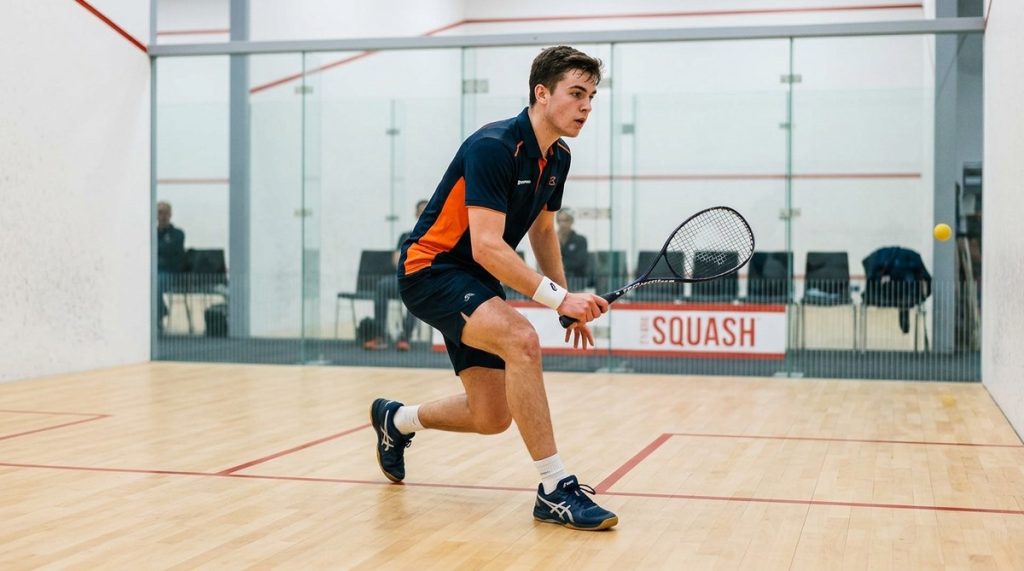
Your opponent sends a deep drive to the back corner. You scramble, retrieve it, and rush back towards the T. But something feels off. You’re always a step behind, constantly stretching for shots that should be comfortable, and your legs feel heavier with each rally.
The problem isn’t your fitness or your racket skills. It’s your footwork around the T.
Most squash players struggle with footwork around the T position, making seven common mistakes that sabotage their court coverage. These errors include standing too square, crossing feet during recovery, poor split-step timing, lazy positioning, watching the ball instead of moving, incorrect weight distribution, and failing to adjust stance between shots. Fixing these technical flaws transforms your movement efficiency and gives you better court control.
Standing Too Square to the Front Wall
Many players position themselves parallel to the front wall when waiting on the T. This feels natural but creates a massive problem.
When you stand square, you need extra steps to reach either back corner. Your body has to rotate before moving, adding precious milliseconds to every movement.
The fix is simple but feels awkward at first. Position yourself at roughly 45 degrees to the front wall. Your front shoulder should point towards the side wall, creating an open stance that lets you push off in any direction.
This angled position means:
- Fewer steps to reach back corners
- Faster rotation for volleys
- Better balance during split-steps
- Improved peripheral vision of your opponent
Think of it like a tennis ready position. No professional stands completely square because it limits explosive movement.
Crossing Your Feet During Recovery
Watch intermediate players return to the T and you’ll spot this mistake constantly. After hitting from a corner, they cross one foot over the other whilst moving back to centre court.
Crossing feet destroys your balance and leaves you vulnerable. If your opponent hits early, you’re caught mid-stride with your weight distributed poorly. You can’t change direction effectively when your legs are tangled.
The correct recovery pattern uses side steps or a smooth backwards glide. Your feet should never cross the midline of your body during recovery to the T.
Here’s the proper sequence:
- Complete your shot in the corner
- Push off your back foot towards the T
- Use small, controlled steps to maintain balance
- Keep your feet shoulder-width apart throughout
- Arrive at the T in your ready position
This pattern might feel slower initially, but it actually improves your overall court speed because you’re always ready to move again.
Mistiming Your Split-Step
The split-step is that small hop players make just before their opponent strikes the ball. It loads your muscles like springs, ready to explode in any direction.
But timing matters enormously.
Jump too early and you land before your opponent hits. Your muscles relax and you lose the explosive benefit. Jump too late and you’re still in the air when you need to be moving.
The perfect split-step happens just as your opponent’s racket starts the forward swing. You should land on the balls of your feet at the exact moment they make contact with the ball.
The split-step isn’t about jumping high. It’s about timing a small, controlled hop that keeps you active and ready. Your feet should barely leave the ground.
Practice this timing during solo drills. Feed yourself balls and focus entirely on when you hop, not where you move afterwards. The movement becomes automatic once the timing clicks.
Lazy T Positioning After Easy Shots
You hit a comfortable length down the wall. Your opponent is deep in the back corner. So you amble back towards the T, taking your time because you think you have space.
This casual recovery is a trap.
Good opponents punish lazy movement. They hit early, catching you between positions. Even average players occasionally produce a surprise winner when you’re not properly set.
Every single recovery to the T should be purposeful. Treat each return as urgent, regardless of how much time you think you have.
The mental shift required here is significant. You need to build a habit where returning to the T position becomes automatic and crisp, not something you do only under pressure.
Benefits of disciplined T recovery include:
- Consistent court positioning
- Better reading of opponent patterns
- Reduced mental fatigue from constant decision-making
- Improved match fitness through constant movement
Your ghosting routines that actually improve your court movement should reinforce this urgency in every repetition.
Watching Instead of Moving
This mistake is subtle but devastating. Players watch the ball travel instead of moving their feet.
You hit a drive. The ball travels to the back corner. Your eyes follow its path whilst your feet remain planted. Only when the ball bounces do you start moving back to the T.
Those two seconds of watching cost you court position.
The correction requires trust in your shot. Once you’ve struck the ball cleanly, immediately begin your recovery movement. Your peripheral vision tracks the ball whilst your body moves.
This feels uncomfortable because your brain wants visual confirmation that your shot was good. But professional players move the instant they complete their swing.
Poor Weight Distribution on the T
Stand on the T right now. Where is your weight?
Many players rest back on their heels, standing upright and relaxed. This position requires a weight shift forward before any movement can begin.
Proper T position keeps your weight on the balls of your feet. Your knees should be slightly bent, your core engaged, and your body tilted slightly forward from the ankles.
| Mistake | Correct Position |
|---|---|
| Weight on heels | Weight on balls of feet |
| Straight legs | Knees slightly bent |
| Upright posture | Forward lean from ankles |
| Relaxed core | Engaged core muscles |
| Flat-footed stance | Ready to push off |
This athletic position feels tiring at first. Your calves and thighs will burn during long rallies. But this discomfort means you’re actually working correctly.
The position is identical to what you’d adopt before receiving serve in other racket sports. It’s universal because it works.
Failing to Adjust Your Stance Between Shots
Each shot in squash requires a different response position. A lob demands you shift slightly backwards. A potential drop shot means edging forward. A cross-court needs lateral adjustment.
But many players return to exactly the same spot on the T regardless of what their opponent might play next.
This rigid positioning makes you predictable and slow. You’re always moving the maximum distance because you never anticipate.
Smart T positioning involves micro-adjustments based on:
- Your opponent’s court position
- Their likely shot options from that position
- Their patterns and preferences
- The score and match situation
If your opponent is deep in the back corner under pressure, shade forward slightly. You’re more likely to need to cover a weak return or a desperate lob than a perfect drop shot.
These adjustments are tiny, perhaps 30 centimetres in any direction. But they compound over a match, saving dozens of steps and crucial split-seconds.
The skill connects directly to shot anticipation. As you improve your reading of the game, your T positioning becomes more dynamic and effective.
Your forehand drive technique improves when you arrive at each shot with better positioning from smart T adjustments.
Recognising Your Personal Pattern
Everyone combines these mistakes differently. You might nail the split-step timing but stand too square. Or perhaps your recovery is crisp but your weight distribution needs work.
Film yourself during a match or practice session. Watch specifically for these seven errors. Most players are shocked when they see their actual movement patterns compared to what they think they’re doing.
Focus on fixing one mistake at a time. Trying to correct everything simultaneously overloads your brain and makes you move awkwardly.
Start with the mistake that appears most frequently in your footage. Spend two weeks drilling the correction until it becomes automatic. Then move to the next error.
This methodical approach feels slow but produces lasting changes. Rushed corrections rarely stick because your body reverts to comfortable patterns under match pressure.
Drills That Cement Better Footwork
Understanding mistakes is worthless without practice that builds correct habits. These drills target the specific errors covered above.
Shadow Movement Drill: Move around the court without a ball, focusing purely on T recovery. Hit an imaginary shot in each corner, then return to the T using perfect technique. Do this for three-minute sets, maintaining intensity throughout.
Split-Step Timing Drill: Have a partner feed balls whilst you focus entirely on split-step timing. Don’t worry about shot quality. Just nail the timing of your hop relative to their contact point.
Angle Awareness Drill: Place a marker on the T at your optimal 45-degree angle. Every recovery must end with you standing on that marker, reinforcing the correct stance.
Pressure Recovery Drill: Hit and recover at maximum intensity for 30-second bursts. This builds the habit of urgent T recovery even when tired.
These drills feel boring compared to playing points. But they’re where real improvement happens. Professional players spend hours on this foundational work because it underpins everything else.
How Equipment Affects Your Movement
Your shoes matter more than you think. Worn soles reduce grip, making split-steps and direction changes feel unstable. This unconsciously makes you more cautious with your footwork.
Check your shoe treads monthly. Replace them when the pattern becomes shallow, even if the uppers look fine.
Court surface also impacts movement patterns. Wooden courts allow more slide, whilst painted concrete demands shorter, choppier steps. Adjust your footwork style to match the surface you’re playing on.
Even your racket string tension indirectly affects footwork. When you trust your strings to perform consistently, you commit more fully to each shot and recovery pattern.
The Connection Between Footwork and Shot Quality
Better footwork doesn’t just get you to the ball faster. It improves every shot you play.
When you arrive at the ball with good balance and time, your technique flows naturally. You can focus on placement and power rather than just making contact.
Poor footwork forces compensations. You stretch awkwardly, swing off-balance, and mishit shots you should control easily. Your backhand volley suffers particularly badly from rushed, unbalanced positioning.
The relationship works both ways. As your shots improve, you create more time for yourself, which allows better footwork. This positive cycle is why fixing footwork mistakes produces such dramatic overall improvement.
Building Match-Ready Movement Patterns
Practice court movement is different from match movement. In drills, you know what’s coming. In matches, you’re reacting to uncertainty whilst managing fatigue and pressure.
Bridge this gap by adding unpredictability to your footwork training. Have a partner call out corners randomly whilst you recover to the T between each movement. Or use a reaction ball that bounces erratically.
Mental pressure matters too. Practice your footwork when you’re tired, not just when you’re fresh. The final games of a match are where technique breaks down if it’s not deeply ingrained.
Compete against yourself. Time how many perfect T recoveries you can complete in two minutes. Beat that number next session.
Your Footwork Transformation Starts Now
These seven mistakes appear in nearly every club-level match. The difference between players isn’t talent or athleticism. It’s who commits to fixing these technical errors.
Start by filming one game this week. Watch it specifically for these footwork patterns. Pick the mistake you make most often and dedicate your next three training sessions to correcting it.
Your movement will feel awkward during the transition. That discomfort means you’re changing ingrained patterns. Push through it. Within a month, the new movement becomes natural and your court coverage transforms completely.
The T position controls squash. Master your footwork around it and you control your matches.