Blog

  • Why Your Backhand Volley Keeps Hitting the Tin (And How to Fix It)

    Why Your Backhand Volley Keeps Hitting the Tin (And How to Fix It)

    Your backhand volley has betrayed you again. The ball thuds into the tin, your opponent grins, and you wonder why this shot feels like wrestling with a stubborn opponent. The backhand volley in squash demands precision, timing, and a few technical adjustments that most intermediate players overlook. The good news? Once you understand what’s going wrong, the fixes are surprisingly straightforward.

    Key Takeaway

    Backhand volley errors usually stem from three fixable mistakes: dropping your wrist below the racquet head, taking the ball too late, and using excessive swing. Correct these by maintaining a firm wrist position, intercepting the ball early with your weight forward, and using a compact punch motion rather than a full swing. These adjustments will lift your volleys clear of the tin consistently.

    Understanding Why Your Backhand Volley Finds the Tin

    The tin is unforgiving. It sits there, 19 inches high, punishing every technical flaw in your volley technique.

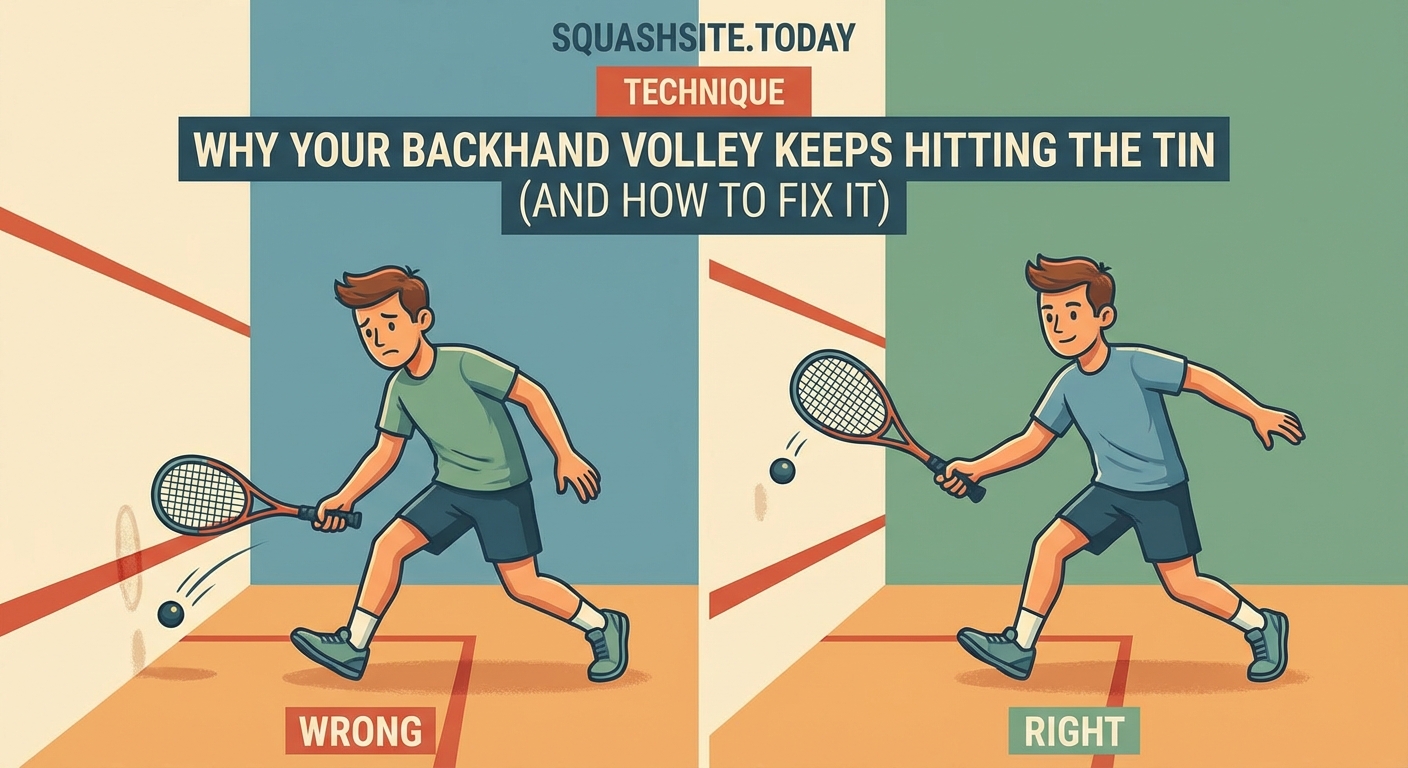
    Most players hitting the tin share a common problem. They’re guiding the ball downward instead of forward. Your racquet face angle at contact determines the ball’s trajectory, and when that angle points even slightly downward, physics takes over.

    The backhand volley differs fundamentally from your backhand drive. Drives allow time for preparation and swing. Volleys demand instant reactions with minimal movement. This distinction trips up players who’ve mastered their ground strokes but struggle at the front of the court.

    Your wrist position matters more than you think. A collapsed or drooping wrist creates a downward racquet angle that sends balls straight into the tin. Meanwhile, a firm wrist maintains the open face needed to lift the ball.

    Timing plays an equally critical role. Taking the ball late forces you to reach backward, collapsing your body position and angling your racquet downward. Early contact lets you punch through the ball with your weight moving forward.

    The Three Technical Culprits Behind Tin Shots
    Why Your Backhand Volley Keeps Hitting the Tin (And How to Fix It) - Illustration 1

    Let’s identify the specific mistakes causing your problems.

    Wrist collapse tops the list. When pressure mounts or fatigue sets in, your wrist bends backward. This subtle change tilts your racquet face downward by several degrees. Those degrees mean the difference between clearing the tin and hitting it.

    Late contact points create a cascade of problems. You’re reaching behind your body, your weight shifts backward, and your racquet face naturally closes. The ball has already passed the ideal interception zone.

    Excessive swing length introduces inconsistency. Big swings require perfect timing. Miss by a fraction of a second and your racquet face angle at contact becomes unpredictable. Shorter, more compact movements give you better control.

    Common Mistake What Happens The Fix
    Dropped wrist Racquet face angles down, ball hits tin Lock wrist firm, racquet head above wrist level
    Late contact Reaching backward, weight on back foot Step forward, intercept ball early
    Long swing Inconsistent racquet face angle Compact punch, minimal backswing
    Passive footwork Poor body position, off-balance contact Active split step, move to the ball

    Five Steps to Fix Your Backhand Volley Technique

    Here’s your systematic approach to eliminating tin shots forever.

    1. Reset your grip to continental. Place your racquet flat on the ground and pick it up from the top. This natural grip position opens your racquet face slightly and gives you the versatility needed for volleys at different heights. Many players use their drive grip for volleys, which closes the face too much.

    2. Establish a firm wrist position before the ball arrives. Stand in front of a mirror and hold your racquet in the ready position. Your wrist should be locked with the racquet head level with or slightly above your wrist. This isn’t a tense grip, just a stable platform. Practice holding this position for 30 seconds at a time.

    3. Master the split step timing. As your opponent strikes the ball, perform a small hop that lands you on the balls of your feet. This athletic position lets you react instantly in any direction. The split step synchronises your movement with the ball’s flight.

    4. Move forward to intercept the ball early. Take a decisive step toward the front wall with your left foot (for right-handed players). This forward movement accomplishes two things: it gets you to the ball before it drops too low, and it lets you transfer your weight into the shot naturally.

    5. Execute a compact punch motion. Think of your backhand volley as a firm push rather than a swing. Your racquet travels forward about 30 centimetres, no more. The power comes from your step and body rotation, not from arm swing. Keep your elbow relatively stable and let your shoulder do the work.

    The best volleyers in squash treat the shot like catching a ball and immediately throwing it back. There’s no wind-up, no elaborate preparation. Just intercept and redirect. This mental model helps players understand the efficiency required at the front of the court.

    Addressing the Height Problem
    Why Your Backhand Volley Keeps Hitting the Tin (And How to Fix It) - Illustration 2

    Different ball heights require specific adjustments to your technique.

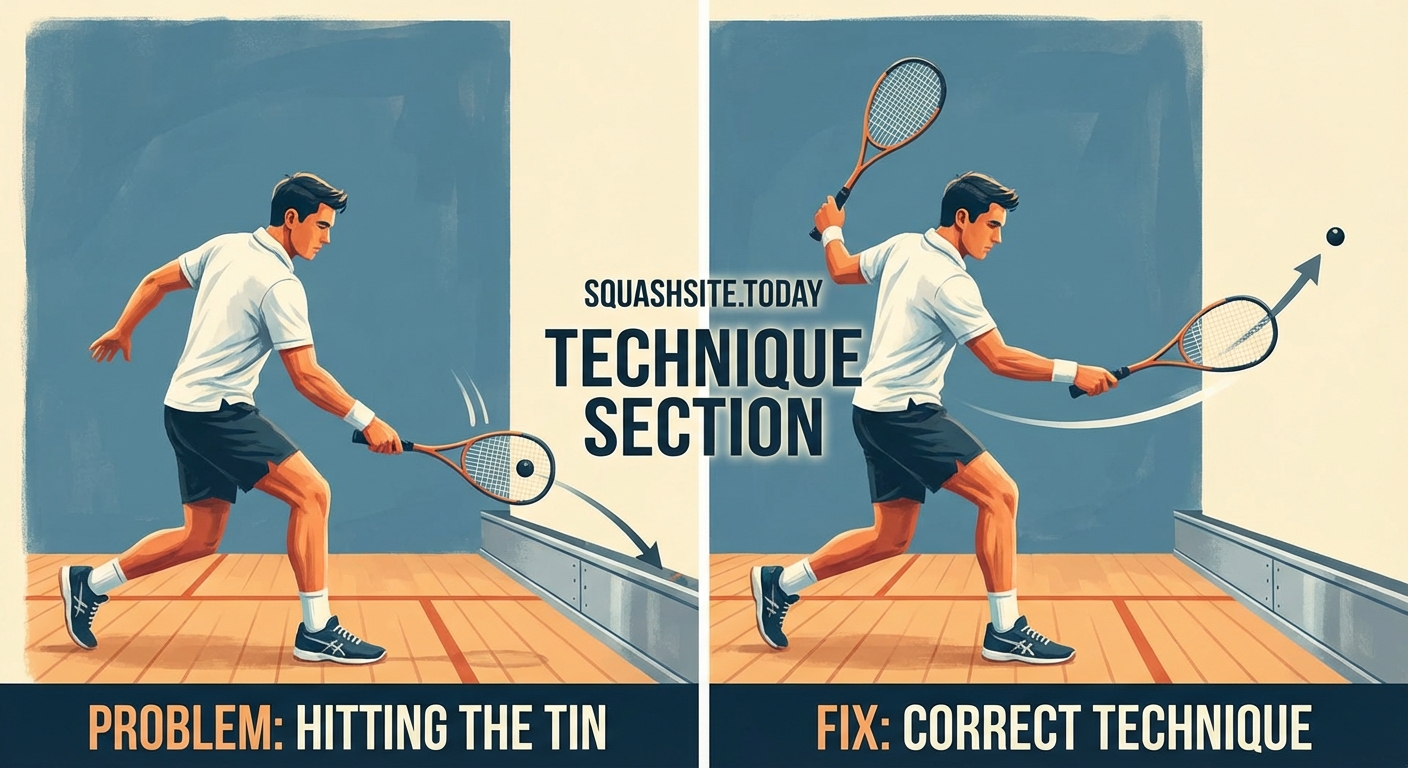
    High volleys (shoulder level and above) need an open racquet face. Your wrist stays firm but your forearm rotates slightly to expose more of the racquet face to the ceiling. Aim to contact the ball slightly in front of your body and punch forward and slightly downward. The key word is slightly. You’re guiding the ball down gently, not chopping at it.

    Mid-height volleys (between waist and shoulder) represent the sweet spot. Your basic technique applies here with minimal adjustment. Focus on stepping in and punching through the ball with a level racquet face.

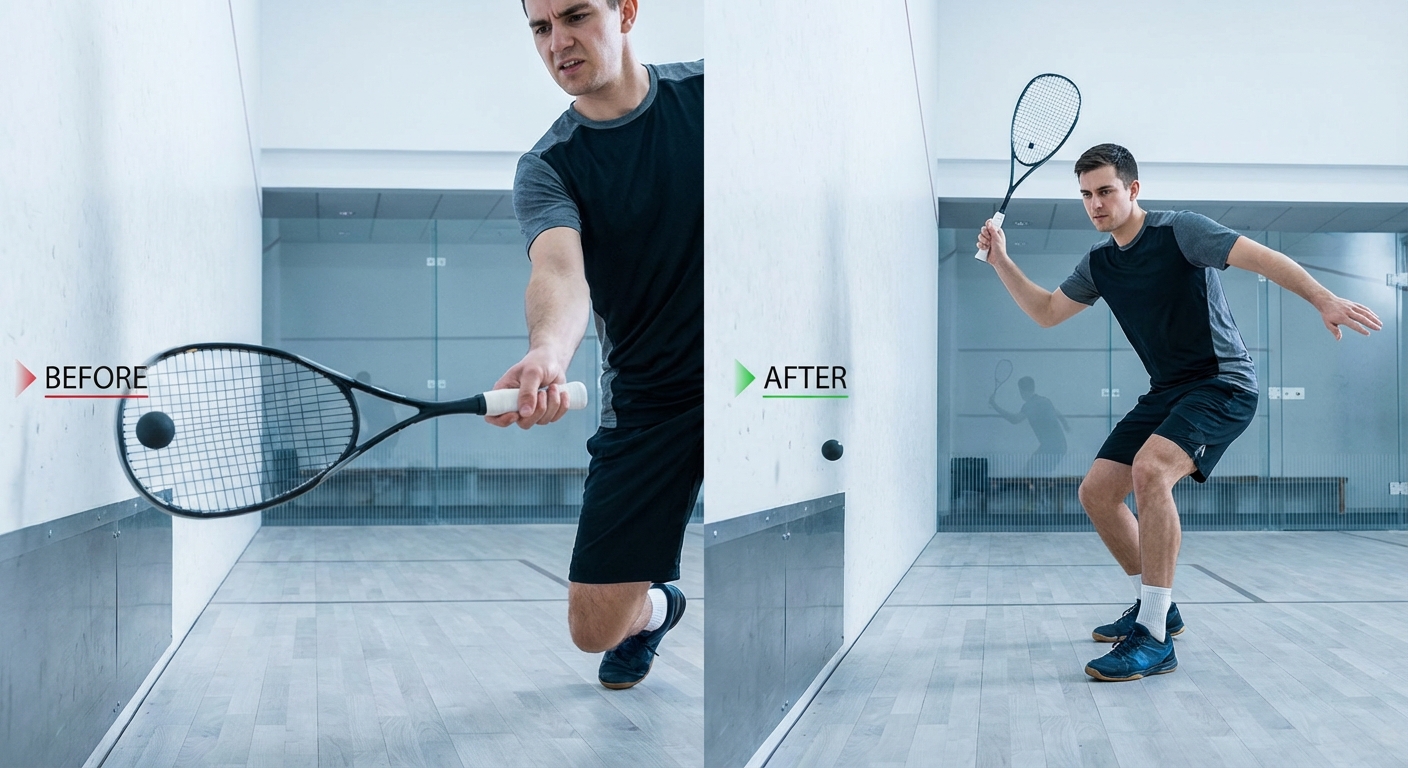
    Low volleys (below waist height) require bending your knees, not your back. Drop your body height by flexing your legs while keeping your upper body relatively upright. This maintains your wrist position and racquet face angle. Many players bend at the waist for low volleys, which collapses their wrist and sends the ball into the tin.

    The common thread across all heights? Your wrist position remains firm and your racquet head stays level with or above your wrist.

    Footwork Patterns That Support Better Volleys

    Your feet determine your body position, which determines your racquet position.

    Start with an active ready position. Stand on the T with your weight on the balls of your feet, knees slightly bent. This athletic stance lets you explode in any direction.

    When the ball comes to your backhand volley side, execute this sequence:

    • Split step as your opponent hits
    • Read the ball’s trajectory
    • Step forward with your left foot toward the side wall
    • Keep your right foot as an anchor for balance
    • Contact the ball with your weight transferring onto your front foot

    This footwork pattern naturally positions your body sideways to the front wall, creating space for your racquet to move through the ball without obstruction.

    Avoid these footwork errors:

    • Standing flat-footed and reaching with just your arm
    • Stepping backward away from the ball
    • Crossing your feet, which tangles your legs and ruins your balance
    • Taking multiple small steps instead of one decisive movement

    Drills to Groove the Correct Motion

    Solo practice builds muscle memory faster than match play.

    The wall drill works brilliantly for developing touch. Stand two metres from the front wall. Drop the ball and volley it continuously against the wall using only your backhand volley technique. Focus entirely on keeping your wrist firm and using a compact punch. Aim to sustain 20 consecutive volleys. This drill provides immediate feedback because any technical breakdown causes you to lose control.

    The shadow swing routine requires no ball at all. Perform 50 backhand volley motions daily, watching yourself in a mirror or recording video. Check these points on each repetition:

    • Wrist firm, racquet head level
    • Compact motion, no big backswing
    • Step forward with front foot
    • Shoulder turns slightly, arm stays relatively quiet

    The target practice drill needs a partner or ball machine. Place a target on the front wall at a height of about one metre. Have balls fed to your backhand volley position at varying heights. Your goal is hitting the target consistently while maintaining proper technique. Don’t worry about power. Accuracy and technique come first.

    The drop shot masterclass: developing touch and feel for winners from anywhere shares similar principles about developing racquet control and feel that translate directly to volley improvement.

    Equipment Considerations for Better Volleys

    Your racquet setup influences your volley performance more than you might realise.

    String tension affects ball response. Higher tensions (27-29 pounds) give you more control and a crisper feel, which helps with the compact punch motion required for volleys. Lower tensions (24-26 pounds) provide more power but less precision. For players struggling with tin shots, slightly higher tension often helps because the ball doesn’t sink into the strings as much, making it easier to direct.

    Balance point matters too. Head-light racquets (balance point closer to the handle) offer better manoeuvrability for volleys. You can position the racquet faster and make last-second adjustments more easily. Head-heavy racquets generate more power on drives but can feel sluggish on volleys.

    Grip size deserves attention. A grip that’s too large makes it harder to maintain a firm wrist position because your hand muscles fatigue faster. Too small and you’ll squeeze too hard, creating tension that travels up your arm. The right size lets you hold the racquet with controlled firmness without excessive grip pressure.

    The truth about squash string tension and how it transforms your game provides deeper insight into how string setup affects your shot-making across all strokes.

    Mental Approach and Decision Making

    Technical skills mean nothing if your mental game sabotages execution.

    Commit to the volley early. The moment you recognise a ball coming to your backhand volley zone, decide you’re taking it as a volley. Hesitation causes you to get caught between a volley and letting the ball bounce, resulting in awkward in-between contact points that find the tin.

    Accept that some balls shouldn’t be volleyed. If a ball drops below knee height before you can reach it, let it bounce. Trying to volley balls that are too low forces you to break all the technical rules we’ve discussed. Smart shot selection prevents forced errors.

    Use volleys to apply pressure, not to end rallies immediately. Many intermediate players try to hit winners off every volley. This aggressive mindset leads to overhitting and tin shots. Instead, think of your backhand volley as a way to maintain your front court position and keep your opponent under pressure. Solid, deep volleys accomplish this without unnecessary risk.

    Visualise the ball’s path before you hit. In the split second before contact, picture the ball’s trajectory from your racquet to the front wall and its bounce. This mental rehearsal helps your body execute the correct racquet angle automatically.

    Common Variations and When to Use Them

    The standard backhand volley isn’t your only option.

    The volley drop works when your opponent is deep in the court. Instead of punching the ball deep, you use an even more compact motion with a very open racquet face to just lift the ball over the tin and have it die in the front corner. This shot requires excellent touch and the same firm wrist position to control the delicate trajectory.

    The volley boast redirects the ball to the side wall before it reaches the front wall. You’ll use this when the ball comes at you with pace and you need to take the sting off it, or when you want to wrong-foot an opponent. The technique remains similar, but your body faces more toward the side wall and your racquet face angles accordingly.

    The attacking volley kill aims to end the rally. You take the ball very early, often above waist height, and punch it hard and low to the front wall. This requires perfect technique because any error at this speed and angle means hitting the tin. Only attempt this when you’ve grooved the basic technique and the ball sits up invitingly.

    Professional players like Paul Coll’s unorthodox style is redefining power play in professional squash demonstrate how variations in technique can still produce effective results, though mastering fundamentals remains essential before experimenting with personal style.

    Troubleshooting Persistent Problems

    If you’ve applied these fixes and still struggle, consider these specific solutions.

    Problem: Volleys clear the tin but lack depth.

    Your contact point is correct but you’re not transferring enough weight forward. Exaggerate your forward step and feel your body weight moving into the shot. Also check that you’re following through toward your target rather than pulling the racquet across your body.

    Problem: Technique feels good in practice but breaks down in matches.

    Pressure causes you to rush. In matches, deliberately slow down your preparation. Take an extra split second to set your feet and wrist position before swinging. Better to be slightly late with good technique than early with collapsed form.

    Problem: Low balls still hit the tin despite bending your knees.

    You’re probably still dropping your wrist as you bend down. Practice low volleys while consciously thinking about keeping your racquet head up. It might feel like you’re scooping under the ball, but you’re actually just maintaining a neutral racquet face.

    Problem: Inconsistent results even with seemingly identical technique.

    Check your grip pressure. Varying how tightly you hold the racquet changes how the strings respond at contact. Aim for consistent, moderate grip pressure, firm enough for control but relaxed enough to maintain feel.

    Building Long-Term Volley Confidence

    Permanent improvement requires systematic practice over weeks and months.

    Dedicate the first ten minutes of every court session to volley practice. This consistent repetition builds neural pathways that make correct technique automatic. Don’t wait until you’re tired at the end of practice to work on volleys.

    Record yourself regularly. Video doesn’t lie. What feels like a firm wrist might actually show collapse on camera. What seems like early contact might reveal you’re still reaching backward. Monthly video check-ins keep you honest about your progress.

    Track your tin percentage during practice. Count how many backhand volleys you attempt versus how many hit the tin. Watch this percentage decrease over time as your technique improves. Measurable progress motivates continued effort.

    Play practice games that emphasise volleys. For example, play points where you must volley any ball that reaches you above knee height. This forces you to use the shot repeatedly under pressure, accelerating your learning.

    Partner with someone working on the same skill. Feed each other balls and provide feedback on wrist position, footwork, and contact point. External observation catches mistakes you can’t feel yourself.

    Your Path to Reliable Backhand Volleys

    The backhand volley transforms from liability to weapon once you address the root causes of tin shots.

    Your wrist position, contact point, and swing length represent the three pillars of volley technique. Get these right and the ball will consistently clear the tin with room to spare. Add proper footwork and you’ll find yourself dominating the front of the court, putting opponents under relentless pressure.

    Start with the five-step process outlined above. Work through each element methodically, using the drills to build muscle memory. Be patient with yourself but persistent in practice. The backhand volley rewards consistent technical work more than any other shot in squash.

    Next time you step on court, remember that every volley is an opportunity to apply these principles. The tin isn’t your enemy. It’s simply feedback telling you which technical element needs attention. Listen to that feedback, make the adjustment, and watch your backhand volley become the reliable weapon it should be.
  • Why Paul Coll’s Unorthodox Style Is Redefining Power Play in Professional Squash

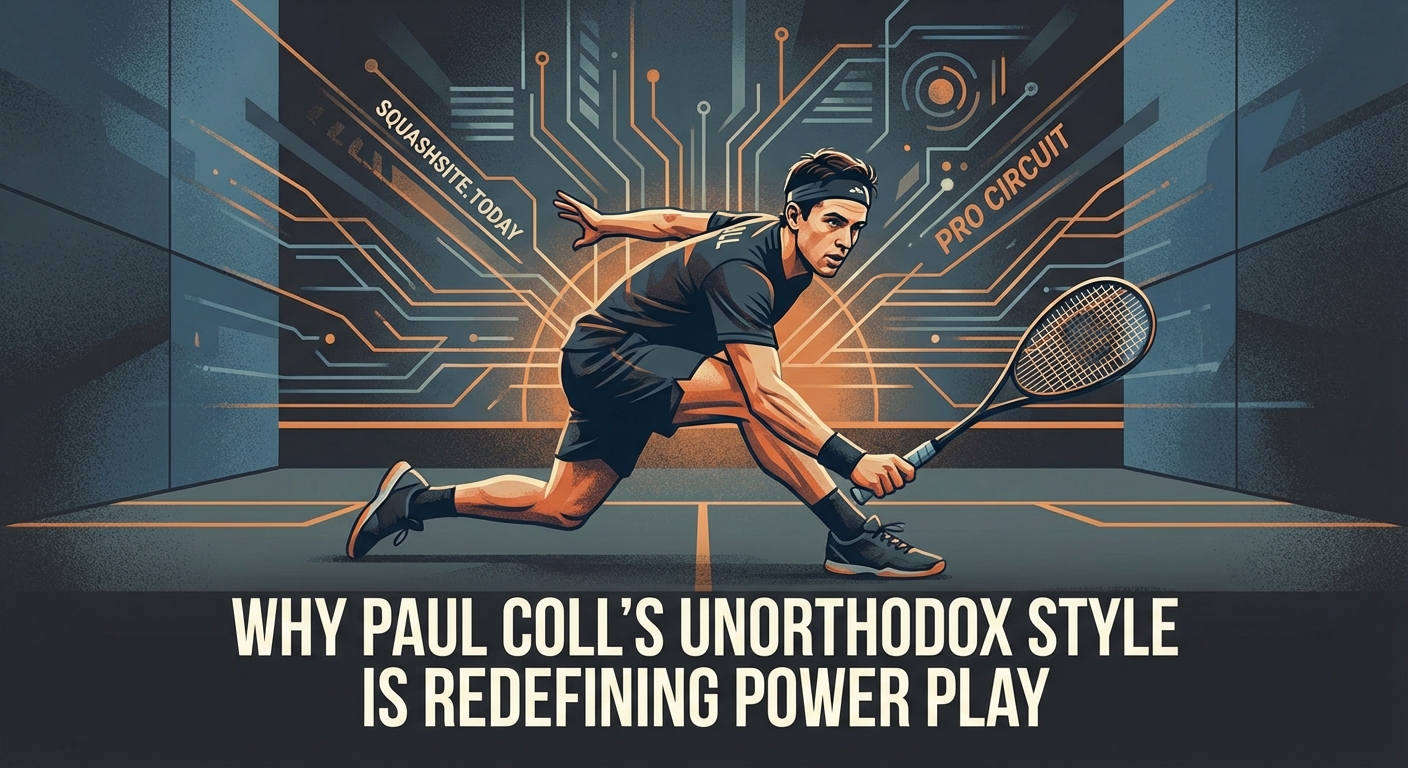
    Why Paul Coll’s Unorthodox Style Is Redefining Power Play in Professional Squash

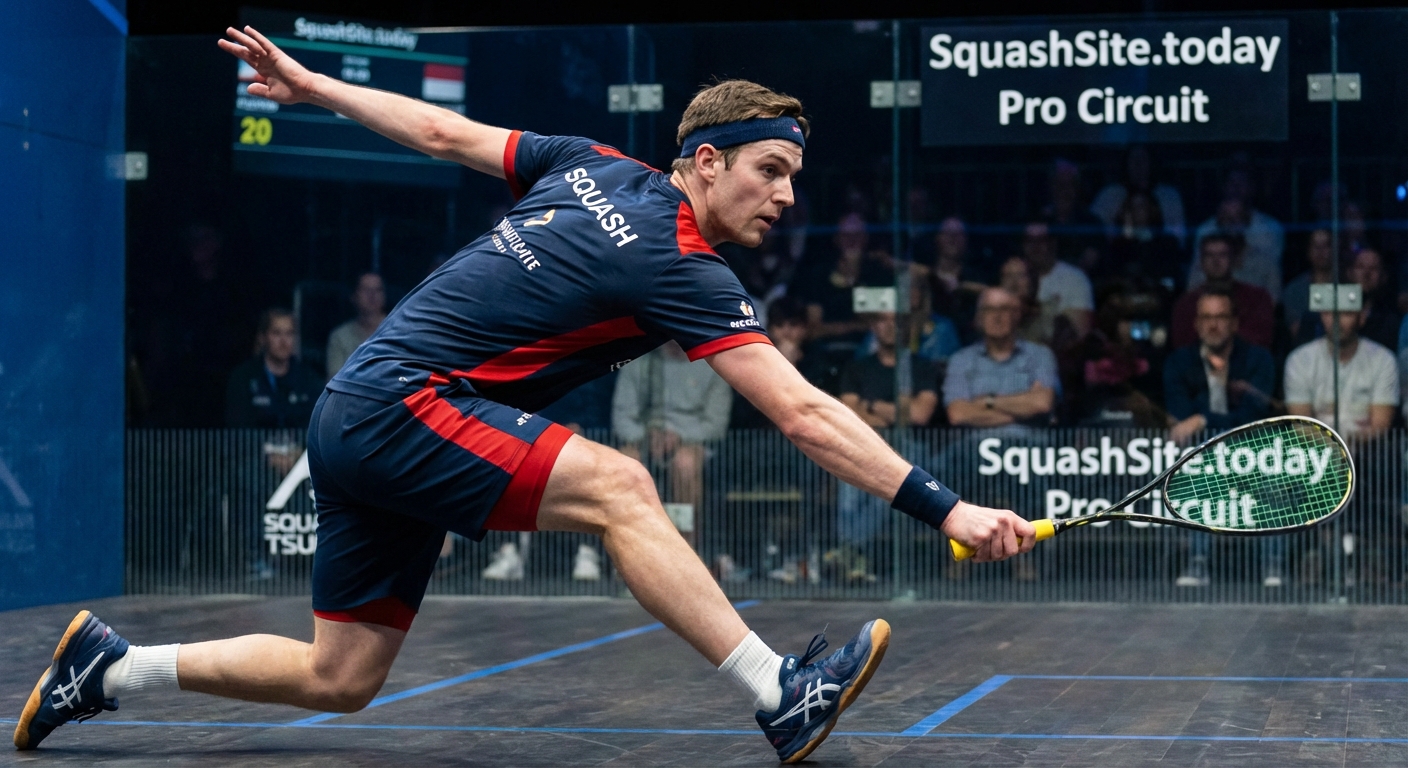
    Paul Coll doesn’t play squash the way textbooks suggest. The New Zealander has climbed to world number one by turning conventional wisdom on its head, blending brute force with surgical precision in ways that leave opponents gasping for air and answers.

    Key Takeaway

    Paul Coll’s playing style centres on exceptional physical conditioning, relentless court coverage, and a unique ability to sustain high-intensity rallies whilst maintaining tactical discipline. His approach combines aggressive shot-making from defensive positions, unorthodox swing mechanics, and mental resilience that forces opponents into physical battles they rarely win. Understanding his methods offers valuable lessons for intermediate and advanced players seeking to elevate their competitive game.

    The Foundation of Coll’s Physical Dominance

    Paul Coll’s athleticism sets him apart from nearly every player on tour. His ability to retrieve seemingly impossible shots doesn’t come from luck or occasional brilliance. It stems from years of conditioning that prioritise endurance, explosive movement, and recovery speed.

    Watch Coll in the fifth game of a brutal match. Whilst his opponent struggles to maintain basic court position, Coll moves with the same intensity he showed in the opening rallies. This stamina advantage creates a psychological weapon as potent as any drop shot.

    His lung capacity and leg strength allow him to maintain a defensive wall that frustrates even the most creative attackers. Players who rely on outpacing their opponents find themselves stuck in extended rallies that drain their reserves whilst Coll thrives in the chaos.

    The New Zealander’s training regime focuses on sport-specific conditioning rather than general fitness. Court sprints, ghosting sessions, and high-intensity interval work mirror match conditions. This specificity translates directly to competitive advantage when rallies extend past 30 shots.

    Unorthodox Swing Mechanics That Deliver Results

    Why Paul Coll's Unorthodox Style Is Redefining Power Play in Professional Squash - Illustration 1

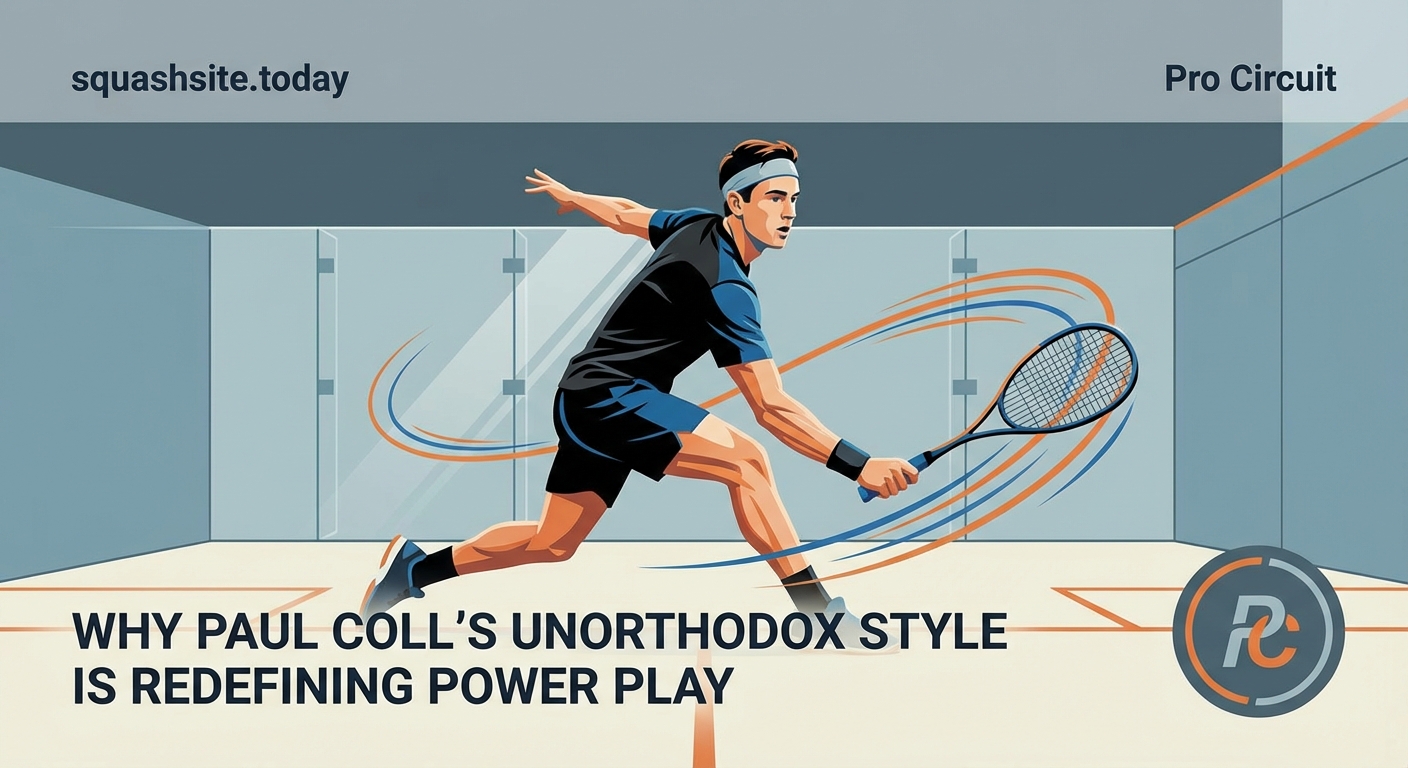
    Coll’s swing technique breaks several traditional coaching principles. His backswing often appears compact, almost abbreviated compared to players who favour full, flowing strokes. Yet this compact motion generates surprising power and allows for rapid shot preparation.

    The abbreviated backswing serves multiple purposes. It reduces telegraphing, making his shot selection harder to read. It also enables faster recovery between shots, crucial for maintaining his defensive coverage. Traditional coaches might flag these mechanics as flaws, but results speak louder than textbook form.

    His forehand drive showcases this approach perfectly. Rather than a sweeping arc, Coll employs a punchy, direct motion that accelerates through impact. The ball comes off his racquet with pace that contradicts the seemingly minimal preparation.

    On the backhand side, Coll generates deceptive power through core rotation and wrist snap rather than relying solely on arm extension. This technique allows him to create sharp angles even when stretched wide or forced deep.

    Technique Element Traditional Approach Coll’s Adaptation Tactical Advantage
    Backswing length Full extension Compact preparation Faster shot execution
    Power generation Arm and shoulder Core and wrist emphasis Deceptive pace from defence
    Shot preparation Early setup Late adjustment Improved disguise
    Recovery position Gradual return to T Explosive push-off Superior court coverage

    Tactical Intelligence Behind the Physicality

    Physical gifts alone don’t explain Coll’s success. His tactical awareness transforms athletic ability into winning squash. He understands when to attack, when to defend, and crucially, when to simply outlast his opponent.

    Coll excels at controlling rally tempo. Against aggressive attackers, he absorbs pressure with deep, tight returns that force opponents to generate their own pace. Against patient players, he injects sudden bursts of attacking shots that disrupt rhythm and create openings.

    His shot selection reflects deep match awareness. Early in contests, Coll often plays conservatively, probing for weaknesses whilst conserving energy. As matches progress, he increases attacking frequency precisely when opponents begin to tire.

    The straight drive forms the backbone of his tactical system. Coll hits this shot with relentless accuracy, pinning opponents behind him and creating space for attacking opportunities. The simplicity masks the difficulty of executing this shot under pressure for extended periods.

    “Paul’s ability to maintain shot quality in the fourth and fifth games separates him from other fit players. Anyone can hit good shots when fresh. Sustaining precision when exhausted requires both physical and mental conditioning that few possess.”

    Reading Opponents and Exploiting Patterns

    Why Paul Coll's Unorthodox Style Is Redefining Power Play in Professional Squash - Illustration 2

    Coll’s pattern recognition skills allow him to anticipate opponent tendencies and adjust tactics mid-match. He identifies favourite shots, preferred court positions, and movement limitations faster than most players.

    Watch how he handles crosscourt exchanges. Coll deliberately engages in these patterns early, studying his opponent’s timing and footwork. Once he identifies a weakness, perhaps a slightly late racquet preparation or a tendency to drift forward, he exploits it ruthlessly.

    His counterattacking ability stems from this reading skill. Coll positions himself based on probability rather than reacting to each shot individually. This anticipatory movement lets him arrive earlier, creating time for offensive replies from defensive positions.

    Against power players, Coll adjusts his court position slightly deeper than standard, giving himself extra milliseconds to react. Against touch players, he creeps forward, pressuring their margin for error on delicate shots.

    Mental Resilience Under Extreme Pressure

    Physical and tactical skills crumble without mental fortitude. Coll’s psychological strength might be his most impressive attribute. He thrives in pressure situations that break other players.

    Consider his comeback victories. Coll has won numerous matches from two games down, scenarios where most players mentally concede. His belief never wavers. Each point receives full commitment regardless of the scoreboard.

    This mental approach manifests in his body language. Even when losing badly, Coll maintains aggressive court presence. He doesn’t drop his shoulders or show frustration. This consistency denies opponents the psychological boost that visible despair provides.

    His between-point routine stays constant throughout matches. The same measured breathing, the same brief reset, the same focused preparation. This consistency creates mental stability that prevents emotional swings from affecting performance.

    Learning From Coll’s Approach

    Intermediate and advanced players can extract practical lessons from Coll’s methods without matching his elite fitness. The principles translate across skill levels.

    Implementing Coll-Inspired Training

    1. Prioritise sport-specific conditioning over general fitness routines.
    2. Include extended rally practice that simulates late-match fatigue conditions.
    3. Develop compact swing mechanics that emphasise quick preparation and recovery.
    4. Practice maintaining shot quality whilst physically stressed.
    5. Build mental routines that remain consistent regardless of match situation.

    Focus on one element at a time rather than attempting wholesale changes. Select the aspect of Coll’s game that addresses your biggest weakness.

    Common Mistakes to Avoid

    Players attempting to copy Coll’s style often make predictable errors:

    • Confusing relentless defence with passive play
    • Neglecting shot quality in pursuit of pure fitness
    • Abandoning attacking shots entirely
    • Overemphasising physical training whilst ignoring tactical development
    • Attempting advanced techniques without building foundational fitness

    The key distinction lies in active versus passive defence. Coll defends aggressively, constantly pressuring opponents even from the back corners. Passive retrieval without tactical purpose wastes energy without creating winning opportunities.

    Adapting Elements to Your Game

    Not every player should attempt to replicate Coll’s style completely. Body type, natural strengths, and playing background all influence which elements translate effectively.

    Taller players might struggle with Coll’s low, explosive movement patterns but can adopt his tactical patience and shot selection discipline. Lighter players can emphasise his court coverage and mental consistency whilst developing power through technique rather than pure strength.

    The mental components apply universally. Every player benefits from consistent routines, positive body language, and unwavering commitment to each point. These elements require no physical gifts, only deliberate practice.

    His approach to rally construction offers lessons for all levels:

    • Establish control through consistent length
    • Identify opponent patterns through deliberate testing
    • Attack when tactical advantage emerges, not from impatience
    • Maintain shot quality as the primary goal regardless of physical state

    Technical Drills Inspired by Coll’s Methods

    Specific practice routines can develop Coll-like attributes without requiring professional-level fitness.

    Sustained Length Drill: Hit straight drives for three-minute intervals, focusing on maintaining depth and width whilst gradually increasing pace. Rest one minute between sets. Complete five sets. This builds the shot accuracy and endurance that underpins Coll’s defensive game.

    Pressure Counterattack Practice: Have a partner feed attacking shots whilst you defend from the back corners. After five defensive shots, look for the first opportunity to counterattack with a drop or attacking drive. This replicates Coll’s ability to transition from defence to offence.

    Late-Match Simulation: After 30 minutes of intensive practice, play competitive points whilst maintaining technical standards. This trains the mental and physical resilience needed to execute skills under fatigue.

    Pattern Recognition Exercise: During practice matches, consciously identify opponent tendencies. Note favourite shots, weak movement directions, and preferred rally patterns. Adjust tactics based on these observations mid-match.

    Why Coll’s Style Succeeds at Elite Level

    Professional squash has trended toward athletic, physical play for years. Coll represents the apex of this evolution whilst maintaining tactical sophistication that pure athletes lack.

    His success validates an approach that many coaches previously dismissed as unsustainable. The conventional wisdom suggested that physical play couldn’t succeed at the highest level without compromising shot quality. Coll proved this assumption wrong.

    The modern game rewards players who can sustain high-intensity rallies whilst maintaining precision. Coll’s combination of endurance and skill creates a template for future champions. Young players now have evidence that physical development and technical excellence can coexist.

    His influence extends beyond individual success. Opponents must now prepare differently, knowing they face potential marathon matches against players who adopt similar approaches. This shift affects training priorities, tactical planning, and even equipment choices across professional squash.

    Building Your Version of Physical Squash

    You don’t need to become Paul Coll to benefit from his principles. Identify which elements align with your natural strengths and current skill level.

    Start with honest assessment. Can you currently maintain shot quality for extended rallies? Does your fitness limit tactical options? Do you give up mentally when physically stressed? These answers reveal where Coll’s approach offers the most value.

    Build gradually. Attempting to match professional conditioning overnight leads to injury and burnout. Increase training intensity progressively, allowing your body to adapt. Add one new element monthly rather than overhauling everything simultaneously.

    Track specific metrics. Monitor rally length tolerance, late-match shot accuracy, and mental consistency under pressure. Measurable progress reinforces commitment when improvements feel invisible.

    Remember that Coll’s style represents years of dedicated development. He didn’t achieve world number one status through shortcuts or tricks. The path requires patience, consistency, and intelligent training that respects your individual circumstances.

    Making Physical Squash Work for You

    Paul Coll’s playing style offers a masterclass in combining athletic excellence with tactical intelligence. His methods prove that physical dominance and technical precision aren’t mutually exclusive but rather complementary elements of complete squash.

    Whether you adopt his compact swing mechanics, tactical patience, or mental resilience, the principles scale to any competitive level. Start with the elements that address your specific weaknesses. Build progressively. Maintain focus on shot quality even as you develop physical capabilities. Most importantly, trust the process that transformed a determined New Zealander into a world champion.

  • The Truth About Squash String Tension and How It Transforms Your Game

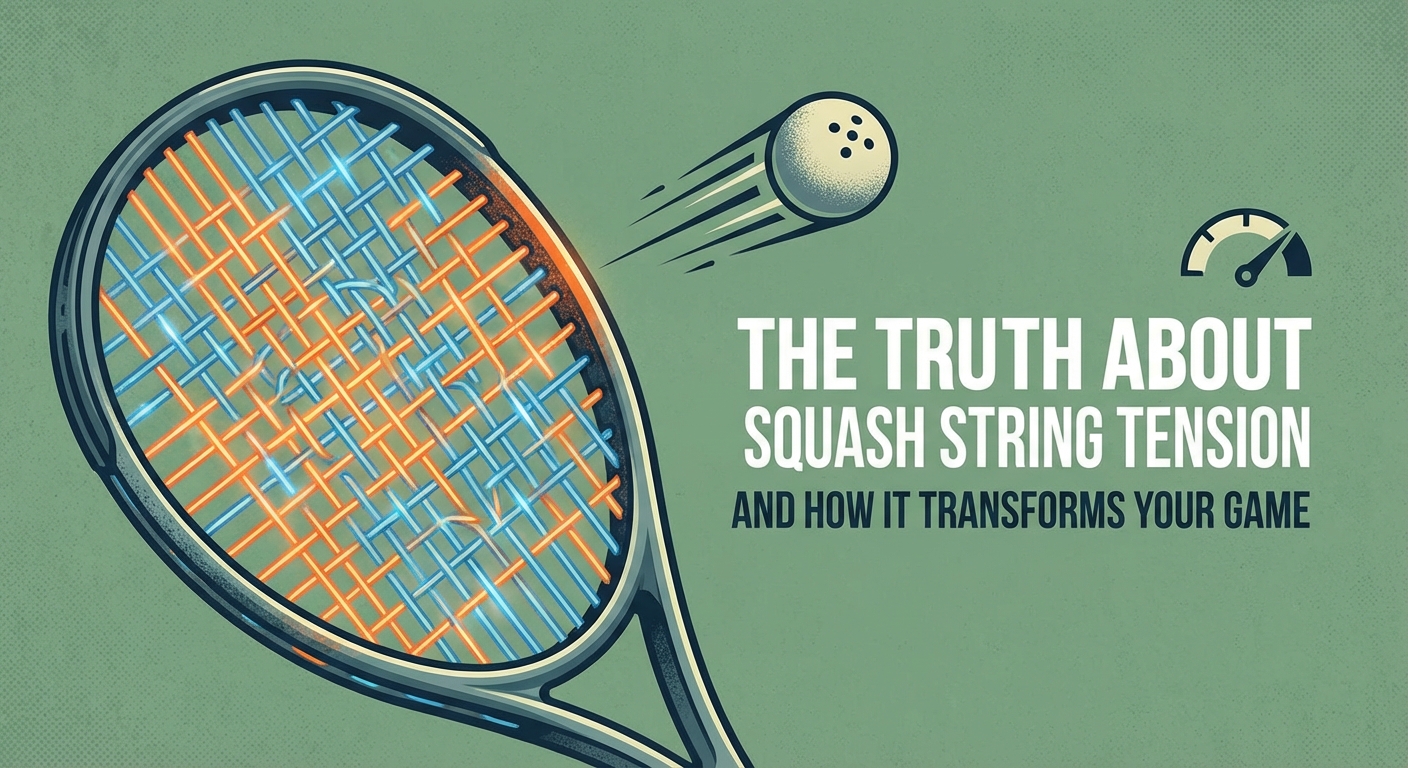
    The Truth About Squash String Tension and How It Transforms Your Game

    Your racquet feels different today. The ball doesn’t quite pop off the strings like it used to. Maybe you’re hitting harder but getting less back. Or perhaps you’ve just had your racquet restrung and it feels like you’re playing with a different frame altogether. String tension is the silent variable that transforms how your racquet performs, yet most players never give it serious thought until something feels wrong.

    Key Takeaway

    Squash string tension directly affects power, control, and feel. Lower tension provides more power and a larger sweet spot, ideal for beginners. Higher tension offers greater control and precision, suited to advanced players with consistent technique. Most players benefit from tensions between 24 and 28 pounds, adjusted based on string type, playing style, and skill level.

    What String Tension Actually Means

    String tension refers to how tightly the strings are pulled when your racquet is strung, measured in pounds or kilograms. A professional stringer uses a stringing machine to pull each string to a specific tension, creating the stringbed that strikes the ball.

    Think of it like a trampoline. Loose strings create more bounce and deflection. Tight strings create a firmer, less forgiving surface.

    Most squash racquets are strung between 24 and 30 pounds. The manufacturer’s recommended range is usually printed on the racquet throat, something like “24-28 lbs” or “11-13 kg”. This range exists because different players need different things from their strings.

    Lower tension sits at the bottom of that range. Higher tension sits at the top. The difference of just 2 or 3 pounds can completely change how your racquet feels and performs.

    How Lower Tension Creates More Power

    The Truth About Squash String Tension and How It Transforms Your Game - Illustration 1

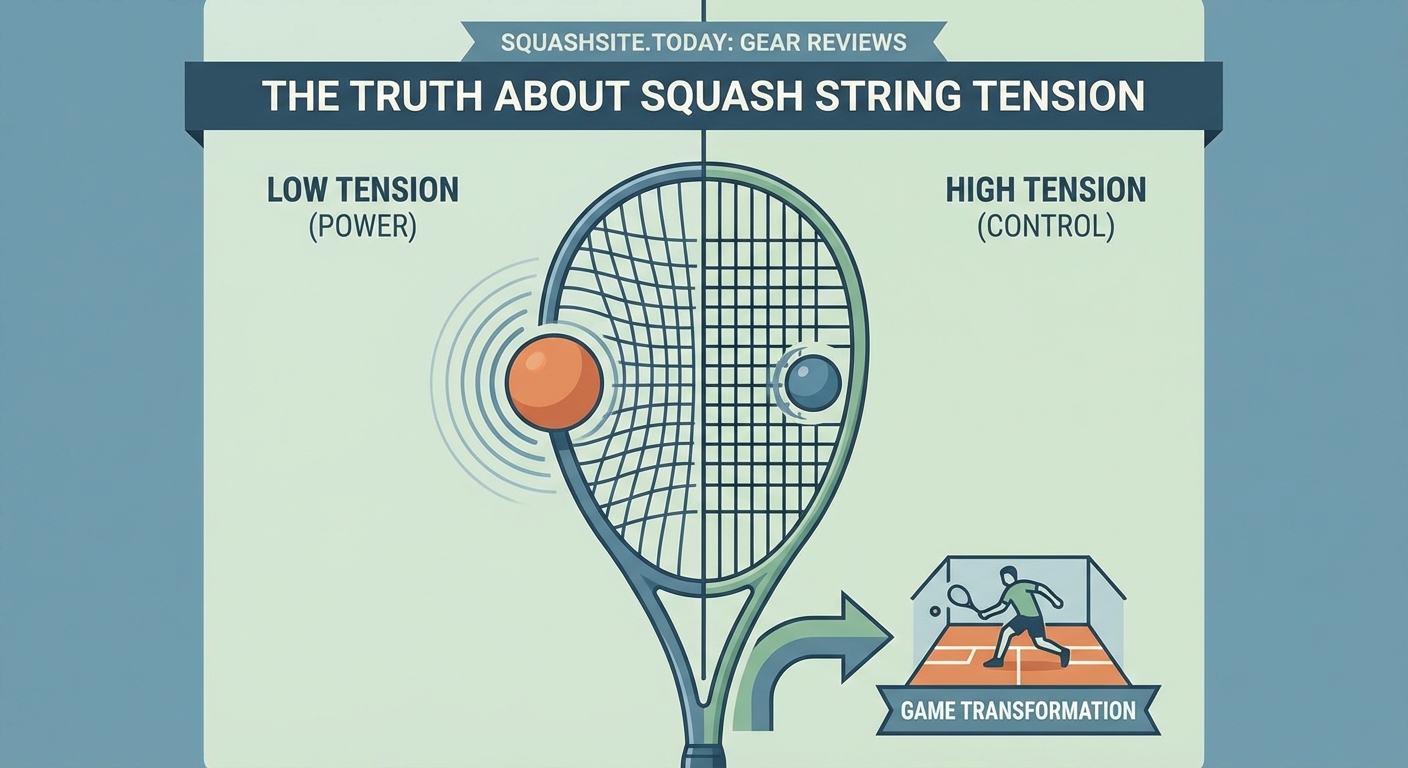
    When strings are looser, they deflect more when the ball makes contact. This deflection creates a trampoline effect that adds energy to your shot. The ball sinks deeper into the stringbed, stays on the strings fractionally longer, and rebounds with more velocity.

    For players with shorter swings or less developed technique, lower tension compensates for what the swing lacks. You don’t need perfect form to generate pace. The strings do some of the work for you.

    Lower tension also enlarges the sweet spot. Off-centre hits still produce decent results because the strings flex and redistribute the impact across a wider area. This forgiveness matters enormously when you’re learning shot mechanics or playing under pressure.

    The downside? Less precision. When strings deflect more, you sacrifice some control over exactly where the ball goes. The added power can also make touch shots and delicate drops harder to execute.

    Why Higher Tension Improves Control

    Tighter strings deflect less. The ball rebounds faster with less dwell time on the stringbed. This creates a firmer, more responsive feel that allows advanced players to place shots with surgical precision.

    Higher tension suits players with long, fluid swings who generate their own power. These players don’t need help from the strings. They need predictability and feedback. They want to know exactly how the ball will react to each swing speed and angle.

    The trade-off is a smaller sweet spot. Mishits feel harsh and lose significant power. Your technique needs to be consistent because the strings won’t mask errors.

    Higher tension also increases the shock transmitted to your arm. If you have any history of elbow or wrist issues, going too high can aggravate old injuries.

    The Sweet Spot Between Power and Control

    The Truth About Squash String Tension and How It Transforms Your Game - Illustration 2

    Most intermediate players find their ideal tension somewhere in the middle of the manufacturer’s range. This balances power assistance with enough control to develop better shot-making.

    Here’s a practical breakdown:

    Tension Range Best For Characteristics
    22-24 lbs Beginners, juniors, players with short swings Maximum power, large sweet spot, forgiving
    25-27 lbs Intermediate players developing technique Balanced power and control, moderate sweet spot
    28-30 lbs Advanced players with consistent swings Maximum control, firm feel, small sweet spot

    Your starting point should consider your current skill level and what you struggle with most. Lacking power? Go lower. Spraying balls all over the court? Go higher.

    How String Type Changes the Tension Equation

    Not all strings behave the same way at the same tension. Thicker strings (lower gauge numbers) feel stiffer and play more like higher tensions. Thinner strings (higher gauge numbers) feel softer and play more like lower tensions.

    A multifilament string at 26 pounds might feel similar to a monofilament string at 24 pounds. The construction and materials matter as much as the tension number itself.

    Multifilament strings have a softer, more elastic feel. They provide good power and comfort but lose tension faster. You might string these 1-2 pounds higher than you would a monofilament to compensate for tension loss.

    Monofilament strings are firmer and hold tension longer. They offer excellent control and durability but can feel harsh, especially at higher tensions.

    “I tell my students to start in the middle of their racquet’s recommended range with a quality monofilament string. Play for a month, then adjust by 2 pounds based on whether they need more power or control. Small changes make big differences.”

    Signs Your Tension Is Wrong for Your Game

    Your racquet will tell you when the tension doesn’t match your needs. Learn to recognise these signals:

    • Balls sailing long on drives and crosscourts (tension too low)
    • Struggling to generate pace even with full swings (tension too high)
    • Frequent mishits feeling dead or powerless (tension too high, sweet spot too small)
    • Difficulty controlling touch shots and drops (tension too low, too much deflection)
    • Arm fatigue or discomfort after matches (tension too high, excessive vibration)
    • Inconsistent shot depth despite similar swings (tension degraded, needs restringing)

    Pay attention to patterns over multiple sessions. One bad day doesn’t mean your tension is wrong. Consistent issues across several matches suggest an adjustment might help.

    How Often Tension Changes Over Time

    Strings lose tension from the moment they’re installed. Every ball strike stretches the strings slightly. Temperature changes cause expansion and contraction. Even if you never play, strings gradually lose tension just sitting in your bag.

    Most strings lose 10-15% of their initial tension within the first 24 hours. After that, the loss continues more slowly. A racquet strung at 26 pounds might play closer to 23 pounds after a month of regular use.

    This matters because your racquet’s performance changes as tension drops. That perfect feel you had with fresh strings gradually shifts toward more power and less control.

    How often should you restring? Follow this guideline:

    1. Count how many times you play per week
    2. Restring that many times per year as a minimum
    3. Add extra restrings if you’re a string breaker or notice significant tension loss

    Someone playing three times per week should restring at least three times per year. A casual player who hits twice per week might restring twice yearly.

    Choosing Your Starting Tension

    If you’ve never thought about tension before, you need a baseline. Here’s how to establish one:

    1. Check your racquet throat for the manufacturer’s recommended range
    2. String at the middle of that range for your first restring
    3. Play at least 10 sessions with that tension, paying attention to power and control
    4. Adjust by 2 pounds in the direction you need (lower for power, higher for control)
    5. Test the new tension for another 10 sessions before making further changes

    Resist the temptation to change tension after one bad match. You need enough experience with each tension to separate the string performance from your own form fluctuations.

    Keep notes about how each tension feels. Write down whether you’re hitting long, short, or just right. Note whether touch shots feel easy or difficult. Track any arm discomfort. This data helps you make informed adjustments.

    Special Considerations for Different Playing Styles

    Your playing style should influence your tension choice as much as your skill level.

    Power players who hit hard and flat often prefer slightly higher tensions. They generate plenty of pace naturally and need the control to keep shots in. Going too low makes their game unpredictable.

    Touch players who rely on drops, boasts, and deception typically favour lower tensions. The added dwell time helps them feel the ball and execute delicate shots. Higher tensions can make their softer shots fall short.

    All-court players who mix power and finesse usually sit right in the middle range. They need enough power for drives and enough control for volleys. Balance is everything.

    Defensive retrievers benefit from lower tensions that help them generate pace from difficult positions. When you’re stretched wide or deep, the strings’ power assistance keeps you in rallies.

    Common Tension Mistakes to Avoid

    Many players sabotage their game by misunderstanding how tension works. Avoid these errors:

    • Copying a professional player’s tension without considering the massive difference in swing speed and technique
    • Changing tension too frequently, never giving yourself time to adapt
    • Stringing too high because you think it makes you a better player
    • Ignoring tension completely and just asking for “whatever you usually do”
    • Using the same tension across different string types
    • Never restringing until strings break, playing with dead strings for months

    Your tension choice should be personal and deliberate. What works for your hitting partner might be completely wrong for you.

    Testing and Adjusting Your Setup

    The only way to find your perfect tension is through systematic testing. Start with a baseline, play enough to form a genuine opinion, then adjust in small increments.

    Keep these variables constant while testing:

    • Same string type and gauge
    • Same stringer (different stringers can produce different results even at the same tension)
    • Similar playing conditions and opponents
    • Adequate break-in period for each new string job

    Change only one thing at a time. If you switch both string type and tension simultaneously, you won’t know which variable caused the change in performance.

    Document your findings. A simple notebook entry after each restring helps you spot patterns. “26 lbs, Tecnifibre 305, felt great for volleys but drove long on crosscourts” tells you something useful.

    When to Seek Professional Advice

    Sometimes you need expert input. Consider consulting a professional stringer or coach if:

    • You’ve tested multiple tensions but nothing feels right
    • You’re experiencing persistent arm pain
    • Your game has plateaued and equipment might be holding you back
    • You’re transitioning from beginner to intermediate level and need guidance
    • You’ve changed racquet models and need to recalibrate your tension

    A good stringer can watch you hit a few balls and offer insights based on your swing mechanics. They’ve seen hundreds of players and can often spot mismatches between player and setup.

    Making String Tension Work for Your Game

    Understanding tension transforms your relationship with your racquet. You stop accepting whatever tension the shop happens to use. You start making informed decisions based on your game’s specific needs.

    The perfect tension isn’t a number you find once and use forever. It evolves as your game develops. Beginners who start at 24 pounds might gradually work up to 27 pounds as their technique improves and they generate more natural power.

    Stay curious about your equipment. Pay attention to how your racquet feels. Notice when performance changes. Be willing to experiment within sensible boundaries.

    Your racquet is a tool that should enhance your natural game. String tension is one of the most accessible ways to customise that tool. Take control of it, test methodically, and you’ll find a setup that makes every shot feel more natural and effective.

  • The Drop Shot Masterclass: Developing Touch and Feel for Winners From Anywhere

    The Drop Shot Masterclass: Developing Touch and Feel for Winners From Anywhere

    The drop shot separates good squash players from great ones. It demands precision, disguise, and nerves of steel when the rally matters most. Get it right and your opponent scrambles helplessly toward the front wall. Get it wrong and you hand them an easy winner.

    Key Takeaway

    The drop shot masterclass centres on developing touch through repetition, disguising intent until the last millisecond, and choosing the right tactical moment. Intermediate and advanced players must build racket control through progressive drills, understand court positioning, and recognise when opponents are vulnerable. Mastery comes from blending technique with reading the game, turning a risky shot into a reliable weapon that wins points from anywhere on court.

    Why the Drop Shot Wins Matches

    The drop shot forces your opponent to cover the greatest distance in the shortest time. When played from the back of the court, it drags them forward while they expect a drive or crosscourt. That sudden change in pace and direction breaks their rhythm.

    Professional players use the drop shot to control tempo. They know that relentless drives tire the body but not the mind. A well-timed drop shot forces mental recalibration. Your opponent must switch from defensive positioning to explosive forward movement.

    The shot also punishes players who stand too deep. If someone camps behind the service box, waiting to volley your drives, a tight drop shot becomes nearly unreachable. They arrive late, off balance, and usually lift the ball for your easy volley.

    Building the Foundation of Touch

    The Drop Shot Masterclass: Developing Touch and Feel for Winners From Anywhere - Illustration 1

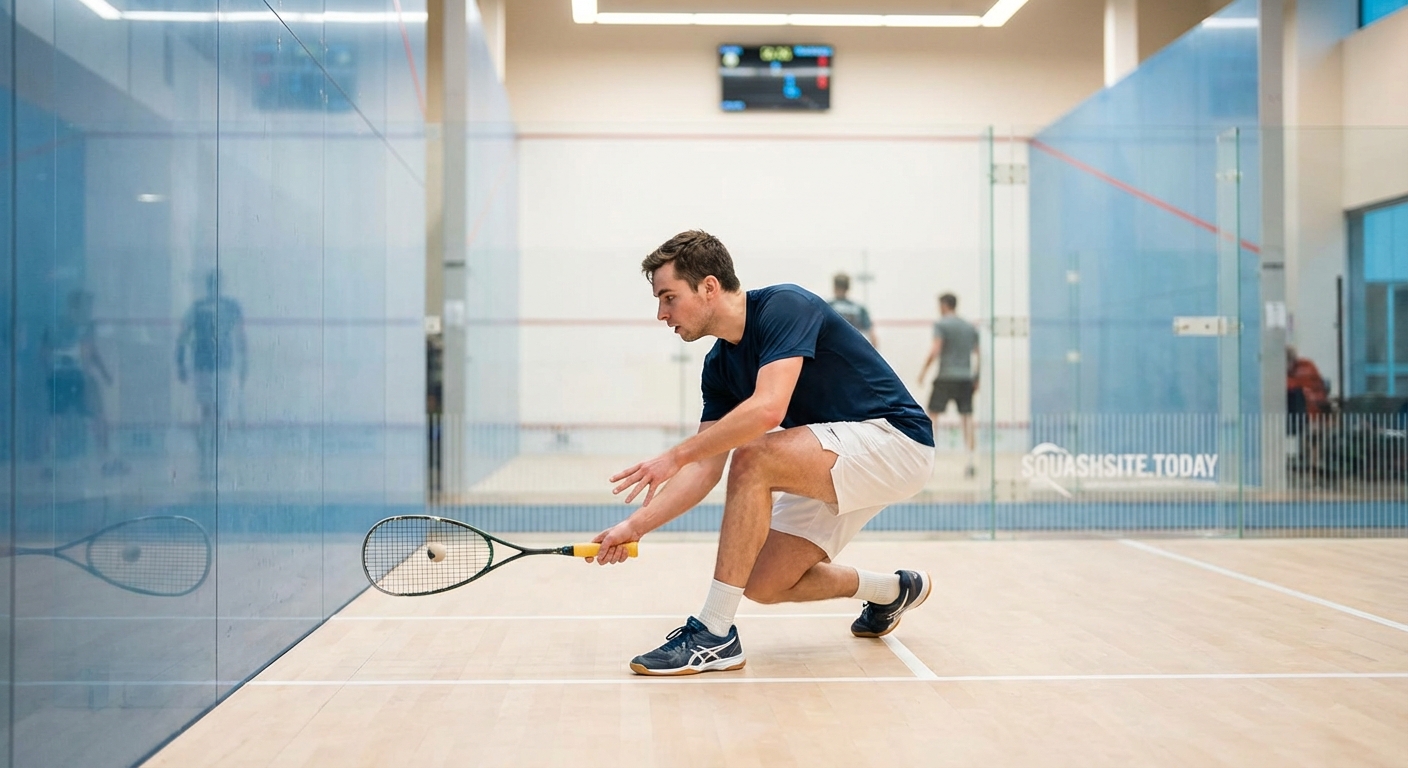
    Touch begins with grip pressure. Most players strangle the racket when attempting delicate shots. Loosen your grip until the racket feels almost weightless in your hand. You should be able to wiggle your fingers slightly during the backswing.

    Your wrist must stay relaxed but firm at impact. Think of it like catching an egg. Too tense and you crush it. Too loose and you drop it. The sweet spot lies in controlled flexibility.

    Practice this progression to develop feel:

    1. Stand one metre from the front wall and tap the ball continuously, keeping it below the service line. Aim for 50 consecutive taps without the ball bouncing past the short line.
    2. Move back to the service box and repeat the same drill. The added distance forces you to adjust swing length while maintaining softness.
    3. Progress to the back of the court and hit drop shots from a self-feed. Focus purely on landing the ball in the front corner, ignoring power completely.

    The racket face angle determines height. Open it too much and the ball floats. Close it too much and the ball hits the tin. Most successful drop shots require a slightly open face, around 15 degrees from vertical at impact.

    Disguise Makes the Drop Shot Lethal

    Your opponent watches your preparation. If they spot a drop shot coming, they sprint forward before you even strike the ball. Disguise eliminates that advantage.

    The backswing for a drop shot should mirror your drive. Take the racket back to the same height, rotate your shoulders identically, and load your weight the same way. The difference happens in the final 20 centimetres before contact.

    At the last moment, ease off the grip pressure and shorten the follow through. Your racket should finish pointing toward your target rather than wrapping around your body. This abbreviated finish absorbs pace without telegraphing intent.

    Watch your opponent’s positioning during your backswing. If they lean back expecting a drive, commit to the drop. If they edge forward suspecting a short shot, blast a drive past them. This cat and mouse game creates doubt in their mind.

    “The best drop shot is the one your opponent doesn’t see coming. If you can make them take two steps backward before realising they need to go forward, you’ve already won the point.” – Former world number three player

    Tactical Situations That Demand a Drop Shot

    The Drop Shot Masterclass: Developing Touch and Feel for Winners From Anywhere - Illustration 2

    Certain moments in a rally scream for a drop shot. Recognising these situations turns the shot from risky gamble to percentage play.

    Use the drop shot when:

    • Your opponent hits a loose ball that lands mid-court, giving you time and space
    • They return to the T slowly after retrieving a difficult shot
    • You’ve hit three or four hard drives in a row and they expect another
    • They stand deep, protecting against the drive or lob
    • The rally has gone long and their legs show signs of fatigue
    • You’re pulled wide and a drop shot forces them to cover the diagonal

    Avoid the drop shot when:

    • You’re stretched and off balance
    • Your opponent already stands on the short line
    • The ball sits behind you, making disguise impossible
    • You’re tired and likely to hit the tin
    • The score is tight and an error would be costly

    Court position matters enormously. A drop shot from the front corner rarely works because your opponent starts close to the target. A drop shot from deep, especially from the back corners, maximises the distance they must cover.

    Common Mistakes and How to Fix Them

    Mistake Why It Happens Solution
    Hitting the tin Racket face too closed or trying to hit too hard Open the face slightly and focus on height over the tin rather than pace
    Ball sits up mid-court Too much power or insufficient cut Reduce swing speed by 30% and brush under the ball with an open face
    Opponent reads it early Backswing looks different from drives Match your drive preparation exactly until the final moment before contact
    Inconsistent length Changing swing speed rather than racket angle Keep swing tempo constant and adjust face angle to control depth
    Ball bounces twice before front wall Aiming too low Target 10 centimetres above the tin and let the ball drop naturally

    The single biggest error is trying to hit the perfect drop shot every time. Even professionals accept that some drop shots will sit up. The goal is consistency at 70%, not perfection at 30%.

    Progressive Drills to Master Touch and Feel

    Start with static drills before adding movement. Your brain needs to automate the technique before introducing complexity.

    Drill One: Corner Targets

    Place targets in both front corners, 30 centimetres from the side wall and 15 centimetres from the front wall. Feed yourself balls from the back corner and aim to hit the target. Complete 20 attempts per corner. Track your success rate weekly.

    Drill Two: Drive to Drop Contrast

    Hit a hard drive to the back corner, then immediately play a soft drop shot to the front. This contrast teaches your hands to switch between power and touch. The muscle memory of alternating helps with disguise during matches.

    Drill Three: Pressure Drop Shots

    Have a partner feed you balls while you’re slightly off balance or stretched. This simulates match conditions where the perfect setup rarely exists. Aim to land 60% of these difficult drop shots above the tin and below the service line.

    Drill Four: Volley Drops

    Intercept balls early and volley them short. This advanced drill combines touch with timing. The ball arrives faster, giving you less time to prepare. Start with gentle feeds and progress to harder pace.

    Drill Five: Alternating Targets

    Hit drop shots alternating between straight and crosscourt. This prevents pattern predictability and forces you to adjust angles rapidly. Your opponent should never know which corner you’ll choose.

    Reading Your Opponent’s Weaknesses

    Some players hate the drop shot more than others. Identify these characteristics during the knockup or early games.

    Players vulnerable to drop shots typically:

    • Recover slowly to the T after hitting from the back
    • Stand with weight on their heels rather than the balls of their feet
    • Show frustration when forced to bend low for short balls
    • Lack flexibility or carry injuries that limit forward movement
    • Prefer a rhythm of consistent drives rather than varied pace

    Test their movement early. Play one or two drop shots in the first game, even if they’re not perfect. Watch how quickly they reach them and how balanced they look when retrieving. If they struggle, add the drop shot to your regular rotation.

    Some opponents anticipate brilliantly. They read your body language, watch your grip, and sprint forward before you strike. Against these players, use the drop shot sparingly. Instead, threaten it constantly to keep them honest, then punish their forward movement with drives and lobs.

    The Mental Side of Playing Drop Shots

    Fear of the tin stops many players from attempting drop shots. They picture the ball clattering into the metal and the point lost. This anxiety creates tension, which ironically makes hitting the tin more likely.

    Accept that you will hit the tin occasionally. Professional players do it multiple times per match. The difference is they don’t let one error stop them from playing the shot again when the right moment appears.

    Build confidence through volume. Hit 100 drop shots in practice for every one you attempt in a match. When your hands have repeated the motion hundreds of times, trust replaces doubt.

    Visualise success before playing the shot. See the ball dying in the front corner. Hear your opponent’s footsteps arriving too late. Feel the satisfaction of the point won. This mental rehearsal primes your nervous system for execution.

    Variations That Keep Opponents Guessing

    The straight drop shot is fundamental, but adding variations multiplies its effectiveness.

    The crosscourt drop works beautifully when your opponent expects straight. Play it from the back corner, cutting across the ball to send it diagonally to the opposite front corner. The angle forces them to cover more ground.

    The trickle boast combines a drop shot with a boast. Instead of hitting the front wall first, you caress the ball into the side wall so it trickles to the front. This shot requires exceptional touch but devastates opponents who commit forward expecting a standard drop.

    The volley drop intercepts the ball early, taking time away from your opponent. Play it when they hit a loose crosscourt or a weak straight drive. The earlier interception means they start further from the front corners.

    The working boast to drop combination involves hitting a boast from the back, then playing a drop shot when they return it. This one-two punch tires legs and tests fitness.

    Equipment Considerations for Better Touch

    Racket choice affects touch more than most players realise. A head-heavy racket generates power easily but makes delicate shots harder to control. A head-light or evenly balanced racket offers better manoeuvrability for touch shots.

    String tension matters too. Tighter strings (27-29 pounds) provide control but require more swing speed to generate pace. Looser strings (24-26 pounds) offer more power but less precision. For players prioritising touch, medium-tight tension around 26-27 pounds balances both needs.

    Grip thickness influences feel. A grip that’s too thick reduces wrist mobility and dulls sensation. A grip that’s too thin allows the racket to twist on off-centre hits. Your grip should allow your middle finger to nearly touch your thumb when wrapped around the handle.

    Fresh grips improve control. A worn, slippery grip forces you to squeeze harder, creating tension that kills touch. Replace your grip every 4-6 weeks if you play regularly.

    Adapting Drop Shots to Different Court Conditions

    Court temperature affects ball bounce. Cold courts slow the ball down, making drop shots easier to execute but also easier for opponents to reach. Hot courts speed everything up, making drop shots riskier but more effective when they work.

    Humidity changes ball behaviour. In damp conditions, the ball gets heavier and dies more quickly. Your drop shots need less finesse because the ball won’t bounce as much. In dry conditions, the ball stays lively and requires more cut to kill it.

    Court floors vary in grip. Slippery floors make it harder for opponents to change direction quickly, favouring drop shots. Grippy floors allow explosive movement, meaning your drop shots need to be tighter.

    Adjust your tactics based on these variables. On a cold, slippery court, use more drop shots. On a hot, grippy court, use them more selectively when you’ve created clear openings.

    Turning Practice Into Match Performance

    Drills build skill but matches test nerve. The gap between practice and performance frustrates many players. Their drop shots work perfectly in drills but fail under pressure.

    Bridge this gap by adding pressure to practice. Set consequences for missed shots. If you hit the tin, do five burpees. If you land the perfect drop, your partner does them. This artificial pressure simulates match tension.

    Practice with a score. Play condition games where you can only win points with drop shots. This forces you to attempt the shot even when nervous.

    Record your matches and count how many drop shot opportunities you missed. Most players discover they play too conservatively, avoiding the shot even when the situation demands it. Awareness of this tendency helps you commit more in future matches.

    Start each match with a target. Aim to attempt five drop shots in the first game, regardless of outcome. This commitment prevents you from abandoning the shot after one error.

    Taking Your Drop Shot From Good to Unstoppable

    Mastery comes from thousands of repetitions, not hundreds. Elite players have hit tens of thousands of drop shots in practice. Their hands know the feel without conscious thought.

    Film yourself hitting drop shots. Compare your technique to professional players. Look for differences in preparation, racket face angle, and follow through. Small adjustments often yield significant improvements.

    Work with a coach who can provide immediate feedback. They’ll spot technical flaws you can’t see or feel. A few targeted corrections can transform an unreliable shot into a weapon.

    Play practice matches where you deliberately overuse the drop shot. Hit twice as many as you normally would. This experimentation reveals which situations work best and builds comfort with the shot under pressure.

    The drop shot masterclass isn’t about learning a single technique. It’s about developing the touch, tactical awareness, and mental confidence to play the right shot at the right moment. Keep practising, stay patient with the learning process, and watch as your opponents start anticipating the drop shot that never comes, leaving them vulnerable to everything else in your arsenal.

  • Hello world!

    Welcome to WordPress. This is your first post. Edit or delete it, then start writing!