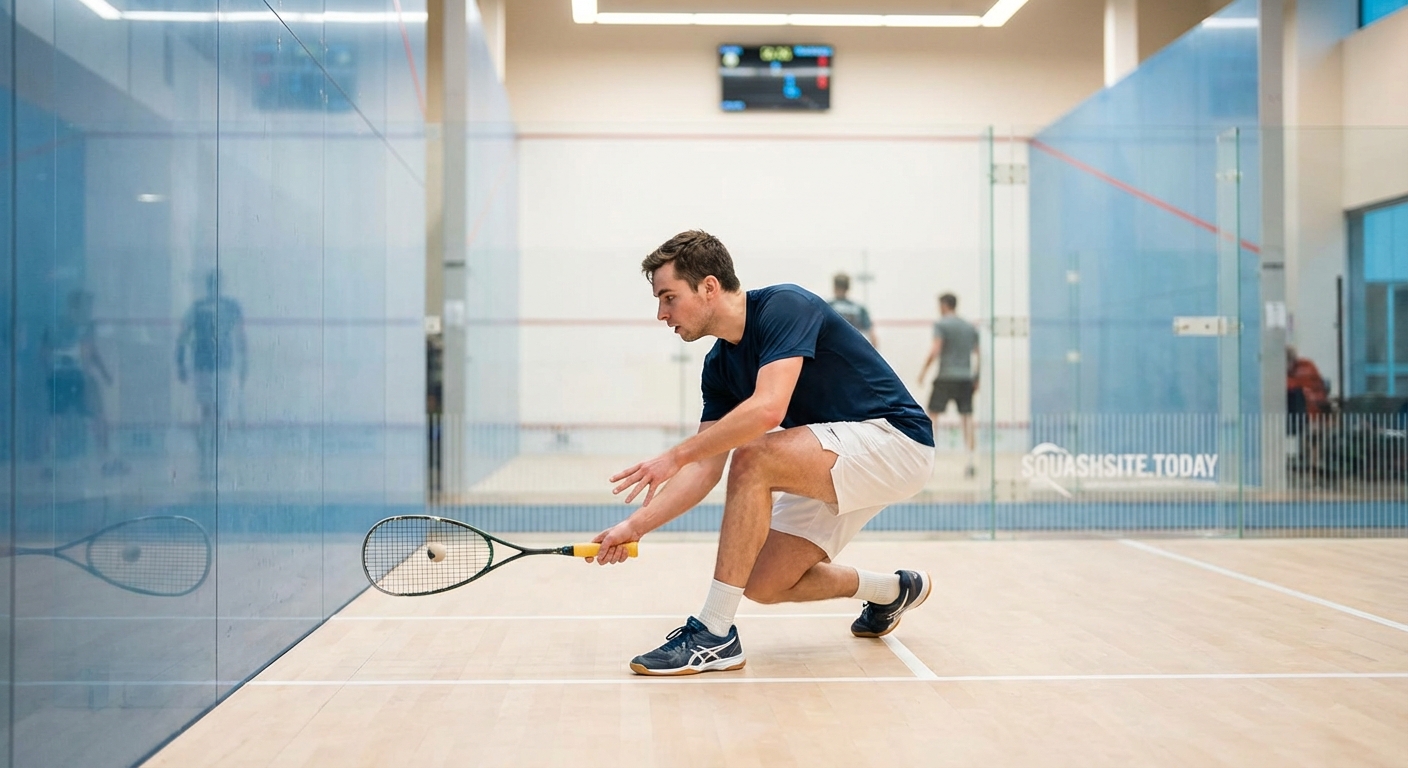
The drop shot separates good squash players from great ones. It demands precision, disguise, and nerves of steel when the rally matters most. Get it right and your opponent scrambles helplessly toward the front wall. Get it wrong and you hand them an easy winner.
The drop shot masterclass centres on developing touch through repetition, disguising intent until the last millisecond, and choosing the right tactical moment. Intermediate and advanced players must build racket control through progressive drills, understand court positioning, and recognise when opponents are vulnerable. Mastery comes from blending technique with reading the game, turning a risky shot into a reliable weapon that wins points from anywhere on court.
Why the Drop Shot Wins Matches
The drop shot forces your opponent to cover the greatest distance in the shortest time. When played from the back of the court, it drags them forward while they expect a drive or crosscourt. That sudden change in pace and direction breaks their rhythm.
Professional players use the drop shot to control tempo. They know that relentless drives tire the body but not the mind. A well-timed drop shot forces mental recalibration. Your opponent must switch from defensive positioning to explosive forward movement.
The shot also punishes players who stand too deep. If someone camps behind the service box, waiting to volley your drives, a tight drop shot becomes nearly unreachable. They arrive late, off balance, and usually lift the ball for your easy volley.
Building the Foundation of Touch
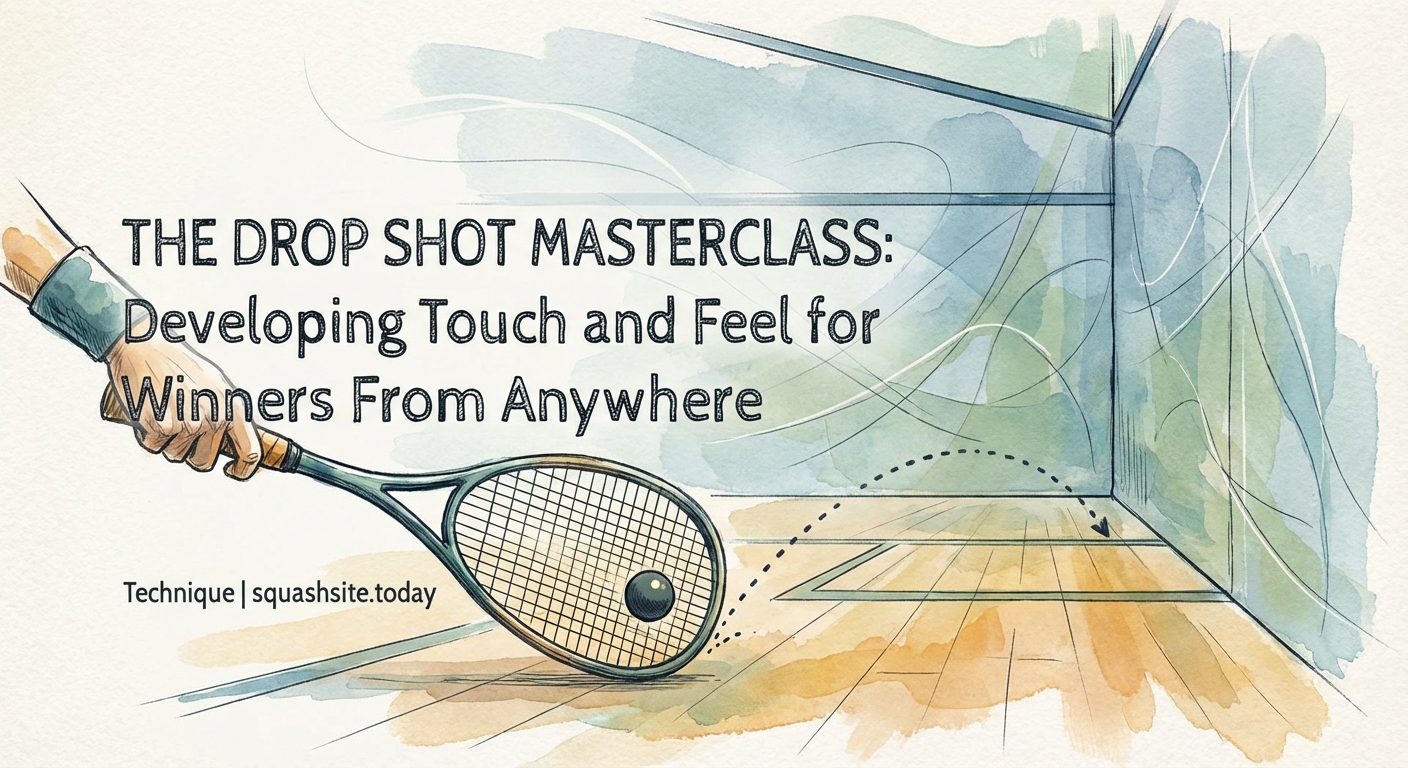
Touch begins with grip pressure. Most players strangle the racket when attempting delicate shots. Loosen your grip until the racket feels almost weightless in your hand. You should be able to wiggle your fingers slightly during the backswing.
Your wrist must stay relaxed but firm at impact. Think of it like catching an egg. Too tense and you crush it. Too loose and you drop it. The sweet spot lies in controlled flexibility.
Practice this progression to develop feel:
- Stand one metre from the front wall and tap the ball continuously, keeping it below the service line. Aim for 50 consecutive taps without the ball bouncing past the short line.
- Move back to the service box and repeat the same drill. The added distance forces you to adjust swing length while maintaining softness.
- Progress to the back of the court and hit drop shots from a self-feed. Focus purely on landing the ball in the front corner, ignoring power completely.
The racket face angle determines height. Open it too much and the ball floats. Close it too much and the ball hits the tin. Most successful drop shots require a slightly open face, around 15 degrees from vertical at impact.
Disguise Makes the Drop Shot Lethal
Your opponent watches your preparation. If they spot a drop shot coming, they sprint forward before you even strike the ball. Disguise eliminates that advantage.
The backswing for a drop shot should mirror your drive. Take the racket back to the same height, rotate your shoulders identically, and load your weight the same way. The difference happens in the final 20 centimetres before contact.
At the last moment, ease off the grip pressure and shorten the follow through. Your racket should finish pointing toward your target rather than wrapping around your body. This abbreviated finish absorbs pace without telegraphing intent.
Watch your opponent’s positioning during your backswing. If they lean back expecting a drive, commit to the drop. If they edge forward suspecting a short shot, blast a drive past them. This cat and mouse game creates doubt in their mind.
“The best drop shot is the one your opponent doesn’t see coming. If you can make them take two steps backward before realising they need to go forward, you’ve already won the point.” – Former world number three player
Tactical Situations That Demand a Drop Shot
Certain moments in a rally scream for a drop shot. Recognising these situations turns the shot from risky gamble to percentage play.
Use the drop shot when:
- Your opponent hits a loose ball that lands mid-court, giving you time and space
- They return to the T slowly after retrieving a difficult shot
- You’ve hit three or four hard drives in a row and they expect another
- They stand deep, protecting against the drive or lob
- The rally has gone long and their legs show signs of fatigue
- You’re pulled wide and a drop shot forces them to cover the diagonal
Avoid the drop shot when:
- You’re stretched and off balance
- Your opponent already stands on the short line
- The ball sits behind you, making disguise impossible
- You’re tired and likely to hit the tin
- The score is tight and an error would be costly
Court position matters enormously. A drop shot from the front corner rarely works because your opponent starts close to the target. A drop shot from deep, especially from the back corners, maximises the distance they must cover.
Common Mistakes and How to Fix Them
| Mistake | Why It Happens | Solution |
|---|---|---|
| Hitting the tin | Racket face too closed or trying to hit too hard | Open the face slightly and focus on height over the tin rather than pace |
| Ball sits up mid-court | Too much power or insufficient cut | Reduce swing speed by 30% and brush under the ball with an open face |
| Opponent reads it early | Backswing looks different from drives | Match your drive preparation exactly until the final moment before contact |
| Inconsistent length | Changing swing speed rather than racket angle | Keep swing tempo constant and adjust face angle to control depth |
| Ball bounces twice before front wall | Aiming too low | Target 10 centimetres above the tin and let the ball drop naturally |
The single biggest error is trying to hit the perfect drop shot every time. Even professionals accept that some drop shots will sit up. The goal is consistency at 70%, not perfection at 30%.
Progressive Drills to Master Touch and Feel
Start with static drills before adding movement. Your brain needs to automate the technique before introducing complexity.
Drill One: Corner Targets
Place targets in both front corners, 30 centimetres from the side wall and 15 centimetres from the front wall. Feed yourself balls from the back corner and aim to hit the target. Complete 20 attempts per corner. Track your success rate weekly.
Drill Two: Drive to Drop Contrast
Hit a hard drive to the back corner, then immediately play a soft drop shot to the front. This contrast teaches your hands to switch between power and touch. The muscle memory of alternating helps with disguise during matches.
Drill Three: Pressure Drop Shots
Have a partner feed you balls while you’re slightly off balance or stretched. This simulates match conditions where the perfect setup rarely exists. Aim to land 60% of these difficult drop shots above the tin and below the service line.
Drill Four: Volley Drops
Intercept balls early and volley them short. This advanced drill combines touch with timing. The ball arrives faster, giving you less time to prepare. Start with gentle feeds and progress to harder pace.
Drill Five: Alternating Targets
Hit drop shots alternating between straight and crosscourt. This prevents pattern predictability and forces you to adjust angles rapidly. Your opponent should never know which corner you’ll choose.
Reading Your Opponent’s Weaknesses
Some players hate the drop shot more than others. Identify these characteristics during the knockup or early games.
Players vulnerable to drop shots typically:
- Recover slowly to the T after hitting from the back
- Stand with weight on their heels rather than the balls of their feet
- Show frustration when forced to bend low for short balls
- Lack flexibility or carry injuries that limit forward movement
- Prefer a rhythm of consistent drives rather than varied pace
Test their movement early. Play one or two drop shots in the first game, even if they’re not perfect. Watch how quickly they reach them and how balanced they look when retrieving. If they struggle, add the drop shot to your regular rotation.
Some opponents anticipate brilliantly. They read your body language, watch your grip, and sprint forward before you strike. Against these players, use the drop shot sparingly. Instead, threaten it constantly to keep them honest, then punish their forward movement with drives and lobs.
The Mental Side of Playing Drop Shots
Fear of the tin stops many players from attempting drop shots. They picture the ball clattering into the metal and the point lost. This anxiety creates tension, which ironically makes hitting the tin more likely.
Accept that you will hit the tin occasionally. Professional players do it multiple times per match. The difference is they don’t let one error stop them from playing the shot again when the right moment appears.
Build confidence through volume. Hit 100 drop shots in practice for every one you attempt in a match. When your hands have repeated the motion hundreds of times, trust replaces doubt.
Visualise success before playing the shot. See the ball dying in the front corner. Hear your opponent’s footsteps arriving too late. Feel the satisfaction of the point won. This mental rehearsal primes your nervous system for execution.
Variations That Keep Opponents Guessing
The straight drop shot is fundamental, but adding variations multiplies its effectiveness.
The crosscourt drop works beautifully when your opponent expects straight. Play it from the back corner, cutting across the ball to send it diagonally to the opposite front corner. The angle forces them to cover more ground.
The trickle boast combines a drop shot with a boast. Instead of hitting the front wall first, you caress the ball into the side wall so it trickles to the front. This shot requires exceptional touch but devastates opponents who commit forward expecting a standard drop.
The volley drop intercepts the ball early, taking time away from your opponent. Play it when they hit a loose crosscourt or a weak straight drive. The earlier interception means they start further from the front corners.
The working boast to drop combination involves hitting a boast from the back, then playing a drop shot when they return it. This one-two punch tires legs and tests fitness.
Equipment Considerations for Better Touch
Racket choice affects touch more than most players realise. A head-heavy racket generates power easily but makes delicate shots harder to control. A head-light or evenly balanced racket offers better manoeuvrability for touch shots.
String tension matters too. Tighter strings (27-29 pounds) provide control but require more swing speed to generate pace. Looser strings (24-26 pounds) offer more power but less precision. For players prioritising touch, medium-tight tension around 26-27 pounds balances both needs.
Grip thickness influences feel. A grip that’s too thick reduces wrist mobility and dulls sensation. A grip that’s too thin allows the racket to twist on off-centre hits. Your grip should allow your middle finger to nearly touch your thumb when wrapped around the handle.
Fresh grips improve control. A worn, slippery grip forces you to squeeze harder, creating tension that kills touch. Replace your grip every 4-6 weeks if you play regularly.
Adapting Drop Shots to Different Court Conditions
Court temperature affects ball bounce. Cold courts slow the ball down, making drop shots easier to execute but also easier for opponents to reach. Hot courts speed everything up, making drop shots riskier but more effective when they work.
Humidity changes ball behaviour. In damp conditions, the ball gets heavier and dies more quickly. Your drop shots need less finesse because the ball won’t bounce as much. In dry conditions, the ball stays lively and requires more cut to kill it.
Court floors vary in grip. Slippery floors make it harder for opponents to change direction quickly, favouring drop shots. Grippy floors allow explosive movement, meaning your drop shots need to be tighter.
Adjust your tactics based on these variables. On a cold, slippery court, use more drop shots. On a hot, grippy court, use them more selectively when you’ve created clear openings.
Turning Practice Into Match Performance
Drills build skill but matches test nerve. The gap between practice and performance frustrates many players. Their drop shots work perfectly in drills but fail under pressure.
Bridge this gap by adding pressure to practice. Set consequences for missed shots. If you hit the tin, do five burpees. If you land the perfect drop, your partner does them. This artificial pressure simulates match tension.
Practice with a score. Play condition games where you can only win points with drop shots. This forces you to attempt the shot even when nervous.
Record your matches and count how many drop shot opportunities you missed. Most players discover they play too conservatively, avoiding the shot even when the situation demands it. Awareness of this tendency helps you commit more in future matches.
Start each match with a target. Aim to attempt five drop shots in the first game, regardless of outcome. This commitment prevents you from abandoning the shot after one error.
Taking Your Drop Shot From Good to Unstoppable
Mastery comes from thousands of repetitions, not hundreds. Elite players have hit tens of thousands of drop shots in practice. Their hands know the feel without conscious thought.
Film yourself hitting drop shots. Compare your technique to professional players. Look for differences in preparation, racket face angle, and follow through. Small adjustments often yield significant improvements.
Work with a coach who can provide immediate feedback. They’ll spot technical flaws you can’t see or feel. A few targeted corrections can transform an unreliable shot into a weapon.
Play practice matches where you deliberately overuse the drop shot. Hit twice as many as you normally would. This experimentation reveals which situations work best and builds comfort with the shot under pressure.
The drop shot masterclass isn’t about learning a single technique. It’s about developing the touch, tactical awareness, and mental confidence to play the right shot at the right moment. Keep practising, stay patient with the learning process, and watch as your opponents start anticipating the drop shot that never comes, leaving them vulnerable to everything else in your arsenal.
Leave a Reply