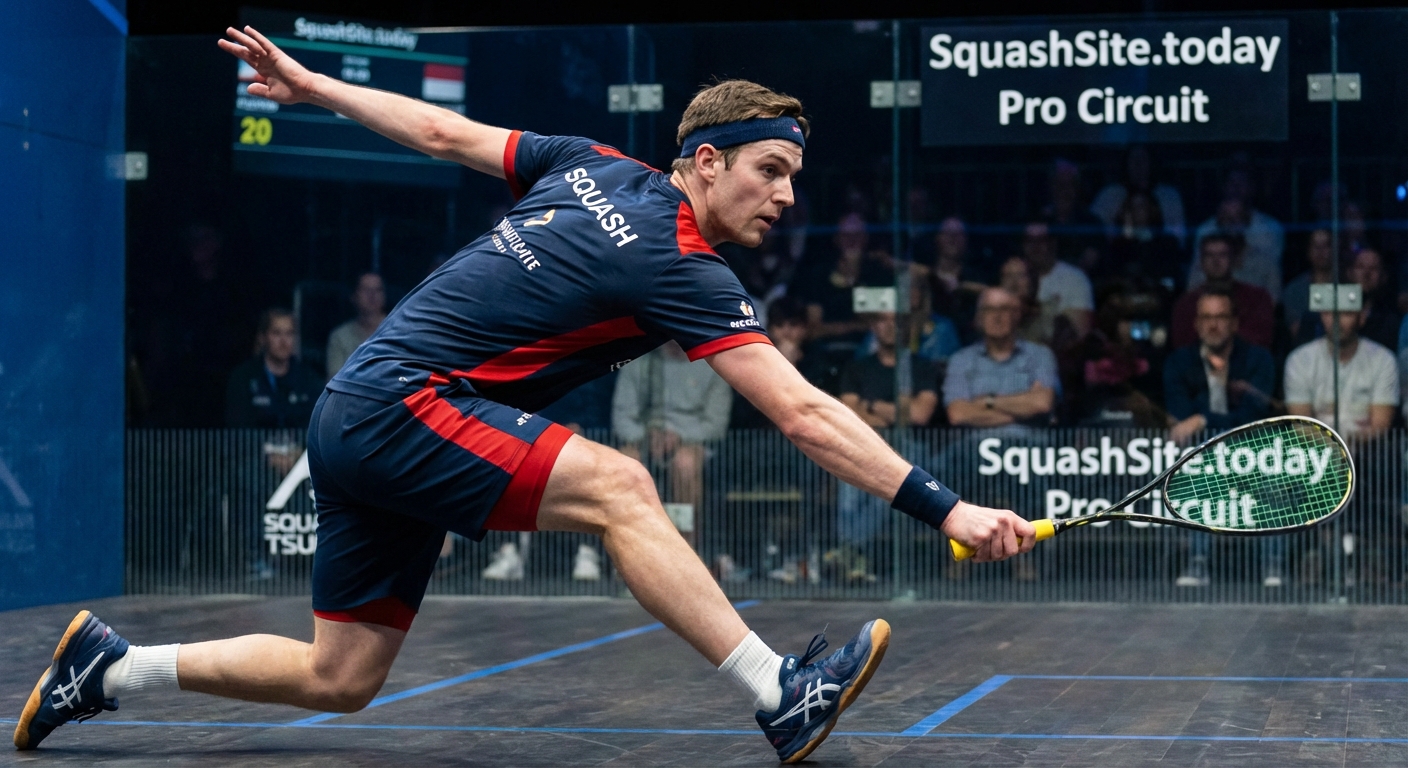
Paul Coll doesn’t play squash the way textbooks suggest. The New Zealander has climbed to world number one by turning conventional wisdom on its head, blending brute force with surgical precision in ways that leave opponents gasping for air and answers.
Paul Coll’s playing style centres on exceptional physical conditioning, relentless court coverage, and a unique ability to sustain high-intensity rallies whilst maintaining tactical discipline. His approach combines aggressive shot-making from defensive positions, unorthodox swing mechanics, and mental resilience that forces opponents into physical battles they rarely win. Understanding his methods offers valuable lessons for intermediate and advanced players seeking to elevate their competitive game.
The Foundation of Coll’s Physical Dominance
Paul Coll’s athleticism sets him apart from nearly every player on tour. His ability to retrieve seemingly impossible shots doesn’t come from luck or occasional brilliance. It stems from years of conditioning that prioritise endurance, explosive movement, and recovery speed.
Watch Coll in the fifth game of a brutal match. Whilst his opponent struggles to maintain basic court position, Coll moves with the same intensity he showed in the opening rallies. This stamina advantage creates a psychological weapon as potent as any drop shot.
His lung capacity and leg strength allow him to maintain a defensive wall that frustrates even the most creative attackers. Players who rely on outpacing their opponents find themselves stuck in extended rallies that drain their reserves whilst Coll thrives in the chaos.
The New Zealander’s training regime focuses on sport-specific conditioning rather than general fitness. Court sprints, ghosting sessions, and high-intensity interval work mirror match conditions. This specificity translates directly to competitive advantage when rallies extend past 30 shots.
Unorthodox Swing Mechanics That Deliver Results
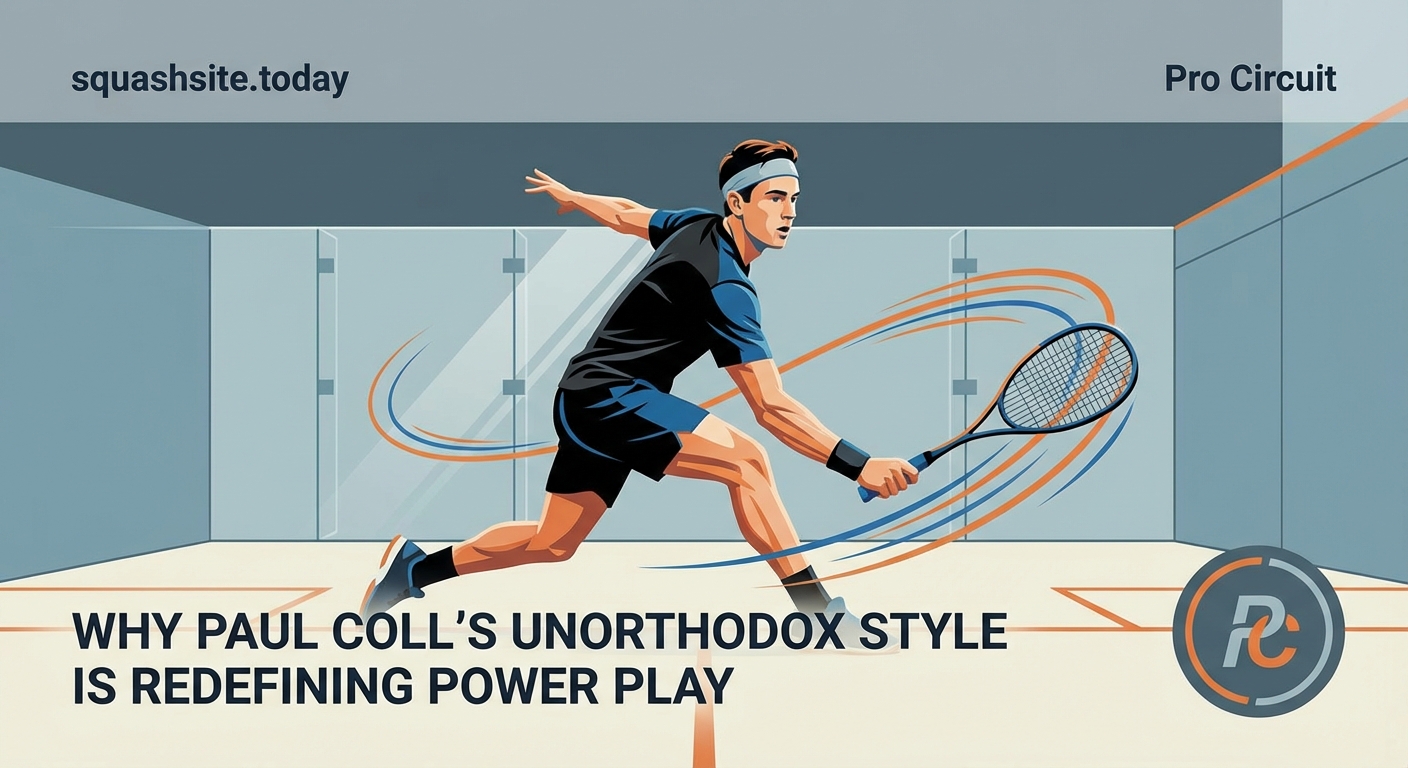
Coll’s swing technique breaks several traditional coaching principles. His backswing often appears compact, almost abbreviated compared to players who favour full, flowing strokes. Yet this compact motion generates surprising power and allows for rapid shot preparation.
The abbreviated backswing serves multiple purposes. It reduces telegraphing, making his shot selection harder to read. It also enables faster recovery between shots, crucial for maintaining his defensive coverage. Traditional coaches might flag these mechanics as flaws, but results speak louder than textbook form.
His forehand drive showcases this approach perfectly. Rather than a sweeping arc, Coll employs a punchy, direct motion that accelerates through impact. The ball comes off his racquet with pace that contradicts the seemingly minimal preparation.
On the backhand side, Coll generates deceptive power through core rotation and wrist snap rather than relying solely on arm extension. This technique allows him to create sharp angles even when stretched wide or forced deep.
| Technique Element | Traditional Approach | Coll’s Adaptation | Tactical Advantage |
|---|---|---|---|
| Backswing length | Full extension | Compact preparation | Faster shot execution |
| Power generation | Arm and shoulder | Core and wrist emphasis | Deceptive pace from defence |
| Shot preparation | Early setup | Late adjustment | Improved disguise |
| Recovery position | Gradual return to T | Explosive push-off | Superior court coverage |
Tactical Intelligence Behind the Physicality
Physical gifts alone don’t explain Coll’s success. His tactical awareness transforms athletic ability into winning squash. He understands when to attack, when to defend, and crucially, when to simply outlast his opponent.
Coll excels at controlling rally tempo. Against aggressive attackers, he absorbs pressure with deep, tight returns that force opponents to generate their own pace. Against patient players, he injects sudden bursts of attacking shots that disrupt rhythm and create openings.
His shot selection reflects deep match awareness. Early in contests, Coll often plays conservatively, probing for weaknesses whilst conserving energy. As matches progress, he increases attacking frequency precisely when opponents begin to tire.
The straight drive forms the backbone of his tactical system. Coll hits this shot with relentless accuracy, pinning opponents behind him and creating space for attacking opportunities. The simplicity masks the difficulty of executing this shot under pressure for extended periods.
“Paul’s ability to maintain shot quality in the fourth and fifth games separates him from other fit players. Anyone can hit good shots when fresh. Sustaining precision when exhausted requires both physical and mental conditioning that few possess.”
Reading Opponents and Exploiting Patterns
Coll’s pattern recognition skills allow him to anticipate opponent tendencies and adjust tactics mid-match. He identifies favourite shots, preferred court positions, and movement limitations faster than most players.
Watch how he handles crosscourt exchanges. Coll deliberately engages in these patterns early, studying his opponent’s timing and footwork. Once he identifies a weakness, perhaps a slightly late racquet preparation or a tendency to drift forward, he exploits it ruthlessly.
His counterattacking ability stems from this reading skill. Coll positions himself based on probability rather than reacting to each shot individually. This anticipatory movement lets him arrive earlier, creating time for offensive replies from defensive positions.
Against power players, Coll adjusts his court position slightly deeper than standard, giving himself extra milliseconds to react. Against touch players, he creeps forward, pressuring their margin for error on delicate shots.
Mental Resilience Under Extreme Pressure
Physical and tactical skills crumble without mental fortitude. Coll’s psychological strength might be his most impressive attribute. He thrives in pressure situations that break other players.
Consider his comeback victories. Coll has won numerous matches from two games down, scenarios where most players mentally concede. His belief never wavers. Each point receives full commitment regardless of the scoreboard.
This mental approach manifests in his body language. Even when losing badly, Coll maintains aggressive court presence. He doesn’t drop his shoulders or show frustration. This consistency denies opponents the psychological boost that visible despair provides.
His between-point routine stays constant throughout matches. The same measured breathing, the same brief reset, the same focused preparation. This consistency creates mental stability that prevents emotional swings from affecting performance.
Learning From Coll’s Approach
Intermediate and advanced players can extract practical lessons from Coll’s methods without matching his elite fitness. The principles translate across skill levels.
Implementing Coll-Inspired Training
- Prioritise sport-specific conditioning over general fitness routines.
- Include extended rally practice that simulates late-match fatigue conditions.
- Develop compact swing mechanics that emphasise quick preparation and recovery.
- Practice maintaining shot quality whilst physically stressed.
- Build mental routines that remain consistent regardless of match situation.
Focus on one element at a time rather than attempting wholesale changes. Select the aspect of Coll’s game that addresses your biggest weakness.
Common Mistakes to Avoid
Players attempting to copy Coll’s style often make predictable errors:
- Confusing relentless defence with passive play
- Neglecting shot quality in pursuit of pure fitness
- Abandoning attacking shots entirely
- Overemphasising physical training whilst ignoring tactical development
- Attempting advanced techniques without building foundational fitness
The key distinction lies in active versus passive defence. Coll defends aggressively, constantly pressuring opponents even from the back corners. Passive retrieval without tactical purpose wastes energy without creating winning opportunities.
Adapting Elements to Your Game
Not every player should attempt to replicate Coll’s style completely. Body type, natural strengths, and playing background all influence which elements translate effectively.
Taller players might struggle with Coll’s low, explosive movement patterns but can adopt his tactical patience and shot selection discipline. Lighter players can emphasise his court coverage and mental consistency whilst developing power through technique rather than pure strength.
The mental components apply universally. Every player benefits from consistent routines, positive body language, and unwavering commitment to each point. These elements require no physical gifts, only deliberate practice.
His approach to rally construction offers lessons for all levels:
- Establish control through consistent length
- Identify opponent patterns through deliberate testing
- Attack when tactical advantage emerges, not from impatience
- Maintain shot quality as the primary goal regardless of physical state
Technical Drills Inspired by Coll’s Methods
Specific practice routines can develop Coll-like attributes without requiring professional-level fitness.
Sustained Length Drill: Hit straight drives for three-minute intervals, focusing on maintaining depth and width whilst gradually increasing pace. Rest one minute between sets. Complete five sets. This builds the shot accuracy and endurance that underpins Coll’s defensive game.
Pressure Counterattack Practice: Have a partner feed attacking shots whilst you defend from the back corners. After five defensive shots, look for the first opportunity to counterattack with a drop or attacking drive. This replicates Coll’s ability to transition from defence to offence.
Late-Match Simulation: After 30 minutes of intensive practice, play competitive points whilst maintaining technical standards. This trains the mental and physical resilience needed to execute skills under fatigue.
Pattern Recognition Exercise: During practice matches, consciously identify opponent tendencies. Note favourite shots, weak movement directions, and preferred rally patterns. Adjust tactics based on these observations mid-match.
Why Coll’s Style Succeeds at Elite Level
Professional squash has trended toward athletic, physical play for years. Coll represents the apex of this evolution whilst maintaining tactical sophistication that pure athletes lack.
His success validates an approach that many coaches previously dismissed as unsustainable. The conventional wisdom suggested that physical play couldn’t succeed at the highest level without compromising shot quality. Coll proved this assumption wrong.
The modern game rewards players who can sustain high-intensity rallies whilst maintaining precision. Coll’s combination of endurance and skill creates a template for future champions. Young players now have evidence that physical development and technical excellence can coexist.
His influence extends beyond individual success. Opponents must now prepare differently, knowing they face potential marathon matches against players who adopt similar approaches. This shift affects training priorities, tactical planning, and even equipment choices across professional squash.
Building Your Version of Physical Squash
You don’t need to become Paul Coll to benefit from his principles. Identify which elements align with your natural strengths and current skill level.
Start with honest assessment. Can you currently maintain shot quality for extended rallies? Does your fitness limit tactical options? Do you give up mentally when physically stressed? These answers reveal where Coll’s approach offers the most value.
Build gradually. Attempting to match professional conditioning overnight leads to injury and burnout. Increase training intensity progressively, allowing your body to adapt. Add one new element monthly rather than overhauling everything simultaneously.
Track specific metrics. Monitor rally length tolerance, late-match shot accuracy, and mental consistency under pressure. Measurable progress reinforces commitment when improvements feel invisible.
Remember that Coll’s style represents years of dedicated development. He didn’t achieve world number one status through shortcuts or tricks. The path requires patience, consistency, and intelligent training that respects your individual circumstances.
Making Physical Squash Work for You
Paul Coll’s playing style offers a masterclass in combining athletic excellence with tactical intelligence. His methods prove that physical dominance and technical precision aren’t mutually exclusive but rather complementary elements of complete squash.
Whether you adopt his compact swing mechanics, tactical patience, or mental resilience, the principles scale to any competitive level. Start with the elements that address your specific weaknesses. Build progressively. Maintain focus on shot quality even as you develop physical capabilities. Most importantly, trust the process that transformed a determined New Zealander into a world champion.
Leave a Reply