The Comeback Kings: Most Impressive PSA Tour Recoveries of the Decade
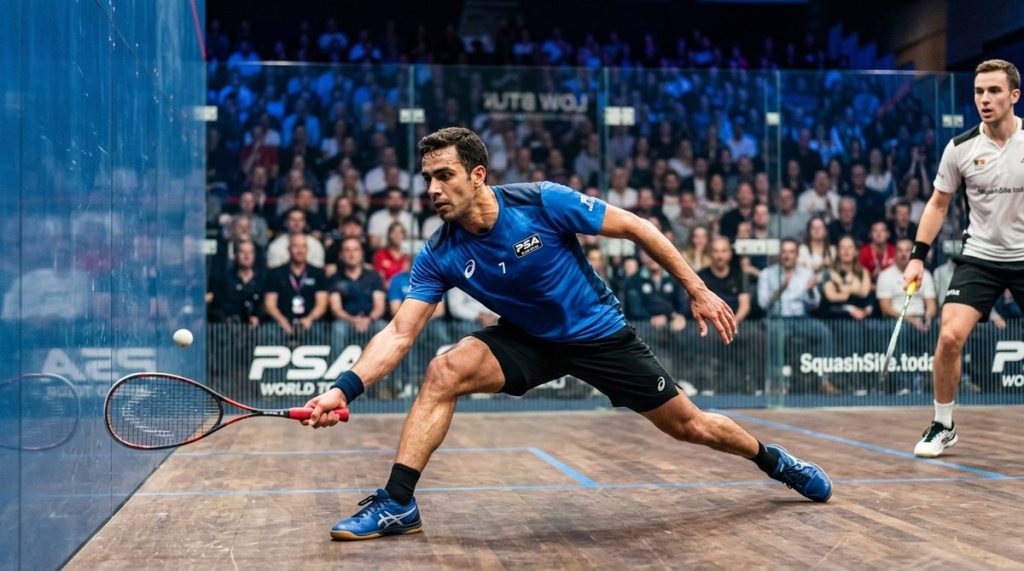
The roar of the crowd. The disbelief on the opponent’s face. The impossible suddenly becoming reality.
Professional squash has delivered some of the most heart-stopping comebacks in sport over the past decade. Players who looked finished. Matches that seemed decided. Moments where champions refused to accept defeat and clawed their way back from the brink.
These aren’t just entertaining highlights. They’re masterclasses in mental strength, tactical adjustment, and physical endurance that every squash player can learn from.
The best PSA squash comebacks of the past decade showcase extraordinary mental resilience and tactical intelligence. From Mohamed ElShorbagy’s 2019 World Championship recovery to Paul Coll’s five-game epics, these matches reveal how champions manage fatigue, adapt strategy mid-match, and maintain belief when trailing. Understanding these comeback patterns helps players develop the psychological tools and technical adjustments needed to turn their own matches around.
Mohamed ElShorbagy’s 2019 World Championship Final
Down 2-0 against Tarek Momen in the 2019 World Championship final in Doha, ElShorbagy faced elimination.
The Egyptian had lost the first two games convincingly. Momen was playing the match of his life. The crowd sensed an upset brewing.
Then something shifted.
ElShorbagy slowed the pace. He started working the ball higher up the front wall. His length improved dramatically. Instead of trying to blast winners past Momen, he made him work for every point.
The tactical shift worked. ElShorbagy took the third game 11-9. The fourth went to 11-7. Suddenly, Momen’s legs looked heavy. His previously impeccable drops started catching the tin.
The fifth game was one-way traffic. ElShorbagy won 11-5 to claim his first world title in the most dramatic fashion possible.
What made this comeback special:
- Complete tactical overhaul between games two and three
- Patience to grind when power wasn’t working
- Physical conditioning that allowed him to outlast Momen in the fifth
- Mental strength to believe when two games down
“I told myself at 2-0 down that I’d won matches from this position before. I just needed to make him play one more ball every rally. Make him doubt himself.” – Mohamed ElShorbagy
Paul Coll’s Trademark Five-Game Battles
The New Zealand warrior has built a reputation for never knowing when he’s beaten.
Coll has orchestrated more comebacks from 2-0 down than perhaps any player in recent PSA history. His 2021 match against Diego Elias at the Manchester Open stands out.
Elias dominated the first two games. His pace and accuracy were suffocating Coll. At 2-0 and 6-3 up in the third, the match looked over.
Coll refused to accept it.
He started moving forward earlier. His volleys became more aggressive. Instead of defending from the back, he took the ball earlier and pushed Elias deeper.
The comeback was brutal. Coll won 11-9 in the third, 11-8 in the fourth, and 11-6 in the fifth. Elias, who had looked unbeatable through two games, could barely move by the end.
Coll’s comeback formula includes:
- Exceptional physical conditioning that allows him to maintain pace in game five
- Tactical flexibility to adjust mid-match
- Aggressive court positioning when trailing
- Unshakeable self-belief regardless of scoreline
The New Zealander’s style proves that match-winning tactics used by top 10 PSA players often come down to who can maintain their level longest.
Nour El Sherbini’s 2020 CIB Egyptian Open Recovery
The women’s game has produced equally stunning comebacks.
El Sherbini’s 2020 CIB Egyptian Open quarter-final against Nouran Gohar looked finished at 2-0 down. Gohar was playing flawless squash. Her length was perfect. Her movement crisp.
El Sherbini made a crucial adjustment. She started attacking Gohar’s forehand side more consistently. Her cross-courts became tighter. She varied the pace more dramatically.
The momentum shifted game by game. El Sherbini took the third 11-8, the fourth 11-6, and the fifth 11-4.
What separated her comeback from others was the gradual accumulation of pressure. Each game, Gohar had to work slightly harder. Each rally lasted a few shots longer. By the fifth game, the physical and mental toll was visible.
How Champions Turn Matches Around
Studying these comebacks reveals clear patterns in how elite players recover from seemingly lost positions.
Here’s what separates successful comebacks from failed attempts:
| Comeback Element | What Works | What Fails |
|---|---|---|
| Tactical Change | Specific adjustment to opponent’s strength | Generic “try harder” approach |
| Pace Management | Varying speed and height deliberately | Maintaining same losing pattern |
| Court Position | Moving forward to volley more | Staying back and defending |
| Mental State | Focusing on next point only | Dwelling on deficit or past errors |
| Physical Approach | Conserving energy in third, exploding in fifth | Going all-out too early |
The best comebacks involve calculated risk-taking. Players who successfully recover don’t just play harder. They play smarter.
Ali Farag’s Mental Fortress
The Egyptian has orchestrated several remarkable comebacks through sheer mental strength.
His 2019 US Open semi-final against Diego Elias showcased this perfectly. Down 2-1 and facing match balls in the fourth, Farag saved three consecutive match points through a combination of fearless attacking and unshakeable composure.
He won that fourth game 14-12. The fifth was never in doubt.
Farag’s approach to comebacks centres on process over outcome. He focuses entirely on the shot in front of him. Not the score. Not the stakes. Just the next ball.
This mental discipline allows him to play freely even when trailing. His cross-court drives maintain their quality regardless of pressure because he’s trained himself to treat every point identically.
The Five-Step Comeback Process
Professional players follow a remarkably consistent process when mounting comebacks.
-
Identify what’s not working. Between games, champions analyse specifically why they’re losing. Is it length? Pace? Court position? They don’t guess. They know.
-
Make one clear tactical change. Not three changes. One. Usually it’s either slowing the pace, speeding it up, moving forward more, or targeting a specific shot.
-
Commit fully to the adjustment. Half-hearted tactical changes fail. Champions commit completely to their new approach for an entire game before evaluating.
-
Monitor opponent’s response. How is the opponent adapting? Are they tiring? Getting frustrated? This information guides further adjustments.
-
Increase pressure gradually. Successful comebacks build momentum game by game. The fifth game often looks easy because the work was done in games three and four.
This process works at every level. Club players can apply the same framework when trailing in their own matches.
Raneem El Welily’s 2017 World Championship Masterclass
El Welily’s 2017 World Championship final comeback against Nour El Tayeb remains one of the greatest in women’s squash history.
Down 2-1 and struggling physically, El Welily made a crucial decision. She would attack everything. No more defence. No more grinding.
The high-risk approach paid off spectacularly. Her winners started flowing. El Tayeb, who had been controlling rallies comfortably, suddenly found herself under constant pressure.
El Welily won the fourth game 11-5 and the fifth 11-6 to claim her first world title.
The lesson here contradicts conventional comeback wisdom. Sometimes the answer isn’t slowing down or being more patient. Sometimes it’s going for broke and forcing your opponent to respond to your attacking.
Reading the situation correctly matters more than following a formula.
What These Comebacks Teach Us
Every dramatic PSA comeback shares common threads that recreational players can apply.
Physical preparation matters enormously. Players who complete comebacks almost always have superior conditioning. They can maintain quality when their opponent’s level drops in the fifth game.
This is where court movement training becomes crucial. The physical capacity to play five hard games separates champions from nearly-champions.
Tactical flexibility proves equally important. Players stuck in one approach rarely mount successful comebacks. The ability to change pace, vary height, or adjust court position mid-match is essential.
Mental resilience underpins everything. Belief doesn’t guarantee comebacks, but disbelief guarantees failure. Every champion who has recovered from 2-0 down believed they could do it before they actually did.
The Role of Momentum Shifts
Momentum in squash is real and measurable.
Watch any comeback and you’ll notice a specific moment when everything changes. Usually it happens during a long, crucial rally that the trailing player wins. Or when they save multiple game balls.
These moments don’t create comebacks by themselves. But they provide the psychological boost that allows players to fully commit to their tactical changes.
Smart players manufacture these moments. They extend rallies when trailing. They celebrate small victories. They take slightly longer between points to break their opponent’s rhythm.
These aren’t gamesmanship tactics. They’re legitimate psychological tools that help shift momentum.
Comparing Men’s and Women’s Comeback Patterns
Interesting differences emerge when analysing comebacks across both tours.
Men’s comebacks often rely more heavily on physical attrition. The player who can maintain pace and power longest usually prevails. Five-game matches regularly exceed 100 minutes.
Women’s comebacks tend to feature more dramatic tactical shifts. The successful adjustments are often more technical than physical. Pace changes and shot selection variations play a larger role.
Neither approach is superior. They reflect the different physical demands and tactical landscapes of men’s and women’s professional squash.
Both tours showcase extraordinary mental strength. The psychological challenge of recovering from 2-0 down is identical regardless of gender.
Learning From Near-Misses
Not every comeback attempt succeeds. The failed attempts teach us as much as the successful ones.
Simon Rösner’s 2018 British Open quarter-final against Mohamed ElShorbagy exemplifies this. The German recovered from 2-0 down to level at 2-2. He had all the momentum. The crowd was behind him.
Then he ran out of fuel. ElShorbagy took the fifth 11-3.
The lesson? Momentum alone isn’t enough. Physical reserves matter. Rösner played brilliant squash to level the match but had nothing left for the decider.
This highlights why protecting your knees whilst maintaining court coverage becomes so important in long matches. Injury or fatigue in the fifth game negates all previous work.
Technical Adjustments That Work
Specific technical changes appear repeatedly in successful comebacks.
Players who successfully recover often make these adjustments:
- Hitting higher and tighter when pace isn’t working
- Taking the ball earlier on the volley to pressure opponents
- Using more deception on drops and kills
- Varying serve placement and pace
- Moving the T position forward or back depending on opponent’s response
These aren’t random changes. They’re calculated responses to specific problems.
The drop shot becomes particularly important in comebacks. When power isn’t working, touch and deception often provide the solution.
The Psychology of Protecting Leads
Understanding comebacks requires understanding why leads get surrendered.
Players with 2-0 leads often make predictable psychological mistakes. They start protecting rather than attacking. They become cautious. They stop doing what was working.
This defensive mindset creates opportunities for trailing players. Suddenly rallies become more neutral. The player who was dominating starts making errors.
Champions who successfully defend leads maintain their aggressive mindset. They don’t change their approach just because they’re ahead.
This psychological insight helps both when mounting comebacks and when protecting leads. The player who maintains their game plan longest usually wins.
Equipment Considerations in Long Matches
Five-game battles place enormous demands on equipment.
String tension drops during long matches. Grip becomes slippery. Shoes lose traction as they heat up.
Professional players account for these factors. Many restring their rackets more frequently than recreational players realize. They change grips between games. They have multiple pairs of shoes available.
These details matter in five-game matches. A slippery grip in the fifth game can cost crucial points.
Modern Training Methods That Build Comeback Ability
Today’s professionals train specifically for comeback scenarios.
They practice five-game simulation sessions. They deliberately put themselves in losing positions during practice matches. They work on maintaining technical quality when fatigued.
This training builds the physical and mental reserves needed for real comebacks. The body and mind learn that performing well when exhausted is possible because they’ve done it repeatedly in training.
Recreational players can adopt similar approaches. Practice sessions that simulate match fatigue build the capacity to perform when it matters most.
When Champions Refused to Lose
The past decade has given us countless examples of champions displaying superhuman determination.
These matches remind us why squash ranks among the most physically and mentally demanding sports. The court dimensions don’t change. The ball doesn’t get easier to retrieve. Success requires absolute commitment for every second of every rally.
The best PSA comebacks showcase human potential at its peak. They demonstrate that matches are never truly over until the final point is won. They prove that belief, preparation, and tactical intelligence can overcome seemingly impossible deficits.
These aren’t just entertaining highlights for fans to enjoy. They’re blueprints for developing mental toughness and tactical flexibility. Every player who has ever trailed in a match can learn from how champions respond to adversity.
The next time you find yourself down 2-0 in a match, remember Mohamed ElShorbagy in Doha. Remember Paul Coll refusing to accept defeat. Remember that comebacks happen because players make them happen through specific, deliberate choices.
Your own comeback story might be waiting to be written. The question is whether you’ll have the tools, the belief, and the tactical awareness to write it.