Why Mohamed ElShorbagy’s Training Regime Could Transform Your Game
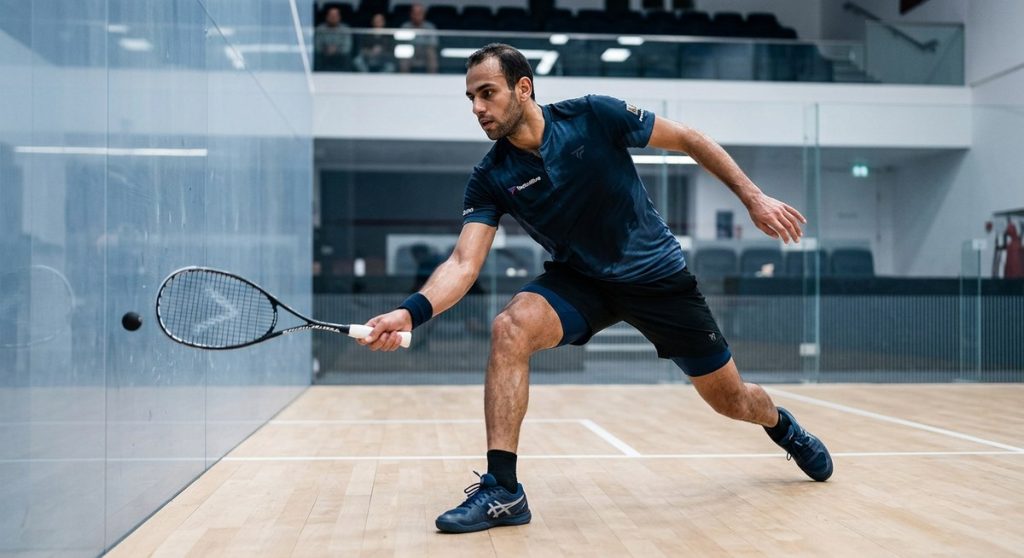
Mohamed ElShorbagy didn’t become world number one by accident. The Egyptian champion built his reputation on a training regime that combines relentless physical conditioning, technical precision, and mental toughness that would break most amateur players before breakfast.
The good news? You don’t need his professional resources to benefit from his approach.
Mohamed ElShorbagy’s training success stems from four pillars: explosive court movement drills, structured technical practice, high-intensity interval conditioning, and disciplined recovery protocols. Amateur players can adapt these professional methods by focusing on movement patterns, shot consistency under pressure, and building cardiovascular endurance through court-specific exercises. The key lies not in training volume but in training quality and deliberate practice.
The Movement Foundation That Powers ElShorbagy’s Game
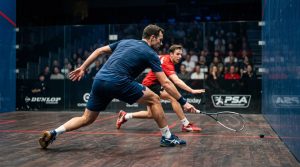
ElShorbagy’s court coverage looks superhuman because it is built on thousands of hours of movement-specific training. He doesn’t just run. He patterns his body to explode from the T, recover efficiently, and maintain perfect balance through every lunge.
His movement training focuses on three core elements.
First, he trains directional changes rather than straight-line speed. Most amateur players spend too much time jogging and not enough time practising the sharp cuts and pivots that actually happen during a match.
Second, he emphasises low-stance work. Watch any ElShorbagy match and you’ll notice his hips stay low throughout rallies. This isn’t natural. It’s trained through ghosting routines that actually improve your court movement and weighted lunges that build the quad and glute strength needed to maintain that position.
Third, he practices recovery steps obsessively. Getting to the ball matters, but getting back to the T determines whether you control the rally or defend desperately.
Here’s how to build ElShorbagy-style movement into your weekly routine:
- Start each session with 10 minutes of movement-only ghosting, focusing on explosive first steps from the T
- Add resistance bands around your ankles for three sets of court patterns to build lateral strength
- Finish with shadow movement at match pace for two-minute intervals, maintaining proper stance throughout
- Film yourself monthly to check whether your hips stay low and your recovery steps remain efficient
The difference between club players and professionals often comes down to movement efficiency. ElShorbagy can play five-game marathons because his movement wastes zero energy.
Technical Drills That Build Unshakeable Consistency
ElShorbagy’s shot-making looks effortless because he has grooved every stroke through structured repetition. His training sessions don’t involve random hitting. They follow specific patterns designed to build muscle memory under progressively challenging conditions.
His technical work follows a clear hierarchy:
- Solo drilling for 15 minutes to warm up basic strokes without pressure
- Cooperative pairs work for 20 minutes to groove length and width
- Conditioned games for 25 minutes where specific shots must be played in certain situations
- Pressure testing for 15 minutes with consequence-based drills
The conditioned games matter most. ElShorbagy regularly practices scenarios like “you must hit a straight drive after every boast” or “cross-court drives are banned for three minutes.” These artificial constraints force technical precision when fatigue sets in.
For amateur players, this approach transforms practice from casual hitting into deliberate skill development. Instead of playing points, try these ElShorbagy-inspired drills:
Straight drive lockdown: Both players can only hit straight drives for five minutes. Any ball that drifts past the service box line loses the rally. This builds the width control that ElShorbagy uses to dominate the back corners.
Volley-only rallies: Play points where ground strokes are forbidden. This forces you to move forward and develop the backhand volley skills that ElShorbagy uses to apply relentless pressure.
Three-shot sequences: Player A hits straight drive, player B hits straight drive, player A hits crosscourt, then open rally. This patterns the combination play that turns good players into great ones.
| Drill Type | Duration | Focus Area | Common Mistake |
|---|---|---|---|
| Solo drives | 10 mins | Groove technique without pressure | Rushing through reps instead of perfect practice |
| Cooperative length | 15 mins | Build depth and width | Accepting loose shots instead of resetting |
| Conditioned games | 20 mins | Apply technique under constraints | Breaking rules when tired instead of maintaining discipline |
| Pressure rallies | 10 mins | Test technique under fatigue | Abandoning form to win points |
The table shows how ElShorbagy structures a typical technical session. Notice the progression from isolated practice to competitive pressure.
The Fitness Protocols Behind Five-Game Dominance
ElShorbagy’s physical conditioning separates him from talented players who fade in the fourth game. His fitness work isn’t about running marathons. It’s about building the specific energy systems that squash demands.
Professional squash requires repeated explosive efforts with incomplete recovery. A rally might last 90 seconds of maximum intensity, followed by 15 seconds of rest, then another brutal exchange. Traditional steady-state cardio doesn’t prepare you for this.
ElShorbagy’s conditioning focuses on high-intensity interval work that mirrors match demands. His off-court sessions include:
- Court sprints with 30 seconds work, 30 seconds rest, repeated for 15 minutes
- Burpee pyramids starting at one rep, building to ten, then back down
- Medicine ball slams combined with lunges to build explosive power
- Bike intervals at maximum effort for 40 seconds, easy spin for 20 seconds, repeated for 20 minutes
The key principle is specificity. Every conditioning session should make you better at squash, not just generally fitter.
“I don’t train to look good. I train so that in the fifth game, when my opponent is broken, I’m still moving like it’s the first point of the match.” — Mohamed ElShorbagy
For club players, you can adapt this approach without spending hours in the gym:
- Replace one weekly run with court-based interval training using ghosting patterns
- Add two 15-minute high-intensity sessions per week focused on explosive movements
- Include bodyweight strength work twice weekly, emphasising legs and core
- Test your match fitness monthly by playing a five-game match and noting when your movement quality drops
The goal isn’t to match ElShorbagy’s professional volume. It’s to adopt his principle of specific, intense preparation that directly transfers to match performance.
Mental Preparation and Match-Day Routines
ElShorbagy’s mental game evolved dramatically throughout his career. Early in his professional journey, he was known for emotional outbursts and inconsistent performances under pressure. The player who now grinds out five-game victories built that mental toughness through deliberate practice.
His match preparation follows consistent patterns that remove uncertainty and build confidence. He arrives at the venue early, never rushed. He follows the same warm-up sequence regardless of opponent or tournament importance. He visualises specific tactical scenarios before stepping on court.
For amateur players, the lesson isn’t to copy his exact routine. It’s to build your own consistent process that puts you in the right mental state.
Consider these elements:
Pre-match fuelling: ElShorbagy eats a light meal three hours before matches, typically including complex carbohydrates and lean protein. He avoids trying new foods on match days. This consistency prevents digestive issues and ensures reliable energy.
Physical warm-up: His warm-up progresses from general movement to sport-specific patterns to match-pace hitting. The sequence never varies. This predictability allows his mind to focus on tactics rather than worrying about physical readiness.
Tactical planning: He identifies two or three specific patterns to use against each opponent. Not complex strategies, just clear go-to options when pressure builds. Having these predetermined patterns prevents mental paralysis during crucial points.
Between-game recovery: ElShorbagy uses the same routine between games. Towel off, sip water, walk slowly, controlled breathing, brief tactical reminder, then back to court. This consistency helps him reset emotionally after tough games.
You can implement simplified versions:
- Eat the same pre-match meal every time you play
- Create a 10-minute warm-up routine and never skip it
- Identify one tactical pattern to use when you’re under pressure
- Develop a 60-second reset routine between games
The power of routine is that it removes decisions. When you’re nervous before an important match, following a familiar process calms your mind and prepares your body.
Adapting Professional Training to Club-Level Reality
The obvious challenge is that ElShorbagy trains full-time with professional coaches, physiotherapists, and nutritionists. You probably have a job, family commitments, and limited court time.
The solution isn’t to do everything he does at lower volume. It’s to identify which elements deliver the biggest improvements for your game and focus ruthlessly on those.
Most club players would see dramatic improvement from just two changes:
Better movement patterns: Even 10 minutes of focused ghosting before each session will improve your court coverage more than an extra game of casual hitting. The footwork mistakes that limit club players aren’t fitness issues. They’re pattern issues that can be fixed through deliberate practice.
Structured technical work: Replace one weekly match with a structured practice session using the conditioned games approach. Your forehand drive will improve faster through 30 minutes of constrained drilling than through three casual games.
The fitness component matters less than you think at club level. Yes, ElShorbagy is extraordinarily fit. But most amateur matches are decided by technical errors and poor shot selection, not physical exhaustion. Get your movement efficient and your core shots reliable before worrying about five-game fitness.
Here’s a realistic weekly schedule inspired by ElShorbagy’s approach:
Monday: 30 minutes solo practice (movement patterns and basic drives)
Wednesday: 60 minutes structured pairs work (conditioned games focusing on specific shots)
Friday: 45 minutes competitive practice (games with tactical constraints)
Sunday: 20 minutes high-intensity conditioning (court sprints or ghosting intervals)
This schedule requires four hours weekly but delivers focused improvement rather than aimless court time. Quality beats quantity every time.
The Recovery Habits That Keep ElShorbagy Injury-Free
Professional players understand that training breaks you down. Recovery builds you back stronger. ElShorbagy’s longevity at the top level reflects his disciplined approach to rest and regeneration.
He prioritises three recovery elements that amateur players typically ignore:
Sleep consistency: ElShorbagy maintains regular sleep schedules even during tournaments in different time zones. He aims for eight hours nightly and uses afternoon naps when training load increases. Sleep is when your body repairs muscle damage and consolidates motor learning from practice.
Active recovery: On rest days, he doesn’t sit on the sofa. He does light movement work like swimming, cycling, or yoga to promote blood flow without adding training stress. This active recovery speeds adaptation better than complete rest.
Nutrition timing: He treats post-training nutrition as seriously as the training itself. Within 30 minutes of finishing a session, he consumes protein and carbohydrates to kickstart recovery. This isn’t complicated. A banana and protein shake works fine.
For club players, the application is straightforward:
- Protect your sleep by setting a consistent bedtime, especially before match days
- Do something active on rest days, even just a 20-minute walk
- Eat something within an hour of training, focusing on protein to repair muscles
- Listen to your body and take extra rest when fatigue accumulates
The biggest mistake amateur players make is training through persistent tiredness. ElShorbagy became world number one partly because he knows when to push and when to back off. That wisdom prevents injuries that derail improvement.
Building Your Shot Arsenal With ElShorbagy’s Approach
ElShorbagy’s game is built on a foundation of reliable basic shots executed under pressure. He didn’t reach world number one through trick shots. He got there by hitting straight drives, crosscourts, and volleys with metronomic consistency.
His approach to developing new shots follows a clear progression. First, he grooves the basic technique through solo practice. Then he adds cooperative pairs work to test the shot in rally situations. Next, he uses it in conditioned games where he must play that shot in specific scenarios. Finally, he introduces it gradually into competitive matches.
This patient approach prevents the common amateur mistake of trying new shots in matches before they’re ready. When a drop shot breaks down under pressure, it’s usually because the player skipped the foundational work.
If you want to add a new shot to your game, follow ElShorbagy’s method:
- Spend three sessions just grooving the basic movement and contact point without pressure
- Add two sessions of cooperative practice where your partner feeds you setups for that shot
- Play conditioned games for two sessions where you must use that shot in specific situations
- Introduce it cautiously in competitive play, only when you have comfortable setups
This progression might take six weeks. That feels slow. But a shot developed properly becomes a reliable weapon. A shot rushed into matches remains a liability that opponents exploit.
The same principle applies to improving existing shots. ElShorbagy didn’t wake up hitting perfect cross-court drives. He spent years refining the angle, height, and timing through structured practice.
Equipment Choices That Support Training Goals
ElShorbagy pays attention to his equipment because small details matter at the elite level. He experiments with string tension to find the perfect balance between power and control. He ensures his grip size allows comfortable racket manipulation without causing hand fatigue.
For amateur players, equipment matters less than technique and fitness. But getting the basics right removes unnecessary obstacles.
Use a racket weight that allows you to maintain good technique through a full session. If your arm is tired after 20 minutes, your racket is probably too heavy. If you can’t generate pace on your drives, it might be too light.
Replace your strings regularly. ElShorbagy restrings before every match. You don’t need that frequency, but dead strings kill power and control. Restring every three months if you play twice weekly.
Wear court shoes with good lateral support. ElShorbagy’s movement training would destroy his knees in running shoes. Proper footwear protects your joints during the directional changes that squash demands.
Keep your grip fresh. A worn grip causes tension in your hand and forearm as you squeeze harder to prevent the racket slipping. Replace it when it feels smooth rather than tacky.
These equipment basics won’t transform your game. But they remove friction that prevents you from training effectively and applying what you’ve learned.
Why ElShorbagy’s Methods Work for Every Level
The beauty of studying ElShorbagy’s training is that the principles scale. You don’t need his resources to benefit from his approach.
Movement efficiency matters whether you’re playing in the world championships or your local league. The player who reaches the ball in balance with time to prepare will beat the player who arrives late and stretched.
Technical consistency under pressure determines outcomes at every level. ElShorbagy wins because his straight drive stays tight when he’s exhausted. You’ll win more club matches when your basic shots remain reliable in the fifth game.
Mental discipline separates players of equal physical ability. Having consistent routines and predetermined tactical patterns helps you perform your best when nerves strike.
The key is adaptation, not imitation. ElShorbagy trains six days weekly for multiple hours per session. You might manage four hours total across a week. That’s fine. Apply his principles of structured practice, movement focus, and deliberate skill development within your available time.
One focused hour beats three hours of aimless hitting. ElShorbagy’s training works because every minute has purpose. Bring that intentionality to your practice and you’ll improve faster than players who spend twice as long on court without direction.
Making ElShorbagy’s Approach Your Own
Start small. Pick one element from his training approach and implement it consistently for a month. Maybe that’s 10 minutes of movement work before every session. Maybe it’s replacing one weekly match with structured technical practice. Maybe it’s adding a 15-minute conditioning session twice weekly.
Track your progress. ElShorbagy reviews video of his matches and training. You can film yourself monthly to check whether your movement patterns are improving and your technique is holding up under pressure.
Find a training partner who shares your commitment to improvement. ElShorbagy’s practice sessions work because he trains with players who push him. You’ll get more from structured pairs work with someone equally motivated than from casual games with players who just want a workout.
Be patient. ElShorbagy spent years developing the game that made him world number one. Your improvement will follow a similar curve. Early gains come quickly as you fix obvious flaws. Continued progress requires persistent, intelligent practice.
The Egyptian champion’s training methods aren’t secret. They’re just disciplined, specific, and relentlessly focused on the elements that actually matter in matches. Bring that same focus to your practice and you’ll be surprised how much your game can improve.