How to Exploit Your Opponent’s Weaknesses in the First Three Points
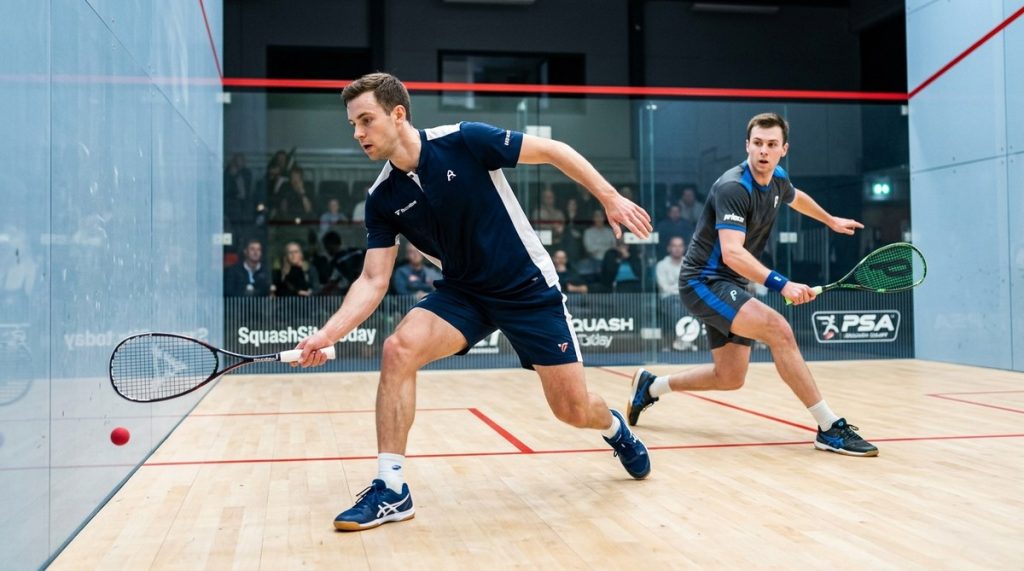
Winning squash matches isn’t about hitting harder than your opponent. It’s about spotting their vulnerabilities faster and turning those flaws into your scoring opportunities. The best players on the PSA Tour don’t waste energy on perfect shots. They systematically identify what their opponent struggles with and ruthlessly attack those areas until the match is won.
Exploiting opponent weaknesses requires systematic observation during the first three points, immediate tactical adjustments, and relentless pressure on identified flaws. Focus on technical limitations, movement patterns, and mental fragility. Test backhand volleys, deep corners, and pace changes early. Successful players adapt their game plan within minutes, not games, to capitalise on vulnerabilities before opponents can adjust their strategy.
Reading Your Opponent in the Opening Points
The first three points reveal everything you need to know.
Most players waste this golden opportunity by focusing on their own game instead of gathering intelligence. Watch how your opponent moves to the front corners. Notice which side they favour when retrieving. Pay attention to their racket preparation speed and body positioning at the T.
A weak backhand volley shows itself immediately. If your opponent turns their body awkwardly or takes the ball late on that side, you’ve found your target. Similarly, poor movement to the front forehand corner often means they struggle with developing touch and feel for winners from anywhere.
Track these specific indicators during the warm-up and opening rally:
- Racket head speed on volleys versus drives
- Recovery time back to the T after front court shots
- Comfort level with high balls versus low balls
- Preferred shot selection under pressure
- Body language after making errors
Your opponent’s grip can tell you plenty about their technical limitations. A pan-handle grip often means limited wrist flexibility and weak drop shots. An extreme Eastern grip typically indicates powerful drives but poor volley control.
The Five-Step System for Identifying Weaknesses
Follow this process every single match.
-
Test both back corners with deep drives in the first rally. Notice which side produces weaker returns. A floating cross-court or a short straight drive tells you they’re uncomfortable with length on that wing.
-
Hit one volley drop to each front corner. Watch their movement pattern and recovery speed. Players who struggle reaching the front usually have poor court positioning fundamentals or weak lunging technique.
-
Vary your pace deliberately on the third point. Throw in a slower, higher ball after two hard drives. Opponents who can’t adjust their timing will either hit the tin or pop the ball up for an easy volley.
-
Force them to volley on their weaker side. Most club players have one side where their volley technique breaks down completely. Find it early and attack it relentlessly throughout the match.
-
Observe their shot selection when you apply pressure. Do they go for risky winners or play safe? This reveals their mental approach and risk tolerance under stress.
“The match is won in the first game. If you haven’t identified at least two major weaknesses by 3-3 in the first game, you’re not paying attention. Every player has technical flaws. Your job is to find them before they find yours.” – Former PSA Top 20 coach
Common Technical Weaknesses and How to Attack Them
Different flaws require different tactical approaches.
| Weakness | Attacking Strategy | Shot Selection |
|---|---|---|
| Poor backhand volley | Hit high cross-courts to their backhand | Lob, high drive, boast |
| Weak front court movement | Drop shot followed by straight drive | Drop, kill, short angle |
| Limited racket preparation | Fast volleys with pace variation | Volley drop, hard volley drive |
| Slow turning speed | Hit behind them regularly | Reverse angle, hold and drive |
| Poor fitness | Extend rallies, work all four corners | Deep drives, width variation |
The backhand volley weakness appears most frequently at club level. Players develop solid backhand drives but never master the volley on that side. Their racket face opens up, they slice everything, and they can’t generate pace. When you spot this flaw, feed them high balls to the backhand side constantly. They’ll either volley weakly or let the ball drop, giving you time to dominate the T.
Movement limitations show up differently. Some players move brilliantly side to side but struggle going forward. Others cover the front court well but labour in the back corners. A player who turns slowly to their backhand back corner is a gift. Hit straight drives to that corner repeatedly and watch them arrive late every single time.
Mental Weaknesses Matter More Than Technical Ones
Physical skills can compensate for technical flaws. Mental fragility cannot hide.
Watch for frustration after errors. Players who show visible annoyance after missing routine shots are mentally vulnerable. They’ll compound errors, rush their shots, and make increasingly poor decisions as pressure builds.
Some opponents crumble when the score gets tight. They play freely at 5-2 up but tighten up at 8-8. Others perform brilliantly when behind but can’t close out games when ahead. Recognising these patterns lets you adjust your tactics mid-match.
The player who constantly checks the score is mentally distracted. They’re thinking about winning rather than playing the next point. Apply sustained pressure and they’ll crack.
Risk-averse opponents telegraph their mental state through shot selection. When under pressure, they play the same safe shot every time. Usually it’s a straight drive or a cross-court lob. Once you’ve identified their safety shot, you can anticipate it and intercept with aggressive volleys.
Adjusting Your Game Plan Mid-Match
Spotting weaknesses means nothing unless you exploit them systematically.
Change your serving strategy immediately after identifying a weakness. If their backhand return is weak, serve predominantly to that side. If they struggle with pace, serve harder and lower. If they can’t handle a slow ball, take pace off your serve completely.
Modify your shot distribution based on what you’ve learned. Against an opponent with poor backhand volleys, hit 70% of your shots to create backhand volley opportunities. Don’t distribute shots evenly just because that’s what you usually do.
Your movement patterns should change too. If your opponent rarely hits drop shots, you can sit slightly further back at the T. If they love the cross-court nick, position yourself to intercept it. Small positioning adjustments based on their tendencies give you crucial split-second advantages.
The concept of working their weaknesses doesn’t mean hitting the same shot repeatedly. Vary the pace, height, and angle whilst consistently targeting the same technical flaw. A player with a weak backhand volley still needs to see different looks: high cross-courts, hard straight drives that force a backhand volley, and occasional drop shots to keep them guessing.
Creating Pressure Through Pattern Recognition
Humans are pattern-recognition machines. Use this against your opponent.
Establish a pattern deliberately, then break it. Hit three straight drives in a row, then hit a boast. Your opponent’s brain expects the fourth straight drive and they position accordingly. The pattern break catches them completely wrong-footed.
Professional players use this tactic constantly. They’ll hit five cross-courts to set up one straight kill. They’ll play patient rallies for three minutes, then suddenly attack. The pattern establishes a rhythm that lulls the opponent into predictability, then the break punishes that predictability.
You can apply this at club level too. If you’ve been hitting deep for several shots, your opponent relaxes and assumes the next shot will be deep too. That’s when you drop short. If you’ve played three boasts in the match, all from the back forehand corner, try one from the back backhand corner. The unexpected variation creates easy points.
Physical Limitations You Can Exploit
Age, injuries, and fitness levels create exploitable vulnerabilities.
Older opponents often have reduced flexibility and slower court coverage. Hit more short shots and vary the pace frequently. They struggle adjusting to sudden changes in rally speed. Their experience and shot-making might be superior, but you can neutralise that advantage through superior movement and fitness.
Players carrying injuries modify their movement patterns to protect the injured area. A player with a dodgy knee will avoid lunging on one side. Someone with a shoulder problem will favour one wing and avoid overhead shots. Spot these compensations early and attack the protected area relentlessly.
Fitness weaknesses become apparent in longer rallies and later games. If your opponent is breathing heavily after a long rally in the first game, you’ve found your path to victory. Extend every rally, work all four corners, and watch them fade. Players with limited endurance often start matches strongly then collapse in the fourth and fifth games.
Some opponents have excellent fitness but poor explosive speed. They can run all day at a steady pace but struggle with sudden direction changes. Against these players, use more boasts, drops, and angles to force rapid acceleration and deceleration.
Tactical Adjustments Based on Playing Style
Different playing styles have predictable weaknesses.
The hard hitter who loves pace struggles with slow balls. They generate power through timing and rhythm. Disrupt that rhythm with high, slow lobs and they’ll either overhit into the tin or float the ball up for easy volleys. These players often have issues with their backhand volley technique when forced to take pace off.
The retriever who gets everything back typically lacks a killer instinct. They’re content to extend rallies and wait for your errors. Against retrievers, you must create openings rather than wait for them to make mistakes. Use more volleys, attack earlier in the rally, and finish points decisively. Don’t get drawn into their preferred long rally pattern.
The shot-maker who tries fancy shots constantly will beat themselves if you stay patient. Let them attempt low-percentage winners and make errors. Play solid, percentage squash and watch them self-destruct through overambition.
The tactical player who thinks too much often struggles with pace and athleticism. Hit harder, move faster, and don’t give them time to think. Rush them into decisions and their careful game plan falls apart.
Using the Court Dimensions Strategically
Court geometry creates natural weak spots for every player.
Most players cover the forehand back corner better than the backhand back corner. It’s a natural body position advantage. Test both corners early, then overload the weaker side. If they’re retrieving well from the backhand back corner, you might be one of the rare players facing someone stronger on that side.
The front forehand corner is often weaker than the front backhand corner for right-handed players. The forehand drop requires more wrist control and touch, whilst the backhand drop comes more naturally to many players. Experiment with both front corners to identify which produces weaker returns.
Width matters enormously. Players who take the ball close to the side wall struggle with racket preparation and often produce weak returns. Hit wide drives that force them tight to the wall. Players who prefer working in the middle of the court hate being squeezed.
Height variation exploits technical limitations. High balls to the backhand expose weak overhead technique. Low balls require good knee bend and core strength. Players with poor lunging mechanics will struggle retrieving low balls in the corners.
Recognising When Your Opponent Adapts
Smart opponents adjust their game when they realise you’ve identified their weakness.
They might change their court position to better cover their vulnerable area. They might alter their shot selection to avoid situations that expose their flaw. They might simply try harder on their weak side, producing better quality shots through increased focus and effort.
When you notice these adjustments, you have two options. First, you can continue attacking the same weakness but vary how you create those situations. Second, you can shift focus to a different weakness whilst they’re overcompensating for the first one.
The player who moves further forward to cover drop shots has left space behind them. The player who positions to protect their backhand has opened up their forehand. Every adjustment creates a new vulnerability.
Common Mistakes When Trying to Exploit Weaknesses
Becoming too predictable defeats the entire strategy.
If you hit to the same spot every single time, even a weak player will eventually adjust and defend that area effectively. You must disguise your intentions and vary your approach whilst maintaining strategic focus on their weakness.
Abandoning your own strengths to attack their weaknesses is counterproductive. If you have a brilliant forehand drive technique, don’t stop using it just because you’ve identified their weak backhand. Combine your strengths with attacks on their weaknesses for maximum effectiveness.
Focusing exclusively on one weakness whilst ignoring others is tactically naive. Most players have multiple flaws. Rotate your attacks between different weaknesses to keep them constantly adjusting and never comfortable.
Getting impatient and forcing low-percentage shots is the biggest error. Just because you’ve identified a weakness doesn’t mean you should attack it from impossible positions. Wait for the right opportunity, create the proper setup, then strike decisively.
Training Your Observation Skills
Weakness identification is a learnable skill that improves with practice.
During practice matches, consciously focus on observation rather than winning. Spend entire games just gathering information about your practice partner’s tendencies. Which corners do they favour? What shots do they avoid? How do they respond to pressure?
Watch professional matches with analytical eyes. Notice how top players test their opponents early in matches. Observe how they adjust tactics once they’ve identified patterns. Learning from professional match statistics can accelerate your tactical development dramatically.
Film your own matches and review them critically. You’ll spot patterns you missed during play. You’ll see opportunities you failed to capitalise on. This feedback loop rapidly improves your tactical awareness.
Create a mental checklist you run through in every match. Backhand volley quality, movement to front corners, fitness level, mental resilience, preferred shots under pressure. Having a systematic approach prevents you from forgetting to test important areas.
Turning Observations Into Points
Information without action is worthless.
Once you’ve identified a weakness, commit fully to exploiting it. Half-hearted attacks allow your opponent to survive and adapt. Sustained, ruthless pressure on their vulnerable areas forces errors and creates winning opportunities.
Set up your attacks properly. Don’t just hit to their weak backhand from any position. Create situations where they must hit a backhand volley under pressure, with you dominating the T and ready to pounce on any weak return.
Combine weakness exploitation with your tactical game plan. If you’re playing match-winning tactics from the professional level, integrate weakness attacks into that framework rather than treating them as separate strategies.
Building Confidence Through Successful Exploitation
Nothing builds match confidence like systematically dismantling an opponent’s game.
When you successfully identify and exploit weaknesses, you take control of the match psychologically. Your opponent knows you’ve found their flaw. They become tentative, defensive, and mentally fragile. This psychological advantage often matters more than the tactical advantage.
Your own confidence soars when your game plan works. You start anticipating better, moving more decisively, and taking more calculated risks. This positive feedback loop elevates your entire performance level.
The opponent’s confidence crumbles proportionally. They start doubting their shots, second-guessing their tactics, and hoping you’ll make errors rather than believing they can win points. This mental collapse accelerates their physical collapse.
Making Tactical Knowledge Your Competitive Edge
Technical skills plateau at intermediate level. Tactical intelligence separates good players from great ones.
Two players with identical technique can have vastly different results based purely on tactical awareness. The player who spots weaknesses faster, adjusts tactics more effectively, and executes game plans more ruthlessly will win consistently.
Developing this tactical intelligence requires deliberate practice. You can’t just play matches and hope tactical awareness magically appears. You must actively work on observation skills, pattern recognition, and strategic thinking.
Study matches at your level and above. Analyse what the winner did tactically that the loser didn’t. Often the technical difference is minimal but the tactical difference is enormous. The winner identified weaknesses and exploited them systematically whilst the loser played their standard game regardless of opponent.
Winning Matches Before They Start
The best tactical players win matches during the warm-up.
They’ve already identified three weaknesses before the match officially begins. They’ve formulated their game plan. They know exactly what they’re going to test in the first three points and how they’ll adjust based on the results.
This preparation transforms match performance. Instead of spending the first game figuring things out, you’re executing your plan from the first point. Instead of hoping your standard game works, you’re actively dismantling your opponent’s game systematically.
The psychological impact of this preparation is substantial. You step onto court with confidence and clarity. Your opponent senses your purposefulness and starts the match already on the back foot mentally.
Develop pre-match routines that include tactical preparation. Watch your opponent warm up if possible. Review previous matches against them. Identify likely weaknesses based on their playing style and level. Enter every match with a clear tactical framework ready to implement.
Your ability to recognise and capitalise on opponent vulnerabilities will determine your competitive success far more than your technical skills. Start every match with systematic observation, adjust ruthlessly based on what you discover, and attack identified weaknesses with sustained pressure until the match is won.