Building Explosive Power for Stronger Drives and Kills
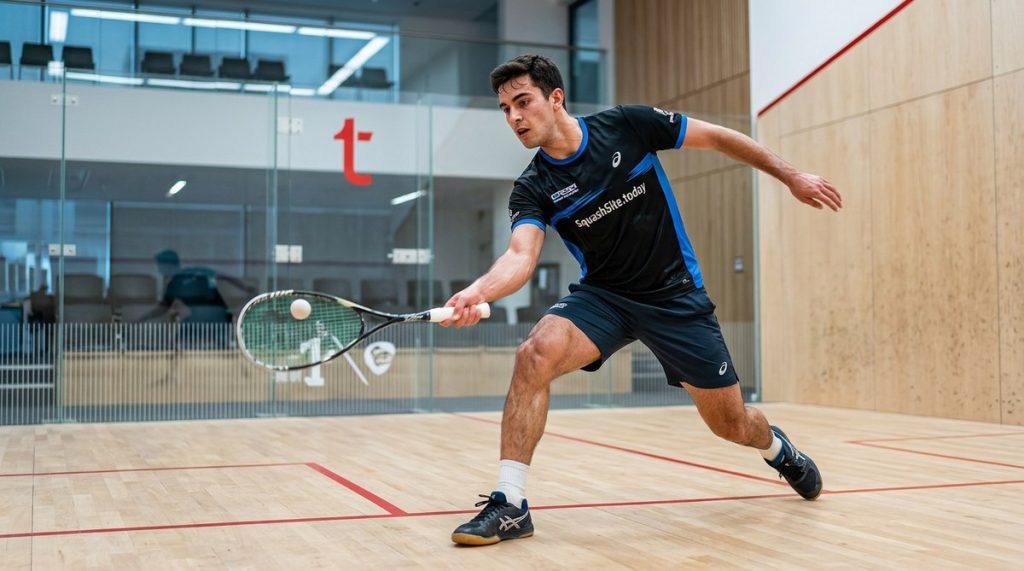
Power separates good players from great ones. You can have perfect technique, but without explosive strength, your attacking shots will never truly threaten opponents. The ability to generate force rapidly determines whether your drive slams into the back wall or floats mid-court for an easy return.
Explosive power exercises build the fast-twitch muscle fibres essential for devastating attacking shots in racquet sports. This guide covers plyometric training, Olympic lift variations, medicine ball drills and contrast training methods that develop rate of force development. Proper progression prevents injury whilst maximising power gains that translate directly to court performance and stronger kills.
Understanding Rate of Force Development
Most players confuse strength with power. Strength means how much force you can produce. Power means how fast you can produce it.
Rate of force development (RFD) determines your explosive ability. A player who generates 500 Newtons in 0.1 seconds hits harder than someone producing 600 Newtons in 0.3 seconds. Your nervous system must learn to recruit muscle fibres rapidly and simultaneously.
Research shows that RFD improvements transfer directly to swing speed. Studies on tennis players found that athletes with higher RFD values generated 12-18% more racquet head speed than equally strong players with lower RFD.
The key lies in training your neuromuscular system to fire all available motor units at once. Traditional slow lifting builds strength but doesn’t teach your body to explode. You need specific exercises that demand maximal acceleration.
Building Your Foundation First
Jumping straight into explosive training without adequate preparation leads to injury. Your tendons, ligaments and stabiliser muscles need preparation time.
Spend 4-6 weeks establishing baseline strength before adding plyometrics. You should comfortably perform these movements:
- 10 single-leg squats per side with controlled tempo
- 20 bodyweight split squats per leg
- 30-second single-leg balance with eyes closed
- 15 proper press-ups with full range of motion
These prerequisites ensure your joints can handle impact forces. Explosive exercises create forces 3-5 times your body weight. Landing from a 60cm box jump generates approximately 3.5 times bodyweight through each ankle.
Your eccentric strength (controlling downward movement) matters enormously. The ability to decelerate your body safely allows you to train harder and recover faster between sessions.
“Athletes who can’t control landing mechanics shouldn’t be doing explosive work. Fix the brakes before you upgrade the engine.” – Dr. Michael Yessis, Sports Training Specialist
Medicine Ball Training for Rotational Power
Racquet sports demand rotational explosion. Your hips, core and shoulders must work as a kinetic chain. Medicine ball throws teach this coordination brilliantly.
Start with these fundamental patterns:
-
Overhead slam: Stand with feet shoulder-width apart, raise a 4-6kg medicine ball overhead, then explosively slam it into the ground. This mirrors the overhead smash pattern in squash and tennis.
-
Rotational throw: Stand sideways to a wall 2 metres away, rotate your torso and throw the ball against the wall using hip drive. Catch the rebound and immediately throw again. Perform 8 throws per side.
-
Scoop throw: Hold the ball between your legs in a quarter-squat position, then explosively extend your hips and throw the ball as high as possible. This develops the triple extension pattern used in building an unstoppable cross-court drive.
-
Chest pass: Face a wall 1.5 metres away, hold the ball at chest height, then explosively push it forward. Focus on maximum acceleration, not distance.
Medicine ball work builds power without the technical demands of Olympic lifts. You can train explosively three times weekly without excessive fatigue.
Progressive overload comes from increased ball weight, throw distance or throw height. Track your best overhead slam height monthly to measure progress.
Plyometric Progressions That Actually Work
Plyometrics train your stretch-shortening cycle. When muscles lengthen rapidly under load, they store elastic energy. Immediately reversing that movement releases stored energy plus muscular force.
This mechanism powers every explosive shot you hit. Your legs load during the split-step, then explode toward the ball. Your shoulder cocks back before driving through impact.
Follow this progression over 8-12 weeks:
| Phase | Exercise | Sets x Reps | Ground Contact Goal |
|---|---|---|---|
| 1 | Ankle hops | 3 x 20 | Minimal knee bend |
| 2 | Pogo jumps | 3 x 15 | Stiff ankle, reactive |
| 3 | Squat jumps | 4 x 6 | Full power, soft landing |
| 4 | Box jumps (30cm) | 4 x 5 | Explosive up, step down |
| 5 | Depth drops (30cm) | 3 x 5 | Absorb and stabilise |
| 6 | Depth jumps (30cm) | 3 x 5 | Minimal ground contact |
Ground contact time determines training effect. Longer contacts (>0.25 seconds) build strength. Shorter contacts (<0.15 seconds) develop reactive ability and pure speed.
Box jumps teach you to generate maximum force. Focus on jumping as high as possible, not rushing through repetitions. Rest 60-90 seconds between sets to maintain quality.
Depth jumps represent advanced training. Step off a box, land, then immediately jump as high as possible. The brief ground contact forces rapid force production. Only attempt these after mastering earlier progressions.
Lateral bounds develop side-to-side explosiveness crucial for court coverage. Jump laterally from one leg to the other, sticking each landing for 2 seconds initially. Progress to continuous bounds with minimal ground contact.
Olympic Lift Variations for Total Body Power
Olympic lifts train your entire kinetic chain to produce force simultaneously. The movements teach you to accelerate objects (the barbell) maximally, exactly like accelerating your racquet through impact.
Full Olympic lifts require extensive coaching. These simplified variations deliver similar benefits with less technical demand:
Hang power clean: Start with the barbell at mid-thigh, explosively extend your hips and pull the bar to shoulder height, catching it in a quarter-squat position. This movement pattern directly transfers to the perfect squash swing by training explosive hip extension.
Dumbbell snatch: Hold one dumbbell between your legs, explosively pull it overhead in one motion whilst dropping into a quarter-squat. Alternate arms each repetition. Start with 8-12kg and focus on speed, not load.
Kettlebell swing: This accessible exercise builds posterior chain power. Hinge at your hips, swing the kettlebell between your legs, then explosively drive your hips forward to propel it to chest height. Let momentum do the work; your arms simply guide the kettlebell.
Jump shrug: Hold dumbbells at your sides, perform a small jump whilst simultaneously shrugging your shoulders explosively upward. This simplified movement teaches the triple extension pattern without catching complexity.
Perform 4-6 sets of 3-5 repetitions with 2-3 minutes rest. Use loads that allow maximum bar speed. If the weight slows down, you’re training strength, not power.
Training frequency matters. Two sessions weekly allows adequate recovery whilst providing sufficient stimulus. Monday and Thursday works well for most athletes, leaving weekends free for matches.
Contrast Training for Neural Adaptation
Contrast training pairs heavy strength work with explosive movements. The heavy lift primes your nervous system, creating post-activation potentiation (PAP). Your subsequent explosive exercise benefits from enhanced neural drive.
A typical contrast pair looks like this:
- Heavy back squat: 3 repetitions at 85-90% of your maximum
- Rest 30 seconds
- Vertical jump: 5 maximum effort jumps
- Rest 3 minutes, repeat for 4 total sets
The heavy squat activates high-threshold motor units. Those units remain partially activated during your rest period, allowing you to jump higher than normal.
Research demonstrates 3-7% performance improvements during the potentiated exercise. Over time, your nervous system learns to recruit those motor units more readily, even without the heavy lift primer.
Other effective contrast pairs include:
- Heavy trap bar deadlift + broad jumps
- Heavy bench press + medicine ball chest throws
- Heavy split squat + split jump
- Weighted pull-up + medicine ball overhead slam
Timing the rest interval correctly matters enormously. Too short (under 20 seconds) and fatigue dominates. Too long (over 5 minutes) and potentiation dissipates. Individual responses vary; experiment to find your optimal window.
This training method suits experienced athletes with solid strength foundations. Beginners should master basic plyometrics and Olympic lift variations first.
Unilateral Training for Court-Specific Power
Racquet sports involve constant single-leg loading. You lunge, push off, and change direction on one leg repeatedly. Bilateral exercises like squats build general strength, but unilateral work develops functional power.
Single-leg exercises also address strength imbalances. Most players have a dominant leg 10-20% stronger than their non-dominant side. This asymmetry increases injury risk and limits performance.
Key unilateral exercises include:
Single-leg box squat: Sit back onto a box 40-50cm high using one leg, then explosively stand. This controlled range of motion allows heavy loading safely. Progress to lower boxes as strength improves.
Bulgarian split squat jump: Perform a split squat with your rear foot elevated on a bench, then explosively jump upward. Land softly and immediately descend into the next repetition. This exercise mirrors the loading pattern in the complete guide to squash lunging.
Single-leg Romanian deadlift to jump: Balance on one leg, hinge forward to touch the ground, then explosively extend your hip and jump vertically. This trains the posterior chain through a full range whilst demanding balance.
Lateral skater jumps: Bound laterally from one leg to the other, holding each landing momentarily before exploding to the opposite side. Gradually increase distance and speed as control improves.
Perform 3-4 sets of 5-8 repetitions per leg. Quality trumps quantity. Stop when your form deteriorates or landing mechanics become sloppy.
Programme Design and Weekly Structure
Explosive training demands fresh legs and a sharp nervous system. Programme these sessions when you’re well-rested, typically 48 hours after your last intense match or training session.
A sample weekly structure for competitive players:
Monday: Medicine ball throws (4 exercises, 3 sets each) + plyometric progression (2 exercises, 4 sets each)
Tuesday: Technical court work or ghosting routines that actually improve your court movement
Wednesday: Contrast training (3 pairs, 4 sets each) + unilateral power work (2 exercises, 3 sets per leg)
Thursday: Light conditioning or rest
Friday: Olympic lift variations (3 exercises, 5 sets of 3 repetitions) + core stability work
Weekend: Matches or rest
Total weekly volume should include 60-100 foot contacts from plyometrics, 40-60 medicine ball throws, and 60-90 repetitions of Olympic lift variations. This provides sufficient stimulus without excessive fatigue.
Deload every fourth week by reducing volume 40-50% whilst maintaining intensity. Your body needs recovery periods to adapt and strengthen.
Track performance markers monthly:
- Vertical jump height
- Broad jump distance
- Medicine ball overhead throw height
- Single-leg hop distance
Improvements in these metrics indicate your training is working. Stagnation suggests you need programming adjustments or additional recovery.
Common Mistakes That Limit Progress
Many athletes sabotage their power development through preventable errors. Recognising these pitfalls helps you avoid wasted training time.
Training to failure: Explosive work requires maximum quality. Grinding out extra repetitions when fatigued teaches your nervous system to move slowly. Stop each set with 1-2 repetitions remaining.
Insufficient rest periods: Power training isn’t conditioning. You need near-complete recovery between sets to maintain maximum velocity. Rest 2-3 minutes between explosive sets, 3-5 minutes between contrast pairs.
Ignoring landing mechanics: Poor landing technique causes knee injuries and limits training consistency. Land softly with your weight distributed across your entire foot, knees tracking over your toes. Your hips should hinge back slightly to absorb force.
Excessive volume: More isn’t better with explosive training. Quality repetitions produce results. Fatigue produces injuries and slow movement patterns.
Neglecting mobility work: Restricted ankle, hip or thoracic mobility limits your ability to generate and transfer force. Spend 10 minutes before each power session addressing mobility restrictions.
Skipping the warm-up: Explosive training on cold muscles invites injury. Perform 5-10 minutes of progressive movement: jogging, skipping, dynamic stretching, then build up to your working intensity gradually.
Nutrition and Recovery Considerations
Power development depends heavily on recovery quality. Your nervous system needs more recovery time than your muscles after explosive training.
Prioritise sleep above everything else. Aim for 8-9 hours nightly during intensive training blocks. Sleep deprivation reduces power output by 8-12% and dramatically increases injury risk.
Protein intake should reach 1.6-2.2 grams per kilogram of bodyweight daily. Distribute this across 4-5 meals to optimise muscle protein synthesis. Consume 20-30 grams within 2 hours after training.
Creatine monohydrate supplementation (5 grams daily) supports power output and recovery. Research consistently demonstrates 5-15% improvements in explosive performance markers.
Stay hydrated throughout training. Even 2% dehydration reduces power output measurably. Drink 500ml of water 2 hours before training, then sip regularly during sessions.
Consider training sessions that complement your power work. Light swimming or cycling on rest days promotes blood flow without adding mechanical stress. Active recovery accelerates adaptation.
Measuring Your Progress on Court
Gym improvements mean nothing if they don’t transfer to match performance. Monitor these court-specific indicators:
Your kill shot effectiveness should improve noticeably after 8-12 weeks of consistent power training. Balls that previously sat up mid-court should die in the back corners. Your opponent should struggle to retrieve attacking shots that once came back easily.
Serve velocity typically increases 5-10% with proper power development. Use a radar gun or smartphone app to track this objectively every 4 weeks.
Your ability to maintain power late in matches indicates improved power endurance. If your fifth game attacking shots match your first game quality, your training is working.
Recovery time between points should decrease. Enhanced power efficiency means less energy expenditure per shot, allowing faster recovery between rallies.
Watch for improvements in your backhand volley penetration and your ability to hit winners from defensive positions. These indicate genuine power transfer to your game.
Adapting Training for Different Racquet Sports
Whilst the fundamental principles remain constant, each racquet sport emphasises different power qualities.
Squash players need exceptional repeat power ability. Rallies last longer and demand sustained explosive output. Reduce rest periods slightly (90-120 seconds) and perform higher total volumes of medicine ball work to build power endurance.
Tennis players require maximum single-shot power for serves and groundstrokes. Prioritise contrast training and Olympic lift variations with longer rest periods (3-5 minutes) to develop peak power output.
Badminton athletes benefit most from overhead power development. Emphasise overhead medicine ball slams, dumbbell snatches and vertical jump variations. The lighter racquet demands even faster acceleration than other sports.
Volleyball players need vertical jump power above all else. Depth jumps, box jumps and single-leg plyometrics should form the programme foundation. Add rotational work to improve hitting power.
Adjust exercise selection based on your sport’s specific demands, but maintain the core principles: progressive overload, adequate recovery, and quality over quantity.
Bringing Explosive Power Into Your Training Routine
Power development transforms attacking players into match winners. The exercises outlined here provide a complete framework for building explosive strength that translates directly to court performance.
Start conservatively with medicine ball work and basic plyometrics. Master movement quality before chasing numbers. Progress systematically through the phases, respecting your body’s adaptation timeline.
Remember that power training complements technical work rather than replacing it. Continue refining your stroke mechanics whilst building the physical capacity to execute them explosively. The combination of proper technique and genuine power creates truly devastating attacking shots that opponents simply cannot handle.
Your investment in explosive power training will pay dividends for years. The neural adaptations and movement patterns you develop become permanent parts of your athletic foundation. Every kill shot, every winning drive, every unreturnable serve benefits from the work you put in now.