
Running your first club championship feels like a big responsibility. You want members to enjoy the experience, matches to run on time, and the whole event to feel professional without becoming a second job.
The good news? You don’t need a massive committee or expensive software to pull off a brilliant tournament. With clear planning and a sensible structure, you can create an event that players will talk about for months.
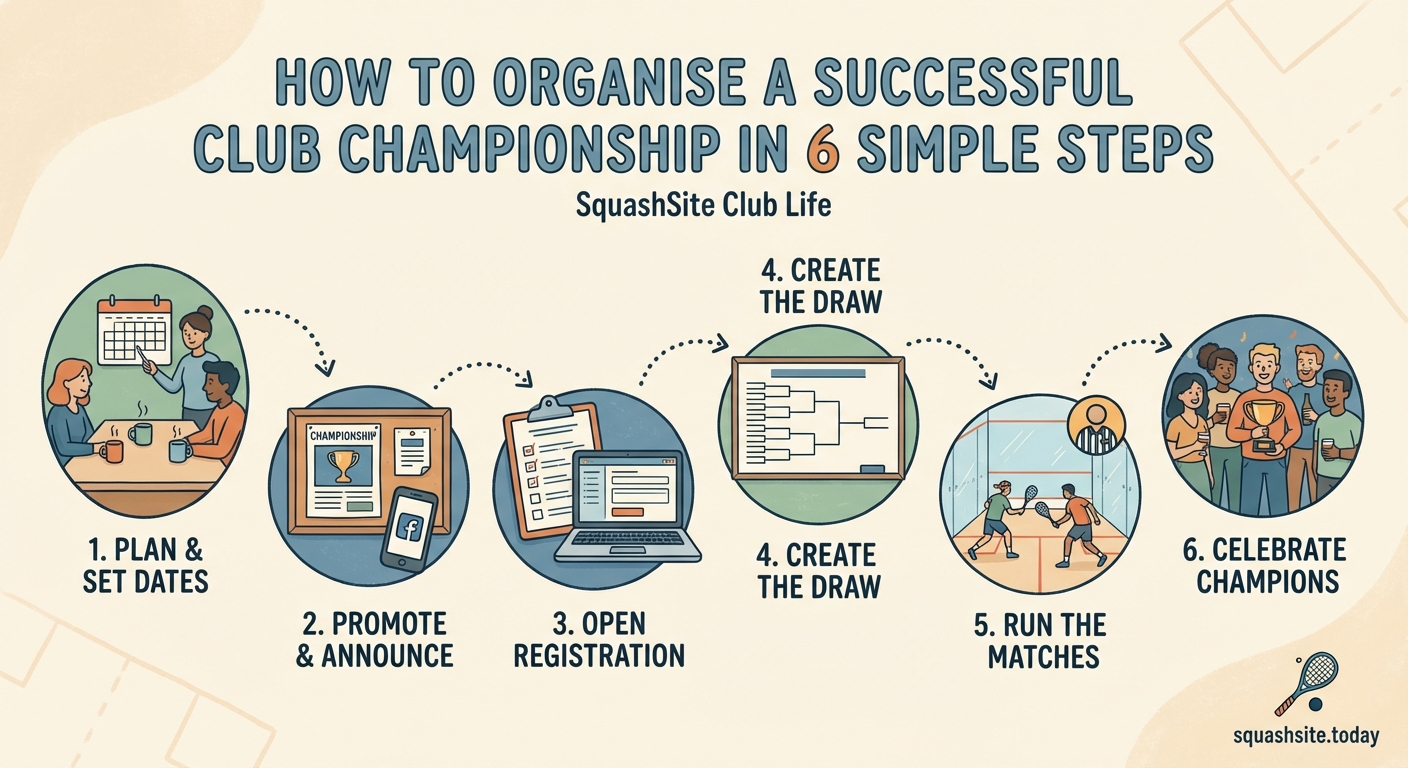
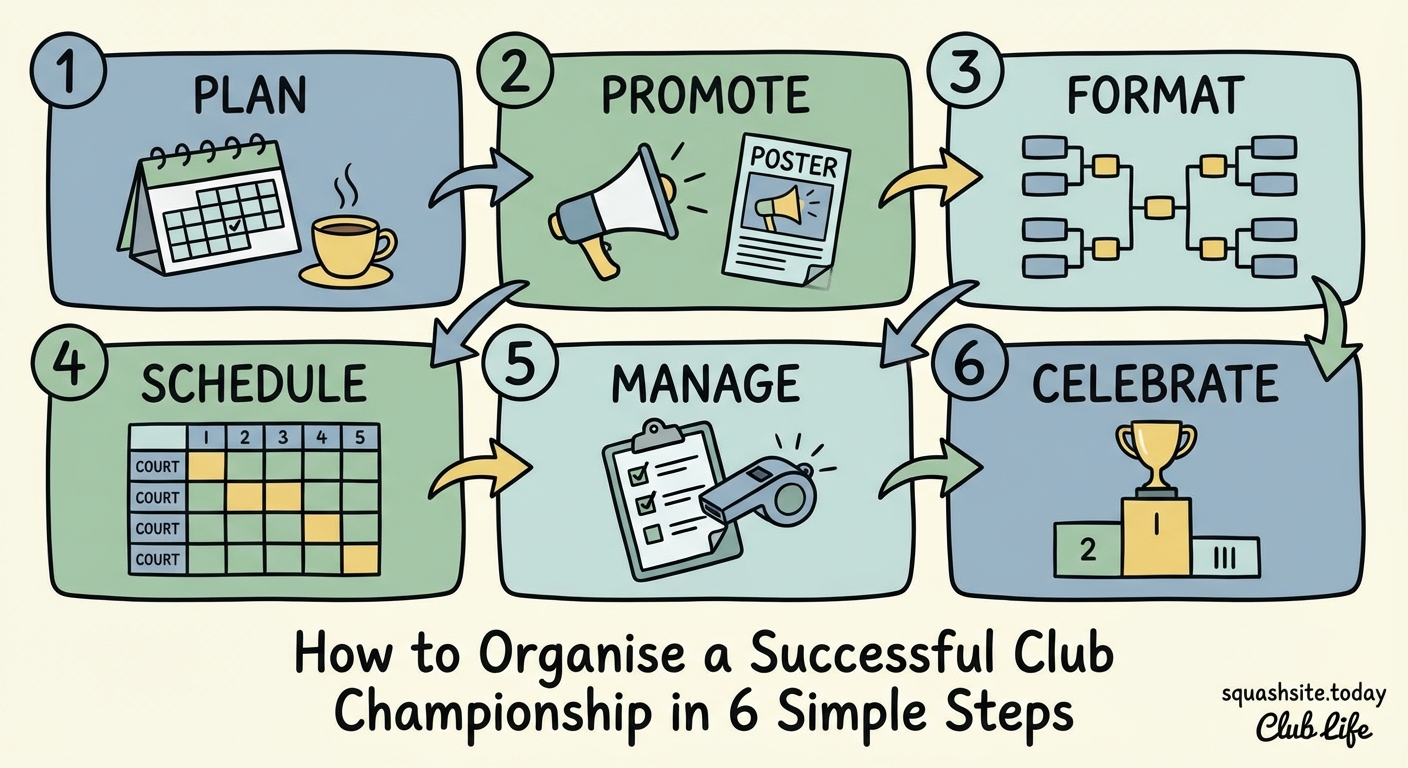
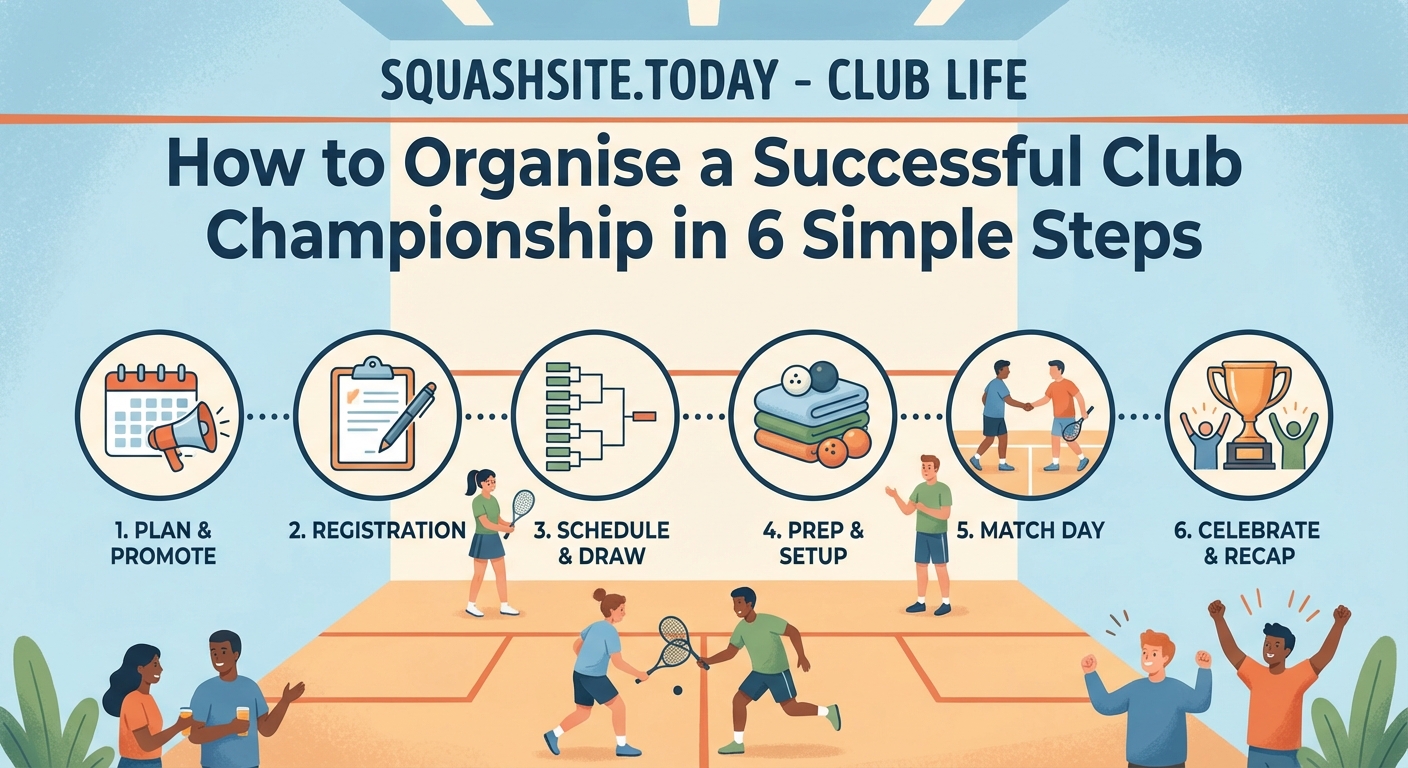
Organising a successful club championship requires six fundamental steps: choosing the right format, setting realistic timelines, communicating clearly with participants, managing court bookings efficiently, tracking results accurately, and celebrating winners properly. Focus on simplicity over complexity, build buffer time into your schedule, and prioritise player experience throughout. A well-run championship strengthens club culture and keeps members engaged long after the final match.
Step One: Choose Your Championship Format
Your format shapes everything else. Pick the wrong one and you’ll spend weeks chasing players for unavailable match times. Pick the right one and matches practically schedule themselves.
Round robin works beautifully for smaller groups. Everyone plays everyone else, which means maximum court time and no early eliminations. Perfect for eight players or fewer in each category.
Knockout tournaments suit larger fields. They’re faster to complete and create natural drama. The downside? Half your entrants go home after one match.
Consider a hybrid approach. Run a round robin group stage, then knock out the top finishers. This gives everyone multiple matches whilst keeping the overall timeline manageable.
Format selection criteria:
- Available court time over your championship period
- Number of expected entrants per category
- Skill level variation within your membership
- Whether you want a social or competitive atmosphere
- How much time you can dedicate to scheduling
Box leagues offer another option. Players arrange matches within their box over several weeks. Less admin for you, more flexibility for them. The trade-off is reduced atmosphere compared to knockout finals.
Step Two: Set a Realistic Timeline
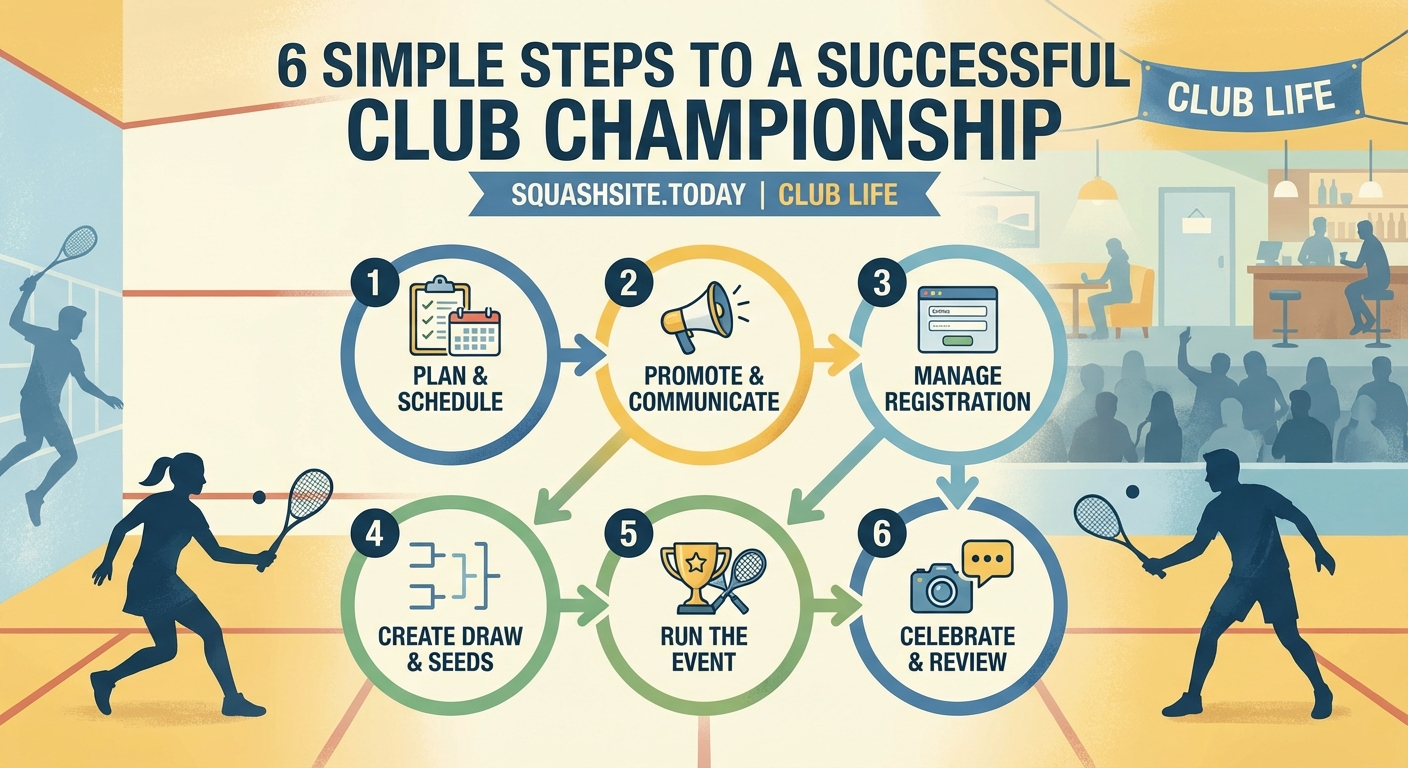
Most club championships fail because organisers underestimate how long everything takes. Matches get postponed. Players go on holiday. Someone always forgets to book the court.
Start planning at least six weeks before your intended start date. That gives you time to promote the event, collect entries, seed players, and publish the draw.
Build in buffer time at every stage. If you think the first round needs one week, schedule ten days. Players appreciate breathing room, especially those juggling work and family commitments.
| Phase | Minimum Duration | Recommended Duration |
|---|---|---|
| Promotion and entries | 2 weeks | 3 weeks |
| Draw creation and seeding | 3 days | 1 week |
| Each knockout round | 1 week | 10 days |
| Finals day preparation | 1 week | 2 weeks |
Avoid scheduling your championship during school holidays, major sporting events, or religious festivals. Check your club calendar for clashes with social events or league matches.
Consider running different categories on staggered timelines. Start your A-grade a week before B-grade. This spreads the workload and ensures you’re not managing twenty simultaneous matches.
Step Three: Communicate Like a Professional
Clear communication prevents 90% of tournament problems. Players need to know what’s expected, when matches happen, and who to contact with questions.
Send a detailed entry pack covering:
- Entry deadline and fee
- Categories available and eligibility criteria
- Format explanation with example scenarios
- Key dates for each round
- Rules around scoring, lets, and disputes
- Your contact details for questions
Use multiple channels. Pin a poster in the changing rooms. Send emails to the membership list. Post updates in your club WhatsApp group. Different people check different places.
Create a simple online form for entries. Google Forms works perfectly and costs nothing. Collect names, contact details, preferred category, and any unavailable dates upfront.
“The best tournament organisers over-communicate. Send reminders before every deadline, confirm match details twice, and assume nobody reads anything the first time.” – Club Tournament Director, 15 years experience
Update players after every round. Share results, publish the next draw immediately, and celebrate great matches. This builds momentum and keeps people engaged.
Step Four: Master the Court Booking System
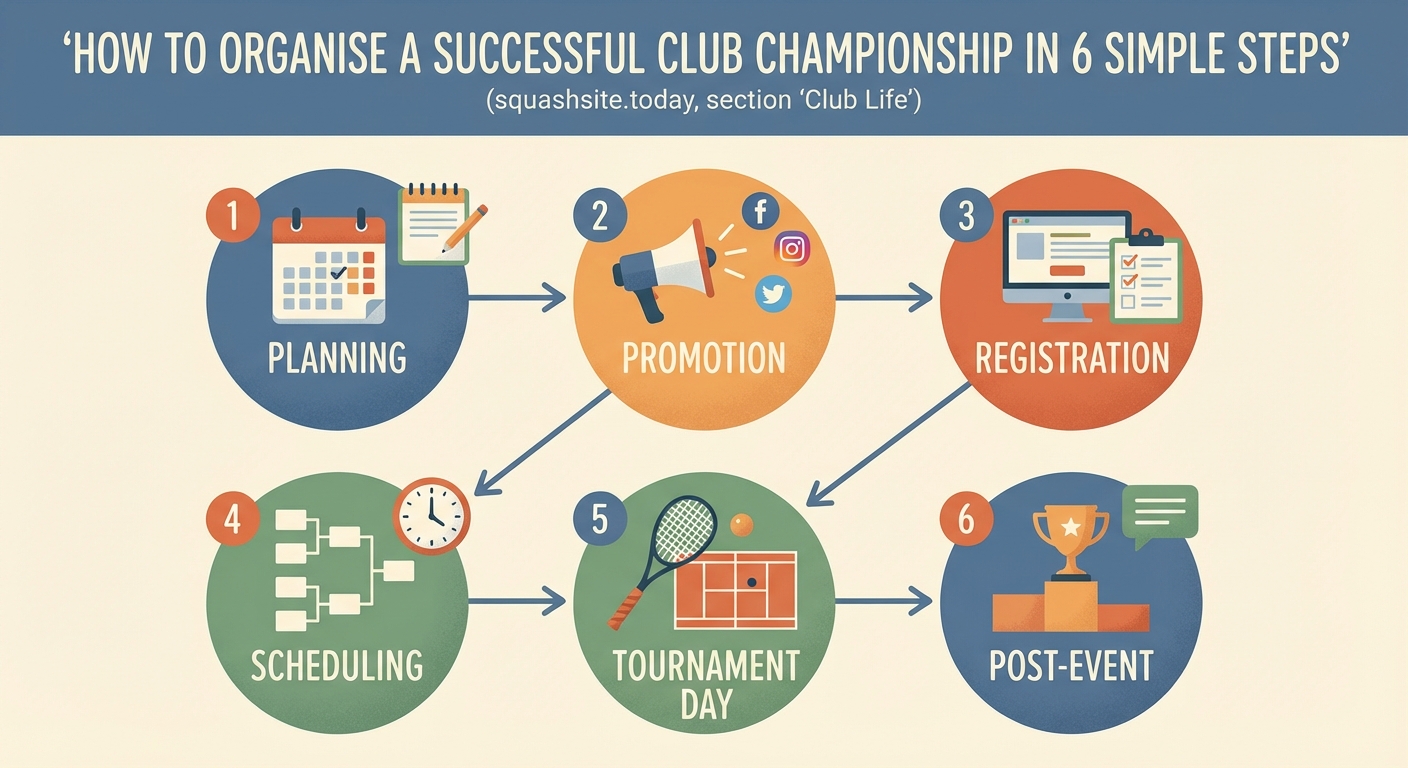
Court availability makes or breaks your championship. You need a system that’s fair, efficient, and doesn’t require you to play booking secretary for three months.
Reserve specific time slots for championship matches. Block out Tuesday evenings and Sunday mornings, for example. This creates predictability and prevents conflicts with regular club nights.
Give players a deadline to arrange their match within each round. Seven days is standard. If they haven’t scheduled by day five, send a reminder. If they still haven’t played by the deadline, both players default or you schedule it for them.
Booking management tips:
- Create a shared calendar showing available championship slots
- Require players to confirm bookings in writing
- Keep one emergency slot free each week for rescheduling
- Prioritise finals for weekend afternoons when spectators can attend
- Don’t allow championship matches during peak social hours
Some clubs use a “challenger arranges” system. The higher seed or previous round winner must contact their opponent and propose three available times. The opponent picks one or suggests alternatives. This distributes the admin burden.
Track which courts are used when. If your glass-backed show court sits empty whilst players squeeze onto court four, you’re missing an opportunity to make matches feel special.
Step Five: Track Results and Maintain Momentum
Nothing kills tournament energy faster than a results vacuum. Players finish their match, report the score, then hear nothing for ten days.
Set up a simple results reporting system. Players text you the score immediately after their match. You update the draw sheet and post it in the club within 24 hours.
Use a visible draw board in your club entrance. The old-fashioned paper version works brilliantly. Players check it every visit, building anticipation for upcoming matches.
Record more than just scores. Note any particularly close games, impressive comebacks, or milestone achievements. Share these stories in your updates. They make players feel valued and create talking points.
Essential tracking information:
- Match date and court used
- Full score including game scores
- Match duration
- Any incidents or rule disputes
- Player feedback about the experience
Consider live scoring for finals. Have someone courtside updating a simple scoreboard or even a phone app that others can follow. This transforms your championship final from just another match into an event.
Photography matters. Snap pictures of players before and after big matches. Action shots during finals. The trophy presentation. These images become your promotional material for next year’s championship.
Step Six: Celebrate Winners and Build Tradition
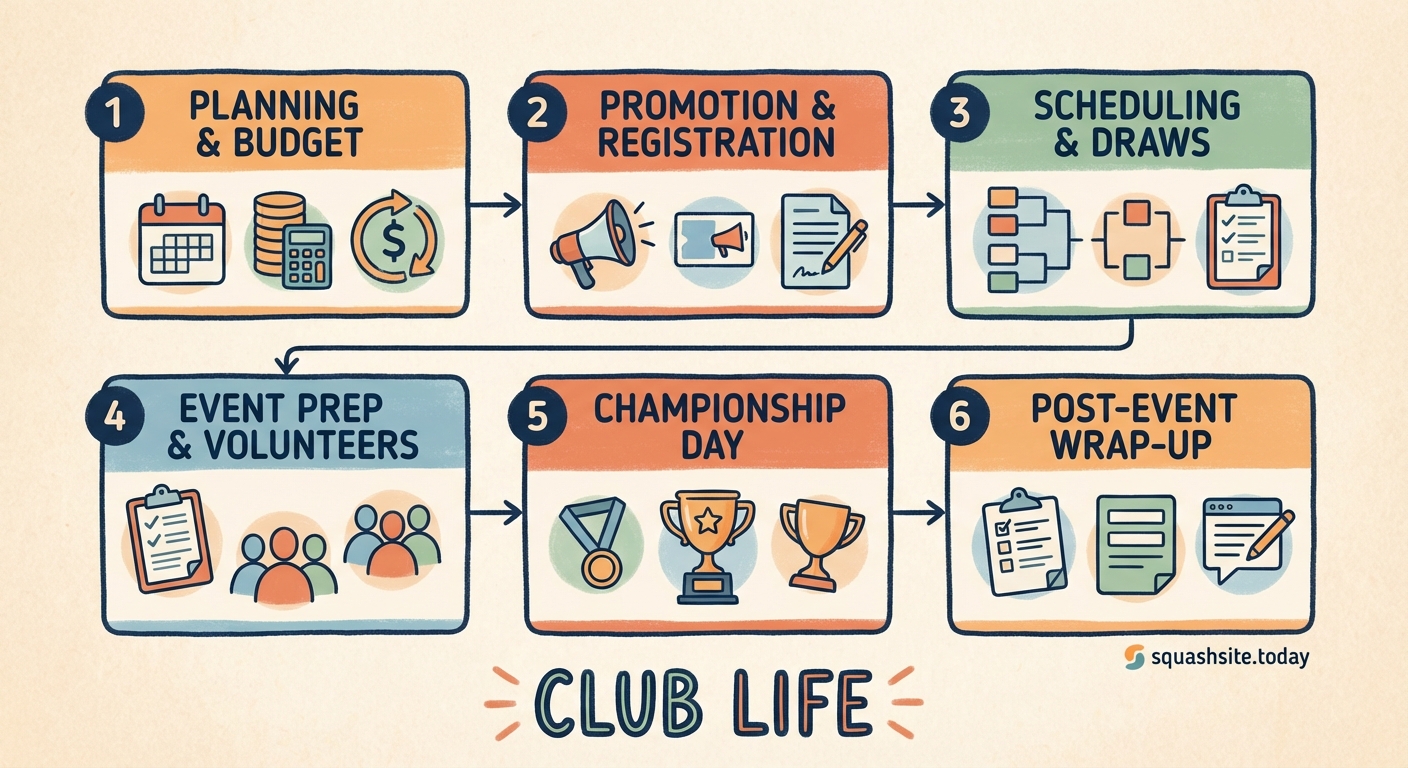
Your prize-giving sets the tone for future championships. Do it well and players will sign up again next year before they leave the building.
Schedule a specific finals day or evening. Don’t let your championship fizzle out with a Tuesday morning final that three people watch. Make it an occasion.
Prizes don’t need to be expensive. A decent trophy that winners keep for a year means more than a cheap medal they’ll lose in a drawer. Add their name to a permanent honours board in the clubhouse.
Prize-giving elements that work:
- Brief speech thanking participants and highlighting memorable moments
- Individual recognition for runners-up, not just winners
- Special mentions for closest matches or best sportsmanship
- Photos of all category winners together
- Immediate promotion of next year’s dates
Consider category-specific awards. Longest match. Most improved player. Best newcomer. These recognise effort beyond pure winning and encourage broader participation.
Gather feedback whilst enthusiasm is high. A simple two-minute survey asking what worked and what didn’t gives you gold for planning next year. Players appreciate being asked and you get genuine insights.
Create a small tradition unique to your club. The winner buys the first round at the bar. Everyone signs the trophy case. The defending champion presents the new winner’s prize. These touches build identity and belonging.
Common Mistakes That Derail Championships
Even experienced organisers fall into predictable traps. Recognising these patterns helps you avoid them.
| Mistake | Why It Happens | How to Prevent It |
|---|---|---|
| Too many categories | Wanting to include everyone | Limit to 3-4 maximum based on real membership numbers |
| Unrealistic deadlines | Underestimating player availability | Add 50% more time than you think needed |
| Poor seeding | Lack of current form knowledge | Consult with coaches and regular players |
| No backup plan | Assuming everything goes smoothly | Prepare alternatives for every critical element |
| Invisible communication | Sending one email and assuming everyone saw it | Use multiple channels and repeat key information |
The biggest mistake? Trying to copy professional tournament structures. Your club championship isn’t Wimbledon. It doesn’t need electronic line calling, professional referees, or complex ranking algorithms.
Keep it simple. Focus on creating an enjoyable experience where members test themselves, play competitive matches, and feel part of something bigger than their usual Tuesday night game.
Equipment and Technical Considerations
Players perform better when basic equipment standards are met. You don’t need perfect conditions, but certain minimums matter.
Check all courts before the championship starts. Fix any loose floorboards, replace dead light bulbs, and ensure walls are properly marked. A player losing a crucial point because they couldn’t see the service line will remember that forever.
Provide new balls for finals at minimum. Some organisers use fresh balls for all championship matches. This levels the playing field and shows you take the event seriously.
Stock basic first aid supplies courtside. Plasters, ice packs, and elastic bandages. Squash is physical and minor injuries happen. Being prepared demonstrates duty of care.
Have spare rackets available for loan. Strings break at the worst moments. A player who can borrow a club racket and continue their match will be grateful.
Consider appropriate footwear requirements in your rules. Non-marking soles protect your court surface and prevent disputes about floor damage.
Managing Disputes and Difficult Situations
Competitive matches create tension. Even friendly club players occasionally disagree about lets, strokes, or line calls.
Establish clear rules before the championship starts. Publish them with your entry pack. Cover scoring systems, let and stroke decisions, acceptable appeals processes, and what happens if players can’t agree.
Appoint a tournament referee. This person doesn’t need to watch every match but must be available to resolve disputes. Choose someone respected, knowledgeable about the rules, and capable of making firm decisions.
Standard dispute resolution process:
- Players attempt to resolve between themselves
- If unsuccessful, they pause and find the tournament referee
- Referee listens to both sides without interruption
- Referee makes a binding decision based on the rules
- Play continues immediately without further discussion
Document any significant incidents. Write down what happened, who was involved, and how it was resolved. This protects you if complaints surface later and helps prevent similar situations in future championships.
Most disputes arise from ambiguous rules rather than bad behaviour. If you find yourself resolving the same argument repeatedly, clarify that rule for next year.
Building on Your Success
A successful first championship creates momentum. Players who enjoyed themselves become your promotional team for next year.
Publish a post-championship report. Share photos, results, statistics, and memorable moments. Thank everyone involved, especially volunteers who helped with refereeing, court preparation, or catering.
Archive everything. Save your draw sheets, communication templates, timeline, and budget. Next year’s organiser (whether that’s you or someone else) will thank you for this documentation.
Consider expanding carefully. If your singles championship worked brilliantly, maybe add doubles next year. But don’t try to run five different formats simultaneously until you’ve mastered the basics.
Connect your championship to club development. Winners might become practice partners for improving players. Semi-finalists could help coach juniors. Use the event to identify and nurture talent.
Some clubs create a championship committee. Three or four people sharing the workload makes the whole process more sustainable and less dependent on one person’s availability.
Why Your Club Championship Matters More Than You Think
Championships do more than crown winners. They create structure, build community, and give members something to train towards.
Regular players sharpen their skills preparing for championship matches. Casual members engage more deeply with the club. Newcomers see an established culture they want to join.
The relationships formed during a championship strengthen your club’s social fabric. Opponents become practice partners. Spectators become friends. Shared experiences create bonds that keep members renewing year after year.
Your championship also raises standards. When players know they’ll face club-mates in competitive matches, they take their technique more seriously. They work on movement patterns and shot selection. The whole club improves together.
Running a championship well builds your reputation as an organiser. This opens doors to bigger responsibilities, whether that’s league management, inter-club events, or regional tournament hosting.
Making Your Championship an Annual Highlight
The difference between a one-off event and an anticipated tradition is consistency. Run your championship at the same time each year. Players will block out those dates automatically.
Create a visual identity. Design a simple logo or use consistent colours in your promotional materials. This builds recognition and makes your championship feel established even in its second year.
Start an honours board displaying past winners. Seeing names from previous years creates history and prestige. Players imagine their own name joining that list.
Involve your entire membership, not just competitors. Recruit spectators for finals. Organise a social event around the prize-giving. Sell refreshments and donate proceeds to club improvements. The more people who participate in some way, the stronger your championship becomes.
Document improvements year on year. More entrants? Better quality matches? Faster scheduling? Celebrate these wins and share them with your club committee. Success builds support for future events.
Your Championship Starts Now
You’ve got the framework. Six clear steps from format selection to prize-giving. The tools to avoid common mistakes. Systems for managing the inevitable challenges.
Start with your calendar. Pick your championship dates working backwards from when you want finals. Block out the planning phases. Set your entry deadline.
Then reach out to three experienced club members. Ask them to help with seeding decisions, refereeing, or results tracking. Shared responsibility makes everything easier and brings different perspectives to your planning.
Your club championship doesn’t need to be perfect. It needs to be well-organised, fair, and enjoyable. Get those three elements right and players will forgive minor hiccups along the way.
The best time to start planning was six months ago. The second best time is today. Your members are waiting for someone to create an event they can get excited about. That someone is you.
Leave a Reply