Stop Wasting Energy: The Three-Step Court Movement Audit Every Club Player Needs
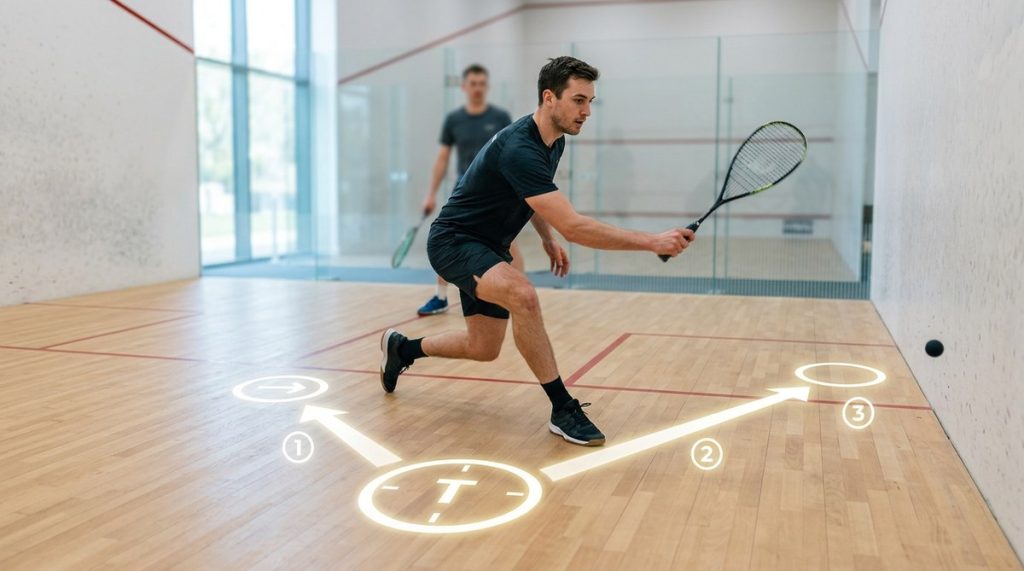
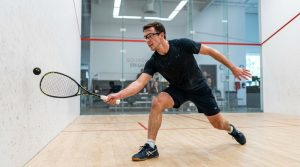
You are three points into the second game. Your opponent plays a loose drop shot to the front left corner. You react, sprinting forward, but you overrun the ball by a full metre. You scramble back, off balance, and your opponent punishes you with a high cross-court drive to the back right. Sound familiar? Most club players waste a staggering amount of energy every rally. They take extra steps, make unnecessary direction changes, and arrive at the ball in a weak position. The fix is not about fitness. It is about awareness. A court movement audit tennis players can use will show you exactly where your energy is leaking away.
A court movement audit tennis players can perform in three steps reveals wasted steps, poor recovery paths, and inefficient lunging patterns. By tracking your footwork for just one rally, you will identify the specific movements that drain your energy. Fixing those patterns can save you up to 30% of your physical output, leaving you fresher for the fifth game. This is the single most effective way to improve your match fitness without extra gym work.
Why Your Movement Is Costing You Games
Let us be honest. You can have the best racket technique in your club, but if you arrive at the ball late or off balance, your shot quality will suffer. Poor court movement creates a domino effect. You rush, you panic, you hit the ball with poor form, and your opponent reads your intent easily.
The problem is often invisible to the player. You feel busy. You feel like you are working hard. But are you working smart? A court movement audit tennis players can apply will pull back the curtain. It will show you the difference between being active and being efficient.
Think of it like this. A car that is constantly braking and accelerating burns far more fuel than one that maintains a steady speed. Your body is the same. Every extra step, every unnecessary stop, every wild lunge consumes energy you need for the final games of a tight match.
The Three-Step Court Movement Audit
This audit is designed to be performed during a practice rally or a recorded match. You do not need any special equipment. Just a willingness to be honest with yourself.
Step 1: Track Your Recovery Path
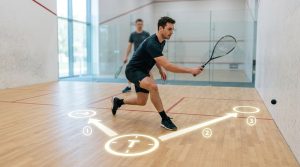
The most common energy leak happens after you play a shot. Watch what you do immediately after the ball leaves your racket. Do you stand still to admire your work? Do you take two or three small, shuffling steps before moving in the right direction? Do you move backwards in a straight line, or do you loop around?
Here is what to look for.
- The straight line back. After playing a shot to the front of the court, the ideal recovery is a direct, explosive path back to the centre. Many players drift sideways or take a curved route. This adds distance and time.
- The double step. You see the ball coming back, you start to move, but then you hesitate and take an extra small step to adjust. That hesitation is gold for your opponent.
- The celebration pause. You play a great shot. You watch it. You lose a full second. By the time you move, your opponent has already played their return.
Action: For one full game, ignore the ball. Watch only your own feet. Count how many steps you take between your shot and your opponent’s return. You will be shocked.
Step 2: Map Your Lunge Efficiency
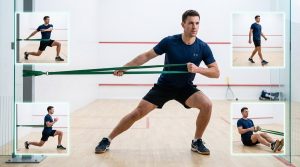
Lunging is essential in squash, but a bad lunge is a disaster. It leaves you stranded, unable to recover for the next shot. A court movement audit tennis players should include a specific check on how you reach low balls.
Ask yourself these questions.
- Do you lunge with your front knee past your toes? This puts enormous stress on your knee joint and makes recovery slow.
- Do you land with your weight too far forward? You will struggle to push back to the centre.
- Do you use a deep lunge when a simple step would have been enough?
The fix: Practice the “half lunge” for balls that are close to you. Use a full lunge only for balls that are genuinely out of reach. Many club players default to a deep lunge for every low ball, even when the ball is within a normal step. This is pure wasted energy.
Step 3: Count Your Direction Changes
Every time you change direction, your body has to decelerate and then accelerate again. This is metabolically expensive. Watch a match and count how many times you change direction in a single rally. A high number usually means you are chasing the ball rather than anticipating it.
Common signs of too many direction changes.
- You move left, then immediately right, then back left again.
- You start moving forward, stop, and then move backwards.
- You circle around the centre of the court rather than cutting across it.
Action: Record a rally. Play it back at half speed. Count every single change of direction. A good target is three to five changes per rally. If you are hitting eight or more, you are working too hard.
Common Movement Mistakes and Their Fixes
Here is a table that summarises the most frequent errors found during a court movement audit tennis players can use, along with the simple fix for each.
| Mistake | What It Looks Like | The Fix |
|---|---|---|
| Overrunning the ball | You sprint to the ball and pass it, then have to reach back. | Take one fewer step. Let the ball come to your racket. |
| Standing up too early from a lunge | You rise before you play the shot, losing power and balance. | Stay low through the shot. Rise only after the ball has left the strings. |
| Recovering to the wrong spot | You return to the exact centre of the court every time. | Recover to a position that covers your opponent’s most likely shot. |
| Crossing your feet | You cross one foot over the other, slowing your next move. | Use a scissor step or a hop to change direction. |
| Watching the ball after you hit it | You track the ball instead of moving to your next position. | Train yourself to look at your opponent’s racket face immediately. |
The Mindset Shift: From Reactive to Proactive
A court movement audit tennis players can perform is not just about fixing physical habits. It is about changing how you think during a rally. Reactive players wait for the ball to be played before they move. Proactive players read the opponent’s body language and start moving before the ball is struck.
This is where the real gains are made. You do not need to be faster. You need to be earlier. And being earlier comes from anticipation, not from sprinting.
“The best movers in squash do not look faster. They look calmer. They arrive at the ball with time to spare. That calmness comes from reading the game, not from running harder.” – Coach Andy, former England Squash national coach.
Start by watching your opponent’s racket face. The angle of the racket tells you where the ball is going before it is hit. The shoulder rotation tells you how much power is coming. The grip tension tells you if a drop shot is coming. These cues are there in every rally. You just need to look for them.
How to Integrate the Audit into Your Training
You do not need to do this audit every session. Once a month is enough. Choose one rally from a practice match or a club night. Apply the three steps. Note down your findings. Then focus on fixing just one issue for the next two weeks.
Here is a suggested approach.
- Week 1-2: Focus on recovery path. Every time you play a shot, mentally note your path back to centre. Aim for a straight line.
- Week 3-4: Focus on lunge efficiency. Reduce your lunge depth by 20% and see if you can still reach the ball.
- Week 5-6: Focus on direction changes. Try to anticipate one shot ahead. Move before the ball is hit.
After six weeks, run the audit again. Compare your numbers. You will likely see a reduction in total steps, fewer direction changes, and better recovery times.
The Tools That Can Help
You do not need expensive technology. A smartphone on a tripod is enough. Record your match or practice rally from a high angle if possible. This gives you a bird’s eye view of your movement patterns. Watch the footage without sound. Focus only on your feet.
If you want to go deeper, consider using a simple notebook to log your findings. Write down the rally number, the number of steps you took, and the number of direction changes. Patterns will emerge over time.
For more structured footwork training, check out our guide on footwork fundamentals the ladder drill programme that actually works. It pairs perfectly with the audit findings.
Putting the Audit into Action
A court movement audit tennis players can use is not a one-time fix. It is a tool you return to whenever you feel your movement is letting you down. Use it before a club championship to sharpen your game. Use it after a period of injury to rebuild efficient movement patterns. Use it when you hit a plateau and cannot figure out why you are still losing to the same opponent.
The three steps are simple. Track your recovery path. Map your lunge efficiency. Count your direction changes. That is it. But the insights you gain will transform how you move on court.
Your Next Rally Starts Now
You have the framework. You know what to look for. The only thing left is to do it. Grab your racket, find a practice partner, and record one rally. Watch it back. Be honest about what you see. Then pick one thing to improve.
Your legs will thank you in the fifth game.