5 Signs Your Squash Shoes Are Worn Out and Hurting Your Game
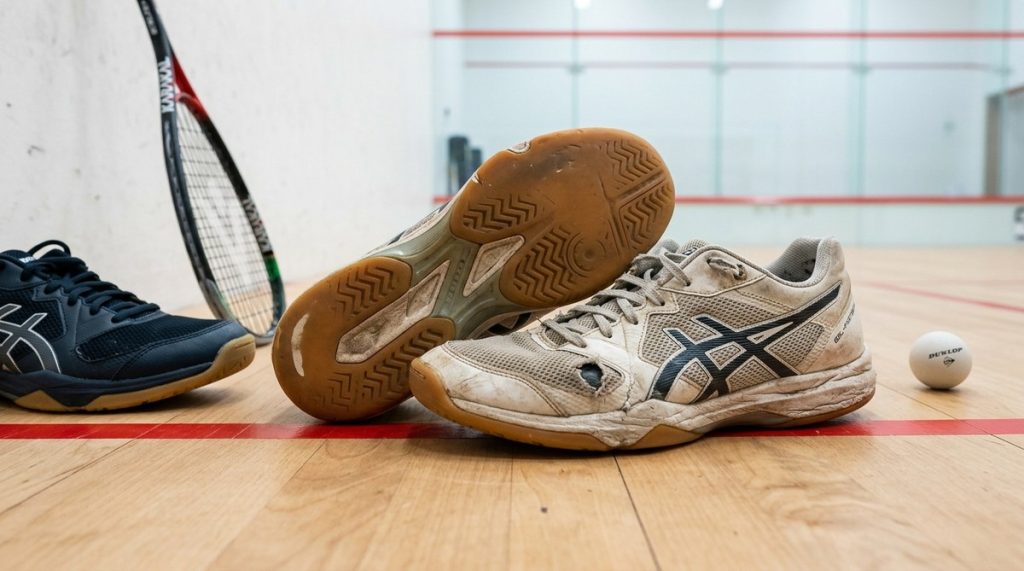
You lace up your trainers, step onto the court, and something feels off. Your first step to the side lacks that crisp bite. Your lunges feel a little unstable. Maybe your arches ache halfway through the second game, or your knees complain the morning after a match. You are not imagining it. Your squash shoes are likely past their best, and they are quietly sabotaging your footwork, your speed, and your recovery.
Worn squash shoes reduce grip, stability, and shock absorption, which directly slows your court coverage and increases injury risk. By learning to spot the five key signs of wear before your game suffers, you can replace your footwear at the right time and maintain the explosive movement that intermediate and advanced play demands.
The five signs your squash shoes are done
Squash puts unique demands on footwear. No other sport combines the same mix of lateral lunges, sudden stops, and repetitive impact on a hard court surface. Your shoes break down in predictable ways. Here is what to look for.
1. The tread pattern has gone smooth
Stand your shoes on a flat surface and look at the sole from eye level. The herringbone or zigzag pattern that once gripped the court should be clearly visible. If the rubber is flat, especially under the ball of your foot and the heel, you have lost traction.
A smooth sole is dangerous. On a dusty club court, you will slide during lateral movements. On a freshly waxed surface, you might slip completely. This is the most obvious sign your squash shoes are worn out, and it is also the easiest to ignore because the upper often looks fine.
Check the high-wear zones. Most players wear down the outside edge of the forefoot and the centre of the heel first. Run your thumb across these areas. If you cannot feel any texture, it is time to shop.
2. The midsole has lost its spring
Squash shoes use a foam midsole to absorb impact and return energy. That foam has a lifespan. After about 150 to 200 hours of court time, the air pockets collapse and the material compresses permanently.
You can feel this change. When you press your thumb into the midsole of a fresh shoe, it bounces back. On a worn shoe, the foam feels hard and does not recover. This loss of cushioning transfers every landing directly to your joints.
The result is not just discomfort. It affects your game. Without that spring, your push-off from a lunge is slower. Your first step in a rally loses its snap. If you are playing two to four times a week, your shoes will reach this point in about four to six months.
3. The heel counter has softened
The heel counter is the stiff plastic cup inside the back of the shoe. It holds your heel in place during lateral cuts. Squeeze the back of your shoe between your thumb and fingers. If it collapses easily, the counter has broken down.
A soft heel counter means your foot slides inside the shoe during direction changes. You will compensate by gripping with your toes, which leads to cramping and blisters. More importantly, it reduces your stability when you land from a jump or absorb a deep lunge.
This sign is common in players who tie their laces loosely or who have worn the same pair for two seasons. The counter does not fail suddenly. It weakens gradually, which is why many players do not notice until they try a new pair and feel how locked in their heel should be.
4. The upper has stretched or torn
Look at the sides of your shoes, particularly around the little toe and the midfoot. Squash shoes take constant stress from lateral lunges. The mesh or synthetic upper will eventually stretch, tear, or separate from the sole.
A small tear might seem cosmetic. It is not. Once the upper loses tension, your foot can shift inside the shoe during aggressive movements. This shifting creates friction, which causes hotspots that turn into blisters over a long match.
Also check the eyelets where your laces pass through. If they are frayed or pulling away from the upper, you cannot maintain a secure fit. A shoe that does not stay snug is a shoe that reduces your court coverage.
5. The insole has flattened
Pull the insole out of your shoe and place it on a flat surface. Compare it to a new insole if you have one, or simply look at the impression left by your foot. A flattened insole shows a clear outline of your heel and forefoot with little to no arch support remaining.
The insole is your first line of defence against impact. When it flattens, your arch collapses more during each step. This can cause plantar fasciitis, shin splints, and Achilles strain over time.
Many players replace the insole and think the problem is solved. It is not. A flattened insole is usually a symptom of a worn midsole underneath it. If the insole is flat, the shoe structure is likely gone too.
How to check your shoes in 60 seconds
You do not need special equipment to assess your footwear. Here is a simple routine you can do at home.
- The table test. Place both shoes on a flat table and photograph them from the side and from underneath. Compare the tread depth to a photo of a new pair of the same model.
- The twist test. Hold the shoe by the toe and heel and twist it. A supportive shoe should resist twisting. If it twists easily, the midsole has lost integrity.
- The squeeze test. Pinch the heel counter as described above. If it flexes more than a few millimetres, it is worn.
- The press test. Push your thumb into the midsole at the forefoot. If it feels hard and does not rebound, the foam is dead.
- The wear pattern check. Look at the outsole for uneven wear. If one side is significantly smoother, your gait may be contributing to early breakdown, and you might need a shoe with more lateral support.
What worn shoes do to your game
The table below shows how each sign of wear translates into a specific performance loss on court.
| Sign of wear | What happens to your movement | What you lose |
|---|---|---|
| Smooth tread | Slipping during lateral cuts | Split-second reaction time |
| Dead midsole | Hard landings, slow push-off | Explosive acceleration from lunges |
| Soft heel counter | Heel slip inside the shoe | Stability on deep lunges and jumps |
| Stretched upper | Foot shifts inside the shoe | Precision in direction changes |
| Flattened insole | Arch collapse, foot fatigue | Endurance in the third and fourth games |
Expert advice from a UK club coach with 15 years of experience: “I see players spend hundreds on a new racket and then ignore their shoes for a year. Your connection to the court is through your feet. If that connection is compromised, no racket upgrade will fix your footwork. Replace your shoes when the tread goes flat, not when the upper tears.”
When to replace your squash shoes
There is no single mileage number because court surfaces, playing frequency, and body weight all affect wear. But here is a practical guide based on the signs above.
- If you play 2 times per week: Check your shoes every three months. Expect replacement at around six to eight months.
- If you play 3 to 4 times per week: Check your shoes every two months. Expect replacement at around four to six months.
- If you play daily or coach: Check your shoes monthly. Expect replacement every three to four months.
These are guidelines. If you see any of the five signs before these timeframes, replace them sooner. Do not wait for multiple signs to appear. One clear sign is enough.
How to make your next pair last longer
You cannot stop wear, but you can slow it down.
- Rotate between two pairs. Alternating shoes gives the midsole foam time to recover between sessions. This can extend the life of each pair by up to 30 per cent.
- Dry them properly. Never leave wet shoes in a kit bag. Stuff them with newspaper and let them air dry at room temperature. Heat from radiators or direct sunlight degrades the foam and glue.
- Use court-specific shoes. Running trainers have different foam densities and lack the lateral support needed for squash. Using them on court will break them down faster and increase your injury risk.
- Replace insoles at the halfway point. A fresh insole can extend the life of the midsole by a few weeks, but it is a temporary fix, not a permanent solution.
The cost of playing in worn shoes
A new pair of squash shoes costs between 60 and 150 pounds for a solid club-level model. A single physio appointment for a knee or ankle issue costs more than that. A month off court due to plantar fasciitis costs you fitness, match practice, and enjoyment.
The math is simple. Replacing your shoes at the right time is far cheaper than treating an injury caused by worn footwear. If you are serious about your game, your shoes are not an area to cut corners.
When your footwork feels slow, check your soles
Your footwork is the foundation of everything you do on a squash court. It dictates how fast you reach the ball, how stable you are when you strike, and how quickly you recover for the next shot. If your movement feels sluggish or your landings feel harsh, do not immediately assume your technique is the problem. Look down at your shoes.
The signs are there if you know what to check. A smooth tread, a dead midsole, a soft heel counter, a stretched upper, or a flattened insole each tell the same story. Your shoes are no longer supporting the game you want to play.
Give your current pair a 60-second inspection before your next session. If you spot any of these signs, start looking for a replacement. Your feet, your knees, and your match results will thank you.