The Ultimate Guide to Squash Club Etiquette Every Member Should Know
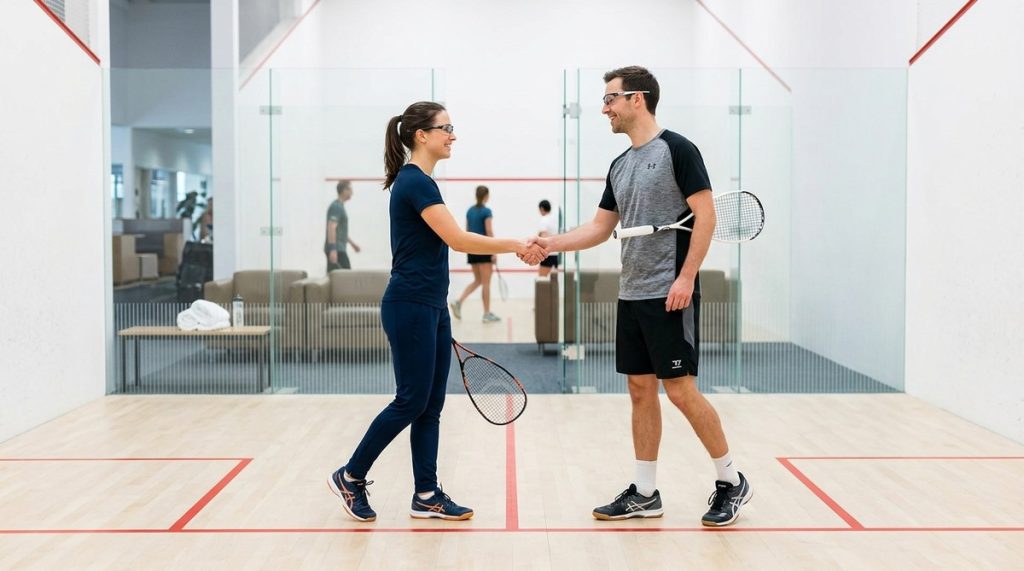
Walking onto a squash court for the first time can feel like entering a secret society with its own language and customs. You’ll notice experienced players shaking hands, moving with purpose, and following patterns that nobody ever explained in writing. These unwritten rules matter more than you might think. They keep matches fair, prevent injuries, and make everyone’s time on court more enjoyable.
Squash etiquette covers pre-match rituals, on-court safety, fair play during rallies, and post-match conduct. Mastering these unwritten rules helps you avoid awkward moments, prevents injuries, builds respect with opponents, and ensures you’re always welcome back on court. Good behaviour transforms you from a beginner into a valued club member who others genuinely want to play with.
Before You Step on Court
Arriving prepared shows respect for your opponent and the club. Turn up at least five minutes before your booked time. This gives you a moment to change shoes, grab water, and mentally prepare without rushing.
Always wear proper non-marking court shoes. Black-soled trainers leave streaks that ruin the playing surface for everyone else. If you’re unsure whether your footwear is suitable, check the sole colour or ask a club member before stepping on court.
Eye protection is mandatory at most clubs for good reason. A squash ball travelling at speed can cause serious injury. Choosing squash goggles that won’t fog up mid-match makes this safety requirement far less annoying.
Book your court properly through the club system. Never assume a court is free just because it looks empty. Someone might have booked it and be running a few minutes late. Taking someone else’s court time creates unnecessary conflict.
Bring your own equipment. Borrowing a racket occasionally is fine, but regularly turning up empty-handed makes you look unprepared. If you’re serious about the sport, invest in your own gear and maintain it properly.
The Pre-Match Ritual
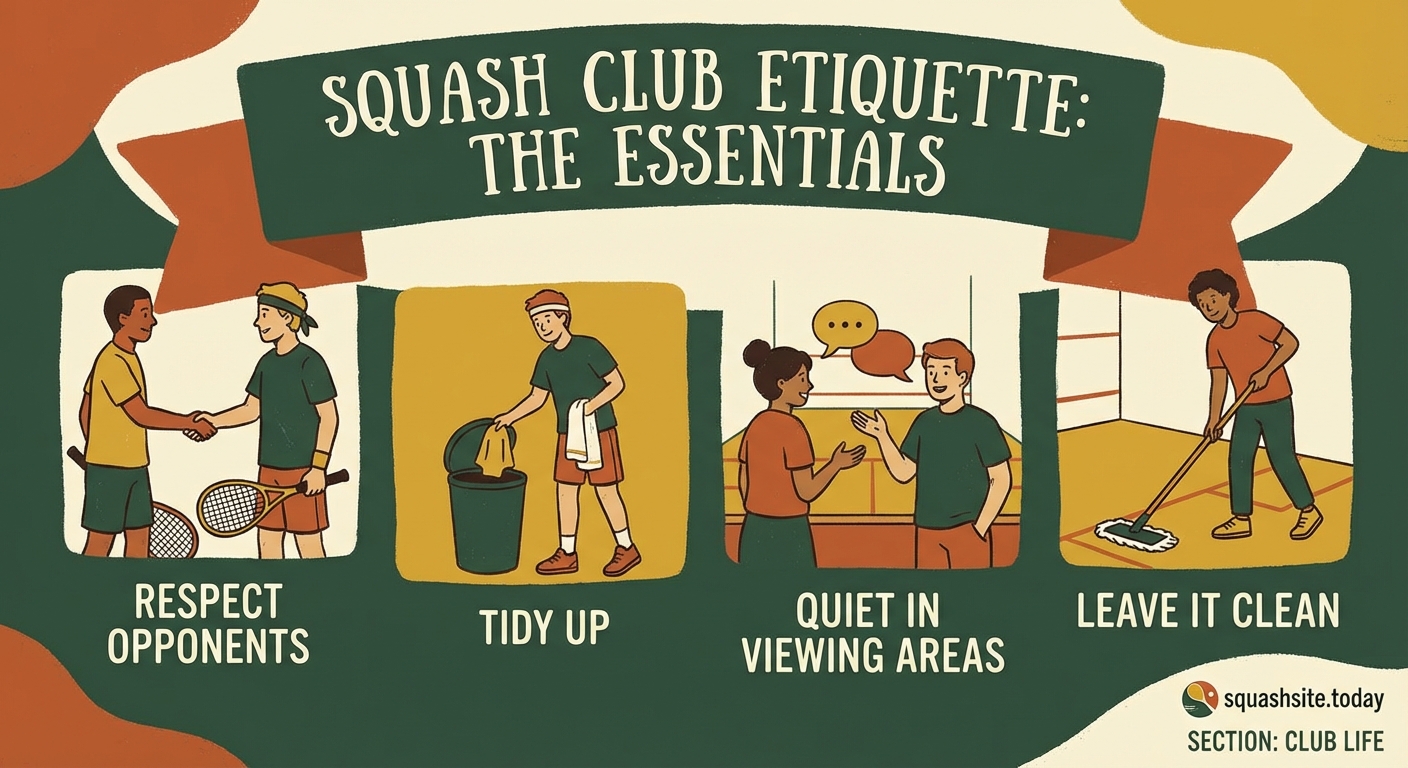
Start every match with a handshake. This simple gesture sets a respectful tone and acknowledges your opponent. It doesn’t matter if you’re playing a casual knockabout or a league match. Always shake hands before you begin.
Agree on the warm-up structure before you start hitting. Most players split the court in half, with each person warming up their shots on their side for about three minutes. Then you switch sides. This system ensures both players get equal practice time.
During the warm-up, hit to your opponent, not away from them. The point is to help each other get ready, not to score points or show off. Keep your shots controlled and predictable. Save the drop shot masterclass for when the match actually starts.
Take roughly the same number of shots as your opponent. If they’ve hit ten forehands, you should hit about ten as well. Don’t hog the ball for extended rallies whilst your opponent stands waiting.
Finish the warm-up when both players feel ready. Five minutes is standard, but some players need more time, especially if they’re coming straight from work or haven’t played in a while. A simple “ready?” confirms everyone is prepared to start.
Safety Comes First
Clear the ball immediately if it rolls onto court during a rally. Stop playing the moment you notice it. A stray ball creates a serious ankle-twisting hazard. Call “stop” loudly so your opponent knows why you’ve halted play.
Give your opponent space to swing. Stand behind them or well to the side. Never crowd them in a way that restricts their racket movement. Getting hit by a follow-through hurts, and it’s usually the fault of the player who didn’t give enough room.
Call a let if you genuinely can’t reach the ball safely. Don’t risk injury trying to squeeze past your opponent or stretch into a dangerous position. A let means you replay the point. It’s not a sign of weakness; it’s sensible play.
Watch your racket on the follow-through. Control your swing so you’re not flailing wildly after each shot. Younger or less experienced players sometimes get over-excited and swing too hard. Keep your movements compact and controlled.
Always warn your opponent if you’re about to hit a shot near them. A simple “watch out” or “coming through” gives them time to move. This matters especially on boasts and shots from the back corners where your opponent might not see what you’re planning.
During the Match
Return to the T position after each shot. This central spot gives you the best chance to reach your opponent’s next ball. Standing in the wrong place forces your opponent to adjust their shot or call a let. Avoiding common footwork mistakes on the T keeps play flowing smoothly.
Move out of your opponent’s way immediately after you’ve hit. Don’t linger in their path to the ball or block their view of the front wall. This interference is called obstruction, and it can cost you the point.
Call your own double bounces and down balls honestly. If the ball bounced twice before you hit it, or if your shot hit the tin, call it yourself. Don’t wait for your opponent to challenge. Self-policing builds trust and keeps the game fair.
Pass the ball directly to your opponent between points. Don’t hit it hard against the front wall or leave it rolling in a corner. A gentle hand-pass or a controlled tap to their side of the court shows respect and speeds up play.
“The mark of a true squash player isn’t how hard they hit the ball, but how fairly they play when no referee is watching. Self-honesty defines our sport.” – Club coach wisdom passed down through generations
Keep noise to a minimum during rallies. Grunting occasionally is fine, but constant shouting or talking disrupts concentration. Save your chat for between games. Your opponent deserves to focus without distraction.
Handling Lets and Strokes
Understand the difference between a let and a stroke. A let means you replay the point because interference occurred but wasn’t severe. A stroke awards the point to the player who was obstructed.
Request a let by stopping play and saying “let, please” calmly. Don’t shout or sound aggressive. Explain briefly why you’re asking if it’s not obvious. “You were in my swing path” or “I couldn’t see the ball” helps clarify.
Accept your opponent’s let requests graciously. Even if you disagree, getting angry achieves nothing in a friendly match. In competitive play, a referee makes these decisions. In social games, give your opponent the benefit of the doubt.
Don’t ask for lets when you’ve simply hit a poor shot. If you had a clear path to the ball and space to swing but chose the wrong shot, that’s not interference. Take responsibility for your mistakes.
Be consistent with let decisions throughout the match. If you gave a let for a certain situation in game one, you should give it for the same situation in game three. Changing standards mid-match feels unfair and creates tension.
| Situation | Correct Call | Why It Matters |
|---|---|---|
| Ball rolls onto court during rally | Stop immediately, replay point | Prevents ankle injuries |
| Opponent blocks your direct path to ball | Let or stroke depending on severity | Ensures fair access |
| You hit a poor shot with clear access | Continue play, no let | Maintains game integrity |
| Opponent’s racket nearly hits you | Stop play, discuss positioning | Protects both players |
| Ball hits opponent before front wall | Your point (if going to front wall) | Rewards good shot placement |
Acknowledging Good Play
Tap your racket on the floor or say “nice shot” when your opponent plays well. This simple acknowledgement shows sportsmanship and makes matches more enjoyable for everyone.
Don’t overdo the praise. A quick recognition is perfect. Constant commentary becomes distracting and can seem insincere. Save your detailed analysis for after the match.
Accept compliments gracefully. A simple “thanks” or a nod works perfectly. Don’t downplay your good shots or make excuses. Your opponent is being generous; respect that gesture.
Avoid celebrating excessively after winning points. A small fist pump is fine, but shouting or jumping around after every point feels disrespectful. Save the big celebrations for match point.
Never show frustration through racket abuse. Throwing your racket, hitting the walls, or slamming it on the floor damages equipment and creates an uncomfortable atmosphere. Everyone has bad days, but control your emotions.
Managing Match Tempo
Maintain a reasonable pace between points. Take a few seconds to breathe and prepare, but don’t dawdle. Excessive delays disrupt rhythm and can be seen as gamesmanship.
Use your allotted time between games properly. You typically get 90 seconds. Use it to towel off, drink water, and mentally reset. Don’t rush back onto court early to pressure your opponent.
Respect your opponent if they need a moment. Players sometimes need to retie a shoe, adjust goggles, or deal with an equipment issue. These brief pauses are normal and necessary.
Don’t take unnecessary injury breaks. If you need genuine medical attention, that’s absolutely fine. But calling for breaks to disrupt your opponent’s momentum is poor form and usually obvious.
Keep toilet breaks to genuine emergencies. Going between games is acceptable, but multiple breaks during a match suggests you’re either unwell or trying to break your opponent’s concentration.
After the Match
Always shake hands again after the final point. Thank your opponent for the game, regardless of the result. This closing ritual mirrors the opening handshake and maintains respect.
Help clear the court together. Pick up any water bottles, towels, or equipment you brought on. Don’t leave the mess for the next players or club staff to sort out.
Offer honest feedback if your opponent asks for it. Keep it constructive and specific. “Your cross-court drives were really tight today” is more helpful than vague praise.
Don’t offer unsolicited coaching immediately after beating someone. They might be frustrated or tired. If you want to share tips, wait until you’re both off court and relaxed. Better yet, ask if they’d like some thoughts rather than launching straight in.
Be gracious in victory and dignified in defeat. Nobody likes a gloating winner or a sulking loser. The result matters less than how you conducted yourself throughout.
Social Situations Around the Club
Learn and use people’s names. Squash clubs are communities, not just facilities. Making an effort to remember names and greet people warmly helps you integrate faster.
Respect the booking system and peak times. If courts are in high demand, stick to your allotted hour. Don’t overrun and inconvenience the next booking. Equally, don’t book multiple courts if you only need one.
Join in club events and social matches. Box leagues, club championships, and informal tournaments help you meet other members and improve your game. Organising a successful club championship often relies on enthusiastic participants.
Keep changing room behaviour appropriate. Everyone wants to get ready or shower in peace. Keep noise down, don’t hog facilities, and maintain basic hygiene standards.
Support the club’s rules and staff. If someone asks you to follow a particular procedure or points out an issue, respond positively. Club staff deal with difficult situations all day; make their job easier, not harder.
Teaching Newer Players
Be patient with beginners. Everyone started somewhere. If you’re playing someone less experienced, adjust your game to make it competitive and fun for both of you. Thrashing someone 11-0, 11-0, 11-0 helps nobody.
Explain rules and etiquette as you go. Don’t assume new players know the unwritten customs. A friendly “just so you know, we usually…” helps them learn without embarrassment.
Encourage rather than criticise. Point out what they’re doing well before suggesting improvements. “Your movement is getting better; now let’s work on…” feels supportive rather than harsh.
Offer to practice specific shots if they’re struggling. A few minutes working on serves or basic forehand technique can make a huge difference to someone’s confidence and enjoyment.
Remember that enthusiasm matters more than skill level. A keen beginner who turns up regularly and shows good attitude will become a valued club member faster than a talented player with poor behaviour.
Competitive Match Etiquette
Arrive earlier for league matches or competitions. These events run on tight schedules. Being late puts pressure on organisers and opponents.
Know the competition rules before you start. Scoring systems, time limits, and let/stroke decisions might differ from your usual social games. Ask the organiser if anything is unclear.
Accept the referee’s decisions without argument. You can ask for clarification politely, but don’t dispute every call. Referees are volunteers giving their time to help run the event.
Shake hands with the referee as well as your opponent. Thank them for their time and effort. Refereeing is difficult and often thankless work.
Stay to watch other matches if possible. Supporting fellow competitors builds community and helps you learn by observing different playing styles. Plus, it’s courteous to show interest in the event beyond your own matches.
Common Mistakes to Avoid
These behaviours mark you as someone who doesn’t understand squash culture:
- Wearing outdoor shoes on court or shoes with black soles
- Taking phone calls during matches or between games
- Coaching from the gallery during competitive matches
- Questioning every let decision in social games
- Leaving the court in poor condition for the next players
- Hogging practice courts during busy periods
- Turning up late repeatedly without apology
- Playing music loudly in changing rooms
- Criticising club facilities constantly without offering solutions
- Treating club staff or volunteers dismissively
Building Your Reputation
Your behaviour over time creates your reputation. One match won’t define you, but patterns of conduct will. Players with good reputations get invited to more games, included in club teams, and welcomed into social events.
The squash community is smaller than you think. Players move between clubs, compete in regional leagues, and talk to each other. Word spreads about both excellent and poor behaviour.
Be the player others want to face. That means being reliable, fair, pleasant, and competitive in the right way. You can be intensely focused on winning whilst still being respectful and enjoyable to play against.
Help maintain club standards by setting a good example. If you consistently demonstrate proper etiquette, newer members will learn from watching you. You become part of the solution rather than part of the problem.
Making Squash Enjoyable for Everyone
Etiquette exists to make squash better for all participants. It’s not about stuffy rules or outdated traditions. Every guideline serves a practical purpose: preventing injuries, ensuring fair play, or making matches more enjoyable.
The beauty of squash etiquette is that it’s mostly common sense wrapped in tradition. Treat others as you’d like to be treated. Play fairly. Stay safe. Show respect. These principles cover 90% of situations you’ll encounter.
Start applying these practices from your very next match. You don’t need to be perfect immediately. Even experienced players occasionally forget or make mistakes. What matters is your willingness to learn and improve your conduct alongside your game.
The players who master both technique and etiquette find themselves welcomed everywhere they go. They get more court time, better opponents, and deeper friendships. They transform squash from a simple sport into a lifelong community and passion.