How to Structure Your First 12 Weeks as a Junior Squash Coach
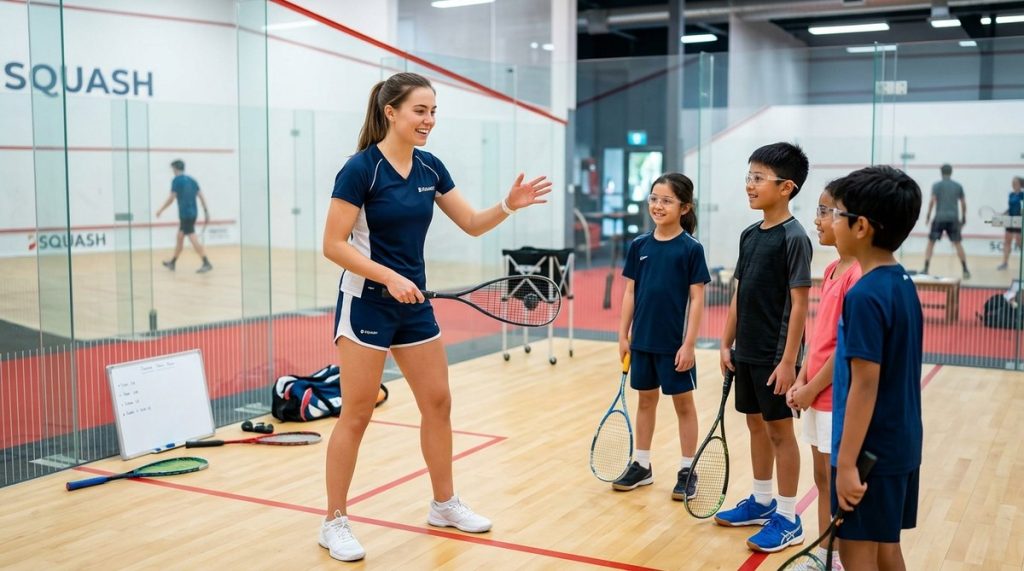
You’ve just landed your first junior coaching session. Eight kids are staring at you with rackets in hand, and you’re suddenly wondering whether you should start with grip technique or just let them hit the ball around for a bit.
Coaching children is nothing like working with adults. They have shorter attention spans, different physical capabilities, and they need constant variety to stay engaged. But get it right, and you’ll watch them transform from tentative beginners into confident players who genuinely love the sport.
Successful junior squash coaching relies on structured progression, age-appropriate drills, and maintaining high energy throughout sessions. Focus on fundamental movement patterns before complex shots, keep explanations under 30 seconds, and use games that disguise technical practice. Most importantly, prioritise fun and safety to build long-term player retention and genuine enthusiasm for the sport.
Understanding Different Age Groups and Their Needs
Children develop at vastly different rates, and your coaching approach needs to reflect that reality.
For ages 5 to 7, sessions should feel more like structured play than formal coaching. Their coordination is still developing, so forget about perfect technique for now. Use mini rackets, foam balls, and plenty of movement games that happen to involve hitting a ball. Sessions should last no longer than 30 minutes.
Ages 8 to 10 can handle more structured drills, but they still need frequent changes of activity. Their attention span maxes out at around 10 minutes per drill. This is the perfect age to introduce basic shot patterns and footwork fundamentals, but always frame them as challenges or games rather than technical exercises.
From 11 to 14, you can start treating them more like adult learners, but they still respond better to variety than repetition. They can grasp tactical concepts and understand why certain shots work in specific situations. This is when you can introduce proper forehand technique and expect them to retain corrections from week to week.
Teenagers aged 15 and above can handle adult-style coaching with minor modifications. They benefit from understanding the reasoning behind drills and appreciate being treated as serious athletes.
Building Your Session Structure
Every junior session needs a predictable framework. Kids thrive on routine, even if the content within that routine changes constantly.
Start with a five-minute warm-up that gets them moving and laughing. Tag games, relay races, or simple movement patterns around the court work brilliantly. The goal is to raise their heart rate and get them comfortable in the space.
Next comes your main technical focus, which should last 15 to 20 minutes maximum. Pick one skill per session. Trying to teach forehand drives, backhand volleys, and court positioning in a single hour guarantees that nothing sticks.
Follow technical work with conditioned games that reinforce what you’ve just taught. If you’ve been working on straight drives, create a game where players only score points when they hit the ball past the service box along the wall.
End every session with free play or a fun challenge. This rewards their hard work and ensures they leave the court smiling rather than exhausted.
“The best junior coaches I’ve worked with all share one trait: they can make repetitive drills feel like games. When kids don’t realise they’re practising, they’ll happily do the same movement pattern fifty times without complaint.” – Regional youth development coach
Essential Drills That Actually Work
Here are five drills that work across different age groups with minor modifications.
-
Target practice with cones: Place cones or markers in different areas of the court and award points for hitting them. Start with large targets close to the player, then gradually make them smaller and further away.
-
Rally challenge: Set a target number of consecutive hits and celebrate when they achieve it. Start with three hits in a row for beginners, then gradually increase to five, ten, or twenty.
-
Shadow swing stations: Set up different stations around the court where players practice specific swings without a ball. Rotate them through each station every two minutes. This builds muscle memory without the pressure of actually hitting.
-
Feed and move: You feed balls to specific areas whilst the player hits and returns to the T. This teaches proper court positioning through repetition without them realising they’re doing fitness work.
-
King of the court: Players compete in short games to three points, with winners staying on and losers rotating out. This creates natural competition whilst giving everyone regular rest periods.
Common Technical Mistakes and How to Fix Them
Junior players develop bad habits faster than adults because they lack the physical awareness to self-correct. Catch these early and you’ll save yourself months of remedial work later.
| Mistake | Why It Happens | Fix |
|---|---|---|
| Gripping too tight | Fear of dropping the racket | Have them hold the racket loosely, then squeeze only at contact point |
| Standing square to the front wall | Copying what they see in other sports | Use tape lines or cones to show them the correct side-on position |
| Swinging with only their arm | Lack of body awareness | Practice full body rotation without a racket first |
| Watching their own racket instead of the ball | Excitement about hitting | Use brightly coloured balls and make a game of calling out the ball colour |
| Running whilst preparing the racket | Poor coordination | Teach them to prepare early using a “ready, set, hit” verbal cue |
The grip deserves special attention because it affects everything else. Most juniors will naturally grip the racket like a hammer, which works fine for beginners but limits their development. Introduce the proper continental grip gradually, perhaps starting with it for volleys only, then expanding to other shots as they get comfortable.
Managing Groups Effectively
Coaching multiple children simultaneously requires different skills than one-on-one sessions. You need eyes in the back of your head and the organisational ability of a primary school teacher.
Never have more than eight children per court. Beyond that number, waiting time increases and engagement drops. If you have twelve kids, book two courts or split them into separate sessions.
Use clear signals for attention. A whistle works, but so does raising your hand and having them mirror you. Whatever system you choose, establish it in the first session and use it consistently.
Keep explanations brutally short. Thirty seconds maximum. If you need longer than that, you’re overcomplicating things. Demonstrate instead of explaining whenever possible.
- Pair stronger players with weaker ones for drills
- Rotate pairs frequently to prevent boredom
- Have backup activities ready for fast finishers
- Never single out struggling players in front of the group
- Use positive reinforcement at least three times more than corrections
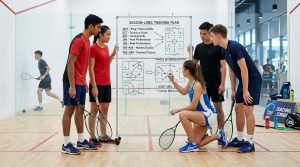
Create station-based activities when you have larger groups. Set up three or four different practice areas around the court, put two or three kids at each station, and rotate them every five minutes. This keeps everyone active and prevents the dreaded queue of bored children waiting for their turn.
Safety Considerations That Actually Matter
Junior squash coaching comes with genuine safety responsibilities that you cannot ignore.
Eye protection should be mandatory for all junior sessions, no exceptions. Yes, some kids will complain that goggles are uncomfortable or fog up. Address those issues by helping them find properly fitting eyewear, but never compromise on this rule.
Teach court awareness from day one. Kids naturally focus on the ball and forget that other humans exist. Practice calling “let” and stopping mid-rally. Make it a game where they earn points for good court awareness rather than just penalising dangerous play.
Check equipment regularly. Junior rackets take serious abuse, and a cracked frame can cause injury. Inspect rackets at the start of each session and remove any damaged equipment immediately.
Control the intensity of competitive drills. Young players will absolutely run through each other to win a point if you let them. Set clear boundaries about acceptable physical play and enforce them consistently.
Never leave children unsupervised on court, even for a minute. If you need to step out, stop play entirely.
Keeping Them Coming Back
Technical improvement means nothing if kids stop showing up after three weeks. Retention matters more than perfection.
Learn their names immediately. Use them constantly throughout the session. Children respond better to personalised feedback than generic group instructions.
Celebrate small wins loudly. Did someone finally hit five drives in a row after struggling for weeks? Make a big deal of it. Did the quietest kid in the group volunteer to demonstrate something? Acknowledge their bravery.
Mix competitive and cooperative activities. Some children thrive on competition whilst others find it stressful. Balance individual challenges with team-based games where everyone contributes to a shared goal.
Communicate with parents effectively. A thirty-second conversation after each session where you mention something specific their child did well builds trust and ensures parents understand the value you’re providing.
Create a simple reward system. Stickers work for younger kids. Certificates for achieving specific milestones work for older ones. The reward itself matters less than the recognition.
Progression Pathways for Developing Players
Once juniors have mastered the basics, they need clear next steps to maintain motivation.
Introduce solo practice routines that they can do outside of coached sessions. This accelerates their development and shows them that improvement happens through consistent effort, not just weekly coaching.
Create internal club competitions that feel achievable. Box leagues work brilliantly because everyone plays against people at a similar level. Nobody gets repeatedly thrashed, and everyone experiences both winning and losing.
Connect promising players with older juniors who can serve as role models. Watching someone just a few years older who plays well gives them a tangible vision of what they can achieve.
Recommend appropriate tournaments once they’re ready. Start with fun, low-pressure events rather than serious competitive tournaments. The goal is to build confidence and experience, not to win trophies immediately.
Consider introducing basic strategy concepts to your more advanced juniors. Understanding why certain shots work in specific situations accelerates their tactical development and makes them think like players rather than just ball hitters.
Equipment Recommendations for Junior Programmes
Getting the equipment right makes everything easier. Wrong equipment makes good coaching nearly impossible.
Junior rackets should be genuinely junior-sized, not just cheap adult rackets marketed to kids. A proper junior racket is shorter, lighter, and has a smaller grip. Children aged 5 to 8 need rackets around 19 inches long. Ages 9 to 11 can use 21 to 23 inch rackets. Only move to full-size rackets once they’re tall enough to swing them properly.
Ball selection matters more than most coaches realise. Start beginners with low-compression balls that bounce higher and move slower. The double yellow dot that adults use is completely inappropriate for juniors who are still developing their swing speed. Single yellow or even blue dots work far better for learning.
Court shoes need proper support and grip. Children will absolutely turn up in running shoes or trainers if you let them. Explain to parents why proper squash shoes matter for both performance and safety.
Keep a set of spare equipment available. Someone will always forget their racket or show up in inappropriate footwear. Having backup options prevents them from missing the session entirely.
Handling Difficult Situations
Not every session goes smoothly. Prepare yourself for these common challenges before they happen.
The child who refuses to participate needs a different approach than the one who’s simply having an off day. Pull them aside quietly and ask if something’s wrong. Sometimes they’re upset about something unrelated to squash. Other times they’re frustrated with their own performance and need reassurance.
The natural athlete who gets bored easily needs additional challenges. Give them harder variations of drills or ask them to help demonstrate for others. Making them a teaching assistant can channel their energy productively.
The nervous beginner who’s terrified of getting hit by the ball needs gradual exposure. Start them with soft balls and very controlled drills. Never force them into situations that trigger their fear. Build confidence slowly.
Parents who want to coach from the sidelines need clear boundaries. Politely but firmly explain that multiple instructions confuse children and undermine your coaching. Invite them to discuss their child’s progress after the session instead.
The child with genuine behavioural challenges needs consistent expectations and consequences. Set clear rules from day one, apply them fairly, and follow through every time. If behaviour becomes unmanageable, speak with parents about whether your programme is the right fit.
Your First Session Checklist
Walking onto court for the first time feels overwhelming. This checklist helps you cover the essentials.
- Arrive 15 minutes early to set up equipment and check the court is safe
- Greet each child by name as they arrive
- Explain basic court safety rules before anyone picks up a racket
- Start with an energetic warm-up game
- Introduce one technical concept with a clear demonstration
- Practice that concept through at least two different drills
- Include a conditioned game that reinforces the skill
- End with free play or a fun challenge
- Gather everyone for a 30-second summary of what they learned
- Speak briefly with parents about what you covered
Building Your Coaching Confidence Over Time
Nobody becomes an exceptional junior coach overnight. You’ll make mistakes, and that’s completely normal.
Record yourself coaching occasionally. Watching the footage reveals habits you don’t notice in the moment. You might discover that you spend too long explaining, or that you’re unconsciously giving more attention to certain children.
Observe other junior coaches whenever possible. Even watching coaches in different sports provides valuable insights into group management and engagement techniques.
Ask for feedback from parents and older juniors. They’ll often notice things that you miss about how children respond to different activities or explanations.
Keep notes after each session about what worked and what didn’t. This creates a personal database of effective drills and helps you avoid repeating unsuccessful approaches.
Connect with other junior coaches through local clubs or online communities. Sharing challenges and solutions with people facing similar situations accelerates your development significantly.
Creating Sessions That Build Long-Term Players
The real measure of successful junior coaching isn’t how many kids you have in your programme next month. It’s how many of them are still playing squash in five years.
That happens when you prioritise their experience over their technical perfection. When you make them feel capable rather than constantly correcting their mistakes. When sessions feel like something they look forward to rather than an obligation.
Children who love squash will naturally improve over time. Children who see it as a chore will quit the moment something more interesting comes along. Your job is to build that foundation of genuine enthusiasm whilst gradually developing their skills.
Start with these principles, adapt them to your specific group, and trust that you’ll improve alongside your players. Every session teaches you something new about how children learn and what keeps them engaged. That knowledge becomes your most valuable coaching tool.