Creating Effective Group Coaching Sessions That Keep Everyone Engaged
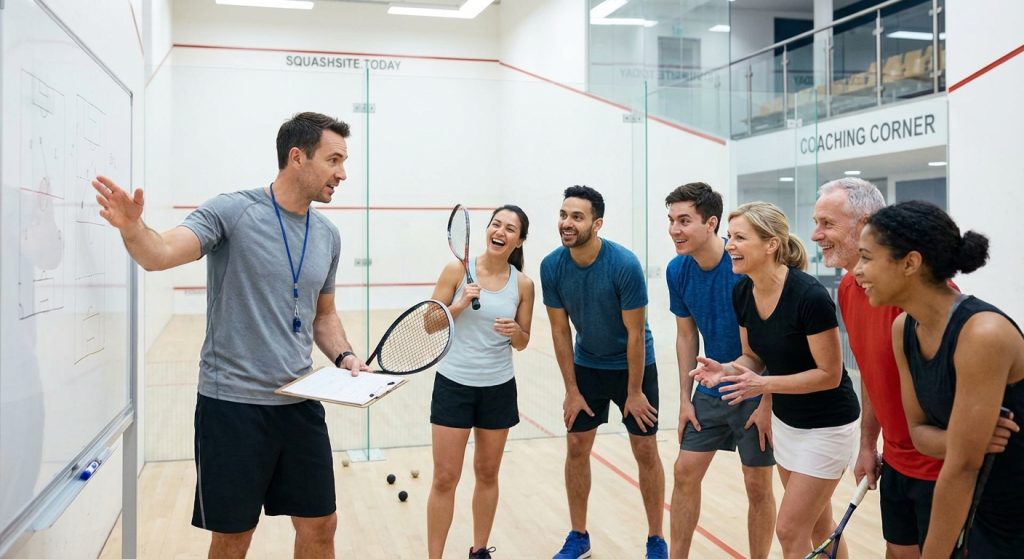
Running a group coaching session feels different from one-to-one work. You’ve got multiple personalities, varying skill levels, and the constant challenge of keeping everyone engaged whilst ensuring each person gets value. The stakes are higher because when one participant checks out, the energy drops for everyone.
Successful group coaching sessions balance structure with flexibility, using clear frameworks to guide participants whilst creating space for peer learning. The best coaches design sessions around specific outcomes, manage group dynamics actively, and build accountability systems that extend beyond the session itself. Focus on creating psychological safety, varying your delivery methods, and ensuring every voice contributes to the collective learning experience.
Understanding What Makes Group Coaching Different
Group coaching isn’t just individual coaching with more people in the room. The dynamics shift completely.
You’re managing relationships between participants, not just between you and each person. Some participants will naturally dominate conversations. Others will hide behind silence. Your role expands from coach to facilitator, mediator, and sometimes referee.
The power of group coaching lies in peer learning. When one participant shares a breakthrough, others see their own challenges reflected back. When someone asks a question, three others were thinking the same thing. This collective intelligence becomes your greatest asset.
But it requires deliberate design.
Sessions need enough structure to feel purposeful but enough flexibility to follow valuable tangents. You need frameworks that guide without constraining, exercises that reveal without exposing, and questions that challenge without threatening.
The Pre-Session Foundation That Determines Success
Most group coaching sessions fail before they start. Poor preparation guarantees mediocre results.
Define your session outcome with precision. Not “improve leadership skills” but “identify one specific behaviour each participant will modify this week to reduce team conflict.” Vague outcomes produce vague sessions.
Know your participants before they arrive. Send a pre-session questionnaire asking about their current challenges, what they hope to gain, and one success they’ve had recently. This data shapes your entire approach.
Create psychological safety from the start. Send clear expectations about confidentiality, participation norms, and session structure. Uncertainty breeds anxiety, which kills engagement.
Prepare more content than you’ll use. Have backup exercises, alternative discussion prompts, and contingency activities. Groups move at unpredictable speeds. Being overprepared lets you adapt smoothly.
Set up your physical or virtual space intentionally. Circles work better than rows. Breakout spaces matter. Visual aids should be visible to everyone. Technical glitches destroy momentum, so test everything twice.
The Opening 15 Minutes That Set Your Tone
First impressions compound throughout the session. Start poorly and you’re fighting uphill for hours.
Begin with a connection exercise, not content. Get people talking to each other immediately. Pair them up for two-minute introductions about something non-threatening: their best holiday this year, what brought them to coaching, or one thing they’re proud of this month.
This serves multiple purposes. It breaks the ice. It shifts energy from passive to active. It establishes that this session involves participation, not just listening.
State your session outcome clearly and check alignment. Ask “Does this outcome serve what you need today?” If three people say no, you’ve got a problem. Better to know now than discover it halfway through.
Establish ground rules collaboratively. Ask the group what they need to feel safe contributing. Write their suggestions visibly. This creates ownership rather than compliance.
Share your agenda with time allocations. Transparency reduces anxiety. People relax when they know what’s coming and when breaks happen.
The first 15 minutes determine whether participants see themselves as recipients of your wisdom or co-creators of their learning. Choose the latter every time.
Designing Activities That Maintain Energy and Focus
Lecture-style delivery kills group coaching sessions. Adults learn by doing, not just hearing.
Structure your session around these activity types, rotating between them every 15 to 20 minutes:
-
Individual reflection. Give participants thinking time before group discussion. Use prompts like “Write three examples of when this challenge appeared last week” or “Score yourself 1 to 10 on this skill and note why.”
-
Paired conversations. Small groups feel safer than large ones. Pairs work brilliantly for deeper sharing. Give specific prompts and time limits. Bring insights back to the larger group.
-
Group discussion. Frame questions that provoke thinking rather than yes/no answers. “What makes this difficult?” works better than “Is this difficult?” Use a talking piece to manage contributions.
-
Skill practice. If you’re teaching communication techniques, have participants practice them. Role plays feel awkward but create learning that sticks. Make them specific and short.
-
Case study analysis. Present real scenarios (anonymised) and have small groups develop solutions. This bridges theory and application beautifully.
-
Action planning. Reserve time for participants to translate insights into specific commitments. Vague intentions don’t create change.
The rhythm matters as much as the content. Vary your delivery. Change the energy. Alternate between introspection and interaction.
Managing Different Skill Levels Without Losing Anyone
Mixed-ability groups create coaching headaches. Advanced participants get bored. Beginners feel overwhelmed. Everyone leaves unsatisfied.
Address this directly in your design:
Create tiered exercises. When practicing a skill, offer basic, intermediate, and advanced versions. Let participants choose their entry point. This respects their self-assessment whilst challenging everyone appropriately.
Use advanced participants as peer coaches. Pair experienced people with beginners for certain activities. This serves both: one gets to teach (which deepens learning), the other gets personalised attention.
Differentiate your questions. Ask beginners “What’s one way you could apply this?” and advanced participants “What obstacles will you face implementing this and how will you overcome them?”
Build in choice. Offer optional advanced reading, bonus exercises, or extension challenges. Those who want more can take more without slowing others down.
Normalise different paces. Say explicitly “Some of you will finish this exercise in three minutes, others will need seven. Both are fine. If you finish early, deepen your reflection rather than waiting.”
The Art of Facilitating Group Discussions That Go Somewhere
Group discussions either generate insights or waste time. The difference is your facilitation.
Ask better questions. Replace “What do you think?” with “What surprised you about that exercise?” or “Where does this show up in your work?” Specific questions produce specific answers.
Use silence strategically. After asking a question, count to ten in your head. Resist filling the gap. Someone will speak. Often the best contributions come from people who need thinking time.
Redirect rather than answer. When someone asks you a question, bounce it to the group: “That’s interesting. Has anyone here faced this?” You’re not the only expert in the room.
Manage dominant voices gently. “Thanks, James. Let’s hear from someone who hasn’t spoken yet.” Or “I’m going to pause you there and come back to you in a moment.” Protect space for quieter participants.
Draw out silent participants carefully. Never put someone on the spot publicly. Instead, during a paired activity, check in privately: “You’ve been quiet. What’s coming up for you?” Give them permission to pass.
Summarise and link. Every 10 minutes, reflect back what you’re hearing: “I’m noticing themes around time management and delegation. Let’s build on that.” This creates coherence from scattered contributions.
Follow valuable tangents briefly, then redirect. If a discussion veers off but it’s valuable, acknowledge it: “This is important. Let’s spend five minutes here, then return to our main thread.”
Building Accountability Systems That Extend Beyond the Session
Group coaching sessions that end with “good chat” achieve nothing. Real coaching creates behaviour change.
Make commitments public and specific. In the final 20 minutes, have each participant state one action they’ll take this week, by when, and how they’ll measure success. Write these down visibly.
Create accountability partnerships. Pair participants to check in with each other between sessions. Give them a simple structure: “What did you commit to? Did you do it? What got in the way?”
Use follow-up touchpoints. Send a midweek email asking “How’s your commitment going? What support do you need?” This signals you’re tracking and you care.
Build progress sharing into your next session. Start by asking “Who followed through on their commitment? What happened?” Celebrate wins publicly. Explore barriers without judgement.
Provide tools for self-monitoring. Give participants tracking sheets, reflection prompts, or progress journals. Make accountability easy, not burdensome.
Connect actions to outcomes. Help participants see the link between their small commitments and bigger goals. “You said you wanted to reduce team conflict. How did this week’s communication experiment affect that?”
| Technique | Purpose | When to Use |
|---|---|---|
| Round-robin sharing | Ensure every voice is heard | Opening check-ins, closing commitments |
| Think-pair-share | Deepen reflection before group discussion | Before tackling complex topics |
| Fishbowl discussion | Model effective conversation | Teaching communication skills |
| Gallery walk | Generate ideas and build on others’ thinking | Brainstorming solutions |
| Case clinic | Apply group wisdom to individual challenges | Mid-session problem-solving |
| Parking lot | Capture important tangents without derailing | Managing scope and time |
Common Pitfalls and How to Avoid Them
Even experienced coaches make predictable mistakes in group settings.
Running over time. Respect the schedule ruthlessly. Finish five minutes early rather than five minutes late. People have commitments. Overrunning signals poor planning.
Letting one person dominate. Address this in the moment, not afterwards. Use the techniques mentioned earlier. Your silence enables their dominance.
Ignoring group energy. If energy drops, change activity immediately. Don’t push through a discussion that’s died. Call a five-minute break or shift to movement.
Teaching instead of coaching. Group coaching isn’t a workshop. Reduce your talking time to 30% maximum. If you’re speaking more than participants, you’ve lost the plot.
Avoiding conflict. When disagreement surfaces, lean into it: “There are different perspectives here. Let’s understand both.” Healthy conflict generates learning. Suppressing it creates resentment.
Failing to close properly. Never run out of time for closing. The final 15 minutes matter enormously. Protect them fiercely.
Not adapting to the room. Your agenda is a guide, not gospel. If participants need something different from what you planned, adjust. Flexibility demonstrates mastery, not weakness.
Measuring What Actually Matters
Group coaching effectiveness isn’t about participant happiness. It’s about behaviour change and outcome achievement.
Track these metrics:
- Participation rates. Who contributes? Who doesn’t? Patterns reveal your facilitation blind spots.
- Commitment completion. What percentage of participants follow through on their stated actions? This measures real impact.
- Peer connection. Are participants building relationships with each other? Do they support one another between sessions?
- Skill application. Can participants demonstrate the skills you’re coaching? Theory without application is entertainment.
- Progress towards stated goals. Are participants moving closer to the outcomes they defined at the start?
Gather feedback through short post-session surveys. Ask three questions:
- What was most valuable today?
- What would you change?
- On a scale of 1 to 10, how likely are you to apply what you learned?
Review this data before your next session. Patterns emerge quickly. Adjust accordingly.
Practical Session Structures That Work
Here are three proven formats for different group coaching contexts:
The skill-building session (90 minutes):
– Opening connection (10 min)
– Teach core concept (15 min)
– Demonstrate skill (10 min)
– Practice in pairs (20 min)
– Group debrief (15 min)
– Individual action planning (15 min)
– Closing commitments (5 min)
The peer learning session (120 minutes):
– Check-in and progress sharing (20 min)
– Case clinic: one participant presents challenge (30 min)
– Small group problem-solving (30 min)
– Share solutions and insights (20 min)
– Individual reflection and planning (15 min)
– Closing round (5 min)
The intensive workshop session (half day):
– Connection activities (20 min)
– Frame the challenge (15 min)
– Individual assessment exercise (20 min)
– Small group discussions (30 min)
– Break (15 min)
– Teach framework or model (20 min)
– Application exercise (40 min)
– Group sharing and feedback (30 min)
– Action planning (20 min)
– Closing and commitments (10 min)
Adapt these to your context, but maintain the rhythm of input, processing, application, and commitment.
Technology and Tools That Enhance Group Coaching
The right tools amplify your effectiveness. The wrong ones create friction.
For virtual sessions:
– Breakout rooms for small group work
– Shared documents for collaborative note-taking
– Digital whiteboards for visual mapping
– Polling features for anonymous input
– Chat for quieter participants to contribute
For in-person sessions:
– Large sticky notes for individual brainstorming
– Flip charts for capturing group thinking
– Different coloured markers for categorising ideas
– Index cards for anonymous questions
– Timer visible to everyone
For ongoing accountability:
– Shared tracking spreadsheets
– Private messaging groups
– Scheduling tools for accountability partnerships
– Simple reminder systems
Don’t over-complicate. One well-used tool beats five underutilised ones.
Adapting Your Approach for Different Group Sizes
Group size fundamentally changes your facilitation approach.
Small groups (4 to 8 participants):
Everyone can contribute in full group discussions. You can track individual progress closely. Intimacy builds faster. Use more open discussion and fewer structured breakouts.
Medium groups (9 to 15 participants):
The sweet spot for group coaching. Large enough for diverse perspectives, small enough for connection. Use a mix of full group and small breakout discussions. Rotate small group membership to build broader connections.
Large groups (16+ participants):
Require more structure and tighter facilitation. Use breakouts extensively. Assign roles (timekeeper, note-taker, reporter) to maintain focus. Limit full group sharing to key insights only.
Scale your techniques to your numbers. What works for six fails with sixteen.
Creating Psychological Safety in Group Settings
Nothing matters more than psychological safety. Without it, participants perform rather than learn.
Build safety through:
Modelling vulnerability. Share your own struggles and failures. If you present as perfect, participants won’t risk imperfection.
Responding to contributions generously. Never dismiss or minimise what someone shares. Find value in every contribution, even clumsy ones.
Protecting confidentiality explicitly. What’s said in the room stays in the room. State this clearly and remind participants regularly.
Normalising struggle. When someone shares a challenge, respond with “That’s common. Who else experiences this?” Isolation kills motivation. Connection sustains it.
Celebrating attempts, not just successes. Praise people for trying new approaches, even when they don’t work. This encourages experimentation.
Addressing breaches immediately. If someone mocks, dismisses, or attacks another participant, intervene instantly. Safety requires active protection.
Why Group Coaching Demands Different Skills Than Individual Work
Many excellent one-to-one coaches struggle with groups. The skillset differs significantly.
Individual coaching lets you follow one person’s thread deeply. Group coaching requires tracking multiple threads simultaneously whilst weaving them together.
You need stronger facilitation skills, better time management, and higher tolerance for ambiguity. You’re orchestrating a conversation, not having one.
The rewards differ too. Individual coaching creates deep transformation for one person. Group coaching creates moderate transformation for many, plus the bonus of peer support networks that outlast your sessions.
Both matter. Both require mastery. Don’t assume competence in one transfers automatically to the other.
If you’re building your coaching skills more broadly, understanding what makes a great squash coach can offer insights into developing the qualities that transcend individual technique and apply to group dynamics as well.
Bringing Your Group Coaching Sessions to Life
Group coaching sessions succeed when you balance careful preparation with responsive facilitation. Design clear structures, then hold them lightly enough to follow the group’s energy and needs.
Focus on creating conditions where participants learn from each other, not just from you. Your role is to facilitate that peer learning, manage the dynamics that enable it, and hold everyone accountable to the commitments they make.
Start small. Run one well-designed session before building a full programme. Gather feedback ruthlessly. Refine your approach based on what actually works, not what you think should work.
The coaches who master group work create impact that scales beyond their individual capacity. They build communities of practice where learning continues long after the formal session ends.
That’s worth the effort of getting it right.