Coaching Adult Improvers: Strategies for Teaching Players Who Started Late
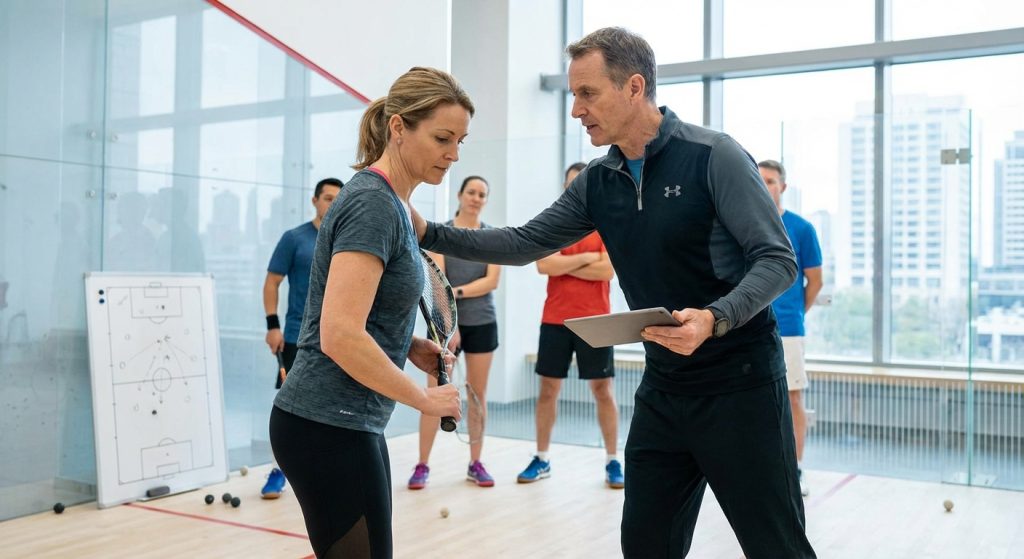
Teaching a 45-year-old who picked up a racket six months ago requires a completely different approach than coaching a teenager who’s been on court since age eight. Adult improvers bring unique challenges and surprising advantages to the learning process. They carry decades of physical habits, professional time constraints, and often a harsh inner critic that no junior player possesses. Yet they also arrive with motivation, discipline, and life experience that can accelerate their progress when coached properly.
Coaching adult improvers demands patience, realistic goal-setting, and technical adaptations that respect physical limitations whilst building confidence. Successful coaches prioritise movement efficiency over power, celebrate small wins, address psychological barriers, and create structured progressions that fit around busy adult schedules. The reward is watching committed learners transform their game through deliberate practice and intelligent coaching.
Understanding the Adult Learning Mindset
Adults don’t learn like children. They question everything. They want to know why a technique works before committing to hours of repetition. They bring ingrained movement patterns from other sports, office chairs, and years of physical compensation.
A 38-year-old solicitor who takes up squash arrives with tight hip flexors from desk work, a lower back that protests sudden rotation, and ankles that haven’t changed direction explosively in two decades. Yet this same person can analyse their own performance, follow complex tactical instructions, and commit to structured training plans that would bore a 14-year-old senseless.
The psychological dimension matters enormously. Adult improvers often compare themselves to club players who’ve been competing for years. They feel embarrassed making basic errors in front of others. They worry about injury. They fear looking foolish.
Your job as a coach extends beyond technical instruction. You’re managing expectations, rebuilding confidence after frustrating sessions, and helping adults rediscover the joy of learning something genuinely difficult.
Building Foundations Without Breaking Bodies
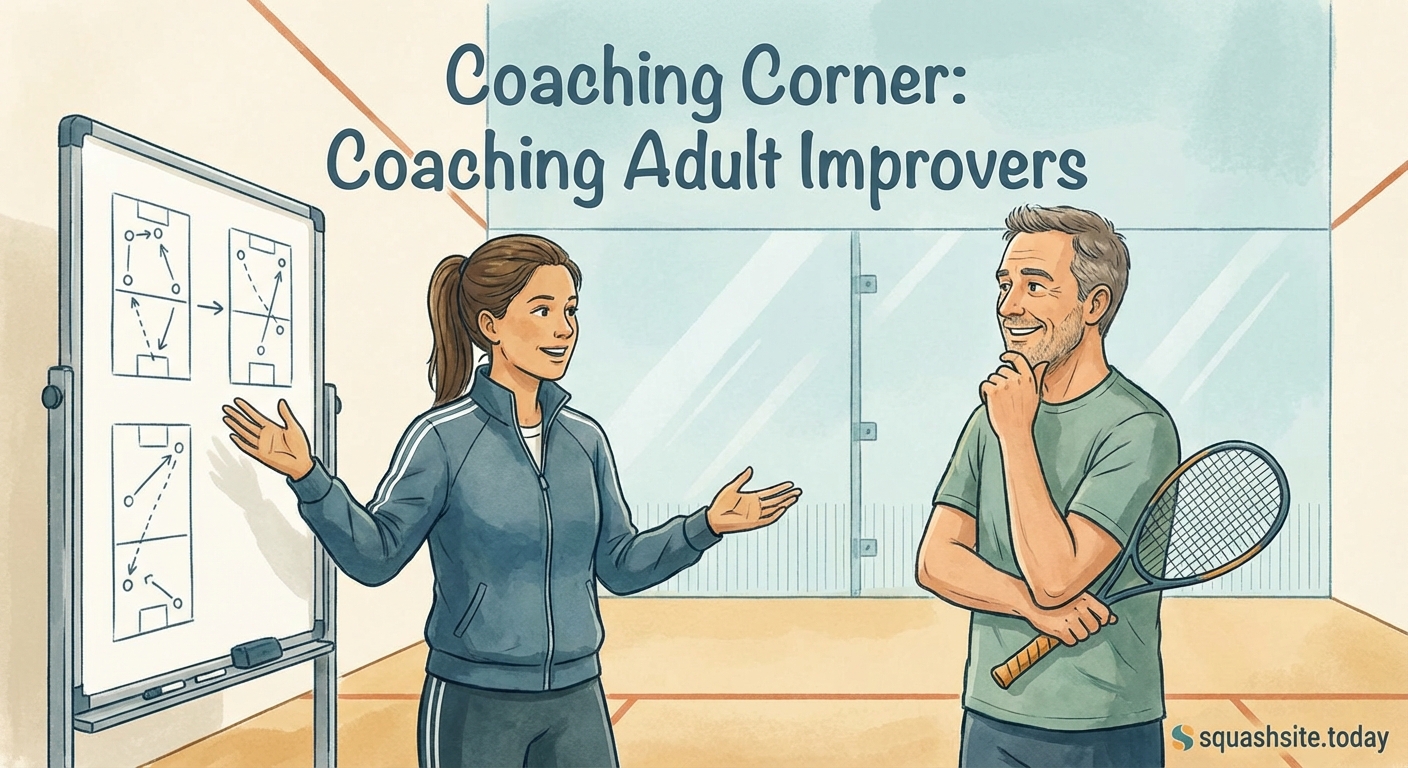
Adult bodies need different technical approaches than junior players. Power comes from efficiency, not brute force. Movement quality trumps speed. Injury prevention becomes part of every lesson.
Start with these foundational principles:
-
Assess movement restrictions before teaching technique. Watch how your student walks, lunges, and rotates. Identify mobility limitations that will affect their swing or footwork. A player with limited shoulder rotation cannot execute a textbook backhand without compensation elsewhere.
-
Teach the compact swing first. Adults lack the flexibility and recovery time for elaborate preparation. Focus on a shorter backswing, efficient weight transfer, and controlled follow-through. The perfect example is the perfect squash swing, which breaks down the forehand drive into manageable components.
-
Prioritise court positioning over shot-making. An adult improver who holds the T position and hits simple straight drives will beat a player with flashy shots but poor positioning. Teach them where to stand, when to move, and how to recover efficiently.
-
Build movement patterns gradually. Start with static hitting, progress to predictable movement drills, then introduce reactive elements. Rushing this progression leads to injury and frustration. Consider incorporating ghosting routines that develop court coverage without the impact of constant ball-striking.
-
Address common technical errors immediately. Don’t let bad habits solidify. An adult who practises incorrect technique for three months will struggle to unlearn it. Common issues like backhand volley errors need early intervention.
-
Incorporate rest and recovery. Adult bodies need 48 hours between intense sessions. Schedule lighter technical work between demanding physical training. Teach them about recovery principles used by elite players.
Creating Realistic Progression Timelines
Adults want to know how long improvement takes. They’re used to professional development where effort correlates predictably with advancement. Sport doesn’t work that way, but you can provide honest timelines.
Here’s what realistic progress looks like for an adult improver training twice weekly:
| Timeframe | Technical Milestone | Tactical Understanding | Physical Capability |
|---|---|---|---|
| 3 months | Consistent contact, basic straight drive | Understands T position | Can complete 20-minute rallies |
| 6 months | Reliable length, developing volley | Recognises attacking opportunities | Recovers to T consistently |
| 12 months | Controlled cross-courts, basic drops | Constructs simple point patterns | Maintains intensity for full matches |
| 24 months | Varied pace and placement | Adapts tactics mid-match | Competes effectively in club leagues |
These timelines assume consistent training, proper coaching, and no major injuries. Age, prior athletic experience, and natural coordination all affect the pace of improvement.
Be honest about plateaus. Adults will hit frustrating periods where progress stalls. Explain that skill consolidation often happens invisibly before manifesting in match performance.
Structuring Sessions for Time-Poor Adults
Your adult students juggle work, family, and other commitments. They can’t train five days weekly. They might cancel sessions for business trips or school holidays. Your coaching must accommodate these realities.
Design sessions that maximise learning in limited time:
-
Start with a consistent warm-up routine. Teach them a 10-minute sequence they can do independently before you arrive. This saves coaching time for technical work.
-
Focus each session on one primary skill. Trying to cover footwork, volleys, and tactical positioning in 45 minutes leads to shallow learning. Go deep on one element.
-
End with competitive pressure. Even a simple points-to-11 game applies learned skills under match conditions. Adults need to practise performing under pressure.
-
Provide homework drills. Give them specific exercises for solo court practice between coached sessions.
-
Record video regularly. Adults benefit enormously from seeing their own technique. A 30-second video reveals more than 10 minutes of verbal correction.
Managing the Psychological Game
Adult improvers carry mental baggage that affects their performance. They catastrophise mistakes. They compare themselves unfavourably to others. They quit when progress slows.
Your coaching must address these psychological patterns:
“The biggest barrier for adult learners isn’t physical limitation. It’s the voice in their head saying they’re too old, too slow, or too far behind. Your job is helping them replace that voice with realistic self-assessment and genuine progress markers.”
Build psychological resilience through these approaches:
-
Celebrate process over outcome. Praise the quality of their movement to the ball, not whether they won the point. Adults respond to specific, technical feedback more than generic encouragement.
-
Reframe errors as data. When they hit the tin, ask what they noticed about their preparation or racket angle. Turn mistakes into learning opportunities rather than failures.
-
Set micro-goals within sessions. Instead of “improve your volley,” aim for “three consecutive volleys above the service line.” Achievable targets build confidence.
-
Share your own learning struggles. Adults respect coaches who admit to ongoing development. Mention a technique you’re currently refining or a tactical concept you recently understood better.
-
Create peer learning opportunities. Adult improvers benefit from practising with others at similar levels. The social element reduces performance anxiety and builds community.
Technical Adaptations for Physical Limitations
Not every adult can lunge like a professional player. Some carry old injuries. Others lack the flexibility for textbook technique. Effective coaching works within these constraints.
Common physical limitations and coaching adaptations:
-
Limited ankle mobility: Teach a wider stance and smaller steps rather than explosive lunges. Focus on anticipation and positioning to reduce extreme stretching.
-
Shoulder restrictions: Modify the backswing and follow-through. A compact swing with proper weight transfer generates adequate power without requiring full rotation. Equipment choices like racket grip size can also accommodate hand and wrist limitations.
-
Lower back sensitivity: Emphasise leg drive over trunk rotation. Teach them to load through their legs and use their core for stability rather than power generation.
-
Knee concerns: Prioritise proper lunging technique that protects joints. Sometimes the best coaching decision is teaching a player to let certain balls go rather than risk injury.
-
Reduced cardiovascular fitness: Structure training with work-to-rest ratios that allow recovery. Use drills that maintain intensity without constant sprinting.
Don’t try to force adult bodies into junior movement patterns. Adapt techniques to work with their physical reality whilst still developing effective squash skills.
Developing Match Intelligence Faster
Adult improvers can accelerate their tactical development because they bring analytical skills from their professional lives. They understand systems, patterns, and strategic thinking.
Teach match intelligence explicitly:
-
Break down point construction. Show them how professional players build attacking opportunities through three or four shots. Adults grasp these patterns faster than juniors.
-
Teach opponent analysis. Give them a simple framework for identifying weaknesses in the first few points. This systematic approach suits adult thinking styles.
-
Use video analysis. Watch professional matches together and discuss tactical decisions. Adults enjoy this cerebral element of improvement.
-
Create decision-making drills. Set up scenarios where they must choose between attacking and defending. Adults benefit from practising these decisions under controlled conditions before facing them in matches.
The tactical dimension often becomes an adult improver’s greatest strength. Their physical skills might lag behind lifelong players, but their match intelligence can develop rapidly with proper coaching.
Equipment Guidance for Adult Learners
Adults often want to buy their way to better performance. Your guidance on equipment matters because they’ll listen to your expertise and poor equipment choices can hinder development.
Key equipment considerations:
-
Racket selection: Recommend lighter, head-heavy rackets for players still developing technique. These generate power with less effort and reduce injury risk.
-
String tension: Suggest appropriate string tension based on their current power generation and control needs.
-
Footwear: Proper squash shoes prevent injuries and improve movement confidence. This is non-negotiable for adult players.
-
Eye protection: Strongly recommend appropriate goggles. Adults understand risk management and will invest in safety equipment when you explain the stakes.
-
Maintenance: Teach them about restringing schedules and equipment care. Adults appreciate this practical knowledge.
Common Coaching Mistakes to Avoid
Even experienced coaches make errors when working with adult improvers. These mistakes undermine progress and damage the coaching relationship.
Avoid these pitfalls:
-
Comparing them to junior players. Adults know they’ll never move like a 16-year-old. Frame their development against their own baseline, not against young athletes.
-
Overloading technical information. Adults want to understand everything, but too much information in one session prevents motor learning. Limit each session to one or two technical focuses.
-
Ignoring their professional expertise. Adults bring valuable skills from their careers. A project manager might excel at structured training plans. A teacher might grasp learning progressions intuitively. Recognise and utilise these transferable skills.
-
Pushing through pain. Adults often have higher pain tolerance and push themselves too hard. Your job includes protecting them from themselves.
-
Neglecting the social element. Adult improvers often continue playing because they enjoy the community. Foster connections between your students. The social reward sustains their commitment through difficult learning periods.
Programming for Long-Term Development
Adult improvers need sustainable training structures that fit their lives. A 12-week intensive programme works for a university student. A 45-year-old needs something they can maintain for years.
Build sustainable programmes through these principles:
-
Periodise training around their calendar. Plan lighter training during work busy seasons or family holidays. Adults appreciate coaches who understand their whole life context.
-
Include variety to prevent boredom. Adults lose motivation doing the same drills repeatedly. Rotate between technical work, tactical games, fitness sessions, and match play.
-
Set quarterly goals. Three-month targets feel manageable for busy adults. Annual goals seem impossibly distant.
-
Create progression pathways. Show them what the next level looks like. Whether that’s moving up a box league, competing in club tournaments, or simply holding longer rallies, adults need visible next steps.
-
Build in flexibility. Life happens. Create training plans that accommodate missed sessions without derailing progress.
The goal is helping them integrate squash into their life permanently, not achieving rapid short-term gains that prove unsustainable.
Learning From Other Sports and Skills
The principles of coaching adult improvers transfer across disciplines. A chess coach teaching a 50-year-old beginner faces similar challenges. So does a golf instructor working with late starters.
Common threads across all adult learning:
-
Adults need to understand the ‘why’ before committing to the ‘how’. Explain the purpose behind each drill or technique. This cognitive understanding accelerates motor learning.
-
Ego protection matters. Create practice environments where adults can make mistakes without embarrassment. Private lessons or small group sessions work better than large classes.
-
Transfer learning from their existing skills. A tennis player brings racket skills but needs to unlearn certain movement patterns. A runner has cardiovascular fitness but needs court-specific conditioning. Identify and build on existing capabilities.
-
Respect their time investment. Adults choose to spend limited free time learning your sport or skill. Honour that commitment with prepared, focused coaching.
Building Your Reputation as an Adult-Focused Coach
Specialising in adult improvers can differentiate your coaching business. Many coaches prefer working with juniors or competitive players. The adult improver market is underserved and often willing to pay premium rates for coaches who understand their needs.
Develop your expertise through:
-
Continuing education in adult learning theory. Understanding how adults process new motor skills makes you a more effective coach.
-
Building case studies. Document your adult students’ progress. Before and after videos, testimonial quotes, and specific improvement metrics attract similar clients.
-
Creating adult-friendly training environments. If you run group sessions, organise them by ability level and ensure a supportive atmosphere. Adults won’t return to sessions where they feel judged.
-
Offering flexible scheduling. Early morning, lunch hour, and evening slots accommodate working adults. Weekend intensives work well for time-poor professionals.
-
Understanding what makes a great coach beyond technical knowledge. The interpersonal skills matter enormously when working with adult learners.
Why Adult Improvers Make Rewarding Students
Coaching adult improvers offers unique satisfactions. They genuinely appreciate your expertise. They show up prepared and focused. They follow your programming between sessions. They refer friends and colleagues when they see results.
Unlike juniors whose parents often push them into lessons, adults choose to invest their time and money in improvement. That intrinsic motivation makes them coachable and committed.
They also bring perspective that makes coaching relationships richer. A 50-year-old learning squash understands that progress isn’t linear. They’ve mastered other difficult skills in their career or hobbies. They respect the learning process because they’ve lived it in other contexts.
The transformation you witness coaching adult improvers extends beyond their squash game. You’re helping them prove to themselves that age doesn’t preclude learning difficult new skills. You’re giving them a physical outlet that improves their health and mental wellbeing. You’re introducing them to a community that enriches their social life.
These broader impacts make coaching adult improvers deeply meaningful work. The player who arrives frustrated and self-critical, then leaves six months later confident and capable, represents coaching at its best.
Making Adult Improvement Sustainable
The real measure of successful coaching isn’t how much your students improve in three months. It’s whether they’re still playing three years later.
Adult improvers who sustain their development share common characteristics. They’ve integrated squash into their weekly routine. They’ve found playing partners at similar levels. They’ve learned to enjoy the process of gradual improvement rather than fixating on outcomes.
Your coaching should cultivate these sustainable habits. Teach them how to structure their own practice sessions. Introduce them to other players. Help them set realistic expectations about progress. Show them how to manage setbacks without losing motivation.
The adult improver who sticks with squash for years will eventually become a solid club player. They’ll never compete on the professional tour, but they’ll derive enormous satisfaction from their hard-won skills. They’ll play regularly into their 60s and beyond. They’ll introduce their own children or grandchildren to the sport.
That long-term engagement represents successful coaching. You’re not just teaching squash technique. You’re helping adults discover a lifelong pursuit that brings them joy, fitness, and community. That’s work worth doing well.