When to Push and When to Hold Back: Reading Mental Fatigue in Your Squash Players

Your star player just lost to someone they’d normally beat comfortably. Their technique looked fine. Fitness wasn’t the issue. But something was clearly off. They were making poor decisions, reacting slowly, and couldn’t maintain focus between points. You’ve just witnessed mental fatigue in action, and it’s costing matches.
Mental fatigue in squash players manifests through poor decision-making, slower reactions, and reduced concentration. Coaches must monitor training intensity, recognise early warning signs like irritability and performance plateaus, and balance physical demands with psychological recovery. Strategic rest periods, varied training approaches, and open communication prevent burnout whilst maintaining competitive edge. Understanding when to push and when to hold back determines long-term player development success.
Understanding Mental Fatigue in Competitive Squash
Mental fatigue isn’t just feeling tired after a tough match. It’s a specific state of psychological exhaustion that affects cognitive function, decision-making, and emotional regulation. For squash players, this manifests in ways that directly impact performance on court.
The brain consumes roughly 20% of your body’s energy despite being only 2% of your body weight. During intense training or competition, that demand increases significantly. Squash requires constant tactical decisions, spatial awareness, and emotional control. Each rally demands dozens of micro-decisions about shot selection, positioning, and pace.
When mental resources deplete, players struggle with:
- Shot selection under pressure
- Reading opponent patterns
- Maintaining tactical discipline
- Controlling emotional responses
- Processing visual information
- Adjusting game plans mid-match
Physical fitness can mask mental fatigue temporarily. A player might have the stamina to reach every ball but lack the cognitive clarity to make smart choices. This disconnect explains why technically sound players sometimes lose to less skilled opponents.
The Science Behind Psychological Burnout
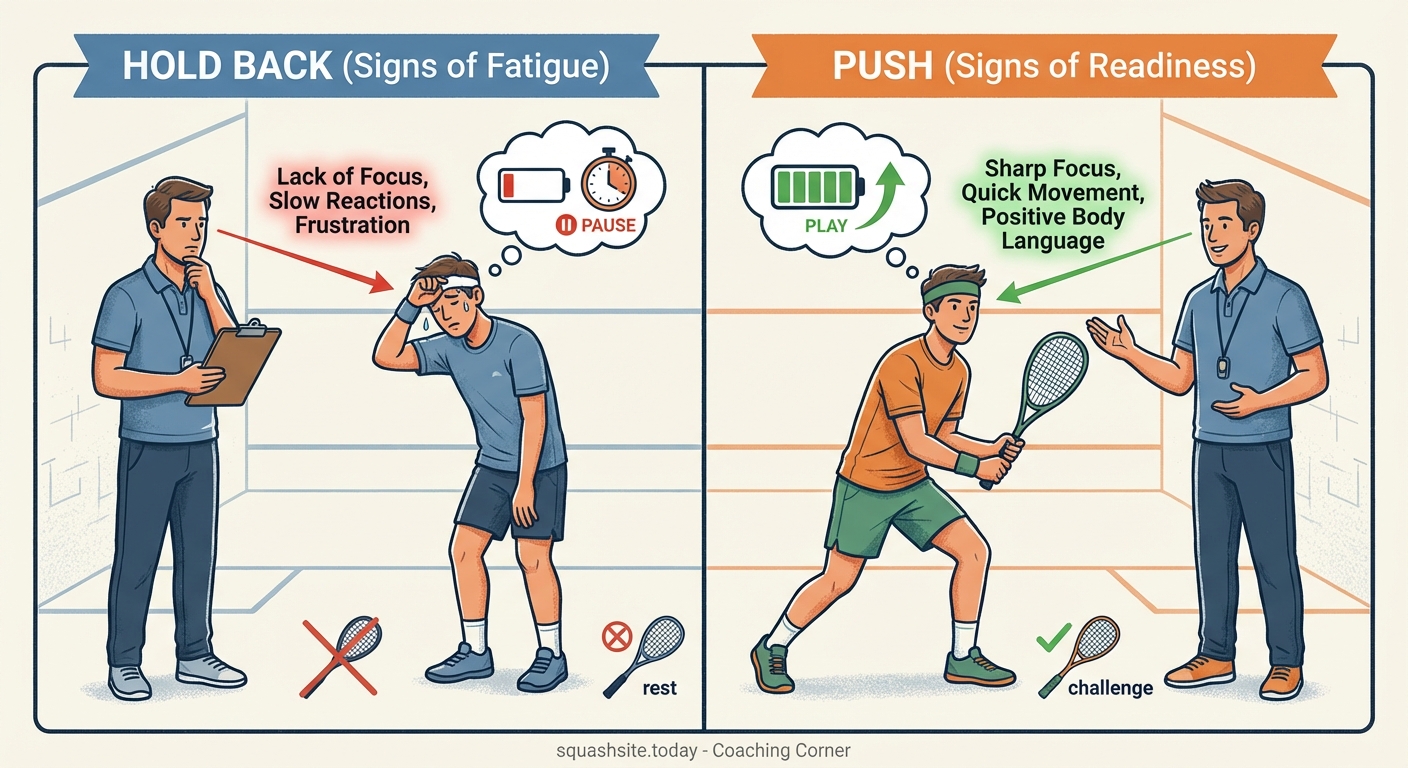
Research on mental fatigue shows that cognitive tasks deplete glucose levels in the prefrontal cortex. This brain region handles executive functions like planning, decision-making, and impulse control. All critical for squash performance.
Studies measuring reaction times in athletes show that mental fatigue slows responses by 5-15%. In a sport where rallies are won and lost in fractions of a second, that delay matters enormously.
The autonomic nervous system also plays a role. Chronic mental stress keeps players in a heightened sympathetic state (fight or flight). Recovery requires activating the parasympathetic system (rest and digest). Without adequate mental downtime, players remain in a state of constant alertness that gradually erodes performance.
Mental fatigue isn’t weakness. It’s a physiological state that affects every athlete regardless of mental toughness. Recognising it early prevents months of underperformance and potential burnout.
Warning Signs Every Coach Should Monitor
Spotting mental fatigue early prevents serious performance decline. Watch for these indicators during training and competition:
Behavioural Changes:
– Increased irritability or mood swings
– Reduced enthusiasm for training
– Social withdrawal from teammates
– Difficulty sleeping despite physical tiredness
– Loss of appetite or emotional eating
Performance Indicators:
– Inconsistent results against familiar opponents
– Increased unforced errors
– Poor shot selection in pressure situations
– Reduced work rate in later games
– Difficulty maintaining concentration between points
Physical Manifestations:
– Persistent muscle tension
– Frequent minor injuries
– Slower recovery between sessions
– Unexplained fatigue despite adequate sleep
– Increased resting heart rate
The tricky part? Many of these symptoms overlap with overtraining. The key difference: mental fatigue primarily affects cognitive function and emotional state before physical performance deteriorates significantly.
Creating a Fatigue Assessment Framework
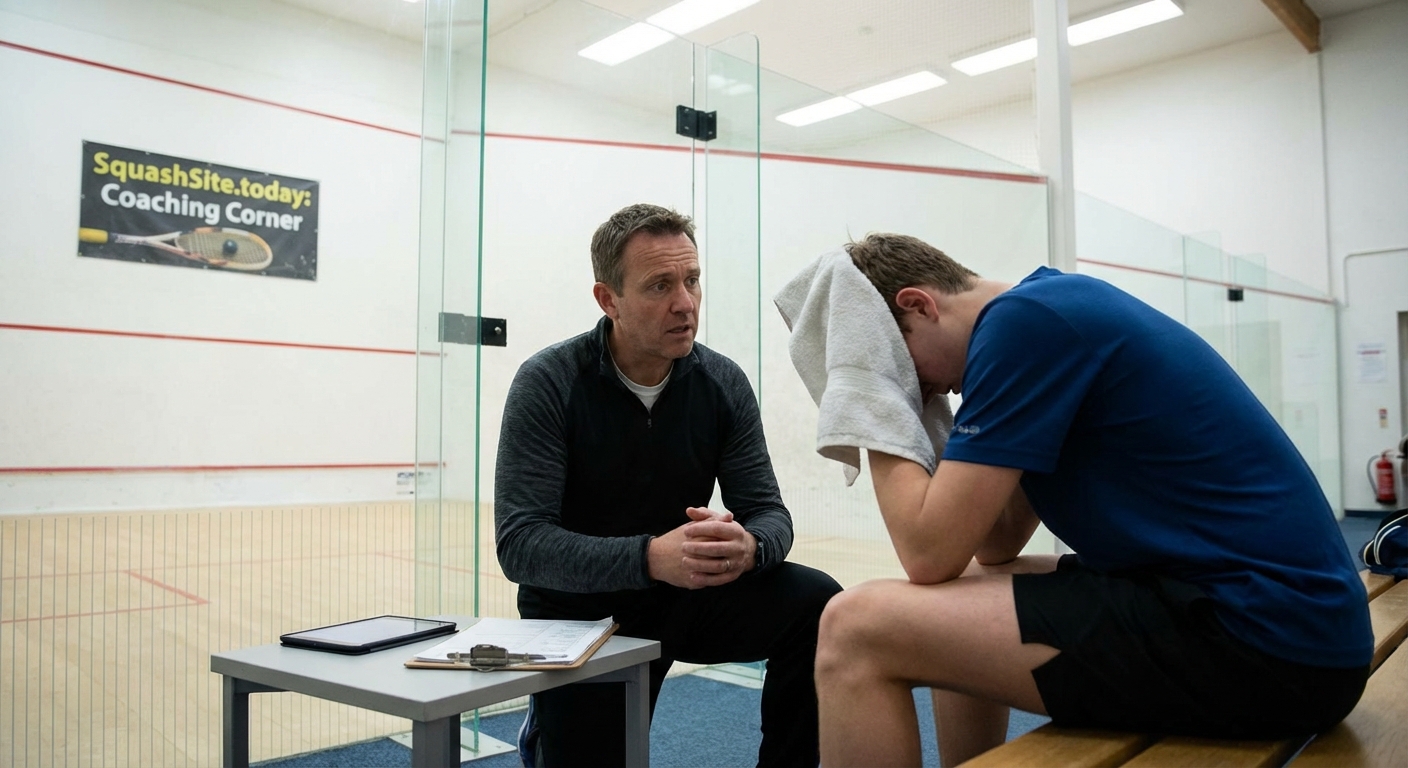
Effective coaches need systematic ways to track mental fatigue. Relying on intuition alone misses early warning signs. Here’s a practical framework you can implement:
1. Weekly Check-In Conversations
Schedule brief one-on-one sessions with players. Ask specific questions:
- How mentally demanding did training feel this week?
- Rate your concentration levels during matches (1-10)
- Did you enjoy training sessions this week?
- How well are you sleeping?
- What’s your stress level outside squash?
Keep notes. Patterns emerge over weeks that single conversations miss.
2. Performance Tracking
Monitor match statistics that indicate mental sharpness:
- Unforced error rates
- Decision-making speed (time between rallies)
- Tactical execution (did they stick to game plans?)
- Emotional control (reactions to bad calls or errors)
Compare these metrics across matches. Declining trends often precede obvious performance drops.
3. Training Response Monitoring
Notice how players respond to coaching during sessions. Mental fatigue shows up as:
- Difficulty absorbing new tactical concepts
- Resistance to feedback
- Reduced problem-solving ability
- Slower skill acquisition
- Inability to maintain focus during drills
Players who normally grasp concepts rapidly but suddenly struggle might be mentally depleted.
4. Subjective Wellness Questionnaires
Simple daily ratings help track trends. Ask players to rate (1-10):
- Mental energy levels
- Motivation to train
- Stress levels
- Sleep quality
- Overall mood
This takes 30 seconds but provides valuable longitudinal data. Sudden drops or gradual declines both warrant attention. Understanding how to structure your weekly training for maximum court performance helps prevent these issues before they start.
The Push-Hold Decision Matrix
Knowing when to increase training intensity versus backing off separates good coaches from great ones. Use this decision framework:
| Player State | Training Intensity | Focus Areas | Recovery Priority |
|---|---|---|---|
| High energy, positive mood | Moderate to high | Technical refinement, tactical complexity | Standard recovery |
| Good energy, neutral mood | Moderate | Skill consolidation, match practice | Enhanced recovery |
| Low energy, positive mood | Light to moderate | Movement patterns, solo drills | High priority recovery |
| Low energy, negative mood | Light or rest | Mental skills, video analysis | Maximum recovery |
This matrix provides starting points, not rigid rules. Individual differences matter enormously. Some players thrive on intensity, others need more recovery even when performing well.
Practical Strategies to Prevent Mental Burnout
Prevention beats intervention every time. Build these practices into your coaching approach:
Vary Training Stimuli
Monotony accelerates mental fatigue. Rotate between:
- Technical drilling
- Tactical games
- Conditioned matches
- Solo practice
- Movement work
- Cross-training activities
The variety maintains engagement whilst developing different aspects of performance. Players stay mentally fresh because each session demands different cognitive resources.
Schedule Strategic Recovery Periods
Plan lighter weeks after tournaments or intense training blocks. This doesn’t mean complete rest. Active recovery maintains fitness whilst reducing psychological demands.
Include sessions focused on:
- Low-intensity movement
- Enjoyable hitting (no pressure)
- Video analysis (passive learning)
- Equipment maintenance
- Social team activities
These activities keep players connected to squash without depleting mental resources.
Teach Mental Recovery Techniques
Players need tools to manage psychological demands. Incorporate training on:
- Breathing exercises that activate the parasympathetic nervous system
- Progressive muscle relaxation to reduce physical tension
- Mindfulness practices that improve present-moment awareness
- Cognitive reframing to manage negative thoughts
- Sleep hygiene protocols for better rest quality
These aren’t luxuries. They’re performance tools as important as ghosting routines that actually improve your court movement.
Monitor External Life Stress
Squash doesn’t exist in isolation. Academic pressures, work demands, relationship issues, and family responsibilities all drain mental resources. The same cognitive systems handle squash decisions and life challenges.
Regular conversations about life outside squash help you adjust training loads appropriately. A player facing exam stress needs different training than someone on holiday from work.
Create Autonomy in Training
Excessive control increases mental fatigue. Players who feel they have input into training decisions show better psychological resilience.
Offer choices where possible:
- Which drills to emphasise
- Training session timing
- Match preparation routines
- Tournament schedules
This doesn’t mean players dictate everything. But strategic autonomy reduces the cognitive burden of constant external control.
Managing Mental Fatigue During Competition
Tournament play presents unique challenges. Matches demand maximum mental resources, but competitions often span multiple days with limited recovery time. Smart management makes the difference between strong finishes and early exits.
Between-Match Recovery Protocols
The time between matches matters as much as the matches themselves. Implement structured recovery:
- Immediate post-match (0-30 minutes): Light movement, hydration, simple carbohydrates. Avoid complex tactical discussions.
- 30-90 minutes post-match: Proper nutrition, passive rest, light stretching. Still minimal cognitive demands.
- 90 minutes onwards: Video review if helpful, tactical preparation for next match, but keep sessions brief.
Many players make the mistake of intensive video analysis immediately after matches. This extends cognitive demands when the brain needs rest.
Simplifying Game Plans Under Fatigue
As tournaments progress and mental fatigue accumulates, simplify tactical approaches. Complex game plans that work fresh become impossible to execute when mentally depleted.
Late in tournaments, focus on:
- One or two core tactical patterns
- Simplified decision trees
- Automatic shot responses
- Rhythm and tempo control
This isn’t giving up on tactics. It’s recognising that execution trumps complexity when cognitive resources are limited. Players who understand when to attack the front court with a decision-making framework can fall back on simpler patterns when fatigue hits.
Emotional Regulation Strategies
Mental fatigue reduces emotional control. Players become more reactive, negative, and prone to frustration. Build pre-planned responses:
- Specific breathing patterns between points
- Physical reset routines (towel, racket check)
- Positive self-talk phrases rehearsed in training
- Visual focus points on court
These external anchors help maintain emotional stability when internal resources deplete.
The Long-Term Development Perspective
Short-term performance matters, but sustainable development requires thinking in years, not weeks. Mental fatigue management shapes career trajectories.
Periodisation for Psychological Load
Just as physical training periodises intensity, psychological demands need similar planning. Map your season:
- High-intensity periods: Major competitions, peak training blocks
- Moderate-intensity periods: Regular training, minor tournaments
- Low-intensity periods: Active recovery, skill refinement
- Off-season: Complete mental reset, cross-training focus
This rhythm prevents the chronic depletion that leads to burnout. Elite players maintain careers spanning decades partly because they manage psychological load intelligently.
Building Psychological Resilience
The goal isn’t avoiding mental fatigue entirely. That’s impossible in competitive sport. Instead, develop players’ capacity to handle psychological demands and recover effectively.
Progressive exposure works. Gradually increase mental challenges:
- Longer training sessions
- More complex tactical scenarios
- Higher-pressure match situations
- Increased competition frequency
But always balance challenge with adequate recovery. Resilience develops through stress followed by adaptation, not constant overload.
Teaching Self-Awareness
The most sustainable approach gives players tools to monitor their own mental state. Teach them to recognise:
- Personal fatigue warning signs
- Effective recovery strategies
- When to push through versus back off
- How life stress affects training capacity
This self-awareness becomes increasingly valuable as players progress. Junior players need more external monitoring. Senior athletes should largely self-regulate with coaching support.
Recognising When Professional Help Is Needed
Sometimes mental fatigue crosses into more serious psychological territory. Coaches aren’t therapists. Know when to refer players to qualified professionals.
Red flags requiring professional support:
- Persistent sleep disturbances lasting weeks
- Significant mood changes affecting daily life
- Loss of interest in activities beyond squash
- Thoughts of self-harm or hopelessness
- Panic attacks or severe anxiety
- Disordered eating patterns
- Social isolation from all relationships
These symptoms indicate issues beyond normal training fatigue. Early intervention prevents serious mental health problems. Build relationships with sports psychologists before crises occur.
Balancing Team Dynamics and Individual Needs
Club environments and team settings complicate fatigue management. What works for one player might not suit another. Group training needs to accommodate individual psychological states.
Differentiated Training Approaches
Not everyone needs identical sessions. Within group training, create options:
- Core drills everyone completes
- Optional intensity variations
- Choice of practice partners
- Flexible session duration
This requires more planning but prevents pushing mentally fatigued players into counterproductive training.
Normalising Recovery Conversations
Create team culture where discussing fatigue isn’t weakness. Players who see teammates managing load intelligently feel comfortable doing the same.
Share examples of elite players who prioritise recovery. Discuss mental fatigue openly in team settings. This normalisation prevents players hiding struggles until performance collapses.
Peer Support Systems
Teammates often notice changes before coaches do. Encourage players to check in with each other. Not to police training, but to offer support when someone seems off.
This peer awareness creates safety nets. Players struggling to admit fatigue to coaches might accept help from teammates first.
Adapting Your Coaching Style to Mental State
Your coaching approach should flex based on players’ psychological state. What motivates a fresh, energised player might overwhelm someone mentally depleted.
High-Energy Coaching
For players in good mental condition:
- Challenge with complex tactical problems
- Introduce new technical concepts
- Use competitive drills with consequences
- Provide detailed, analytical feedback
- Push physical and mental boundaries
Supportive Coaching
For players showing fatigue signs:
- Focus on mastery of existing skills
- Use familiar, comfortable drills
- Reduce competitive pressure
- Give simple, encouraging feedback
- Emphasise enjoyment and connection
This doesn’t mean lowering standards. It means recognising that psychological state affects learning capacity. Pushing hard when players are mentally depleted creates frustration, not improvement.
Learning from what makes a great squash coach beyond technical knowledge includes this adaptive flexibility.
Creating Recovery-Friendly Training Environments
The physical and social environment affects mental recovery. Small changes to training settings can reduce psychological demands.
Physical Environment Considerations
- Adequate lighting reduces eye strain and mental fatigue
- Temperature control prevents additional physiological stress
- Organised equipment reduces decision-making burden
- Comfortable rest areas between sessions
- Access to nutrition and hydration
These seem minor but accumulate. Training environments that require constant problem-solving drain mental resources unnecessarily.
Social Environment Factors
- Clear communication reduces anxiety
- Predictable schedules allow mental preparation
- Supportive team culture reduces social stress
- Appropriate music or quiet options during breaks
- Respect for individual recovery preferences
Some players recover through social interaction. Others need quiet solitude. Accommodate both within team settings.
Measuring Success Beyond Match Results
When managing mental fatigue, traditional performance metrics tell incomplete stories. Expand your success measures:
Process Goals
Track improvements in:
- Concentration duration during training
- Emotional regulation in pressure situations
- Recovery speed between intense periods
- Enjoyment and engagement levels
- Consistency of effort across sessions
These indicators predict long-term success better than short-term results.
Wellbeing Metrics
Monitor:
- Sleep quality trends
- Mood stability
- Motivation levels
- Social connection
- Life satisfaction
Players thriving in these areas sustain performance over years. Those sacrificing wellbeing for results burn out quickly.
Skill Retention
Mental fatigue impairs learning consolidation. If players can’t retain skills taught in previous sessions, they’re likely too depleted for effective training. Skill retention becomes a fatigue indicator.
Building Your Personal Coaching Philosophy
Every coach needs a clear philosophy about mental fatigue management. This guides daily decisions when pressure builds to push players harder.
Consider these questions:
- What’s your primary coaching goal? Short-term results or long-term development?
- How do you balance player autonomy with structured guidance?
- What role does enjoyment play in your training approach?
- How comfortable are you discussing psychological struggles?
- What’s your own relationship with rest and recovery?
Your answers shape how you handle mental fatigue in players. Coaches who value sustainable development naturally prioritise psychological recovery. Those focused purely on immediate results often push past healthy limits.
Neither approach is inherently wrong, but understanding your philosophy helps you make consistent decisions aligned with your values.
Making Mental Fatigue Management Practical
Theory matters less than implementation. Start with these concrete steps:
-
This week: Have individual conversations with each player about their current mental state. Just listen.
-
This month: Implement one simple tracking method (daily mood ratings or weekly check-ins).
-
This season: Review your training periodisation. Identify if psychological load varies appropriately across the calendar.
-
This year: Build relationships with sports psychology professionals you can refer players to when needed.
Small, consistent actions compound into systematic fatigue management. You don’t need perfect systems immediately. Start somewhere and refine as you learn what works for your players and context.
Protecting Performance Through Smart Recovery
Mental fatigue in squash players isn’t a sign of weakness or lack of commitment. It’s a predictable response to the cognitive demands of competitive sport. Coaches who recognise this reality and adapt their approach protect both performance and player wellbeing.
The best coaches understand that pushing hard and backing off aren’t opposites. They’re complementary tools used strategically based on individual needs and circumstances. Your ability to read mental state and adjust training accordingly determines whether players reach their potential or burn out trying.
Start paying attention to the psychological signals your players send. Build recovery into your planning with the same rigour you apply to physical training. Create environments where discussing fatigue feels safe rather than shameful. These practices separate coaching that produces short-term results from coaching that builds careers.
Mental fatigue management isn’t an extra responsibility added to your coaching duties. It’s central to everything you do. Every training decision either deposits into or withdraws from your players’ psychological accounts. Make sure you’re building wealth, not running up debt.