10 Proven Ways to Attract New Members to Your Squash Club

Your squash club has three active courts, a dedicated committee, and a handful of loyal members who’ve been playing together for years. But when you look at the membership roster, the numbers tell a different story. Renewals are steady, but new sign-ups have flatlined. The courts sit empty during off-peak hours, and the junior programme you launched last year attracted just four kids.
Growing your membership isn’t about expensive marketing campaigns or complete facility overhauls. It’s about creating pathways for different types of players to discover, try, and stick with your club.
Attracting new members requires a structured approach across three areas: making squash accessible to beginners through taster sessions and coaching, building community through social events and internal leagues, and maintaining visibility through local partnerships and digital presence. Clubs that combine low-barrier entry programmes with strong retention systems see the most sustainable growth over time.
Understanding Why People Join Squash Clubs
Most people don’t wake up one morning deciding they want to play squash. They’re looking for something else entirely.
Some want fitness without the monotony of a gym. Others crave social connection after moving to a new area or changing jobs. Parents seek structured activities for their children. Competitive players need practice partners at their level.
Your club needs to speak to these different motivations, not just promote squash as a sport. A 35-year-old professional who hasn’t exercised in five years needs a completely different message than a former university player looking to get back into competitive play.
The clubs that grow fastest understand this. They don’t just open their doors and hope people wander in. They create specific programmes for specific audiences, then communicate those programmes where those audiences actually spend their time.
Building a Beginner-Friendly First Experience
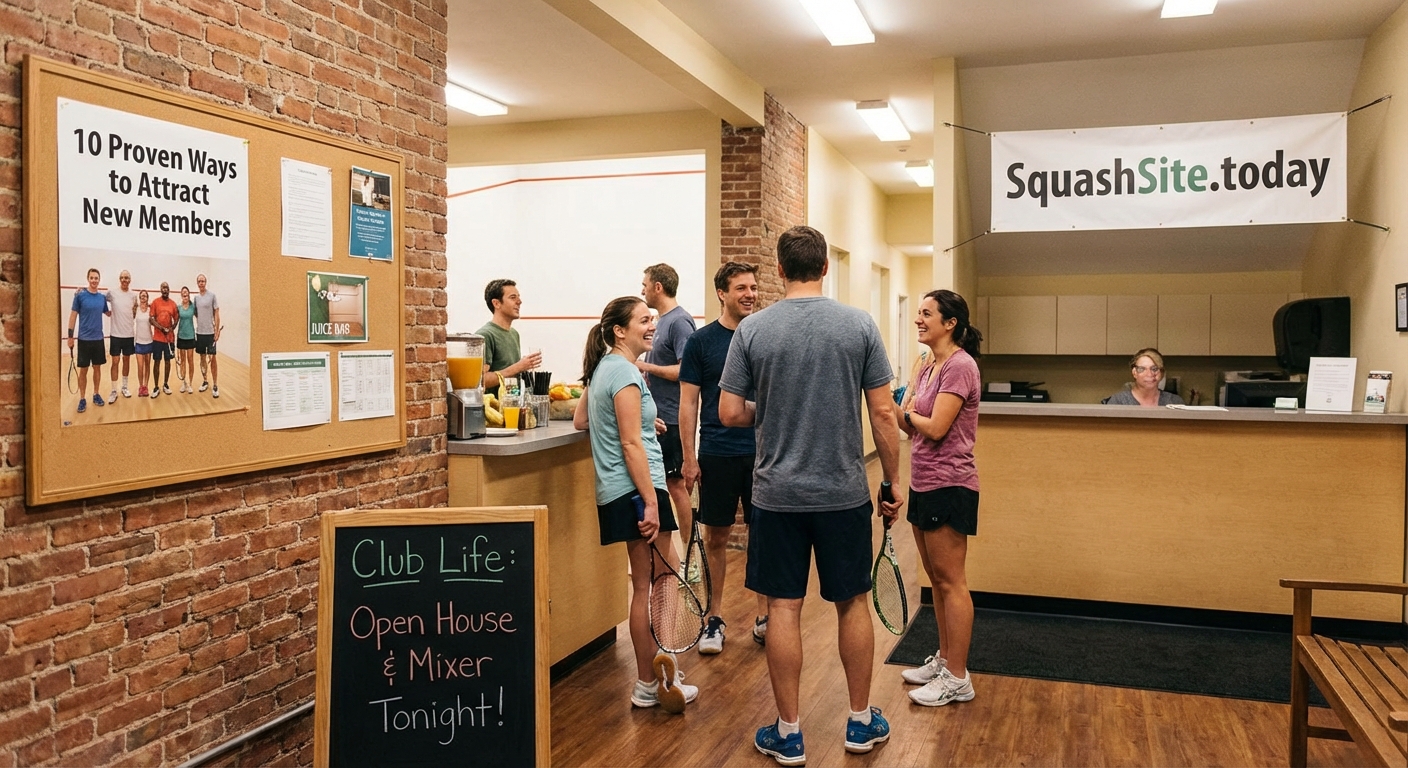
Your first interaction with a potential member determines whether they become a long-term player or never return.
Most clubs fail here. They assume everyone knows basic squash rules, understands court etiquette, and feels comfortable asking strangers for a game. New players often feel intimidated walking into an established club where everyone seems to know each other.
Create a structured onboarding process that removes these barriers.
The Six-Week Starter Programme
Design a beginner course that runs continuously throughout the year. Six weeks gives people enough time to develop basic skills without demanding a massive commitment.
Structure each session identically so participants know what to expect. Fifteen minutes of movement drills, twenty minutes of technique work, fifteen minutes of controlled rallying, ten minutes of mini-games.
Cap each course at twelve participants. Smaller groups mean more individual attention and stronger social bonds between participants. Many will continue playing together after the course ends.
Price it lower than your standard membership fee. The goal isn’t immediate profit. You’re investing in long-term members who’ll pay full fees for years.
Free Taster Sessions That Actually Convert
One-off taster sessions sound great but rarely convert attendees into members. People enjoy the free session, thank you politely, then never return.
Make tasters part of a journey instead. Offer a free first session, then a discounted three-session package, then the full beginner course. Each step requires a small commitment that builds toward membership.
Schedule tasters at consistent times. The first Saturday morning of each month works better than random dates. Consistency makes promotion easier and helps people plan ahead.
Pair every new person with an experienced club member, not just a coach. This creates an immediate social connection and gives newcomers someone to ask questions between sessions.
Creating Multiple Entry Points for Different Players
Not everyone wants to start with a formal coaching programme. Offer alternatives that suit different personalities and schedules.
Open Court Sessions
Dedicate specific time slots where anyone can book a court and find a partner. Post a WhatsApp group or physical sign-up sheet where people can indicate when they’re playing. This works brilliantly for shift workers, parents with unpredictable schedules, or anyone who can’t commit to regular league nights.
Social Leagues with Skill Divisions
Competitive leagues intimidate beginners. Social leagues with multiple divisions based on ability remove this barrier. Players compete against others at their level, making matches more enjoyable and less one-sided.
Run these leagues on weekday evenings when courts would otherwise sit empty. Thursday nights become squash nights. Regularity builds habits, and habits build memberships.
Family and Junior Programmes
Parents with children face a constant challenge finding activities the whole family can do together. Create family membership options with discounted rates and dedicated family court times.
Junior programmes need careful structure. Age-appropriate sessions for 8-12 year-olds work differently than teen programmes. Younger children need shorter sessions with more variety. Teenagers want competitive opportunities and peer social time.
Partner with local schools to run after-school clubs. Provide coaches, and the school provides participants and a pathway into your club membership. Many successful clubs build their junior sections entirely through school partnerships.
Building Community Beyond the Court
People join for squash. They stay for community.
The strongest clubs create social structures that extend beyond playing time. Members become friends. Friends don’t cancel memberships.
Monthly Social Events That Actually Happen
Most clubs plan ambitious social calendars that collapse after three months. Committee members burn out organising events that few people attend.
Start small. One monthly event, same format, same time. Consistency matters more than variety.
A monthly club night combining round-robin matches and shared food works brilliantly. Everyone plays three short matches against different opponents, then eats together. Simple, repeatable, and it builds connections across different skill levels.
Add variety gradually once your core event runs smoothly. Quiz nights, tournament viewing parties, or charity fundraisers become additions, not replacements.
For more ideas on strengthening your club’s social fabric, transform your club’s social scene with activities that go beyond traditional approaches.
Internal Competitions That Include Everyone
Club championships sound exciting but often feature the same twelve players every year. Create competitions designed for broader participation.
Box leagues work perfectly for this. Small groups of 4-6 players at similar levels play each other over a month. Winners move up a box, bottom players move down. Everyone gets competitive matches at their level.
Run handicap tournaments where weaker players start with point advantages. A player receiving a 5-point head start in each game can genuinely compete against someone two divisions above them. This creates unpredictable, exciting matches.
Theme tournaments around fun formats. Doubles-only events, vintage racket competitions, or left-hand-only matches create novelty and laughter. Not everything needs to be serious.
Understanding how to organise a successful club championship helps you create events that strengthen membership rather than just showcase your top players.
Making Your Club Visible in the Local Community
The best programmes mean nothing if nobody knows they exist. Most squash clubs are terrible at promotion.
You don’t need a marketing budget. You need consistent presence in the places your potential members already spend time.
Local Partnerships That Generate Referrals
Identify businesses and organisations whose customers match your target members. Gyms, physiotherapy clinics, running clubs, and corporate wellness programmes all work with people interested in fitness.
Offer their members a free taster session or discounted first month. Provide them with simple promotional materials they can display or share. Make referrals easy.
Corporate partnerships deserve special attention. Many companies want employee wellness programmes but lack the expertise to run them. Offer lunchtime squash sessions, beginner courses, or corporate league nights. One corporate partnership can add twenty members.
Local schools and universities provide another rich source. Offer coaching sessions, facility use, or tournament hosting. Students who learn squash at school become adult members later.
Digital Presence That Converts Interest Into Action
Your website needs one job: converting interested visitors into first-time attendees. Most club websites fail completely.
Remove everything except essential information. New visitors need three things: what you offer, when it happens, and how to book. Bury your committee meeting minutes and historical trophy winners in a separate section.
Make booking frictionless. Online booking systems that require account creation before showing available times lose half your potential bookings. Show availability first, collect details last.
Post regularly on social media, but focus on one platform. A Facebook page updated three times weekly beats presence on five platforms updated randomly. Share member stories, match results, upcoming events, and beginner programme dates.
Local community Facebook groups reach thousands of nearby residents. Post about your beginner programmes, open days, or family sessions. These groups explicitly welcome local business and activity promotion.
Open Days That Showcase Your Club Culture
Twice-yearly open days give curious locals a low-pressure way to visit your club. Spring and autumn work well, catching people when they’re thinking about new activities.
Structure the day carefully. Continuous mini-sessions every 30 minutes work better than one big demonstration. People can drop in when convenient rather than committing to a specific time.
Offer different activities for different interests. Court demonstrations, coaching taster sessions, equipment try-outs, and social areas where people can chat with members. Some visitors want to try playing. Others want to observe and ask questions.
Current members are your best promotional tool. Ask them to bring friends, family, or colleagues. Offer a free guest session to any member who brings someone new. Personal recommendations convert better than any advertisement.
Retaining New Members Through Their Critical First Months
Attracting new members means nothing if they quit after two months. Most clubs lose 40% of new members within six months.
The first twelve weeks determine whether someone becomes a long-term member. During this period, they’re forming habits, building relationships, and deciding if squash fits their life.
The Buddy System That Actually Works
Assign every new member an experienced player as their buddy for the first three months. This isn’t a coaching relationship. It’s a friendly contact who helps them navigate club culture.
Buddies introduce new members to other players, explain unwritten rules, help them find suitable practice partners, and check in regularly. A simple text asking “Playing this week?” makes new members feel noticed and valued.
Choose buddies carefully. They need to be friendly, reliable, and genuinely interested in helping others. Not everyone makes a good buddy, even if they’re excellent players.
Recognise and reward good buddies. Public acknowledgement, small gifts, or discounted membership shows you value their contribution. The buddy system only works if buddies stay motivated.
Structured Progression Pathways
New players need clear next steps. After completing a beginner course, what happens? Without guidance, many simply drift away.
Create a visible progression pathway. Beginner course leads to intermediate coaching or box league participation. Intermediate players move toward competitive leagues or advanced technique sessions. Everyone can see their next step.
Celebrate progression publicly. Announce when someone completes their first course, wins their first competitive match, or moves up a box league division. Recognition reinforces commitment.
Offer ongoing development opportunities. Monthly technique workshops, video analysis sessions, or coaching adult improvers through structured programmes keep members engaged and improving.
Pricing Strategies That Remove Barriers
Price often determines whether someone tries your club. But the cheapest option rarely wins.
People don’t want the lowest price. They want fair value and flexible options that match their circumstances.
Membership Tiers That Suit Different Needs
Single-tier membership forces everyone into the same box. A student who plays twice weekly pays the same as a professional who plays five times weekly. Neither feels they’re getting good value.
Create multiple tiers based on usage. Off-peak memberships for people who can only play during quiet periods. Pay-as-you-go options for irregular players. Family packages for households with multiple players. Student and senior discounts for those on fixed incomes.
Each tier should feel like a good deal for its target user. The goal isn’t maximising revenue per member. It’s maximising total membership by removing price barriers for different groups.
First-Year Incentives That Build Loyalty
Discounted first-year memberships get people through the door. Many clubs avoid this, fearing they’ll lose revenue. They’re thinking backwards.
A new member paying 70% of full price for year one, then 100% for the next ten years, generates far more revenue than an empty membership slot. First-year discounts are investments, not losses.
Combine discounts with commitment. Offer 30% off if they pay for the full year upfront. This builds financial commitment and ensures they’ll give squash a proper chance rather than quitting after six weeks.
Grandfather in pricing for long-term members. People who’ve been members for five years pay slightly less than new full-price members. This rewards loyalty and reduces the chance of established members leaving over price increases.
Common Mistakes That Kill Membership Growth
Even clubs doing many things right often sabotage themselves with easily avoidable mistakes. Recognising these patterns helps you sidestep them.
| Mistake | Why It Happens | The Fix |
|---|---|---|
| Assuming everyone knows how to play | Committee members have played for years | Create absolute beginner programmes with zero assumed knowledge |
| Focusing only on competitive players | Committee members are usually competitive players | Design programmes specifically for social and fitness-focused players |
| Irregular beginner programmes | Waiting until you have “enough interest” | Run courses on fixed schedule regardless of initial sign-ups |
| Poor communication about what’s available | Information scattered across noticeboards and old emails | Single source of truth updated weekly and easily accessible |
| No follow-up with trial members | Assuming interested people will take initiative | Structured contact schedule for everyone who attends a taster session |
| Cliquey culture that excludes newcomers | Natural human tendency to stick with existing friends | Deliberate integration activities and buddy systems |
Understanding what makes a great squash club captain helps leadership teams avoid these cultural pitfalls.
Measuring What Actually Matters
Most clubs track total membership numbers. This tells you almost nothing about the health of your growth efforts.
Track these metrics instead:
-
New member acquisition rate: How many new members join each month? Seasonal variation is normal, but you should see consistent numbers across similar months year-on-year.
-
First-year retention rate: What percentage of new members renew after their first year? Anything below 60% suggests problems with your onboarding or club culture.
-
Programme conversion rates: Of people attending taster sessions, how many join beginner courses? Of those completing beginner courses, how many become members? These numbers reveal where your funnel leaks.
-
Member activity levels: How many members play at least once weekly? Members who play regularly stay members. Declining activity predicts cancellations.
-
Referral sources: How did new members hear about you? Track this religiously. Double down on channels that work. Stop wasting effort on channels that don’t.
Review these metrics quarterly with your committee. Monthly creates noise and panic. Annually means you miss problems until they’re serious. Quarterly gives you time to spot trends and adjust.
Getting Your Committee On Board
The best membership growth strategies fail if your committee doesn’t support them. Committee members often resist change, especially if they’ve been doing things the same way for years.
Present data, not opinions. Show declining membership numbers, empty courts during off-peak hours, and aging membership demographics. Problems become harder to ignore when quantified.
Start with one pilot programme. Trying to overhaul everything simultaneously overwhelms volunteers and creates resistance. Pick your strongest idea, run it for three months, measure results, then present findings.
Celebrate small wins publicly. When your first beginner course adds six new members, make sure everyone knows. Success builds momentum and converts sceptics.
Distribute workload carefully. Committee burnout kills initiatives. If you’re proposing new programmes, identify who’ll run them and ensure they have capacity. Enthusiastic volunteers who become exhausted and quit harm your club more than no programme at all.
“The clubs that grow aren’t necessarily the ones with the best facilities. They’re the ones that make new players feel welcome from the moment they walk through the door and give them clear reasons to keep coming back.”
Making Your Club The Obvious Choice
Your local area probably has multiple fitness options. Gyms, yoga studios, running clubs, tennis centres, and other squash clubs all compete for the same potential members.
Why should someone choose your club?
Most clubs answer with facilities or price. These matter, but they’re not decisive. People choose clubs where they feel they belong.
Build belonging through intentional culture. New members should feel noticed, welcomed, and included within their first three visits. Existing members should actively look for new faces and introduce themselves.
Create traditions that reinforce community. Annual tournaments, charity events, social gatherings, and internal competitions give members shared experiences and stories. These traditions become part of club identity.
Communicate your club’s personality clearly. Are you competitive and performance-focused? Social and welcoming? Family-oriented? Traditional or modern? Being clear about who you are helps attract people who fit and repels those who don’t.
The clubs with the strongest cultures aren’t trying to be everything to everyone. They know exactly who they serve and build everything around serving those people brilliantly.
Turning Members Into Ambassadors
Your best marketing tool isn’t your website or social media. It’s your existing members talking about your club to their friends, family, and colleagues.
Most members will happily recommend your club if you make it easy and give them reasons to do so.
Create a formal referral programme. Offer both the referring member and the new member a benefit. A free month of membership, discounted coaching sessions, or club merchandise all work. Make the reward meaningful enough to motivate action.
Ask for referrals at the right moments. After someone wins a match, completes a course, or mentions how much they’re enjoying playing, that’s when to say “Know anyone else who might enjoy this?”
Provide shareable content. Photos from club events, highlights from tournaments, or testimonials from happy members give your members something concrete to share on their social media.
Make guest visits easy. Allow members to bring guests for free occasionally. Remove administrative friction. The easier you make it to bring friends, the more often it happens.
Remember that building a sustainable coaching business within your club creates another referral source, as coaches naturally promote the club to their private students.
When Growth Requires Investment
Some membership growth strategies require spending money. New equipment, facility improvements, or hiring coaches all cost money that volunteer-run clubs often lack.
Prioritise investments by potential return. Spending £2,000 on a beginner coaching programme that adds fifteen members paying £400 annually generates £6,000 in first-year revenue and potentially £60,000 over ten years. That’s a brilliant investment.
Spending £10,000 on new court lighting might be necessary eventually, but it won’t directly attract new members. Distinguish between maintenance that keeps existing members happy and investments that drive growth.
Seek external funding. Sports England, local councils, and charitable trusts all offer grants for community sports facilities. Applications take time, but successful grants can fund improvements you couldn’t otherwise afford.
Consider phased improvements. Rather than waiting until you can afford a complete facility upgrade, tackle one project yearly. This year, improve changing rooms. Next year, upgrade the viewing area. Continuous small improvements maintain momentum.
For detailed guidance on financial planning, understanding the real cost of running a squash club helps committees make informed investment decisions.
Sustaining Growth Over Years, Not Months
The strategies outlined above work. But they only work if you maintain them consistently over years.
Most clubs start enthusiastically, see initial success, then let things slide. Beginner courses become irregular. Social events get cancelled. Communication becomes sporadic. Growth stalls, then reverses.
Sustainable growth requires systems, not heroic individual effort. Document your processes. Create templates for promoting events, running beginner courses, and onboarding new members. When the enthusiastic volunteer who’s been running everything moves away, someone else can step in without starting from scratch.
Build succession planning into your committee structure. Identify potential future leaders and involve them in current programmes. Gradual transition works better than sudden handovers.
Review and refine your approaches annually. What worked brilliantly two years ago might need adjustment. Stay curious about what other successful clubs are doing. Adapt their ideas to fit your context.
Celebrate your progress. Growing membership from 80 to 100 over two years represents real success, even if it feels slow. Acknowledge the work your volunteers put in and the results they achieve.
Building Something That Lasts
Growing your squash club’s membership isn’t a three-month project with a defined endpoint. It’s an ongoing commitment to creating an environment where new players feel welcome, supported, and excited to keep playing.
The clubs that thrive over decades understand this. They don’t chase viral growth or revolutionary changes. They focus on doing the basics brilliantly and consistently. Welcoming beginners. Creating community. Staying visible. Making it easy to join and hard to leave.
Start with one strategy from this guide. Run it properly for three months. Measure the results. Adjust based on what you learn. Then add another strategy. Build your membership growth system one piece at a time.
Your club has courts, equipment, and people who love squash. You have everything needed to attract new members. You just need to show them why they should walk through your door and give them compelling reasons to keep coming back.
The players who’ll transform your club’s future are out there right now. They just don’t know your club exists yet. Time to change that.