What Squash Bag Features Do Professional Players Actually Use?
Professional players travel constantly. They play multiple matches in different climates. Their gear takes a beating that most club players never experience.
The bag they choose isn’t about brand loyalty or aesthetics. It’s about protecting thousands of pounds worth of equipment whilst managing the practical demands of tournament life. Understanding these priorities can transform how you approach your own equipment storage and care.
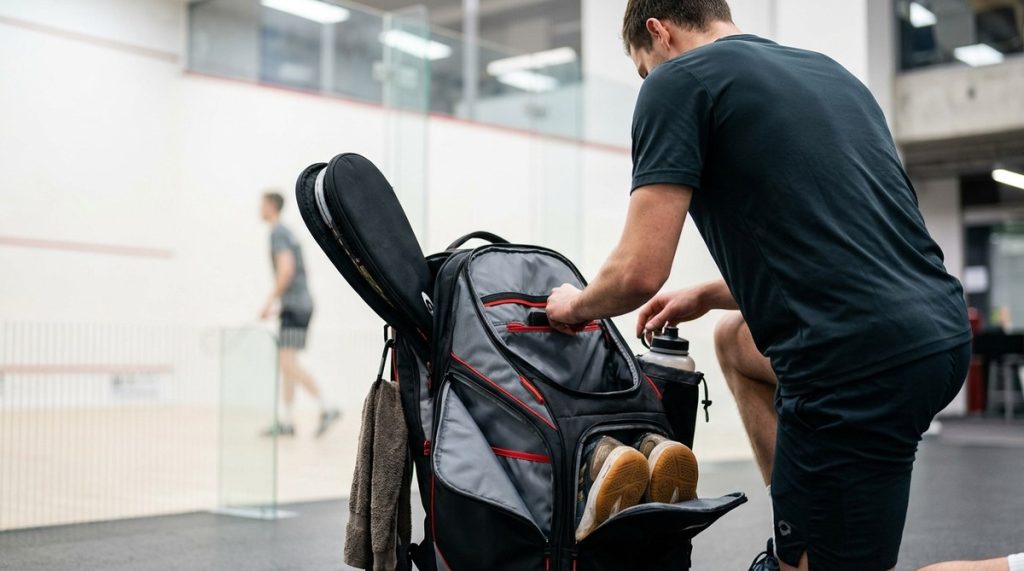
Professional players prioritise ventilation systems, reinforced racket compartments with individual protection, dedicated shoe sections with antimicrobial linings, accessible hydration pockets, and durable water-resistant materials. They need bags that protect multiple rackets, manage moisture effectively, and withstand constant travel whilst keeping essential items immediately accessible during tournament play. Organisation and durability outweigh aesthetics every time.
Ventilation Systems That Actually Work
Walk into any professional locker room after a match and the smell hits you immediately. Sweat-soaked gear crammed into bags creates the perfect environment for bacteria and odour.
Professional bags address this with dedicated ventilation systems. These aren’t just mesh panels for show. They’re strategically placed openings that allow continuous airflow through separate compartments.
Most pro-level bags feature:
- Mesh panels on at least two opposing sides for cross-ventilation
- Separate ventilated shoe compartments that isolate moisture
- Breathable fabric linings that wick moisture away from stored items
- Drainage grommets at the base to prevent water pooling
The difference becomes obvious after just one week of use. A properly ventilated bag stays fresher and extends the life of everything inside. Your shoes dry faster. Your clothing doesn’t develop that permanent gym smell. Your grips stay tacky instead of going slippery from trapped moisture.
Players like Mohamed ElShorbagy travel with multiple bags during major tournaments, but even they rely on proper ventilation to manage gear between matches.
Racket Protection Beyond Basic Padding
Amateur bags often include a single padded compartment for rackets. Professional bags take protection several levels further.
The racket section typically features individual sleeves or dividers. Each racket sits in its own protected space, preventing frame-to-frame contact during transport. This matters more than most players realise.
Even minor frame damage can affect string tension distribution. A small crack you can barely see might alter how the racket responds. When your livelihood depends on consistent equipment performance, you can’t risk it.
Here’s what professional-grade racket protection includes:
- Reinforced external shell with impact-resistant materials
- Internal dividers that keep each racket completely separate
- Additional padding at stress points where bags typically get dropped
- Rigid backing panels that prevent crushing during airline baggage handling
- Quick-access design that lets you grab a specific racket without unpacking everything
The table below shows how different protection levels compare:
| Protection Feature | Club-Level Bags | Professional Bags | Impact on Equipment |
|---|---|---|---|
| Racket dividers | Sometimes included | Always individual sleeves | Prevents frame damage |
| External reinforcement | Minimal padding | Impact-resistant shell | Survives airline handling |
| Access design | Single zip opening | Individual racket access | Faster racket changes |
| Crush protection | Soft sides only | Rigid backing panel | Maintains string tension |
Your rackets represent a significant investment. Proper string tension and grip size become irrelevant if the frame gets damaged in transit.
The Shoe Compartment That Changes Everything
Shoes present a unique challenge. They’re heavy, dirty, often wet, and they smell. Yet you need them immediately accessible.
Professional bags solve this with completely separate shoe compartments. Not just a small pocket, but a full-size section that holds multiple pairs whilst keeping them isolated from everything else.
The best designs include:
- Antimicrobial linings that actively reduce odour-causing bacteria
- Hard plastic bases that maintain compartment shape under weight
- External access zips so you can grab shoes without opening the main bag
- Drainage holes that let water escape after playing in humid conditions
Players typically carry at least two pairs of court shoes. One for matches, one for training. Some bring a third pair as backup or for different court surfaces.
The separation matters for practical reasons. Your clean clothing shouldn’t touch shoes that have been on dozens of different courts. Your racket grips shouldn’t absorb moisture from damp footwear.
Choosing the right court shoes matters, but so does storing them properly between sessions. A dedicated compartment with proper ventilation keeps them ready for the next match.
Organisation Systems for Tournament Life
Professional players need to access specific items instantly. Between matches, during warm-ups, or when making last-minute equipment changes, fumbling through a disorganised bag wastes time and mental energy.
High-end tournament bags include multiple internal pockets and compartments, each designed for specific items:
- Small valuables pocket with key clip for phone, wallet, and tournament pass
- Racket accessory pouch for dampeners, overgrips, and string cutters
- Medical supplies section for tape, blister treatment, and pain relief
- Hydration sleeve that keeps water bottles upright and prevents leaking
- Flat document pocket for travel papers and tournament schedules
The layout follows a logical hierarchy. Items you need most frequently sit in the most accessible locations. Backup equipment and spare clothing go in deeper compartments.
“I’ve seen players lose matches because they couldn’t find their backup racket when they needed it. Organisation isn’t just convenience. It’s part of match preparation.” – Professional squash coach
This thinking applies to club players too. Spending five minutes searching for your goggles before a match disrupts your mental preparation. Having properly maintained goggles matters, but only if you can actually find them when needed.
Materials That Survive Constant Travel
Tournament players abuse their bags. Airport conveyor belts, rental car boots, hotel floors, changing room benches. The bag takes punishment that would destroy typical sports luggage within months.
Professional-grade materials make the difference between a bag lasting one season versus five years:
- Ballistic nylon or ripstop polyester for the main body
- Reinforced stitching at all stress points and handle attachments
- Water-resistant coatings that shed rain and spills
- Heavy-duty zips with large pulls that work even wearing gloves
- Rubberised base panels that resist abrasion from rough surfaces
Weight matters too. Players carry these bags through airports, up stairs, across car parks. A bag that weighs three kilos empty becomes unbearable when loaded with gear.
The best bags balance durability with reasonable weight. They use strategic reinforcement rather than making everything thick and heavy. High-stress areas get extra protection. Less critical sections use lighter materials.
Hydration Access During Matches
Between games, you have 90 seconds. That includes towelling off, catching your breath, and drinking. You can’t waste 30 seconds digging through your bag for a water bottle.
Professional bags include external hydration pockets. These sit on the bag’s exterior, usually on one or both sides. You can grab your bottle without opening anything.
The design details matter:
- Elastic retention bands that hold bottles securely during transport
- Drainage holes at the bottom for condensation
- Insulated versions that keep drinks cold in hot conditions
- Expandable pockets that accommodate different bottle sizes
Some players prefer hydration bladders with drinking tubes. Tournament bags accommodate this with internal sleeves and tube routing channels.
Staying properly hydrated affects your movement speed and court positioning. Making it effortless to drink between games removes one more barrier to optimal performance.
Carrying Systems for Different Situations
Professional players need versatility. Sometimes they’re walking two minutes from a car park to the club. Other times they’re navigating a massive airport with connecting flights.
The best tournament bags offer multiple carrying options:
- Padded backpack straps for hands-free transport through airports
- Reinforced grab handles for lifting in and out of vehicles
- Detachable shoulder straps for medium-distance carrying
- Trolley sleeve that slides over rolling luggage handles
- Rubberised feet that let the bag stand upright without tipping
The backpack configuration gets used most during travel. Padded straps with chest clips distribute weight properly. This matters when you’re carrying 8-10 kilos of equipment through a terminal.
For short trips between car and court, the grab handle works best. You can carry the bag in one hand whilst managing other items.
Some bags include wheels, but many professionals avoid them. Wheels add weight and create failure points. They work brilliantly on smooth surfaces but struggle on stairs, grass, or rough pavements.
Temperature Protection for String and Grip Performance
Extreme temperatures affect equipment performance. Strings lose tension in heat. Grips become hard in cold. Professional bags address this with thermal management features.
Reflective interior linings bounce heat away from stored rackets. This prevents string tension changes when bags sit in hot cars or sunny changing rooms. The effect isn’t dramatic, but it’s measurable.
Some bags include insulated compartments specifically for rackets. These maintain more stable temperatures regardless of external conditions.
Cold weather presents different challenges. Restringing frequency increases when strings experience repeated temperature cycling. Keeping rackets at moderate temperatures extends string life and maintains consistent performance.
Size Considerations for Different Playing Levels
Professional bags tend to be larger than club players need. A touring pro might carry six rackets, three pairs of shoes, multiple complete outfits, medical supplies, and backup equipment.
Most intermediate and advanced players need space for:
- Two to three rackets
- One pair of court shoes
- Playing outfit plus one spare
- Towel and basic toiletries
- Water bottle and snacks
- Small valuables
A mid-size bag (around 60-75 litres) handles this comfortably without becoming unwieldy. Larger bags tempt you to carry unnecessary items, adding weight without benefit.
The key is matching bag size to your actual needs. If you play three times weekly at your local club, you don’t need a bag designed for month-long international tours.
The Features That Don’t Matter
Marketing materials often highlight features that sound impressive but provide little practical value.
Ignore these unless you have specific needs:
- Excessive external pockets that just add weight and complexity
- Integrated cooler compartments that take up valuable space
- Built-in changing mats that rarely get used
- Laptop sleeves in bags designed primarily for sport
- Decorative elements that add cost without function
Professional players focus ruthlessly on functionality. If a feature doesn’t solve a real problem they face regularly, they don’t want it. Extra features mean extra weight, extra cost, and extra things to break.
This philosophy serves club players well too. A simpler bag with excellent core features outperforms a complicated one with mediocre execution.
What This Means for Your Next Bag Purchase
You don’t need to match professional specifications exactly. But understanding what pros prioritise helps you make smarter choices.
Focus on these elements when evaluating bags:
- Proper ventilation in shoe and main compartments
- Individual racket protection, not just a single padded section
- Logical organisation that puts frequently used items within easy reach
- Durable materials at stress points and contact areas
- Comfortable carrying options for how you actually transport your gear
Consider your specific situation. If you walk to your club, backpack straps matter more than grab handles. If you play immediately after work, a separate section for street clothes becomes essential.
The best bag for you solves your actual problems. It protects your investment in equipment whilst making your routine more convenient. Everything else is secondary.
Professional players treat their bags as essential equipment, not just storage. That mindset transforms how you think about gear care and organisation. Your bag should work as hard as you do on court.