The 20-Minute Court Session That Transforms Your Movement Speed
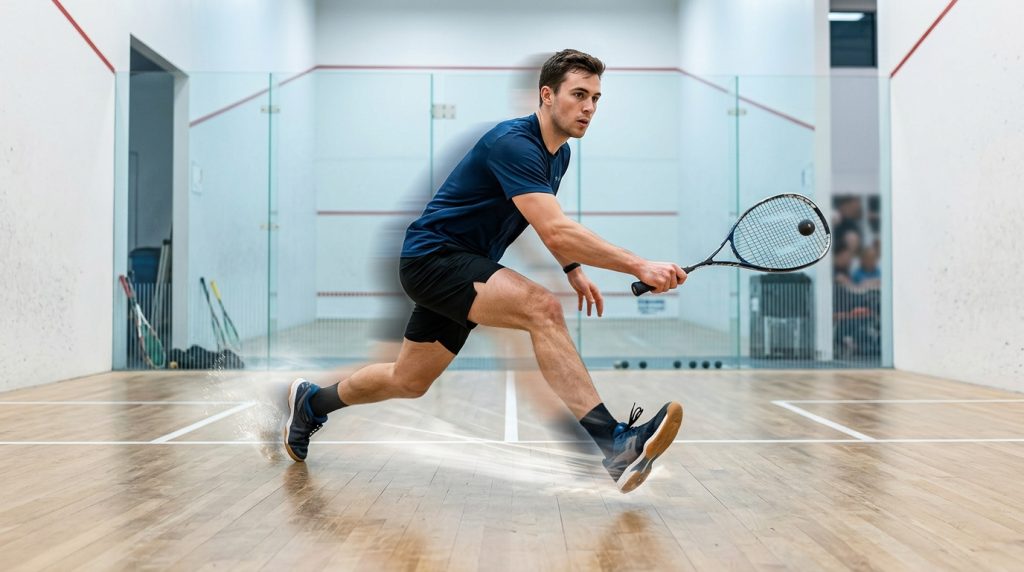
Most recreational court sport athletes believe they need hour-long gym sessions to improve their movement speed. They don’t. Twenty focused minutes on court delivers better results than lengthy workouts that drain your energy and motivation. The secret lies in targeting the specific movement patterns your sport demands, not generic fitness routines.
Court sport speed isn’t about straight-line sprinting. It’s about explosive first steps, directional changes, and recovery positioning. This 20 minute training format combines reaction drills, lateral movement patterns, and sport-specific footwork that translates directly to match performance. You’ll improve acceleration, change of direction speed, and court coverage without sacrificing technique or risking injury through overtraining.
Why Traditional Speed Training Fails Court Sport Athletes
Running laps or doing generic sprint intervals doesn’t prepare you for the movement demands of tennis, squash, badminton, or pickleball. These sports require multi-directional speed, not just forward acceleration.
Court sports demand three distinct movement types. First, explosive starts from a stationary or split-step position. Second, rapid deceleration and direction changes. Third, efficient recovery back to central court positions.
Traditional track-style speed work misses all three elements. You end up faster in a straight line but no more effective at reaching drop shots or covering the court during rallies.
The 20 minute format works because it maintains intensity without accumulating fatigue that degrades movement quality. Short, focused sessions allow you to train at match-realistic speeds whilst staying fresh enough to execute proper technique.
Building Your 20 Minute Speed Session Structure
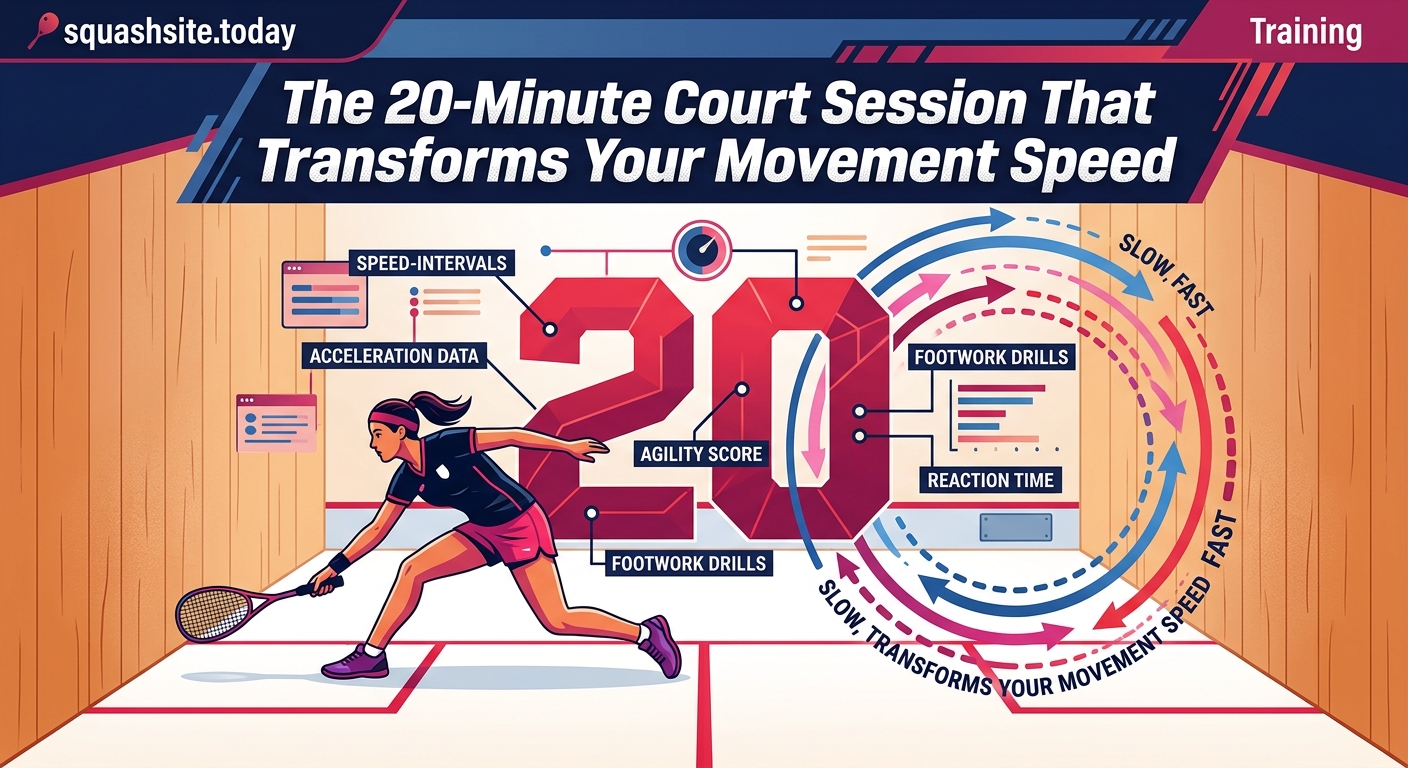
Every effective court speed session follows a specific progression. This structure ensures you’re prepared physically and mentally before pushing into high-intensity work.
The Five-Phase Framework
-
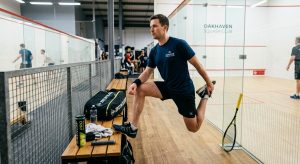
Dynamic warm-up (3 minutes): Leg swings, arm circles, walking lunges, and gentle court-width shuffles activate muscles without depleting energy reserves.
-
Movement activation (3 minutes): Split-step practice, shadow swings with footwork, and T-position recoveries prime your nervous system for explosive movements.
-
Primary speed work (10 minutes): This core section contains your main drills with full recovery between repetitions.
-
Secondary conditioning (3 minutes): Slightly longer sequences at moderate intensity to build movement endurance.
-
Cool-down (1 minute): Light movement and static stretches prevent stiffness and aid recovery.
The timing isn’t arbitrary. Research on neuromuscular fatigue shows that movement quality begins declining after 12-15 minutes of high-intensity work. By keeping your main training block under that threshold, every repetition maintains the speed and precision that transfers to actual matches.
“Speed training only works when you can execute movements at match pace with proper form. The moment technique breaks down, you’re just practising bad habits faster.” — Sports performance coach
The Core Drills That Transform Court Speed
These five drills form the foundation of your 20 minute speed training for court sports. Each targets specific movement patterns you’ll use hundreds of times per match.
Drill 1: Cone Touch Explosions
Place four cones in a diamond pattern, each two metres from a central starting point. Sprint to touch one cone, return to centre, immediately explode to the next cone. Complete all four cones as one set.
Rest 45 seconds between sets. Perform four total sets.
This drill develops your first-step explosion and trains the deceleration control needed to change direction without losing balance. The diamond pattern mimics the angles you’ll move on court better than straight-line sprints.
Drill 2: Lateral Shadow Rallies
Stand at the T (or court centre for tennis). Execute 10 rapid side-to-side movements as if retrieving alternating shots. Focus on staying low, keeping your weight on your toes, and maintaining a wide base.
Each movement should cover 2-3 metres. Rest 30 seconds between sets. Complete five sets.
This builds the lateral speed essential for covering width during rallies. The continuous nature trains your ability to chain movements together, which matters more than isolated bursts.
Drill 3: Reaction Ball Retrievals
Have a partner randomly drop or throw a reaction ball (the multi-sided bouncing ball) from the service line. Sprint to retrieve it before the second bounce.
If training alone, throw the ball against a wall at varying angles and chase the unpredictable rebound.
Perform 8-10 retrievals with 20-second rests between attempts.
This drill adds the reaction component missing from predetermined movement patterns. Court sports require responding to your opponent’s shots, not just executing planned movements.
Drill 4: Split-Step to Sprint
Start at the T. Execute a split-step (small hop landing in ready position), then immediately sprint to a designated corner. Walk back and repeat to different corners.
Complete 12 total sprints (three to each corner). Rest 15 seconds between sprints.
The split-step is how you prepare for explosive movement in actual rallies. Training this transition specifically makes your first step faster when it matters most. Many players who seem slow actually just have poor split-step timing, not inadequate speed.
Drill 5: Recovery Position Shuttles
Sprint from the T to the front corner, touch the wall, then backpedal to the T. Immediately sprint to the opposite back corner, touch, and return forward to the T.
This creates a diagonal movement pattern. Complete six total shuttles with 40-second rests between.
Court positioning isn’t just about reaching the ball. It’s about returning to optimal position for the next shot. This drill trains both elements as a connected sequence, just like in matches.
Common Speed Training Mistakes and How to Avoid Them
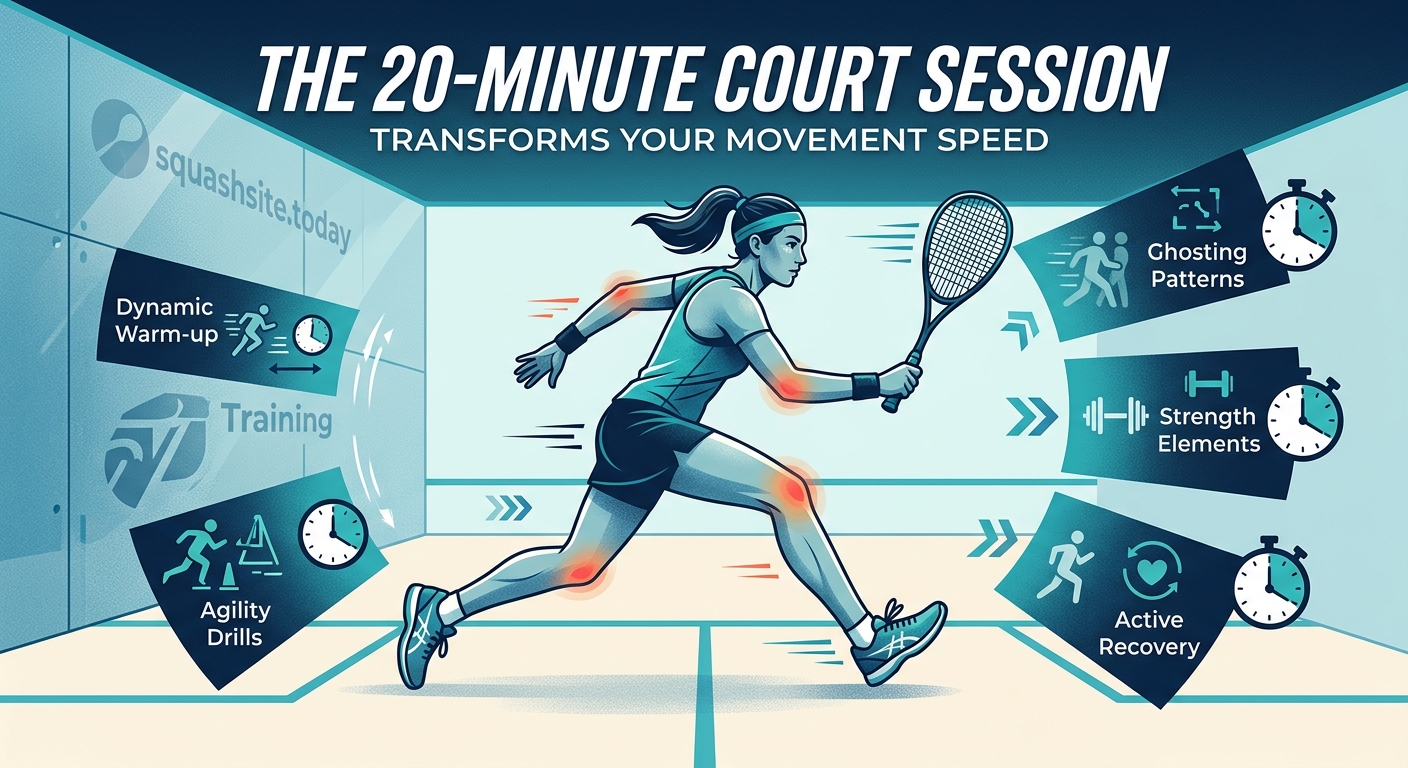
Most recreational players make predictable errors that limit their speed development. Recognising these mistakes helps you train more effectively.
| Mistake | Why It Happens | Correction |
|---|---|---|
| Training when already fatigued | Doing speed work after long hitting sessions | Always train speed first when fresh |
| Insufficient rest between reps | Trying to increase “fitness” during speed work | Take full recovery (30-60 seconds minimum) |
| Using only forward/backward movements | Mimicking running drills instead of court patterns | Include lateral and diagonal movements in every session |
| Neglecting the split-step | Focusing only on running speed | Start every movement from a proper ready position |
| Training at 80% effort | Fear of injury or discomfort | Speed only improves at maximum effort with proper technique |
The most damaging mistake is treating speed training like cardio conditioning. They serve different purposes and require different approaches. Speed work demands maximum effort with complete recovery. Conditioning work maintains moderate intensity with limited rest.
Mixing the two creates mediocre results in both areas. Your 20 minute session should feel intense but not exhausting. If you’re breathing heavily throughout, you’re doing conditioning work, not speed training.
Adapting the Session for Different Court Sports
Whilst the fundamental movement patterns overlap across racket sports, each discipline has specific demands worth addressing.
Tennis players should emphasise longer distances (3-4 metres per movement) and include more diagonal patterns that match baseline-to-baseline rally geometry. The court size demands covering more ground per shot.
Squash players benefit from tighter movement patterns (1.5-2 metres) with more emphasis on explosive lunging and rapid recovery to the T. The compact court rewards acceleration over top-end speed. Consider incorporating elements from ghosting routines that actually improve your court movement for sport-specific patterns.
Badminton athletes need to prioritise overhead movement preparation, as the shuttlecock’s trajectory demands different body positioning than ball sports. Include backward movements to the rear court more frequently.
Pickleball players work in the smallest space but face the fastest exchanges. Focus on reaction drills and short-distance explosiveness rather than sustained speed over distance.
Regardless of your primary sport, the 20 minute format remains consistent. Adjust the movement distances and patterns, not the overall session structure or rest intervals.
Programming Your Weekly Speed Training Schedule
Speed training requires fresh legs and a sharp nervous system. Strategic scheduling determines whether you see consistent improvement or plateau after initial gains.
For recreational players training 3-4 times per week:
- Monday: 20 minute speed session before technical practice
- Wednesday: Match play or longer hitting session (no speed work)
- Friday: 20 minute speed session before light drills
- Weekend: Competition or rest
For intermediate players training 5-6 times per week:
- Monday: Speed session plus technical work
- Tuesday: Match play or intensive drilling
- Wednesday: Light movement day (no speed work)
- Thursday: Speed session plus tactical practice
- Friday: Rest or very light hitting
- Saturday: Competition
- Sunday: Recovery or light cross-training
Never schedule speed training the day before competition. Your nervous system needs 36-48 hours to fully recover from high-intensity movement work. Training speed on Friday for a Saturday match leaves you flat when performance matters most.
Similarly, avoid speed work the day after intense matches. Your body needs recovery time before asking it to produce maximum-effort movements again.
Measuring Progress Without Fancy Equipment
You don’t need laser timing gates or expensive technology to track speed improvement. Simple methods provide sufficient feedback for recreational athletes.
Timed cone drills: Record how long it takes to complete your diamond cone touches. Improvement of even 0.2-0.3 seconds per set indicates meaningful speed gains.
Rally coverage assessment: During practice matches, count how many shots you reach comfortably versus stretching desperately. Better court speed means more balls reached with good positioning.
Recovery time observation: Notice how long you need between points to feel ready. Improved speed fitness means faster recovery between intense rallies.
Video comparison: Film yourself doing shadow movements monthly. Watch for improved acceleration, smoother direction changes, and better balance throughout movements.
The most reliable indicator is match performance. Are you reaching more shots? Arriving in better position? Feeling less rushed during fast exchanges? These practical outcomes matter more than abstract speed measurements.
Preventing Injury During High-Intensity Movement Training
Speed training places significant stress on joints, tendons, and muscles. Smart precautions keep you training consistently without setbacks.
Surface matters: Train on the same surface you compete on whenever possible. Moving from hardwood to clay to concrete between sessions increases injury risk as your body adapts to different friction and impact forces.
Footwear counts: Wear proper court shoes with adequate lateral support. Running shoes allow excessive sideways movement that stresses ankles and knees during direction changes. If you’re uncertain about your current footwear, consider whether you should switch to non-marking gum sole or stick with traditional squash shoes.
Progressive loading: Don’t jump from zero speed training to maximum-effort sessions. Spend 2-3 weeks at 85-90% effort before pushing to true maximum speed. This allows connective tissues to adapt to the new demands.
Movement quality over quantity: Ten perfect repetitions beat twenty sloppy ones. Stop the session when technique degrades, even if you haven’t completed all planned sets.
Address existing limitations: If you have poor ankle mobility or weak glutes, speed training will expose these weaknesses. Consider dedicated mobility work or strength training to address specific limitations before they cause problems.
Pain during training isn’t normal. Muscle burn from effort differs from joint discomfort or sharp pain. Learn to distinguish between productive training stress and warning signs of injury.
Combining Speed Work With Technical Practice
Speed training shouldn’t exist in isolation from your overall court development. Integrating movement work with technical practice creates better transfer to actual match performance.
After completing your 20 minute speed session, transition into technical drills that reinforce the movement patterns you just trained. If you focused on lateral speed, follow with drills emphasising wide shots and recovery positioning.
This sequencing works because your nervous system is primed for explosive movement. Technical practice immediately after speed work happens at higher intensity than standalone drilling, creating better adaptation.
The key is managing total session volume. Your complete training session (speed work plus technical practice) shouldn’t exceed 60-75 minutes for recreational players. Longer sessions accumulate fatigue that degrades both movement quality and shot technique.
For players working on specific technical elements, proper footwork forms the foundation. You can’t execute the perfect squash swing breaking down your forehand drive in 5 simple steps if you arrive at the ball off-balance or rushed.
Nutrition and Recovery for Speed Development
What you do between training sessions matters as much as the work itself. Speed improvements require your nervous system to adapt, which only happens during recovery periods.
Immediate post-training: Consume 20-30 grams of protein within an hour of finishing your session. This supports muscle repair from the explosive contractions speed training demands.
Hydration: Even mild dehydration slows reaction time and reduces explosive power. Drink water consistently throughout the day, not just during training.
Sleep priority: Your nervous system adapts during deep sleep. Seven to nine hours nightly isn’t optional for athletes pursuing speed improvements. Consistent sleep deprivation will stall progress regardless of training quality.
Active recovery: Light movement on rest days (walking, easy cycling, gentle swimming) promotes blood flow without adding training stress. This accelerates recovery better than complete inactivity.
Avoid treating speed training as an excuse to increase calorie intake dramatically. The 20 minute format burns fewer calories than you might expect. Focus on nutrition quality rather than quantity increases.
When to Progress Beyond Basic Speed Training
After 8-12 weeks of consistent 20 minute speed training for court sports, you’ll likely plateau using the same drills. This signals readiness for progression, not a problem with the method.
Add complexity: Combine movements into longer sequences. Instead of isolated cone touches, create patterns that require three or four direction changes before resting.
Increase unpredictability: Have training partners call out directions mid-movement, forcing reactive adjustments rather than predetermined patterns.
Reduce rest periods gradually: Once you can complete all sets with excellent technique, decrease rest by 5-10 seconds. This builds speed endurance without compromising movement quality.
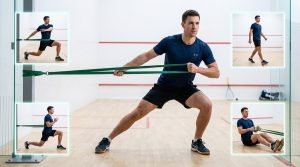
Incorporate resistance: Light resistance bands around your waist during lateral movements increase the challenge. Remove the resistance and you’ll feel noticeably faster.
Sport-specific scenarios: Replace abstract drills with game-realistic patterns. For squash players, this might mean retrieving drop shots followed by immediate back-corner coverage, mimicking actual rally sequences.
The principle remains constant regardless of progression level. Maintain movement quality, allow adequate recovery between efforts, and keep total high-intensity work under 15 minutes per session.
Making 20 Minutes Count When Time Is Limited
The beauty of this approach is its compatibility with busy schedules. You can complete meaningful speed training even on days when lengthy practice sessions aren’t possible.
Court access limitations: If you can’t access a court, use any flat surface with enough room for 5-metre movements. A basketball court, tennis court, or even a large driveway works fine.
Training alone: Every drill described adapts for solo practice. Reaction work becomes slightly less unpredictable, but you can compensate by varying your patterns and maintaining honest maximum effort.
Equipment-free options: You don’t need cones or reaction balls. Use court lines, tape marks, or even shoes as reference points. The movement patterns matter more than the specific equipment.
Warm weather modifications: On hot days, extend rest periods slightly to prevent overheating. Speed training demands maximum effort, which generates significant body heat quickly.
The 20 minute commitment is genuine. Including warm-up and cool-down, you’ll spend 20-22 minutes total. This makes consistency achievable even during your busiest weeks.
Speed Training Creates Confidence, Not Just Quickness
Improved court speed delivers benefits beyond reaching more balls. When you know you can cover the court effectively, your entire game changes.
You take more risks with shot selection because you trust your ability to recover if opponents counter well. You maintain better court position because you’re not constantly caught out of place. You finish matches feeling less exhausted because efficient movement wastes less energy.
Perhaps most valuable, you stop making defensive decisions based on fear of not reaching the next shot. Confidence in your movement allows aggressive, attacking play that puts opponents under pressure.
This mental shift often produces bigger performance improvements than the physical speed gains themselves. Players who feel fast play faster, creating a positive cycle of improvement.
Your 20 minute investment doesn’t just change how you move. It transforms how you compete.
Twenty Minutes to Better Court Coverage
Court sport speed isn’t a genetic gift reserved for naturally athletic players. It’s a trainable skill that responds predictably to focused practice. The 20 minute format removes the excuses that prevent consistent training whilst delivering the intensity required for genuine improvement.
Start with the basic drill progression outlined here. Train twice weekly for a month. Track your progress through timed drills and match performance observations. You’ll notice differences in how you reach balls, recover position, and finish matches feeling stronger.
The players who improve aren’t those with the most elaborate training plans. They’re the ones who show up consistently, execute quality movements, and trust the process. Twenty minutes twice a week beats sporadic hour-long sessions every time.
Your next match is waiting. Your improved court speed starts with today’s 20 minute session.