How to Choose the Right Squash Racket Strings for Power and Control
Squash players aiming to improve their performance often overlook one key element: the strings on their racket. The right strings can make all the difference between a good shot and a winning rally. Striking the perfect balance between power and control is essential for intermediate and advanced players striving to push their game to the next level. Choosing the best squash racket strings for power and control requires understanding how string type, tension, and gauge influence your play style.
Understanding how to optimise your racket setup can give you the edge in tight matches. Whether you want explosive drives or precise placements, selecting the right strings is a crucial step. This guide will walk you through the best options, how to choose them, and practical tips to get the most out of your equipment.
The best squash racket strings for power and control depend on your playing style and preferences. Opt for multifilament or hybrid strings for power, and polyesters for control. Proper tensioning and gauge selection optimise your game and ensure durability. Experimenting with string type and tension can unlock your full potential on the court.
How to pick the perfect strings for your squash game
Choosing the right strings involves understanding the different types and how they affect your performance. Your play style, whether aggressive or controlled, should guide your choice.
Types of squash strings and their benefits
- Multifilament strings: These are made of numerous tiny fibres bundled together. They offer excellent power and a softer feel, making them ideal for players looking to generate more pace without sacrificing comfort. They tend to be less durable but provide better ball grip and spin.
- Polyester strings: Known for their control and durability. They are stiffer, which helps in precise shot placement and reducing ball pocketing. They are suitable for aggressive players who need to control their power.
- Hybrid strings: Combining a polyester main string with a multifilament cross string can provide a balanced mix of power and control. This setup is popular among intermediate and advanced players.
- Gut or natural strings: Rare in squash due to durability issues, but some players prefer them for their exceptional feel and power.
How string tension influences power and control
Tension is a critical factor. Higher tensions (around 30-35 lbs) offer better control but less power. Lower tensions (around 20-25 lbs) provide more power but less control.
To find what works best:
1. Determine your primary focus: power or control.
2. Start with a tension around 24-26 lbs for a blend of both.
3. Adjust based on your feel and performance in matches or practice.
Gauge: the thickness of your strings
String gauge impacts durability, spin, and power:
– Thinner gauges (around 1.10-1.20 mm): Offer more spin and feel but break more easily.
– Thicker gauges (around 1.30-1.40 mm): Last longer and provide more control but with less spin and touch.
Intermediate and advanced players often prefer thinner gauges for enhanced control and spin, provided they are willing to restring more frequently.
Practical steps to optimise your string setup
- Identify your play style: aggressive players might prefer polyester strings at higher tension for control, while those seeking more power lean towards multifilament strings at lower tension.
- Choose your string type: experiment with hybrid setups or stick with a trusted brand.
- Set your tension: start with a middle ground, then fine-tune based on feel.
- Select gauge: opt for thinner strings if you want more spin and feel, thicker if durability is a priority.
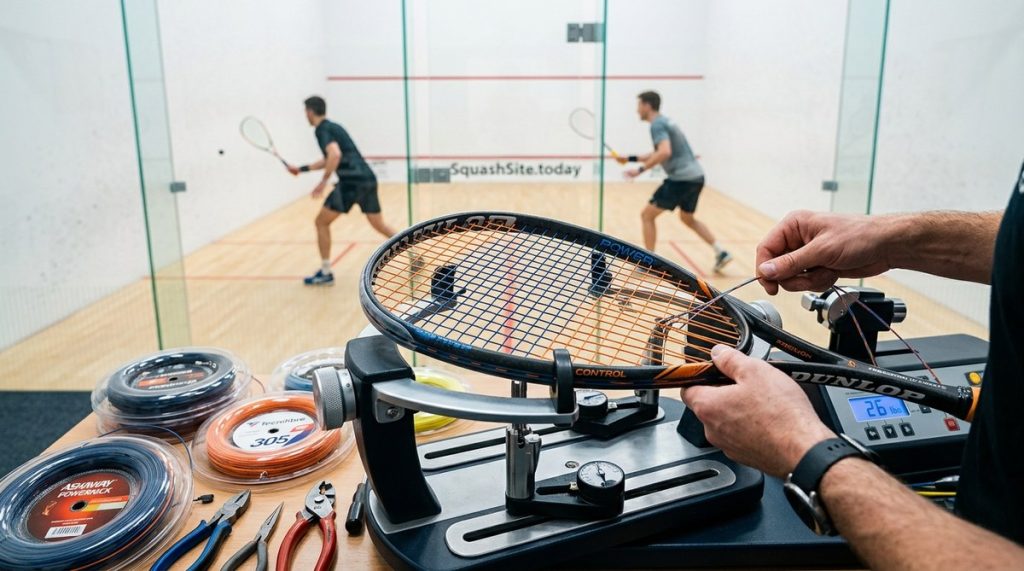
- Restring regularly: strings lose tension over time, affecting performance. Restring every 8-12 hours of play or when control diminishes.
Step-by-step process for selecting the right strings
- Assess your current performance issues.
- Decide whether you need more power or control.
- Choose a string type that complements your needs.
- Test different tensions in small increments.
- Keep a record of your preferences and results.
Common mistakes to avoid when choosing squash strings
| Mistake | Explanation | Impact |
|---|---|---|
| Using the same tension for all strings | Different strings respond better at specific tensions | Reduced performance and feel |
| Ignoring string gauge | Thicker or thinner gauge affects durability and playability | Unintended loss of spin or quick breakage |
| Overlooking string maintenance | Not restringing regularly causes tension loss | Poor control and power |
| Not considering your style | Failing to match string type with playing style | Suboptimal performance |
Expert tip: “Experimenting with hybrid string setups can give you a customised feel that balances power and control perfectly. Don’t be afraid to try different combinations to find what suits your game best,” advises squash coach Liam Turner.
How tension and string type work together to shape your game
Matching the right tension with your string type is crucial. For example, a multifilament string at around 24 lbs can produce impressive power, while a polyester string at 30 lbs offers excellent control.
Quick reference for tension and string type pairing
| Playing style | Recommended string type | Tension range | Gauge preference |
|---|---|---|---|
| Power hitter | Multifilament | 20-24 lbs | Thinner gauge (1.15 mm) |
| Control focused | Polyester | 28-32 lbs | Thicker gauge (1.30 mm) |
| All-round | Hybrid | 24-28 lbs | Variable gauge based on preference |
Mistakes to avoid
| Mistake | Consequence | Solution |
|---|---|---|
| Ignoring tension loss | Reduced control and power over time | Restring regularly |
| Choosing tension without considering style | Mismatch reduces effectiveness | Adjust tension based on your game |
Tuning your racket for maximum impact
Once you’ve selected your strings, fine-tuning tension is the final step.
- Start at manufacturer recommended tension: usually printed on your racket.
- Adjust in small increments: 1 lb up or down to find your sweet spot.
- Test in matches or practice: note how your shots feel and adjust accordingly.
Final thoughts on mastering your string setup
Getting your strings right can revolutionise your game. Remember, the best squash racket strings for power and control are those that align with your unique style. Don’t hesitate to experiment with different types, tensions, and gauges. Restringing regularly ensures your setup remains optimised.
Take time to assess your performance after each change. Over time, you’ll develop a customised setup that enhances your strengths and compensates for weaknesses. With patience and a bit of trial and error, you’ll unlock new levels of precision and power on the court.
Keep refining your string game for continual improvement
As you progress, revisit your string choices periodically. The demands of your play evolve, and so should your equipment. Whether you aim for more spin, increased durability, or sharper control, the right strings are a vital part of your toolkit. Embrace a mindset of ongoing optimisation, and your game will keep improving.
Good luck on your journey to mastering your racket setup. Small adjustments can lead to big gains. Stay curious, keep testing, and enjoy every rally as you fine-tune your gear for peak performance.