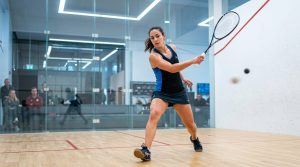
Why the Drop Shot Is Becoming the Most Lethal Tool on the PSA Tour
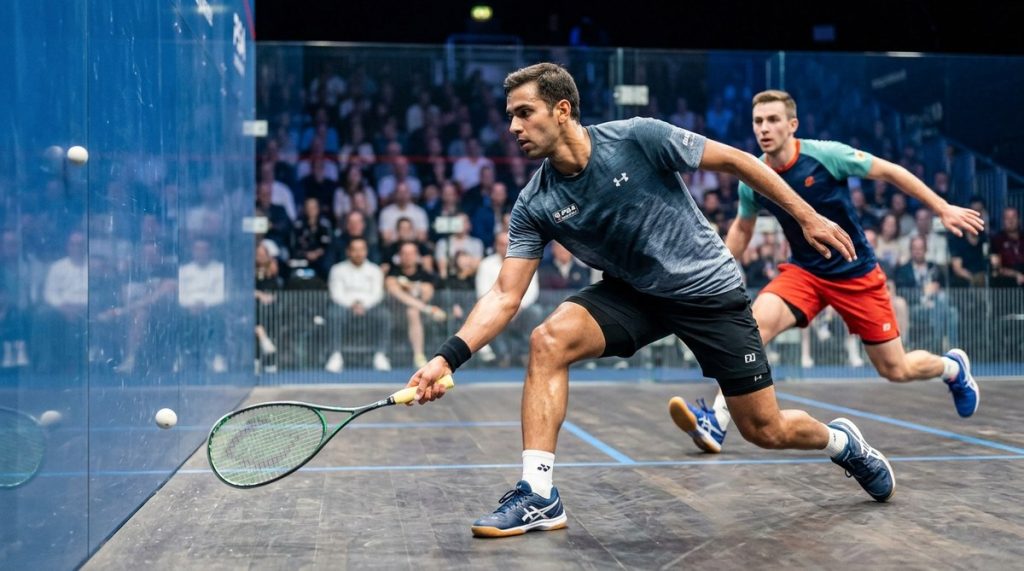
The drop shot has evolved from a tactical change of pace into a primary scoring weapon on the PSA tour. In 2026, players use subtle wrist lag, perfect balance, and early racket preparation to disguise the shot, freezing opponents before the ball dies in the front court. By studying the technique of players like Karim Abdel Gawad and Nour El Sherbini, you can add deceptive drops to your own game and start winning more rallies without needing to overpower anyone.
The pace of professional squash has never been higher. Drives scream down the sidewalls, volleys fly crosscourt, and players cover the T like their lives depend on it. Yet the shot that is deciding more and more big points in 2026 is the one that seems almost gentle: the drop shot.
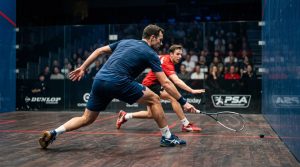
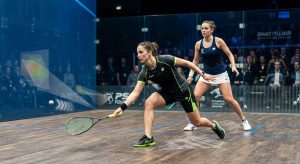
Watch the latest tournaments from Cairo to Chicago and you will see players using drop shots not just as a change of rhythm, but as a primary way to finish rallies. Why has the drop become so lethal? Because the modern game has become so fast that a properly executed drop shot can turn a brutal rally into a one-shot winner. The player who masters it gains an edge that pure power alone cannot match.
The Anatomy of a Tour-Level Drop Shot
Hitting a great drop is not about being gentle. It is about precision, disguise, and body control. Let us look at the key elements that separate a pro drop from a club drop.
- Racket face angle: Pros keep the face slightly open (pointing up) to create a soft, lifting contact. If you close the face, the ball travels too low and hits the tin.
- Wrist position: The wrist stays relaxed but firm. A locked wrist kills the feel; a floppy wrist causes mishits.
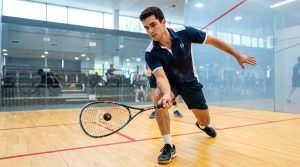
- Footwork: You need to get low. The front knee bends past the toes, and the back leg acts as a stabiliser. Without this balance, the shot drifts.
- Distance from the ball: Hit the ball too close to your body and you lose control. Too far and you stretch, reducing accuracy. The ideal contact point is about an arm’s length away, slightly ahead of the front foot.
The Deception Factor
What makes a PSA drop so hard to read is the delay. Players like Karim Abdel Gawad hold the ball on the racket face for a split second longer than expected. This “hang time” freezes the opponent, who cannot decide which way to move. Then the ball dies softly into the nick or just above the tin.
“The drop shot is the most deceptive shot in squash because it requires extreme softness in a game built on power. If you can disguise it, you have already won the point before the ball leaves the strings.” — SquashSkills coach David Campion
Why Pro Players Are Using the Drop More Than Ever
In 2026, several factors make the drop shot more effective than a decade ago.
- Longer rallies: Players are fitter and retrieval is better. To end a rally from a deep position, you need to draw the opponent in and then go short.
- Ball evolution: The slower ball currently used on tour stays lower and loses speed faster. A drop shot that lands just over the tin is harder to dig out than a drive that sits up.
- Tactical intelligence: Coaches now teach drop shots as part of a pattern, not as a random gamble. Players learn to set up the drop with two or three deep shots first, forcing the opponent behind the T.
- Physical wear: A heavy diet of drops forces the opponent to lunge repeatedly. Over a five-game match, that extra movement adds up. As we cover in How to Structure Your Weekly Training for Maximum Court Performance, building the endurance to handle those repeated lunges is crucial for club players who want to adopt a similar style.
The Three-Step Process for a Lethal Drop
If you want to add a winning drop to your game, follow this sequence.
-
Set up with length. Hit two or three accurate drives — straight or crosscourt — that push your opponent deep behind the T line. The deeper you keep them, the more ground they must cover when you go short.
-
Step into the ball. As the ball comes off the front wall, move forward with a small adjustment step. Keep your racket high and behind your ear to disguise whether you are hitting a drive or a drop. This early preparation is a hallmark of every top PSA player.
-
Carve the shot. Lower your body, let the ball drop to knee height, and cut underneath it with a gentle, brushing motion. Aim for the sidewall nick just above the tin. Do not try to kill it. Just let the racket do the work.
Common Mistakes and How the PSA Pros Fix Them
| Mistake | Symptom | PSA Fix |
|---|---|---|
| Grip too tight | Ball flies long or into the tin | Relax the fingers and hold the racket like you are holding a bird. |
| Standing up too straight | Shot rises too high above the tin | Bend your knees until your eyes are level with the ball. |
| Hitting too hard | Ball bounces back into the middle of the court | Focus on brushing the ball, not punching it. |
| No disguise | Opponent sees the drop coming and reaches it easily | Hold the racket head back as long as possible before the swing. |
| Wrong target area | Ball hits the sidewall too high or too low | Aim for the spot where the sidewall meets the floor — the “nick” zone. |
Learning to fix these issues is the difference between a drop that wins points and one that gives away easy winners. A great place to start is practising solo, using the routine in Solo Court Drills: 12 Exercises You Can Do Without a Partner to ingrain the correct feel.
How to Practice Your Drop Shot Like a Pro
You do not need a partner to develop a lethal drop. Many PSA players spend hours alone, feeding balls from the service box and trying to land the ball softly in the front corner. Here is a practice plan:
- Static feeding: Stand just behind the short line. Drop a ball, let it bounce once, and hit a forehand drop. Do ten on each side. Focus on balance and soft hands.
- Moving backward: Start at the front of the court, then retreat to the back wall. Have a partner or a ball machine feed a deep ball. Run forward and hit a drop. This simulates match conditions.
- Target practice: Place a towel or a small mat in the front corner. Aim for it with every drop. Do not move on until you land five in a row.
- Pressure drills: Play a game where you can only score with a drop shot. This forces you to set up the rally and execute under pressure.
For a more structured approach, check out The Drop Shot Masterclass: Developing Touch and Feel for Winners From Anywhere. It breaks down the exact drills used by coaches to turn average droppers into front court threats.
The Tactical Setup: When to Use the Drop
Knowing when to play a drop is as important as knowing how. On the PSA tour, players rarely hit drops from a neutral or defensive position. They only go short when they have a clear advantage.
- After a weak return: If your opponent’s drive lacks length or hangs in the middle of the court, step in and drop. You have them out of position.
- When the opponent is recovering: Just after they have played a shot and are moving back to the T, a drop can catch them midstride. This is a favourite tactic of Nour El Sherbini.
- From a volley position: If you volley a ball that is above the height of the service line, you can drop it with extra disguise because you have time to hold the swing.
- In the third game and beyond: As fatigue sets in, the legs of your opponent get heavy. Drops become even harder to retrieve. Use them to finish points without spending extra energy.
For deeper tactical understanding, read When to Attack the Front Court: A Decision-Making Framework. It gives you a simple three-question test to decide whether to go short in any rally.
Reading Your Opponent to Set Up the Drop
A good drop is useless if your opponent reads it. That is why the best PSA players study their opponents’ movement patterns. If you notice that your opponent tends to lean forward or bounce on the T, you can wait for that moment and then hit a drop behind them.
- Watch the feet. When your opponent’s weight is on the front foot, they are leaning forward. A drop will catch them off balance.
- Watch the racket. If they are holding the racket low, they are less likely to recover to the front quickly.
- Use the same preparation for drive and drop. This keeps the opponent guessing. As we discuss in Reading the Game: 7 Visual Cues That Telegraph Your Opponent’s Next Shot, the ability to spot these cues gives you a tactical edge that pure athleticism cannot replace.
Build Your Reputation as a Front Court Threat
The drop shot is no longer just a trick shot. It is a fundamental weapon in the modern squash arsenal. By investing time in the techniques used by PSA stars, you can turn your front court game from a weakness into a strength. Start by drilling the basics, then layer in disguise and tactical awareness. In a few months, the players in your club will dread seeing you step forward to the short line.
Make the drop a regular part of your match play, not a rare gamble. That is how you will win more points, more matches, and enjoy the game even more.