How to Spot Counterfeit Squash Rackets Before You Buy
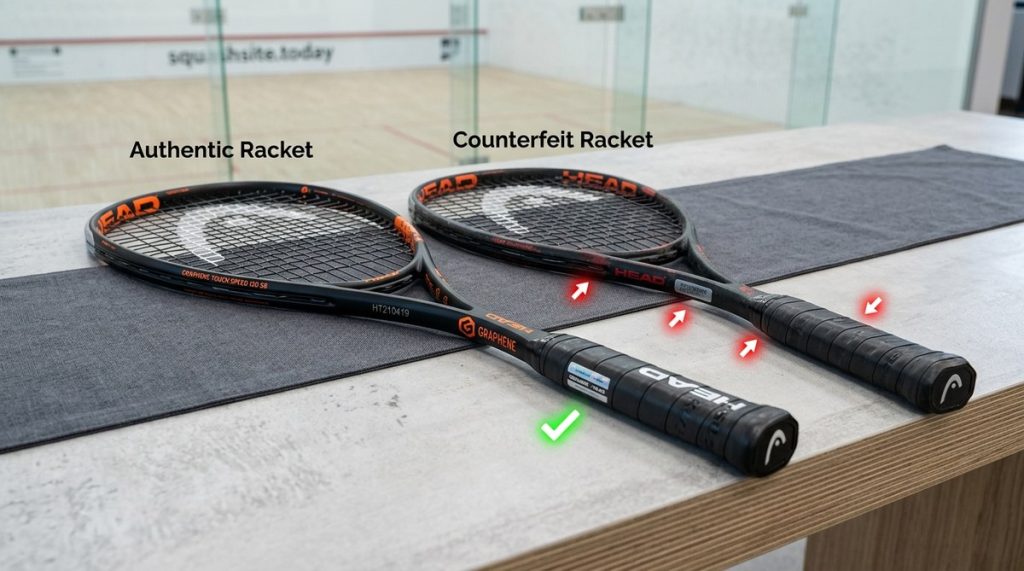
You walk onto court, bounce the ball, and take your first swing. Something feels off. The racket vibrates in a way you have never felt before. The strings look loose even though you just bought it. And that logo on the throat? It is slightly crooked. You may have just bought a counterfeit squash racket. Do not worry. You can learn how to spot a fake squash racket before you hand over your cash. With a bit of know how, you can protect your game and your wallet.
Counterfeit squash rackets are becoming harder to spot, but you can avoid them by checking four things: the serial number arrangement, the feel of the grip material, the precision of the paint and decals, and the overall weight balance. Always buy from approved retailers or inspect second hand rackets in person. If the price feels too good to be true, trust your gut.
Why counterfeit squash rackets are flooding the UK market
Fake sports equipment is not a new problem. In 2026, counterfeit goods are more sophisticated than ever. Squash rackets from top brands like Dunlop, Tecnifibre, and Head are frequent targets. Online marketplaces and second hand sales on Facebook Marketplace or Gumtree are common places where fakes appear. A fake racket may look identical in photos, but it can break after a few rallies and it will never perform like the real thing. Worse, a counterfeit racket can fail mid swing and cause injury. Understanding how to spot a fake squash racket starts with knowing why fakes exist: low production cost and high profit margins for the seller.
The five point inspection method
Here is a practical process that works for any brand. Follow these steps whenever you are considering buying a squash racket, especially if you cannot test it first.
-
Check the serial number
Every genuine racket has a unique serial code. It is usually laser etched into the shaft or printed under the butt cap. Fakes often have a serial that is stamped too deeply, poorly aligned, or in a font that does not match the brand standard. Use the brand’s official website to verify the serial. -
Feel the grip
Genuine grips have a consistent texture and a slight tackiness. Fake grips can feel slippery, too thin, or too thick. If the grip smells strongly of chemical glue, that is a warning sign. -
Examine the paint and decals
Authentic rackets have sharp, precise decals with no bleeding under the clear coat. Fakes often have blurry edges or mismatched colours. Hold the racket under strong light and look for uneven gloss. -
Assess the weight and balance
Pop the racket onto a simple balance scale if you have one. The published weight and balance point should match what the manufacturer claims for that exact model. A counterfeit is often heavier in the head or feels flimsy overall. -
Test the string bed
Tap the strings with your knuckle. A genuine racket produces a consistent pitch across the bed. Fake rackets often have irregular tension and sound dull. If the grommets (the plastic pieces the strings pass through) are uneven, that is another red flag.
Key red flags to scan for when buying second hand
When you buy from a private seller, you do not have the protection of a returns policy. So scan for these warning signs before you hand over the money.
- The seller cannot provide a clear photo of the serial number.
- The price is 50% or more below the typical retail price for that model.
- The racket has no original packaging or documentation.
- The butt cap logo looks different from official images.
- The racket feels noticeably lighter or heavier than what you expect from that model.
- The paint has bubbles, drips, or an orange peel texture.
- The frame has a strange smell, like cheap plastic.
Comparison table: authentic vs fake squash racket
| Feature | Authentic Racket | Fake Racket |
|---|---|---|
| Serial number | Laser etched, clear, evenly spaced | Stamped or printed, uneven, wrong font |
| Grip | Consistent tackiness, firm feel | Slippery, chemical smell, too thin or thick |
| Paint & decals | Sharp edges, no bleeding, even gloss | Blurry edges, colour mismatch, bubbles |
| Weight balance | Matches spec sheet exactly | Often head heavy or too light |
| String bed | Consistent pitch, even grommets | Dead spots, plastic grommets misshapen |
| Butt cap | Brand emblem recessed or embossed cleanly | Logo off centre, poor finish |
Expert insight from a stringer with 15 years experience
“I see about two fake rackets a month come through my workshop. The biggest giveaway is always the string bed. On a genuine Tecnifibre, the grommets are precision cut. On a fake, they look like they were melted with a hot glue gun. I also weigh every racket I string. If a brand new model is 20 grams off the published weight, that is a fake. Do not let a bargain fool you. Your game will suffer and you might get hurt.” — Jason Porter, UKRSA Master Stringer
Trusted sources for buying genuine squash rackets
Your safest bet is to buy from official sports retailers or direct from the brand. For UK players, shops like Decathlon, Sports Direct, or specialist stores like Racket Zone and Squash Source are reliable. If you prefer second hand, ask to meet at a local court or a club so you can test the racket before paying. Avoid sellers who only accept bank transfers or who cannot answer basic questions about the racket’s specification.
If you want to read more about how your racket setup affects your game, check out our guide on why your squash racket grip size actually matters more than you think. And for those on a budget, our round up of 5 budget friendly squash rackets that perform like premium models can help you find a genuine deal.
How to spot a fake squash racket when shopping online
Online shopping makes it harder to inspect the racket in person. But you can still use the same five point method by asking the seller for specific photos. Request a high resolution image of the serial number, a close up of the butt cap, and a side view of the string bed. If the seller hesitates or sends blurry images, that is your answer.
Another trick: ask the seller to weigh the racket on a kitchen scale. A genuine Tecnifibre Carboflex 125 weighs exactly 125 grams unstrung. If they say “I do not have a scale,” that is a poor excuse for almost every household in 2026. Most people have a digital kitchen scale.
Final thoughts on protecting yourself from counterfeit gear
Fake squash rackets do more than waste your money. They can ruin your technique, alter your swing, and even cause injury if the frame cracks during a high speed rally. By learning how to spot a fake squash racket before you buy, you keep your game honest and your equipment safe.
Spend a few extra minutes checking the points we have covered. It is the difference between a bargain and a bad decision. And if you ever suspect a racket you already own might be counterfeit, stop using it and compare it side by side with a known genuine version at your local club.
For more help with your game, from technique to fitness, browse our other guides like the forgotten training element that separates good players from great ones or why your court positioning is costing you matches. Stay sharp, stay safe, and keep playing.