The Most Controversial Referee Decisions in PSA History and What They Teach Us
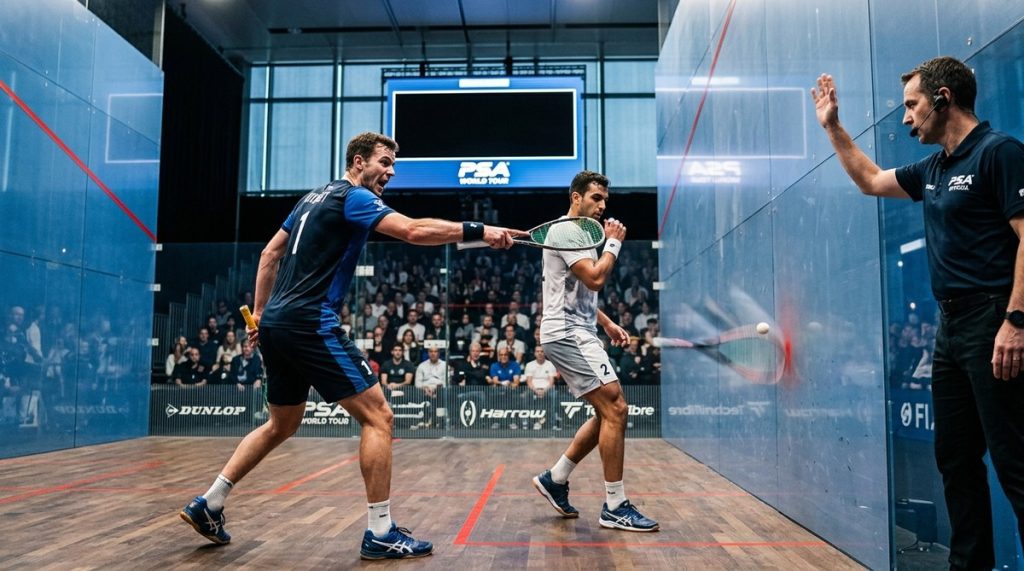
Few things fire up a squash crowd like a referee’s whistle that stops the match mid-rally. Whether you are watching from the stands at the British Open or streaming a World Tour final on your phone, a single call can flip the momentum, ignite a debate, and sometimes define a player’s legacy. The Professional Squash Association (PSA) has seen its share of moments when the official in the chair became the story. These flashpoints are more than just gossip for the squash community. They hold real lessons for anyone who steps onto a court, from club league players to aspiring pros.
Controversial referee decisions in PSA history reveal how rule ambiguity, player reputation, and match pressure can collide. By studying these flashpoints, club players and coaches learn to manage their own conduct, understand the rules more deeply, and use video review to turn a disputed call into a training opportunity.
The Anatomy of a Controversial Call
What makes a referee decision truly controversial in professional squash? It is rarely just one factor. Most disputed calls share a few common ingredients. The stakes are high often a quarterfinal or semifinal of a major tournament. The contact between ball and racket happens so fast that the human eye struggles. And the player who disagrees reacts in a way that fuels the fire.
Let’s break down the main categories of controversy that have appeared across PSA history.
- The double hit. A player strikes the ball twice in one swing. The rules say the rally must stop. But was the sound a double hit or the ball brushing the frame?
- The carry. The ball rests on the racket strings before being flicked away. This is illegal, but the split second is almost impossible to judge without slow motion.
- The line call. Did the ball land inside the court or on the line? In the heat of a rally, a referee’s angle can be blocked.
- The interference. One player claims the opponent’s follow through or movement prevented a clean shot.
These situations create the perfect storm for a flashpoint. And when they happen in a high profile match, the debate can last for years.
Five of the Most Talked About PSA Referee Moments
Every dedicated squash fan has a shortlist of calls that still make them wince. Here are five moments that sparked serious discussion in the professional squash community. Each one teaches us something different about the game.
1. The World Championship Quarterfinal That Had Everyone Rewinding
A few years ago, a top ten player was locked in a tight third game when the referee called a double hit. The player slammed his racket onto the court and argued for several minutes. Replays later showed the ball had only brushed the sidewall before the racket made contact. The call stood, but the momentum shifted. The player lost the match and later admitted the reaction cost him more than the point.
Lesson: Your response to a call can hurt you more than the call itself. Losing composure gives your opponent a mental edge.
2. The Final Where the Referee Changed His Mind
In one memorable PSA Platinum event final, the referee initially signalled a point for the server. Then he paused, walked to the other official, and reversed his decision. The crowd erupted. Boos echoed around the glass court. The player who lost the point refused to continue until the tournament director intervened. The match resumed, but the atmosphere never recovered.
Lesson: Consistency in officiating matters. When a referee appears uncertain, it undermines trust in the entire match.
3. The Carry Call That Sparked a Rule Change
A well known incident involved a player who used a very loose wrist to scoop the ball from the strings. Opponents argued it was a carry. The referee allowed it. The PSA later clarified the wording in the rulebook to define a carry as any situation where the ball comes to rest on the strings. This case directly influenced how the rule is taught to referees today.
Lesson: Controversies can lead to better rules. If you coach or play, stay updated on rule clarifications. They often come from real match disputes.
4. The Interference That Decided a Title
During a major final, the player serving hit a powerful drive that clipped the opponent’s shoulder. The opponent claimed interference and stopped playing. The referee awarded a let, meaning the rally was replayed. The server lost the momentum and eventually the match. Slow motion footage later showed the ball was going wide anyway, but the damage was done.
Lesson: Understanding the interference rule is vital. If you stop playing on a close call, you are trusting the referee to see it your way. Sometimes it is better to play through and protest after the rally.
5. The Line Call That Nobody Could See
In a packed stadium, a ball landed near the baseline. The referee called it out. The player serving was certain it was in. Video from the opposite angle showed the ball had hit the line, which counts as in. The referee stood by the call. The player finished the match but filed a formal complaint afterward.
Lesson: Technology is closing the gap. More tournaments now use camera review for line calls. As a club player, you can use your phone to review disputed points during practice and learn to read the ball’s trajectory better.
What These Decisions Teach Us About Match Conduct
When you strip away the drama, each controversial referee decision in PSA history offers a practical takeaway for the rest of us. Whether you play at a local leisure centre or coach juniors on a Saturday morning, these lessons apply.
How to Handle a Bad Call on Court
Here is a numbered process that helps players and coaches manage the moment a referee makes a decision you disagree with.
- Pause and breathe. Take three seconds before saying anything. This stops the emotional spike that leads to a racket slam.
- Ask for clarification politely. Say something like “Could you explain what you saw?” This keeps the tone respectful.
- Accept the decision. Once the referee confirms, move on. Arguing further rarely changes the outcome and often makes you look difficult.
- Use the break to refocus. Walk to the back wall. Reset your breathing. Do not let the call live inside your head for the next rally.
- Review after the match. If the call was genuinely wrong, note the time and rally number. Discuss it with your coach later. Do not bring it up during the match.
Common Mistakes Players Make After a Disputed Call
| Mistake | Why It Happens | Better Approach |
|---|---|---|
| Shouting at the referee | Emotional frustration | Use the pause and breathe method |
| Stopping play mid-rally | Belief the call was wrong | Play through and appeal after the rally |
| Repeatedly questioning the same call | Desire for fairness | Accept and move on |
| Blaming the opponent | Misplaced anger | Focus on your own next shot |
| Losing focus for the next two rallies | Lingering frustration | Use a reset routine (deep breath, towel wipe, visualise) |
Blockquote from a Former PSA Referee
“The best players I officiated never argued. They might ask a question once, but then they got on with it. The ones who fought every call were usually the ones who lost the match mentally before the final rally. Control your reaction, and you control the court.”
How to Use Controversial Calls in Your Training
You do not need to wait for a tournament to learn from disputed decisions. You can bring these lessons into your regular practice sessions. Try these approaches.
- Film your own matches. Set up a phone on a tripod behind the court. When a close call happens, you can review the footage later. This builds your understanding of what the referee sees.
- Practice the reset routine. During training, ask your partner to shout “out” randomly. Train yourself to pause and refocus without reacting. This builds mental resilience.
- Study PSA match reviews. Many YouTube channels now break down controversial calls frame by frame. Watching these helps you see the angles referees use.
- Roleplay with your club. In a coaching session, have one player act as referee and make a few deliberate close calls. The players must practice accepting them and moving on. This is a powerful drill for junior players.
For more on building composure and movement under pressure, check out our guide on the 20-minute court session that transforms your movement speed. It pairs well with the mental reset techniques above.
How the PSA Has Improved Officiating
The governing body has not ignored these controversies. In the last few years, the PSA has introduced several changes to reduce flashpoints.
- Mandatory referee training courses. All officials at PSA events must now pass a practical assessment.
- Video review for line calls. Selected tournaments now allow the referee to check a tablet replay before making a final decision.
- Player conduct warnings. A formal warning system for excessive arguing has reduced on court drama.
- Clearer rule language. The rulebook has been rewritten in plainer English to reduce interpretation gaps.
These changes show that the sport listens to its community. If you are involved in a club committee, you can apply the same principle. Review your own club’s rules and make sure they are clear to everyone.
What Club Players Should Take Away
You might never play on the PSA World Tour, but the dynamics of a controversial call happen at every level. A local league final can feel just as intense as a World Championship quarterfinal. The stakes may be different, but the emotions are the same.
Here are three things to remember next time you face a disputed decision.
- The referee is human. They make mistakes. So do you. Accepting that fact makes the game more enjoyable for everyone.
- Your reaction is a choice. You cannot control the call, but you can control how you respond. That choice often decides the next rally.
- Rules knowledge is power. The more you understand the rulebook, the less likely you are to be caught off guard. Spend ten minutes reading the official PSA rules once a season.
Building a Culture of Respect Around Officiating
If you coach or captain a team, you have a role in shaping how your players react to referees. Lead by example. When you disagree with a call, keep your voice level. After the match, thank the official for their time. This simple habit spreads through a club.
You might also consider running a short workshop on squash court etiquette. Our article on squash court etiquette and match conduct for club and tournament play gives you a ready made structure for that session.
What the Future Holds for PSA Officiating
As technology improves, we will likely see more automated line calling and instant replay in professional squash. Some fans worry this will remove the human element. Others argue it will reduce controversy. The truth probably lies somewhere in the middle. Even with perfect technology, there will always be moments of interpretation. A double hit is still a judgement call. A carry is still a feel decision.
The best thing you can do as a player or fan is to stay engaged with the conversation. Follow PSA rule updates. Watch match reviews. And when a controversial decision happens in your next club match, remember that it is part of the sport’s rich, human story.
Final Thoughts on Learning from Squash Controversy
Controversial referee decisions in PSA history are not just entertainment for the squash community. They are case studies in pressure, fairness, and human nature. Every time a player loses their cool on a glass court, there is a lesson for the rest of us about what not to do. Every time a referee makes a tough call under the lights, there is a reminder that officiating is one of the hardest jobs in sport.
The next time you step onto the court, carry these stories with you. Not as ammunition for an argument, but as a guide for how to stay composed, respect the rules, and keep your focus on the ball. That is the real win.