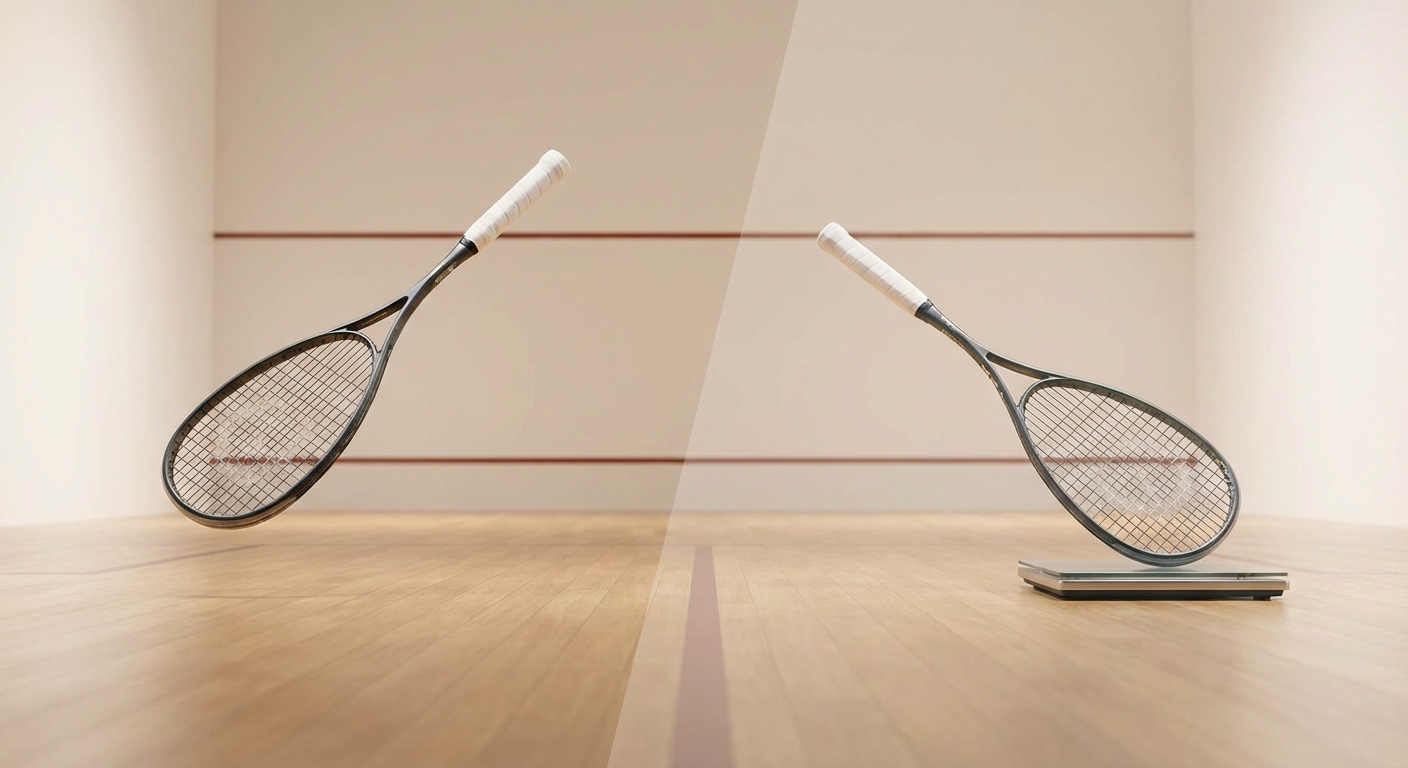
Choosing between a head heavy and head light racket can transform your game overnight. The balance point determines how the racket feels in your hand, how much power you generate, and whether you’ll dominate at the net or from the back of the court. Most players pick a racket based on brand or price, then wonder why their shots feel sluggish or their arm aches after three games.
Head heavy rackets concentrate weight in the frame for explosive power and smashes, ideal for attacking players who hit from the back. Head light rackets shift weight towards the handle for faster reactions and control, perfect for net players and defensive styles. Your balance choice should match your playing position, physical strength, and whether you prioritise power generation or manoeuvrability during rallies.
What Balance Point Actually Means
Balance point measures where the racket’s weight concentrates along its length. Hold your racket horizontally on one finger. The spot where it balances perfectly is your balance point.
Manufacturers measure this from the bottom of the handle in millimetres or centimetres. A standard racket measures around 675mm total length. Balance points typically fall between 285mm and 310mm from the handle base.
Head heavy rackets shift the balance point towards the frame. Head light rackets move it closer to your hand. Even a 5mm difference creates a noticeable change in how the racket swings.
The physics matter here. When more weight sits in the racket head, you generate greater momentum through your swing. That momentum translates directly into shot power. But it also means the racket feels heavier during fast exchanges.
Head Heavy Rackets for Power Players
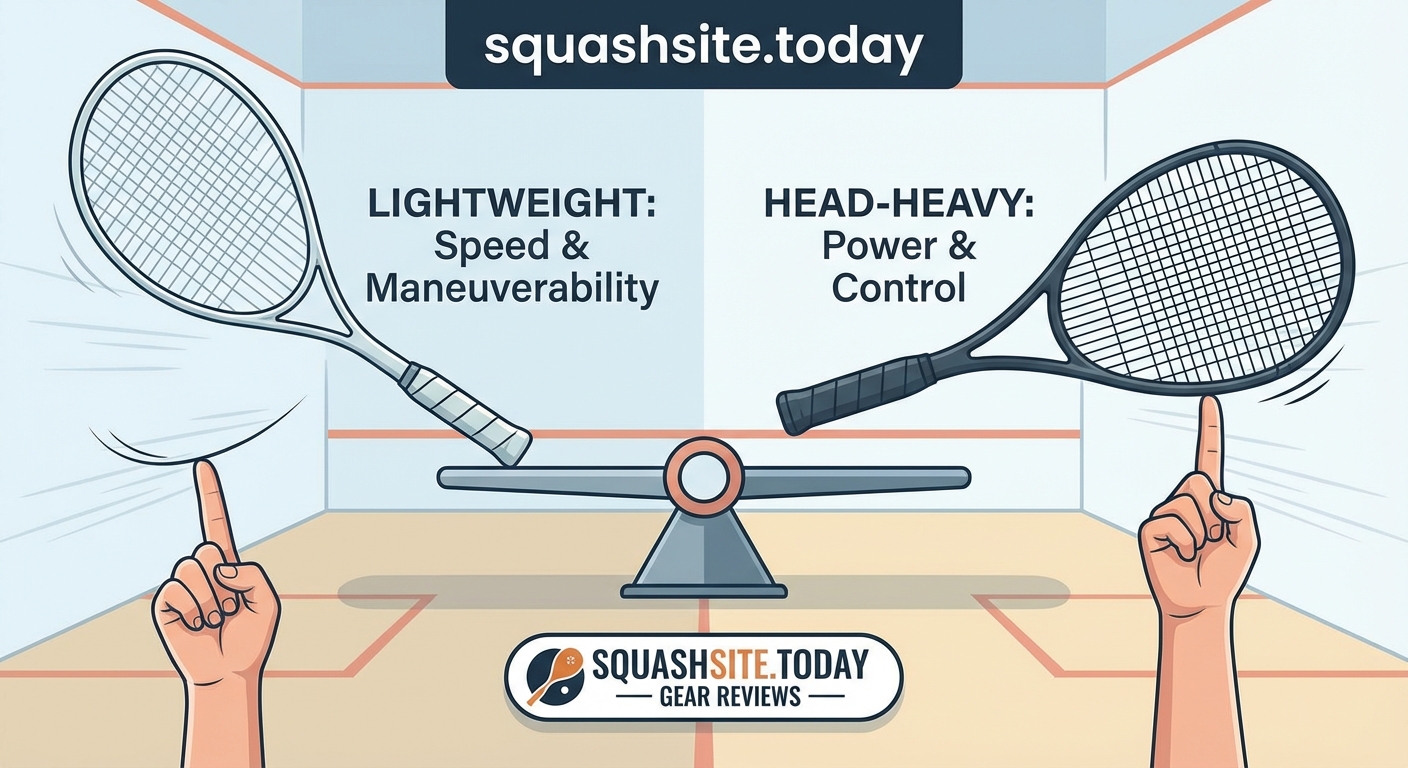
Head heavy rackets excel at generating pace with less effort. The weight distribution creates a whip effect through your swing. The racket head accelerates faster, producing more force on contact.
These frames suit players who spend most rallies at the back of the court. If you love hitting deep drives and attacking with overhead shots, head heavy balance gives you natural power.
Key advantages of head heavy rackets:
- Generate maximum power on smashes and clears
- Require less arm strength for deep shots
- Create momentum that carries through your swing
- Ideal for singles players who control from the back
- Help weaker players produce pace
The trade-off comes at the net. Head heavy rackets feel sluggish during rapid exchanges. Your reaction time suffers because you’re swinging more mass. Defensive blocks and volleys require more effort.
Your arm also works harder over long matches. The extra weight in the head increases strain on your wrist and elbow. Players switching from head light to head heavy often notice fatigue setting in earlier.
Professional coaches recommend head heavy rackets for intermediate players who’ve developed proper technique but lack natural power. The balance point compensates for developing strength whilst good form prevents injury.
Head Light Rackets for Control and Speed
Head light rackets move the balance point towards your hand. This creates a racket that feels lighter and responds faster to your movements.
The reduced weight in the frame means you sacrifice some natural power. But you gain precision, manoeuvrability, and lightning reactions at the net.
These rackets suit players who dominate the front court. If your game relies on touch shots and precise placement, head light balance gives you the control you need.
Benefits of head light rackets:
- Faster swing speed for defensive reactions
- Superior control on delicate shots
- Less strain on your arm during long matches
- Better for doubles players at the net
- Easier to adjust mid-swing
The main limitation is power generation. You’ll need better technique and more physical strength to hit deep from the back court. Beginners often struggle to reach the back wall consistently with head light rackets.
Your swing mechanics become more important. With head heavy rackets, the weight does some work for you. Head light frames demand proper form to generate adequate pace.
How to Test Balance Point Before Buying
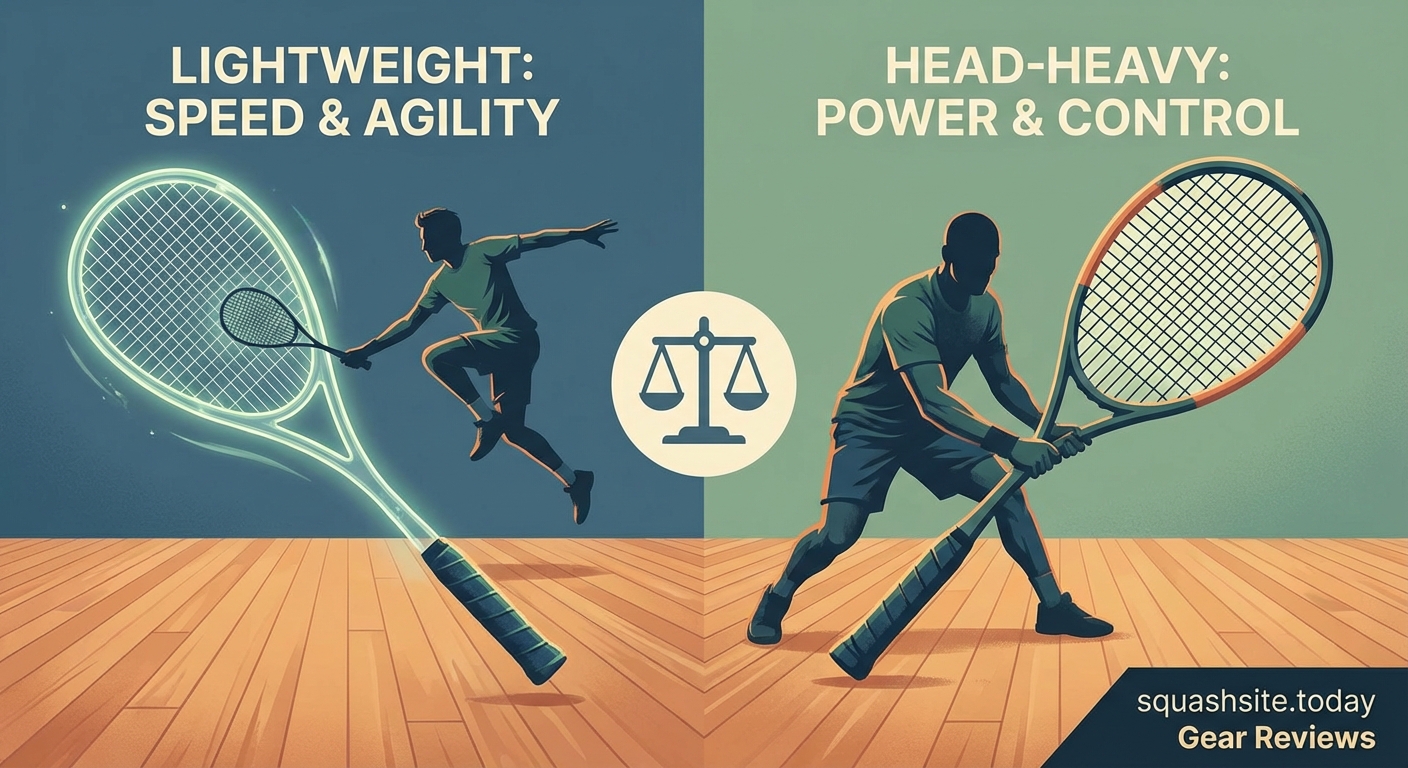
Testing racket balance before purchase saves you from expensive mistakes. Most shops let you demo rackets, but you need to know what to feel for.
Follow these steps to properly assess balance:
- Hold the racket at arm’s length horizontally
- Note how much effort it takes to keep steady
- Make slow practice swings focusing on the weight distribution
- Attempt rapid direction changes as if volleying
- Hit overhead shots to gauge power generation
- Try delicate touch shots for control assessment
- Play for at least 20 minutes to feel fatigue patterns
The first few swings always feel strange with any new racket. Give yourself time to adjust before making judgements. Your brain needs to recalibrate to the new weight distribution.
Pay attention to your arm after testing. If your wrist or elbow aches, the balance might not suit your current strength level. Discomfort during testing becomes pain during matches.
Balance Point Recommendations by Playing Style
Different playing styles demand different balance points. Your position on court and tactical approach should guide your choice.
| Playing Style | Recommended Balance | Reason |
|---|---|---|
| Aggressive baseline | Head heavy | Maximises power on drives and smashes |
| All-court player | Even balance | Versatility for varied shot selection |
| Net specialist | Head light | Speed and control for volleys |
| Defensive counter-puncher | Head light | Fast reactions to opponent’s attacks |
| Power doubles | Head heavy | Attacking from the back in rotation |
| Mixed doubles (front) | Head light | Quick hands at the net |
These recommendations assume intermediate skill levels. Beginners often benefit from even balance regardless of style. The neutral feel helps you develop technique without the racket imposing characteristics.
Advanced players sometimes choose against type deliberately. A naturally powerful player might select head light to improve touch. A defensive specialist might add head heavy to develop attacking options.
Your physical attributes matter too. Stronger players handle head heavy rackets more easily. If you’re still building strength, starting with head light prevents injury and allows longer practice sessions without fatigue.
The Even Balance Compromise
Some rackets offer even balance, placing the balance point near the centre. These frames attempt to blend power and control characteristics.
Even balance suits players still discovering their style. You get reasonable power without sacrificing too much manoeuvrability. The neutral feel lets you experiment with different tactical approaches.
Many intermediate players find even balance ideal whilst developing their game. You won’t excel at any particular aspect, but you won’t have glaring weaknesses either.
The downside is lack of specialisation. Once you’ve identified your preferred playing style, a properly matched head heavy or head light racket will serve you better than even balance.
Think of even balance as training wheels. Useful whilst learning, but you’ll eventually want the performance benefits of a more specialised balance point.
Balance Point Versus Total Weight
Balance point and total weight are separate specifications that work together. A light racket can still be head heavy. A heavier racket might feel head light.
The combination determines how the racket actually performs. A 90g racket with head heavy balance might feel similar to a 95g racket with even balance during play.
Manufacturers use different weight classifications. Badminton uses U ratings (2U, 3U, 4U). Tennis measures in grams or ounces. Squash typically lists weights between 110g and 140g for the frame alone.
Focus on how the complete package feels rather than obsessing over individual specifications. A racket’s swing weight matters more than static weight. Swing weight accounts for both total mass and balance point together.
Two rackets with identical static weight can feel completely different based on balance alone. Test with actual swings rather than just holding the racket still.
Adjusting Balance Point With Lead Tape
You can modify balance point after purchase using lead tape. This weighted tape sticks to the frame, shifting the balance point towards wherever you apply it.
Adding tape to the racket head makes it more head heavy. Applying tape near the handle shifts balance towards head light. Small amounts create noticeable changes.
Start with 2-3 grams and test before adding more. Place tape symmetrically on both sides to maintain even weight distribution. Most players position tape at 3 and 9 o’clock on the frame.
Common tape placement strategies:
- Top of the frame for more power on overheads
- Sides of the frame for stability on off-centre hits
- Throat area for subtle balance shifts
- Handle for converting to head light feel
Lead tape lets you experiment with balance without buying multiple rackets. But it also adds total weight. A racket might feel perfect statically but tire your arm faster during play.
Professional stringers can advise on tape placement for your specific needs. They’ve seen hundreds of customisation requests and know what actually works versus what sounds good in theory.
Common Balance Point Mistakes
Many players choose balance based on misconceptions rather than actual playing requirements. These mistakes lead to frustration and slower improvement.
Copying professional players’ equipment rarely works. Pros use rackets matched to their exceptional strength and technique. What works for a touring player might feel terrible for an intermediate club member.
Assuming head heavy always means more power ignores technique requirements. Without proper form, a head heavy racket just tires your arm faster. The extra weight doesn’t automatically translate to better shots.
Switching balance points too frequently prevents adaptation. Your brain and muscles need time to adjust to new weight distribution. Constantly changing rackets means you never fully adapt to any of them.
Ignoring physical limitations causes injuries. If you lack the strength for head heavy balance, forcing it risks tennis elbow or wrist problems. Proper technique and conditioning must come before equipment choices.
Buying based on appearance rather than feel is surprisingly common. A racket might look aggressive, but if the balance doesn’t match your game, it won’t perform.
How Balance Affects Different Shots
Balance point influences every shot type differently. Understanding these effects helps you choose equipment that strengthens your weapons and minimises weaknesses.
Serves and smashes: Head heavy rackets generate more pace with less effort. The weight accelerates through contact, adding free power. Head light rackets demand better technique and strength to achieve similar speeds.
Volleys and blocks: Head light rackets react faster to incoming shots. The reduced weight in the frame lets you adjust position mid-swing. Head heavy rackets feel sluggish during rapid exchanges at the net.
Drop shots: Head light balance provides superior touch and feel. You can decelerate the racket head smoothly for delicate placements. Head heavy rackets make soft shots more difficult to control.
Drives and clears: Head heavy rackets excel at maintaining depth. The momentum carries through your swing, pushing shots to the back court. Head light frames require more arm speed to achieve similar length.
Defensive lobs: Both balance types work, but for different reasons. Head heavy uses momentum to lift the ball. Head light relies on fast racket preparation and compact swings.
Your shot selection should influence balance choice. If you rarely hit drop shots, sacrificing touch for power makes sense. Players who live at the net need the control that head light provides.
Transitioning Between Balance Points
Switching balance points requires an adjustment period. Your muscle memory expects certain feedback from the racket. Changing balance disrupts those expectations.
Allow at least three practice sessions before judging a new balance point. Your first attempts will feel awkward. Shots that felt automatic suddenly require conscious thought.
Start with solo practice before playing matches. Hit against a wall or do shadow swings to recalibrate your timing. Match pressure makes adaptation harder.
Your swing mechanics might need adjustment. Head heavy rackets need less arm speed but more body rotation. Head light frames demand faster hands but less body commitment.
Temporary performance drops are normal. You might lose to players you usually beat whilst adapting. This frustrates many players into switching back prematurely.
Keep notes on how different shots feel. Track which aspects improve and which suffer. This data helps you decide whether the change suits your game long term.
Balance Point and Injury Prevention
Wrong balance choice contributes to common racket sport injuries. The repetitive nature of play amplifies small stresses into chronic problems.
Head heavy rackets increase strain on your wrist and elbow. The extra weight creates greater forces at the end of each swing. Players with existing joint issues should approach head heavy balance cautiously.
Head light rackets reduce joint stress but demand more muscular effort. You’re generating power through arm speed rather than racket momentum. This can cause shoulder problems if your technique isn’t sound.
Listen to your body during the adaptation period. Mild discomfort is normal. Sharp pain or lasting aches signal a mismatch between your current condition and the racket’s demands.
Proper warm-up becomes more important with head heavy rackets. Cold muscles and tendons can’t handle the increased forces safely. Spend extra time on wrist and forearm preparation.
Consider your age and injury history. Younger players with no joint issues tolerate head heavy balance better. Older players or those recovering from injuries often find head light more forgiving.
Making Your Final Decision
Choosing between head heavy and head light racket balance comes down to honest self-assessment. What does your game actually need right now, not what you wish it needed?
Test both types extensively before committing. Borrow from friends, use demo programmes, or attend racket trial events. Fifteen minutes in a shop tells you nothing about how a racket performs during a tough three-game match.
Consider your development trajectory. If you’re still building strength and technique, head light might serve you better initially. You can transition to head heavy later if your style demands it.
Budget matters for testing. If you can only afford one racket, even balance provides the safest middle ground. Once you’ve saved for a second racket, you can specialise based on experience with your first.
Don’t overthink the decision. Balance point matters, but it’s not the only factor determining performance. String tension, grip size, and your own technique influence results just as much.
Finding Your Perfect Frame Balance
The head heavy versus head light debate has no universal answer. Your ideal balance point depends on playing style, physical attributes, and tactical preferences. Power players attacking from the back court benefit from head heavy momentum. Net specialists and defensive players need the speed that head light provides. Test thoroughly, listen to your body, and choose based on how the racket actually performs during realistic match conditions rather than specifications on paper.
Leave a Reply