
Running a squash club means juggling court bookings, member queries, match results, and social events. Most clubs turn to WhatsApp because it’s already on everyone’s phone. But within weeks, the group chat becomes a mess of unanswered questions, off-topic banter, and important announcements buried under dozens of messages.
A well-managed squash club WhatsApp group can transform how your members communicate. A poorly run one drives people to mute notifications and miss vital information.
A squash club WhatsApp group works best with clear rules, designated admins, and separate channels for different purposes. Set boundaries early, pin essential information, and create sub-groups for teams, social events, and coaching to prevent message overload. Regular maintenance keeps engagement high and ensures important updates reach everyone who needs them.
Why WhatsApp Works for Squash Clubs
Most squash clubs tried email newsletters first. Members rarely opened them. Facebook groups required another login. Notice boards at the club only reached people who turned up that day.
WhatsApp sits on your members’ home screens. Messages arrive instantly. Read receipts show who’s seen important updates. Group chats feel personal rather than corporate.
The platform handles everything from last-minute court cancellations to sharing match photos. Members can respond immediately when someone needs a hitting partner. Tournament organisers can coordinate draws and timings without endless phone calls.
But popularity creates problems. A single group chat with 80 members generates hundreds of messages daily. People miss crucial information. Conversations spiral off-topic. New members feel overwhelmed by the backlog.
Setting Up Your Main Club Group
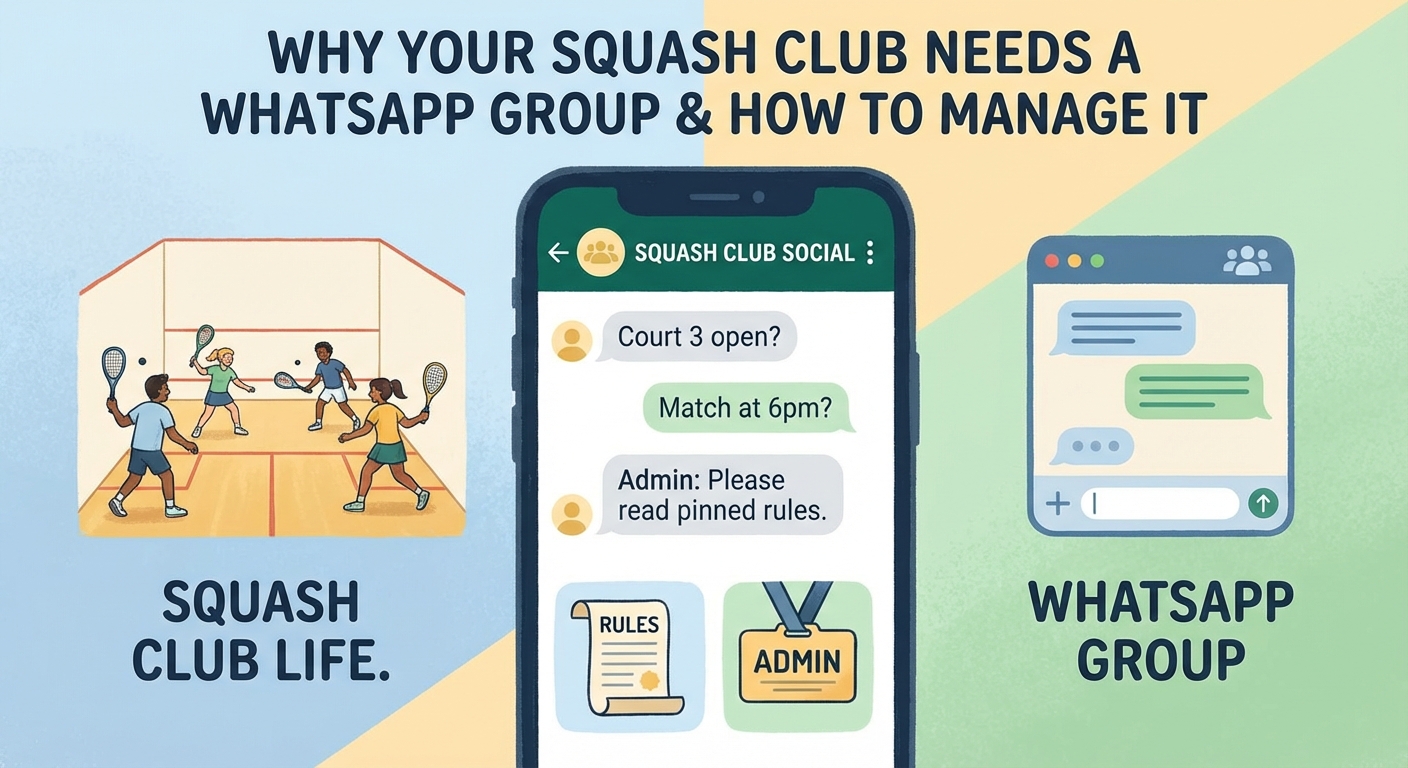
Start with structure before adding members. A chaotic beginning sets the wrong tone.
Choose the Right Group Type
WhatsApp offers two options: standard groups and communities. Standard groups work for clubs under 100 members. Communities suit larger clubs because they allow multiple sub-groups under one umbrella.
Name your group clearly. “Riverside Squash Club” beats “RSC Chat” or inside jokes that confuse newcomers.
Write Your Group Description
The description appears when people join. Use it wisely. Include:
- What the group is for (club announcements, court bookings, social events)
- What belongs in other channels (coaching questions, league results)
- Response time expectations (nobody needs to reply at midnight)
- Basic etiquette (no voice notes during work hours, keep videos under 30 seconds)
Pin this description so it stays accessible. Update it when rules change.
Assign Multiple Admins
Never rely on one person. Life happens. Holidays, work emergencies, and family commitments mean your sole admin might disappear for weeks.
Appoint at least three admins from different areas of club life. The club secretary, head coach, and social committee chair make a balanced team. They can cover each other’s absences and bring different perspectives to group management.
Creating Effective Group Rules
Rules sound boring until someone posts 47 photos from last night’s social at 7am on a Monday.
The Five Essential Rules
-
Announcements only between 8am and 9pm. Emergencies exempt. Court closures at midnight can wait until morning unless tomorrow’s bookings are affected.
-
Keep conversations relevant to squash. Birthday wishes are lovely. Extended debates about parking regulations belong elsewhere.
-
Use reply function for clarity. WhatsApp’s reply feature prevents confusion when multiple conversations overlap. Teach older members how it works.
-
No commercial posts without admin approval. Members selling second-hand rackets is fine. Endless promotions from the guy who started a stringing business annoy everyone.
-
Respect privacy. Don’t share photos of children without parental consent. Don’t screenshot private messages and post them to the group.
Post these rules as the first message. Pin them. Reference specific rules when enforcing them rather than vague “keep it appropriate” warnings.
Managing Different Types of Messages
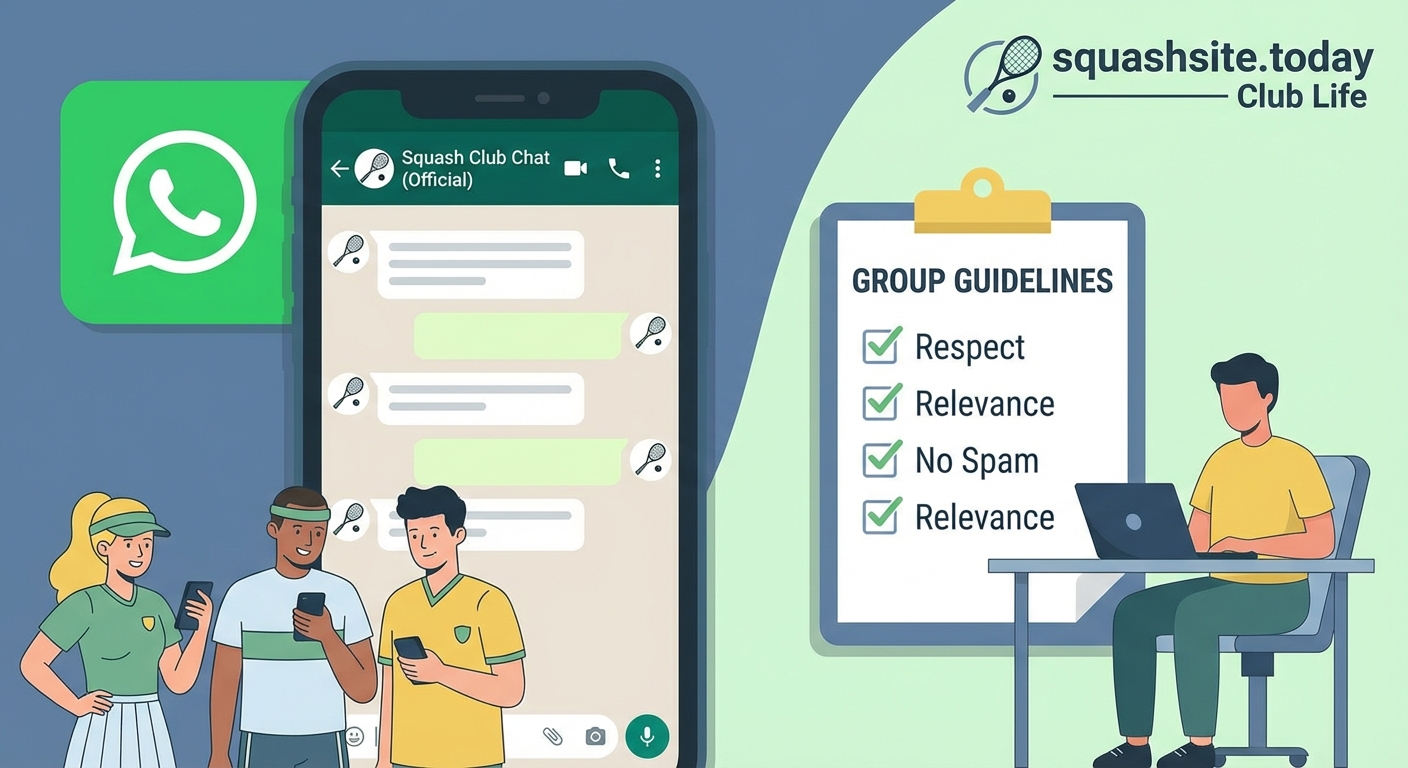
Not all messages deserve equal treatment. Categorise them to maintain order.
| Message Type | Response Needed | Admin Action |
|---|---|---|
| Court booking query | Within 2 hours | Answer or direct to booking system |
| Match result | Acknowledge receipt | Thank poster, update records |
| Equipment question | Within 24 hours | Answer or connect to coach |
| Social event interest | Track responses | Create poll if needed |
| Complaint or dispute | Immediate private message | Move to private chat, never resolve publicly |
| Spam or off-topic | Instant | Delete and warn sender |
Consistency matters more than speed. Members learn what to expect when you handle similar situations the same way.
Building Separate Groups for Specific Purposes
Your main group should handle general club business. Everything else needs its own space.
When to Create Sub-Groups
- Team groups: Each league team needs private space for tactics and match coordination
- Coaching groups: Technical discussions and training drills stay separate from general chat
- Social committee: Event planning generates too many messages for the main group
- Junior section: Parents need different information than adult members
Link these groups in your main group’s description. New members can join relevant sub-groups without cluttering everyone’s phone.
The Tournament Group Template
Tournaments generate massive message volume. Create a dedicated group two weeks before the event. Include:
- Draw and schedule (pinned message)
- Rule clarifications
- Real-time score updates
- Referee contact details
Archive the group one week after the tournament. Members can still access information but won’t receive notifications.
Handling Common WhatsApp Group Problems
Every club faces the same issues. Prepare solutions before problems arise.
The Serial Poster
One member dominates the chat with constant messages. Often well-meaning but exhausting.
Address this privately. “We love your enthusiasm, but could you batch your messages? Post once with all your questions rather than sending them as you think of them.”
If private messages fail, implement a “three messages per topic” rule for everyone.
The Ghost Members
Dozens of members never post or react. You can’t tell if they’re reading messages.
Send a quarterly engagement check. “React with 👍 if you’re still active in this group.” Remove members who don’t respond after two reminders. They can rejoin when they’re ready to participate.
The Late-Night Debaters
Two members start arguing about rule interpretations at 11pm. Messages fly back and forth.
“This conversation is better suited to a private chat or face-to-face discussion. Let’s keep the group clear for time-sensitive information.”
Move the discussion offline. Follow up with both parties individually to ensure the dispute doesn’t fester.
The Information Hoarder
Someone asks a question. An admin answers privately. Three other people ask the same question because they didn’t see the answer.
Always answer common questions in the group. If you’ve already answered privately, post a summary: “Several people have asked about court fees. The new rates are £X for members, £Y for guests, effective from [date].”
Using WhatsApp Features Effectively
WhatsApp keeps adding features. Most clubs ignore them. That’s a mistake.
Polls for Decisions
Need to pick a date for the club championship? Create a poll instead of asking “who can make the 15th?”
Polls close automatically. Results are clear. No scrolling through 40 messages to count responses.
Broadcast Lists for Announcements
Broadcast lists send messages to multiple people without creating a group chat. Recipients see your message as a private conversation.
Use broadcasts for sensitive information like membership renewals or payment reminders. People can ask questions privately rather than exposing financial details to the entire club.
Voice Messages Sparingly
Voice messages work for complex explanations or when you’re driving. They’re terrible for information people need to reference later.
Establish a norm: voice messages under 30 seconds are fine. Anything longer should be text or a voice note with a written summary.
Status Updates for Casual Content
WhatsApp Status works like Instagram Stories. Post casual content there instead of the main group.
Action shots from coaching sessions, funny moments, or “who left their water bottle?” queries fit Status better than group messages. People who care will check. Others won’t be disturbed.
Monthly Maintenance Tasks
Set calendar reminders for these essential jobs.
-
Review pinned messages. Remove outdated information. Pin current schedules and contact lists.
-
Check member list. Remove people who’ve left the club. Add new members with a welcome message explaining group norms.
-
Archive old media. WhatsApp stores photos and videos on your phone. Export important images to cloud storage, then delete from the chat to save space.
-
Update group description. Reflect current priorities. Summer might emphasise social events. Winter focuses on league matches.
-
Survey member satisfaction. Annual anonymous feedback reveals whether the group serves its purpose. Ask what’s working and what needs changing.
Transitioning from Chaos to Order
Maybe your group already exists and it’s a disaster. You can fix it without starting over.
Announce changes clearly. “We’re implementing new guidelines to make this group more useful for everyone. Here’s what’s changing and why.”
Give a transition period. “Starting Monday, we’ll enforce the 8am-9pm rule for non-urgent messages.”
Lead by example. Admins must follow rules strictly. Members notice hypocrisy instantly.
Acknowledge growing pains. “We know this feels different. Give it two weeks. If it’s not working, we’ll adjust.”
Most members will appreciate the structure. The few who complain often weren’t contributing meaningfully anyway.
Knowing When WhatsApp Isn’t Enough
WhatsApp has limits. Recognise when you’ve outgrown it.
Court booking systems need dedicated software. WhatsApp messages get buried. Double bookings happen. Disputes arise.
Financial transactions don’t belong in group chats. Use proper club management software with payment tracking and receipts.
Long-term planning requires documents that multiple people can edit. WhatsApp’s limited file-sharing makes collaborative work difficult.
Technical coaching benefits from video analysis tools and structured feedback on technique. WhatsApp works for quick tips but can’t replace proper coaching platforms.
Making Your Group Indispensable
The best squash club WhatsApp groups become the heartbeat of club culture. Members check them first for news. They feel connected even when they can’t make it to the club.
This happens when you balance utility with community. Share match results alongside celebration. Post court schedules with encouragement for members returning from injury. Announce tournament draws with good luck messages.
Recognise contributions publicly. Thank the member who always arrives early to open up. Celebrate the junior who won their first match. Acknowledge the volunteer who organised the summer social.
Keep the focus on squash but remember you’re managing humans, not just players. Someone’s struggling with their backhand volley? Connect them with a coach or experienced player. New member feeling intimidated? Pair them with a friendly regular for a casual hit.
Building Connection Through Better Communication
Your squash club WhatsApp group will never be perfect. Members will occasionally post at odd hours. Conversations will drift off-topic. Someone will forget to mute notifications before a work meeting.
But with clear rules, consistent enforcement, and genuine care for your community, your group becomes more than a messaging platform. It becomes the space where court times turn into friendships, where nervous beginners find encouragement, and where your club’s personality shines through every shared victory and commiserated defeat.
Start small. Implement one improvement this week. Add another next month. Your members will notice the difference, even if they don’t say anything. The proof appears in engagement rates, attendance at events, and the general feeling that your club is a place where people genuinely want to spend time.
Leave a Reply