Master the Backhand Boast: A Step-by-Step Guide to Adding Variety to Your Game
If you are an intermediate pickleball player, you already know the basics. You can dink, drive and drop with decent consistency. But the game starts to feel predictable. Your opponent reads your shots, and every rally becomes a grind. You need something different. You need a shot that changes the angle and breaks the rhythm. That shot is the backhand boast.
The backhand boast comes from squash, where it is a staple of creative court coverage. In pickleball, it translates beautifully into a low, deceptive shot that hits the side wall before bouncing to the front wall. It lands softly in the kitchen and leaves your opponent scrambling. This guide will walk you through exactly how to execute it, when to use it, and how to avoid the common pitfalls.
Mastering the backhand boast gives you a tactical edge by offering an unexpected angle away from your opponent. The technique requires a soft grip, a low swing path, and contact well in front of your body. Use it sparingly from the kitchen line when your opponent is out of position. With deliberate practice, this shot will transform your game from predictable to unpredictable.
What Is a Backhand Boast
The backhand boast is a shot that redirects the ball to the side wall before it hits the front wall. In squash, it is used to change the direction of play. In pickleball, you use it from the kitchen area to send the ball to an unexpected spot on the opponent’s side. The ball travels diagonally, kisses the side wall low, and then softly drops into the non-volley zone.
The result is a shot that is almost impossible to attack. Your opponent, expecting a crosscourt dink or a down the line drop, suddenly has to move sideways and forward to a tight angle. Even if they reach it, their return will be weak and high, giving you an easy putaway.
Why Add a Backhand Boast to Your Pickleball Game
Adding variety to your shot selection is the key to moving from intermediate to advanced. The backhand boast offers several advantages that a standard dink or drop cannot match.
- It breaks the rhythm of a steady opponent who reads crosscourt patterns well.
- It forces your opponent to cover more court, especially if they favour the middle.
- It creates a lower, slower bounce that is harder to attack.
- It gives you an extra option when you are pushed wide on the backhand side and cannot hit a clean drive.
- It is a low risk shot when executed correctly, because the ball rarely pops up for an easy smash.
If you have been playing for a while and feel stuck in predictable rallies, the backhand boast is the missing piece.
Step by Step Technique for the Backhand Boast
Follow these five steps to build a reliable backhand boast. Practice each step slowly before adding speed and disguise.
-
Set your grip and stance. Use a continental grip for the backhand, with your hand relaxed. Stand with your feet roughly shoulder width apart, slightly side on to the net. Your paddle shoulder should point toward the side wall you are aiming for.
-
Get low and stay balanced. Bend your knees and keep your weight on the balls of your feet. The backhand boast works best when your body is stable and your head remains still.
-
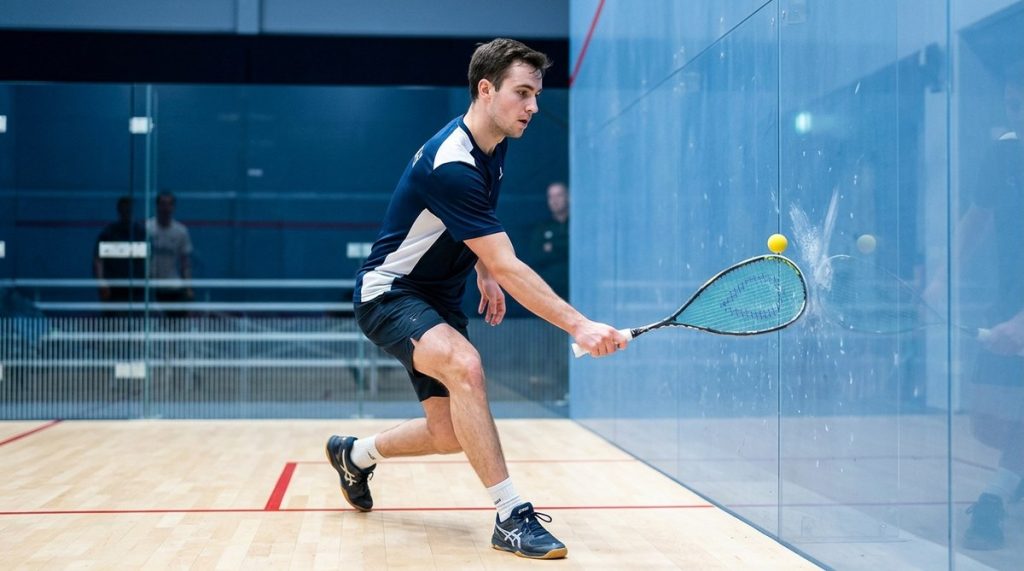
Swing path is flat and low. Bring the paddle back with your elbow leading. The swing should be horizontal, not upward. Imagine you are sliding the paddle under the ball. Contact the ball at hip height or lower, well in front of your body.
-
Aim for the side wall, not the front wall. Your target is the side wall about halfway between the net and the non-volley line. The ball should hit the wall at a shallow angle, then roll forward and die in the kitchen.
-
Follow through softly. Do not snap your wrist. Let the paddle continue forward and slightly across your body. The softer your hand, the more control you will have over the angle and pace.
Coach’s tip: The most common error is trying to hit the boast too hard. Think of it as a controlled redirect, not a power shot. A soft grip and gentle contact will produce a more deceptive, lower bounce.
Common Mistakes and How to Fix Them
Here are the typical errors intermediate players make when learning the backhand boast, along with simple corrections.
| Mistake | What Happens | How to Fix It |
|---|---|---|
| Hitting too hard | The ball bounces off the side wall high and deep, giving your opponent an easy attack | Reduce swing speed. Focus on a relaxed grip and a short follow through |
| Contacting the ball too late | The ball goes straight into the front wall without touching the side wall | Make contact earlier, further in front of your body. Use your shoulder turn to create space |
| Aiming too high on the side wall | The ball rebounds high and sits up for your opponent | Target the lower third of the side wall. Keep your swing low and level |
| Standing upright | Loss of balance leads to inconsistent contact and poor angle | Bend your knees more. Stay low through the entire swing |
| Using too much wrist | The ball flies off line and becomes unpredictable | Lead with your elbow and keep the paddle face stable. Let your body do the work |
When to Use the Backhand Boast in a Rally
Timing and positioning are everything. The backhand boast is not a shot to use every rally. It works best in specific situations.
- When your opponent is hugging the centre line, expecting a standard dink crosscourt.
- When you are forced wide on the backhand side and cannot hit a clean drive.
- When you want to change the pace of a rally that has become too predictable.
- When your opponent has just hit a weak shot that lands short, giving you time to set up.
- When you need to buy yourself a split second to recover to the centre of the court.
Avoid using the boast from deep in your own court. It becomes a low percentage shot that gives your opponent easy attack opportunities. Stick to using it from the kitchen line or just behind it.
Practice Drills to Build Consistency
Adding a new shot to your game requires deliberate repetition. Here are three drills you can do with a partner.
-
Wall target drill. Use chalk or tape to mark a square on the side wall about 1 meter above the ground. Stand at the kitchen line and try to hit the square with your backhand boast. Aim for 8 out of 10 to feel comfortable.
-
Angle variation drill. Have your partner feed you backhand dinks from the centre. Alternate between a standard crosscourt dink and a backhand boast. This builds your decision making under pressure.
-
Pressure drill. Play a game where you can only score points using the backhand boast. It forces you to find the right moments and builds confidence under match conditions.
Integrating the Boast Into Your Match Strategy
Once you have the basic technique, think about how the backhand boast fits into your overall game plan. It works well as a surprise element after you have established a pattern. For example, hit three crosscourt dinks in a row, then throw in a backhand boast. Your opponent will hesitate, and that hesitation is your opportunity.
Combine the boast with other deceptive shots to keep your opponent guessing. The art of deception is a powerful tool in both squash and pickleball. If you want to explore more ways to disguise your intentions, read our guide on the art of deception: adding holds and disguise to your game. The principles of holding the shot and reading the opponent’s weight transfer transfer directly to pickleball.
Court positioning also matters. If you find yourself consistently out of position after a rally, check out our article on why your court positioning is costing you matches and how to fix it. The same principles of recovering to the centre apply across all racket sports.
Mastering the Backhand Boast: Your Next Step
The backhand boast is not just a trick shot. It is a legitimate tactical weapon that adds depth and variety to your pickleball game. It takes time to develop the feel and accuracy, but the payoff is worth it. Your opponents will no longer be able to read your patterns. You will have more control over the pace and direction of rallies.
Grab a paddle, find a practice partner, and start with the wall target drill. Spend ten minutes each session focusing on the soft contact and low swing. Within a few weeks, the backhand boast will feel natural. You will begin to spot the moments to use it without thinking. That is when your game truly evolves.