How to Master the Squash Lob: A Defensive Weapon for Every Player
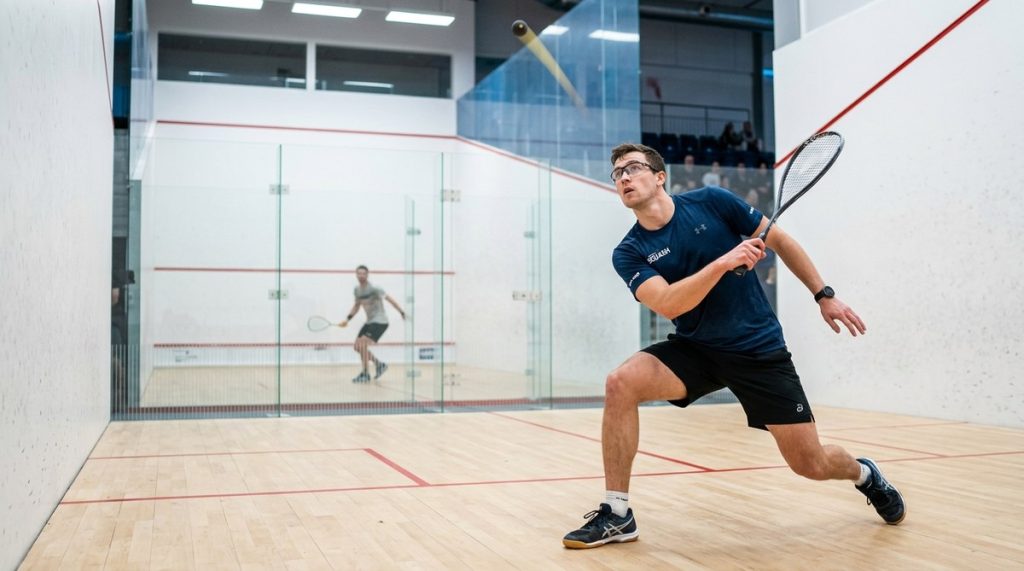
You are pinned in the back corner. Your opponent has just driven a ball so deep and so tight that you can barely reach it. You have one option. If you try a straight drive, you will probably hit the tin or gift them a volley. If you try a drop shot, you are picking it up from the floor. What you need right now is a squash lob technique that buys you time, resets the rally, and forces your opponent to retreat.
The lob is the most underrated shot in club squash. When played well, it turns defence into attack without taking big risks. Many intermediate players treat it as a panic shot, something they fling upwards when they are in trouble. But the best club players and PSA pros treat it as a precision weapon, one that changes the entire shape of a rally. Let us change how you think about the lob so you can handle even the most aggressive opponent in your local league.
The squash lob technique is not just a defensive escape; it is a tactical reset. A well executed lob makes your opponent retreat to the back, breaks their rhythm, and gives you time to recover to the T. Focus on a smooth swing, high racket head, and a trajectory that kisses the side wall near the back. Practise regularly and you will win rallies you used to lose.
Why the Lob Belongs in Every Intermediate Player’s Toolbox
Imagine you are playing against a player who loves to attack. They step into the court, volley early, and put everything into the front corners. You try to match their pace and end up making errors. The lob is the antidote. Instead of trying to outhit them, you use height and depth to neutralise their power.
A good lob has three effects. It forces the opponent to move backwards. It gives you time to recover to the T. And it often sets up a weak return that you can attack. The squash lob technique is especially effective on British courts, where the ball tends to stay cooler and bounces lower. A high, slow lob can die in the back corner and leave your opponent scrambling.
The Three Types of Lob You Need to Know
Not all lobs are the same. The best players choose a specific lob based on their position on court and the opponent’s movement. Here is a breakdown of the three main types.
| Lob Type | When to Use | Key Technique | Common Mistake |
|---|---|---|---|
| Defensive Lob | When you are stretched deep and off balance | Open the racket face early, swing from low to high, aim for a high arc that touches the side wall near the back | Swinging too hard, causing the ball to fly out or hit the side wall too early |
| Attacking Lob | When you are in a neutral position and the opponent is leaning forward | Use a shorter swing but still high trajectory, target the backhand side of your opponent | Dropping the racket head too low, resulting in a flat shot that can be volleyed |
| Cross-Court Lob | When you want to change the angle and send your opponent across the full width | Open the racket face more, aim to kiss the side wall on the opposite side, about halfway up | Underhitting so the ball lands short and gives the opponent a volley opportunity |
Each type serves a different tactical purpose. The defensive lob is your safety net. The attacking lob is a subtle weapon that catches opponents off guard. The cross-court lob can break a pattern when your opponent is reading your straight shots too easily.
How to Execute the Perfect Squash Lob Technique in 5 Steps
Mastering the squash lob technique comes down to feeling the ball off the strings. It is a soft touch shot, not a power shot. Follow these steps to build a consistent, reliable lob.
-
Prepare early with an open racket face. As you move to the ball, tilt the racket head back slightly. The face should be pointing up towards the ceiling. This open angle is what lifts the ball. Do not wait until the last moment to open the face.
-
Use a smooth, compact backswing. The lob does not need a big wind up. Bring the racket back to about shoulder height. Keep your wrist firm but relaxed. A big backswing often leads to a jerky motion and loss of control.
-
Swing from low to high in one motion. Imagine you are scooping the ball upwards. The contact point should be slightly in front of your front foot. Let the racket head rise through the ball. The follow through should finish above your head.
-
Watch the ball onto the strings. This is the most important part. Keep your head still and your eyes on the ball until after contact. Many players look at where they want the ball to go and mis-hit. Trust your feel.
-
Control the height and depth with your wrist. A slight flick of the wrist at contact adds extra height. For more depth, swing a fraction longer. To keep the ball short (defensive), use a softer grip. Practise on a court alone to feel how small changes affect the trajectory.
Common Lob Mistakes and Their Simple Fixes
Even experienced club players struggle with consistency on the lob. Here is a table of the most frequent errors and what to do instead.
| Mistake | Result | Correction |
|---|---|---|
| Swinging too hard | Ball hits the back wall too low and bounces out | Reduce arm speed; focus on a gentle lifting motion |
| Closed racket face | Ball stays low and is easy to volley | Check your grip; ensure the racket face is open at address |
| Rushing the preparation | Mis-hit or weak lob | Get into position earlier; use split step timing |
| Hitting from behind the body | Ball goes straight down the middle | Move your feet so the ball is beside your front foot before swinging |
| Tensing the grip | Loss of feel and control | Hold the racket like you are holding a bird; soft fingers |
If you notice one of these in your game, pick just one correction to work on during your next practice session. Overloading your brain with three or four fixes at once rarely works.
Essential Drills to Build a Reliable Lob
You cannot learn the squash lob technique by reading about it alone. You need dedicated practice. Here are five drills that will build muscle memory and confidence.
-
Solo lob practice from the back. Stand at the back of the court on the forehand side. Feed a ball to yourself by dropping it and hitting a high lob that lands near the backhand back corner. Aim for 10 successful lobs in a row without hitting the side wall too early.
-
Partner feed drill. Have a partner feed you deep drives from the front of the court. Your job is to return each drive with a defensive lob. Focus on height first, then accuracy. Do five sets of ten.
-
Cross-court lob target. Place a towel or a cone in the back corner on the opposite side. From the T, practise hitting cross-court lobs that land near the target. Count how many out of twenty hit the target zone.
-
Lob volley drill. Stand at the front of the court. Your partner feeds a low ball to you at the front. Instead of dropping, hit a soft lob from the front area. This simulates recovering from a short shot.
-
Random rally drill. Play a practice game where you are only allowed to use lobs and drives. No drops or boasts. This forces you to build rallies around the lob and learn its timing.
You can combine these drills with other footwork work. For example, use the 20-minute court session that transforms your movement speed to warm up before focusing on lob practice.
When to Pull the Trigger: Tactical Scenarios
Knowing the technique is one thing. Knowing when to use it is another. Here are three situations where the lob should be your first instinct.
-
Your opponent is crowding the T. Some players love to stand on the T and volley everything. A high defensive lob pushes them back and forces them to retreat. Once they are behind the T, you have more time to attack.
-
You are off balance after a lunge. If you stretch to reach a ball and cannot recover quickly, a lob gives you the extra seconds you need to get back to the centre. Do not try a drive when you are off balance.
-
The ball is behind you. When the ball passes your body and you have to twist to hit it, a lob is often the only safe shot. Try to aim for the opposite back corner to give yourself maximum recovery time.
“The lob is the shot that separates good club players from great ones. When I coach, I tell my players to think of the lob as a reset button. Press it when the rally is moving too fast for you.” — Martyn Leach, Level 3 Squash Coach, Yorkshire
Unlock Your Defensive Game
The squash lob technique is not complicated, but it does require patience and repetition. Start by practising the defensive lob from the back corners. Once you feel confident with that, introduce the attacking lob and the cross-court lob into your match play. You will soon notice that aggressive opponents become frustrated. They cannot attack a ball that is floating high above their reach. They have to wait, move backwards, and often give you a loose ball to punish.
Combine your new lob with other elements of your game. Good court positioning makes the lob even more effective. If you want to take your movement to the next level, check out our guide on how to improve your squash footwork for faster court coverage. The lob and footwork go hand in hand.
Now you have the knowledge and the drills. The only thing left is to book a court, grab a ball, and start lifting those shots high. Your opponents will not know what hit them. And when they complain that your lob is impossible to kill, you will know you have mastered one of the most valuable shots in squash.