How to Trap Your Opponent in the Back Court: A Simple Two-Shot Combination
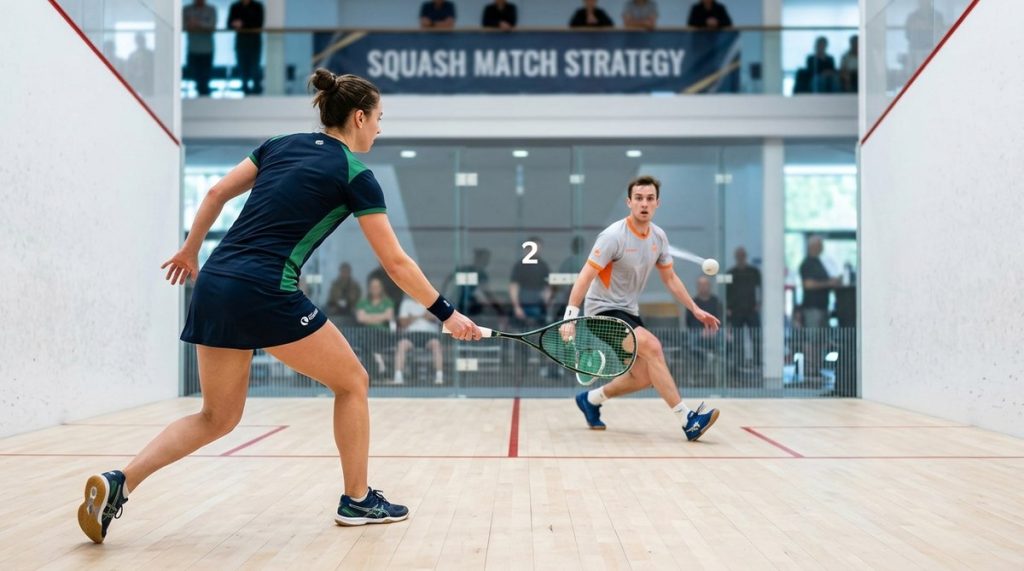
You are stuck in a rally. The ball keeps coming back. You feel like you are moving but not winning. Then you remember the back court trap combination. It is a two shot pattern that flips the match. You send your opponent deep, then push them even deeper. They scramble, you control the T. This is not complicated. It is simple, repeatable, and devastating.
The back court trap combination uses a tight straight drive followed by a cross court lob to pin your opponent in the rear corners. This forces weak returns, opens the front court, and lets you dictate the rally. Master the timing, height, and footwork. Practice the sequence until it is automatic. It works in both singles and doubles because it exploits the same defensive gaps.
What Is the Back Court Trap Combination?
The back court trap is a tactical sequence of two consecutive shots. It is designed to keep your opponent behind the service box. You use a straight drive to push them into one back corner. Then you follow with a cross court lob that lands deep in the opposite corner. The opponent must travel across the full width of the back court. They are forced to retrieve from a defensive position. You hold the T and wait for a weak reply.
This pattern is especially effective against players who are quick forward but slow laterally. It also works in doubles because the partner covering the front court often gets drawn out of position.
The Two Shots You Need to Master
Shot One: The Tight Straight Drive
Your first shot must be a straight drive that hugs the side wall. It should land deep, ideally bouncing past the service box line. The height should be low enough to deny your opponent a volley but high enough to clear the tin. Aim for the back corner on your forehand or backhand side depending on your position.
Key points for the drive:
- Contact the ball at hip height or lower
- Keep your racket head level and swing through straight
- Follow through towards the target line
- Use a closed racket face to keep the ball tight
If the drive is too loose, your opponent will cut it off and attack. If it is too high, they will volley and kill your momentum. Practice hitting the same spot ten times in a row.
Shot Two: The Cross Court Lob
As soon as your opponent hits back, you need to redirect the ball to the opposite corner. Use a high, soft lob that arcs over their head. The lob should land just inside the back line on the far side. This forces your opponent to turn, run, and hit while off balance.
A good lob:
- Travels above head height
- Drops steeply into the back corner
- Bounces straight off the side wall
- Never reaches the front wall before the back wall
You can play the lob off either wing. The backhand cross court lob is harder to control, so practice it against a partner.
Step by Step: How to Execute the Combination
Follow this sequence during a rally:
- Choose the moment. Look for a ball that sits up around the middle of the court. Do not try the trap when you are stretched or off balance.
- Play the straight drive. Step into the ball and hit a tight drive deep to one corner. Recover to the T immediately.
- Read the return. Watch your opponent’s racket. If they are forced to hit a defensive shot, you have time to set up the lob.
- Hit the cross court lob. Turn your shoulders and lift the ball high. Aim for the opposite back corner. Do not overhit.
- Stay on the T. Do not follow your shot. Stay central and watch for the weak reply. Attack the front court if they drop short.
That is the entire sequence. It takes three seconds. It wins points.
Common Mistakes and How to Avoid Them
| Mistake | Consequence | Correction |
|---|---|---|
| Drive too loose | Opponent volleys and attacks | Focus on accuracy over power. Use a shorter backswing. |
| Lob too low | Opponent smashes it | Increase racket head speed and follow through higher. |
| Not recovering to T | You leave gaps | Sprint back to the T after your drive. Do not admire the shot. |
| Hitting the lob too flat | Ball hits side wall early | Aim for a higher arc. Let the ball drop before striking. |
| Using the same corner repeatedly | Opponent anticipates | Vary which corner you target first. Mix up the trap. |
“The back court trap is not about power. It is about patience. If you commit to the pattern, the point comes to you.” — Emma Jones, England Squash Level 3 Coach
When to Use the Trap in a Match
This combination works best in specific situations:
- You are serving and the return is short
- Your opponent has just played a weak boast
- You notice your opponent struggles with deep court coverage
- The rally is long and you need to break their rhythm
Avoid using it when:
- You are under pressure and cannot step into the ball
- Your opponent is a fast mover who can cover the back corners easily
- You are too tired to execute the lob with control
Practical Drills to Build the Pattern
To make the back court trap a natural part of your game, spend time on these drills:
- Target practice. Mark a square in each back corner. Try to land your drive and lob inside those squares. Use 20 balls per side.
- Two shot rally. With a partner, play only the two shot sequence. One player hits the drive, the other hits the lob. Alternate roles.
- Pressure simulation. Have a partner feed you balls at random. You must identify when to use the trap and execute it under time pressure.
You can also use solo court time to practice the lob. Stand at the back of the court and hit lobs to the opposite corner. Focus on height and consistency.
How This Links to Your Overall Game
The back court trap is not a standalone trick. It works best when your straight drives are already reliable. If you struggle with length, work on your drive first. A good resource is the article on footwork fundamentals: the ladder drill programme that actually works. Better footwork gives you more time to set up the trap.
Similarly, your lob needs to be deceptive. Learn the art of disguise by reading the art of deception: adding holds and disguise to your game. If your opponent reads your intent, the trap fails.
Finally, remember that court positioning is everything. If you are constantly caught out of position, even a perfect trap will not save you. Study why your court positioning is costing you matches (and how to fix it) to tighten up your movement.
Make the Trap Part of Your Match Plan
The back court trap combination gives you control. It turns a neutral rally into an attack. It forces your opponent to defend, and it opens up the whole court for your next shot. Start by drilling the two shot sequence three times a week. Use it in your next club match. Notice how quickly your opponents struggle.
Then add it to your wider tactical toolkit. Combine it with drops, boasts, and volleys. The trap is just one piece, but it is a powerful one. Practice it. Trust it. Let it win you points.