3 Simple Adjustments to Stop Hitting the Tin on Your Volley Drop
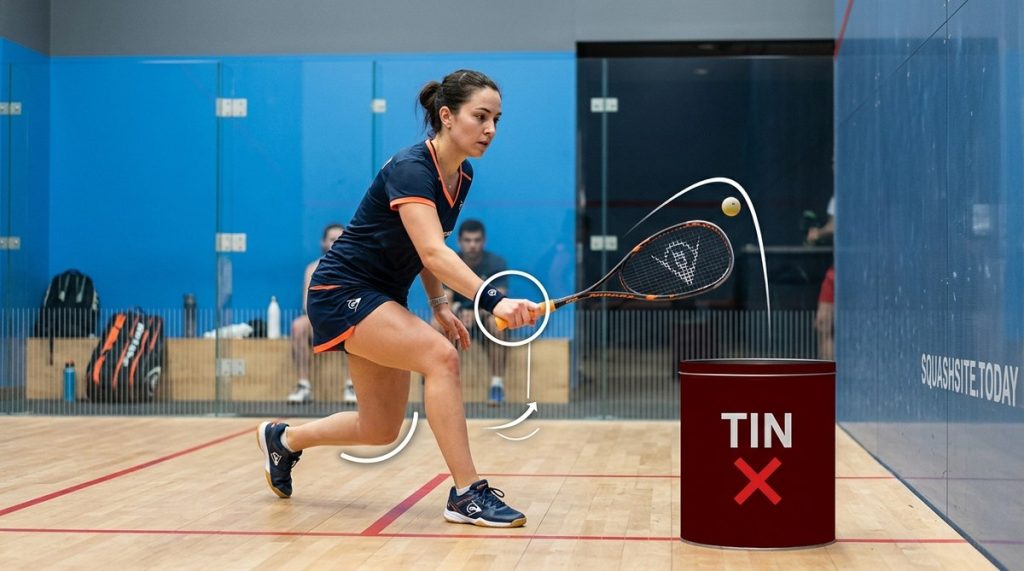
The thud of the ball hitting the tin on a volley drop is one of the most deflating sounds in squash. You set up perfectly, you read the shot, you step in to attack, and then … clunk. The point is gone, and you are left muttering under your breath as you walk back to the T. If this sounds painfully familiar, you are not alone. The volley drop is a high risk, high reward shot, and even club level players who have been playing for years struggle with consistency. The good news is that the problem is almost never a lack of talent. It is usually a small technical flaw that, once corrected, transforms the shot from a gamble into a weapon.
The three biggest reasons you hit the tin on a volley drop are a late racket preparation, an open racket face at contact, and poor footwork that leaves you off balance. By fixing these issues, you can instantly improve your accuracy and turn your volley drop into a reliable point winner. This guide breaks down each fix with drills you can apply today.
Why Your Volley Drop Keeps Finding the Tin
Before we fix anything, it helps to understand why the ball goes down. The volley drop requires a combination of soft hands, precise timing, and stable body position. When any one of these elements is off, the ball falls short of the front wall or clips the tin.
Here are the three most common technical culprits:
- Late racket preparation. You wait too long to bring the racket back, then rush the swing. The result is a jabby, uncontrolled contact.
- Open racket face at impact. Your wrist is too loose or your racket face is tilted upward, causing the ball to pop up and then drop vertically into the tin.
- Off balance body. You lunge forward with your weight too far over your front foot, making it impossible to control the racket head through the shot.
Most players focus on “soft hands” or “touch” without realising that those qualities only work when the fundamentals are solid. Let us break down the adjustments that will save your volley drop.
The Three Adjustments: A Step by Step Approach
These are the three concrete changes you need to make, based on what top coaches teach at clubs across the UK.
1. Set the Racket Early (Before Your Opponent Hits)
The single biggest difference between a clean volley drop and a tin shot is when you take the racket back. If you wait until the ball is already on its way to you, you are too late. Your swing becomes a reflex swipe rather than a controlled stroke.
The fix: As your opponent prepares to strike, start taking your racket back. The backswing should be complete before the ball crosses the halfway line of the court. This gives you time to adjust the racket face and decide where you want to place the drop.
A good way to practice this is to use a https://squashsite.today/solo-court-drills-12-exercises-you-can-do-without-a-partner/ where you feed the ball to yourself and focus on the timing of the backswing. Set a mental trigger: as the ball leaves your opponent’s racket, your racket is already up and behind your ear.
2. Keep the Racket Face Slightly Closed Through Contact
Many players try to “help” the ball over the tin by opening the racket face. This actually makes the shot harder to control. An open face sends the ball upward, which then drops straight down onto the tin. Instead, you want a slightly closed racket face.
The fix: Imagine you are catching an egg on your strings. The racket face should be angled downward just a fraction, so that the ball is pinched against the strings for a split second. This gives you feel and direction. If you are consistently hitting the tin high up, close the face a little more. If you are hitting the ball too high and losing control, open it slightly.
A common mistake is to grip the racket too tightly. A death grip kills touch. Check your grip pressure; it should be firm but not white knuckle. https://squashsite.today/5-grip-mistakes-that-are-ruining-your-squash-game/ has more on hand pressure.
3. Step Into the Shot with a Stable Base
The volley drop is not a shot you play on the run. If you are stretching forward with your front knee over your toe, you cannot stabilise the racket. Your body will wobble, and the ball will go anywhere.
The fix: Use a small adjustment step to get your feet set before you strike. Your front foot should be planted, knee bent, with your back foot providing balance. Your weight should be centred, not leaning forward. From this position, you can transfer weight into the shot without losing control.
https://squashsite.today/the-complete-guide-to-squash-lunging-protecting-your-knees-whilst-reaching-every-ball/ explains the lunge mechanics that protect both your knees and your shot accuracy.
Technique and Mistakes: A Head to Head Comparison
Sometimes it helps to see the right and wrong side by side. The table below shows the key differences between a successful volley drop and one that hits the tin.
| Element | Success (Dead Drop) | Failure (Tin Shot) |
|---|---|---|
| Racket preparation | Backswing complete before ball arrives | Backswing late, rushed forward swing |
| Racket face at contact | Slightly closed, pinching the ball | Open face, ball pops up then down |
| Grip pressure | Firm but relaxed, soft wrist | Tight grip, locked wrist |
| Footwork | Stable lunge, weight centred | Lunge too deep, weight over front toe |
| Contact point | Out in front of the body | Too close to the body or behind |
| Follow through | Short, controlled finish | Long, loopy follow through |
Use this table as a checklist when you practise. Focus on one element at a time. You cannot fix everything at once.
Drills to Build Consistency
Practice does not make perfect; perfect practice makes perfect. These three drills target the specific weaknesses that cause tin strikes.
-
The Static Volley Drop. Stand two metres from the front wall, have a partner feed you soft balls from the T. Your only job is to volley drop the ball into the nick, keeping the racket face closed and your feet set. Do 20 reps on each side.
-
The Step In Drill. Start at the T. Your partner feeds a high ball to the front of the court. You take two steps forward, set your feet, and play a volley drop. Focus on the backswing timing. Repeat for 10 minutes.
-
The Target Challenge. Place a towel or a spare racket cover just behind the service box line. Aim to land every volley drop on that target. If you hit the tin, start again from zero. This builds mental pressure and sharpens accuracy.
For more drills that improve your overall front court game, the https://squashsite.today/the-drop-shot-masterclass-developing-touch-and-feel-for-winners-from-anywhere/ is a brilliant resource.
Common Misconceptions about Volley Drop Technique
“The volley drop is all about feel and touch. You either have it or you don’t.”
That is a myth we hear at clubs all over the UK. Feel is important, but it is built on a foundation of correct mechanics. If you set the racket early, close the face, and stay balanced, the touch will follow naturally. You can learn to be soft handed through repetition. Do not let the idea of “natural talent” stop you from drilling.
Another misconception is that you need to swing harder for more spin. Actually, the best volley drops use the pace of the incoming ball. You simply redirect it with a short, controlled punch. The swing length is roughly the same as a half volley, not a full drive.
When to Use the Volley Drop (and When to Hold Back)
Your volley drop is most effective when your opponent is deep in the back court. If they are already near the T, the drop is risky because they can cover it. Look for these cues:
- The ball is above the service line (a high ball).
- Your opponent is off balance or behind the T.
- You have time to step in and set your feet.
Avoid the volley drop when the ball is low, because you have to lift it over the tin, or when you are stretched wide and cannot stabilise. In those situations, a drive or a lob is safer.
If you find yourself consistently hitting the tin in matches, it might be a sign that your https://squashsite.today/why-your-court-positioning-is-costing-you-matches-and-how-to-fix-it/ needs work. Being in the wrong place forces you to play difficult volleys.
How Your Equipment Affects the Volley Drop
Your racket and strings play a bigger role than most players realise. A racket with a flexible frame and a slightly lower string tension gives you more dwell time, which helps with soft volleys. If your strings are too tight, the ball bounces off the strings too quickly, making it harder to control the drop.
Check the condition of your strings. If they are more than three months old or have lost tension, you are fighting against your own equipment. https://squashsite.today/how-often-should-you-really-be-restringing-your-squash-racket/ has recommendations for club players.
Also, your grip size matters. A grip that is too thick can prevent you from feeling the racket face angle. https://squashsite.today/why-your-squash-racket-grip-size-actually-matters-more-than-you-think/ explains how to find the right size.
The Mental Side of the Volley Drop
The pressure of a tight match can make your arm stiffen. When you are nervous, you grip the racket harder, and your backswing shortens. The result is a tin shot.
Train your mind by playing pressure drills in practice. For example, play a game where you can only score with volley drops. This forces you to commit to the shot under fatigue and pressure. Over time, the shot becomes automatic.
To improve your ability to stay calm in key moments, have a look at
Putting It All Together: A Weekly Routine
To see real improvement, dedicate 15 minutes of each practice session to volley drop work. Here is a simple weekly plan:
- Monday: Static volley drop drill (20 reps per side).
- Wednesday: Step in drill with a partner (15 minutes).
- Friday: Target challenge with a reward (if you hit 8 out of 10, you finish two minutes early).
- Match day: Remind yourself of the three adjustments before your game.
Consistency comes from repetition. Do not expect perfection overnight. Every time you hit the tin, ask yourself which of the three adjustments you missed. Was it the backswing? The racket face? The footwork? Identifying the error is half the fix.
Take Your Volley Drop from Risky to Reliable
The volley drop is one of the most satisfying shots in squash when it works. It puts you on the front foot, forces errors, and wins points outright. By focusing on early racket preparation, a closed racket face, and a stable base, you can cut the number of tin shots in half within a month.
Next time you step on court, make a mental note of the three adjustments. Do not try to do them all at once. Pick one, drill it until it feels natural, then add the next. Your opponents will soon notice the difference, and that satisfying thud of a dead drop will replace the frustrating clunk of the tin.