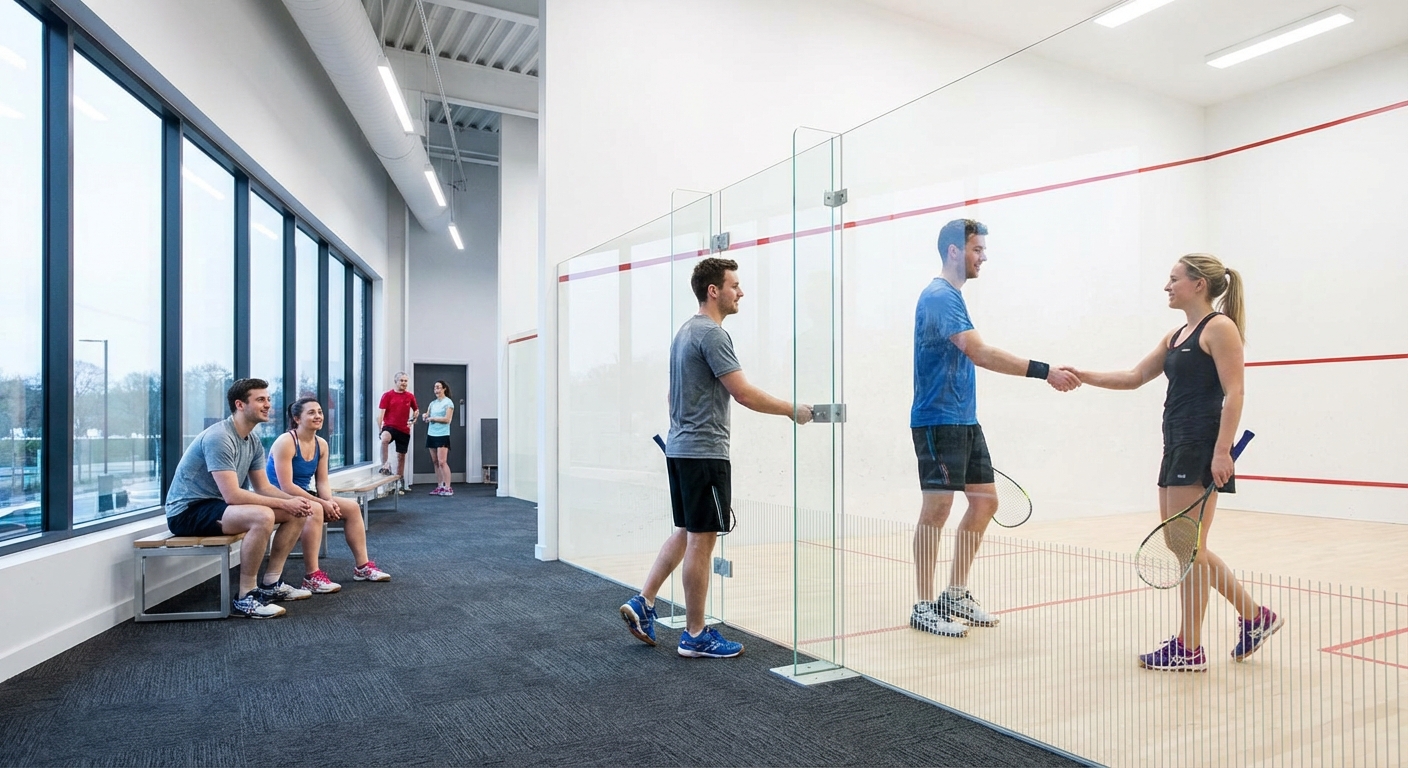
Walking onto a squash court for the first time can feel like entering a secret society. Everyone seems to know the rules, but nobody wrote them down. You watch players shake hands, acknowledge good shots, and navigate the court with unspoken understanding. Meanwhile, you’re wondering whether you’ve just committed a cardinal sin by walking across the court during someone else’s warm-up.
Squash etiquette encompasses the unwritten rules that govern court behaviour, from pre-match handshakes to post-match conduct. Understanding proper etiquette around safety, let calls, warm-ups, and court sharing prevents embarrassment, reduces conflict, and helps you integrate smoothly into any club environment. These social norms matter as much as your forehand drive for enjoying the game and earning respect from fellow players.
Before You Step on Court
Arriving at the right time matters more than most beginners realise. Show up five minutes early, not ten minutes late. Your opponent has likely arranged their entire day around this match. Being late disrupts their warm-up routine and creates unnecessary tension before you’ve even hit a ball.
Booking etiquette varies between clubs, but the principle stays constant. If you’ve reserved a court, honour that booking. Don’t overstay your slot, even if the next court users haven’t arrived yet. They might be changing or waiting politely in the viewing area.
Check your kit before entering. Non-marking shoes are mandatory at every respectable club. Black sole marks on the court aren’t just unsightly; they’re expensive to remove and show disrespect for the facility. Club managers will notice, and you’ll earn a reputation for the wrong reasons.
The Pre-Match Ritual
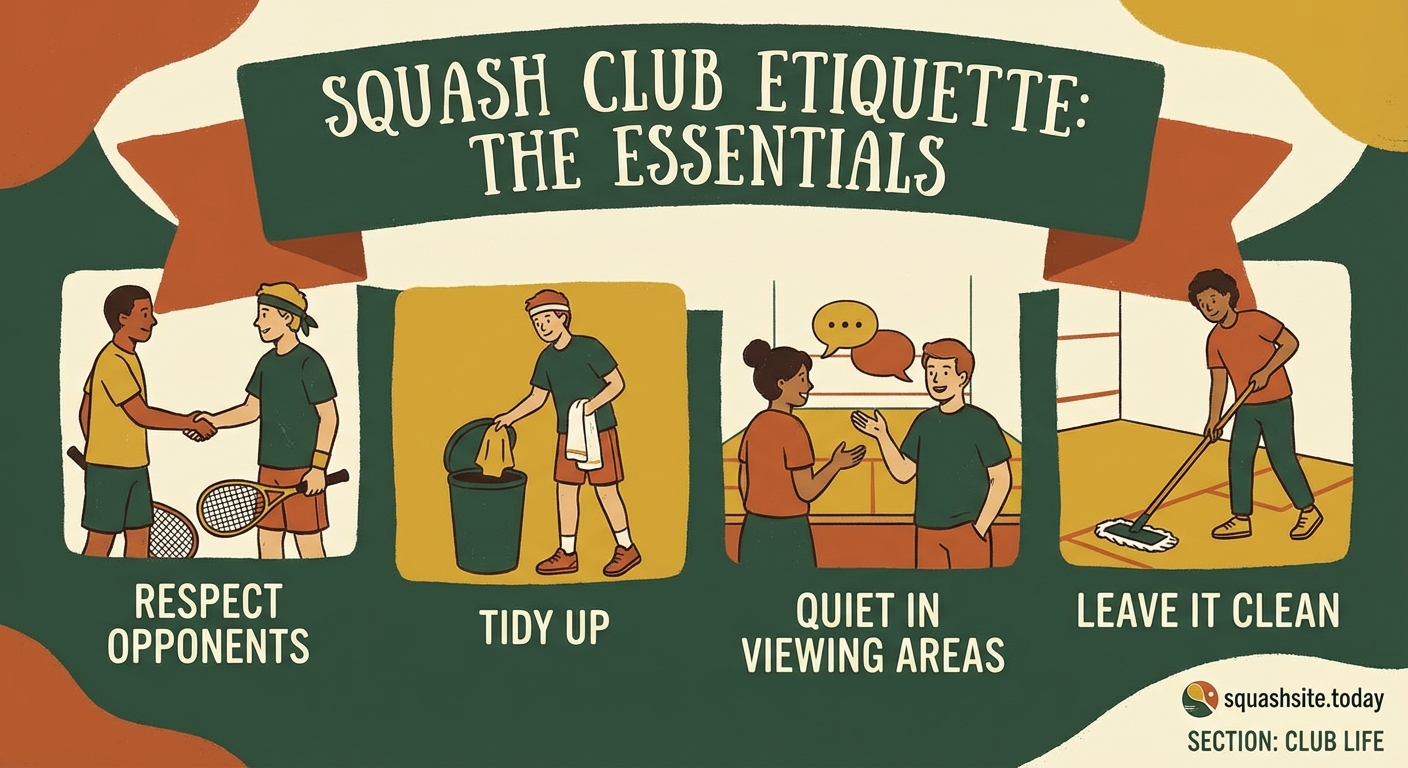
Always shake hands before the match begins. This isn’t optional formality. It’s how you acknowledge your opponent and signal that you’re both entering a competitive but respectful contest. A firm handshake and eye contact set the tone for everything that follows.
The warm-up follows specific patterns that everyone observes:
- Start with straight drives down your side of the court
- Move to crosscourt drives after a few minutes
- Practice volleys and drops
- Finish with serves and returns
Each player gets equal time. If your opponent hits ten drives, you hit ten drives. Don’t monopolise the ball or rush through their turn. The warm-up typically lasts five minutes per player, though this can vary. Watch for cues from your opponent about when they’re ready to move to the next phase.
“The warm-up tells you everything about a player’s character. Someone who hogs the ball or skips their opponent’s turn usually plays the same way during the match.” – Club coach with 20 years’ experience
Safety Comes First, Always
Squash is fast. The ball travels at speeds that can cause serious injury. Eye protection isn’t just recommended; proper goggles should be standard equipment for every player.
Call lets when you can’t play a safe shot. This is where beginners often go wrong. They think asking for a let shows weakness or disrupts the flow. Wrong. Calling a let when your opponent blocks your swing protects both players from injury. A racket to the face isn’t worth winning a point.
Clear the ball after your shot. Don’t stand in front of your opponent or obstruct their path to the ball. Move to the T position, but be ready to adjust if you’re in their way. Court awareness develops with experience, but conscious effort speeds up the learning process.
Never swing if there’s any risk of hitting your opponent. Stop your swing, call a let, and replay the point. Players who follow through regardless of safety hazards don’t get invited back for friendly matches.
During the Match
Honesty separates squash from many other sports. You’re expected to call your own double bounces and acknowledge when the ball hit you. In social matches without referees, this self-policing system only works if everyone participates.
Call the score before every serve. The server announces the score clearly, with their score first. This simple habit prevents disputes and keeps both players mentally engaged. Confusion about the score creates awkward moments that damage the match atmosphere.
| Situation | Proper Response | Common Mistake |
|---|---|---|
| Your shot double bounces | Call it yourself | Hope opponent didn’t notice |
| Ball hits you | Award point to opponent | Argue it was going out anyway |
| Opponent plays great shot | Nod or say “good shot” | Ignore or show frustration |
| You need a let | Stop and call it immediately | Try to play through interference |
| Score is unclear | Ask politely before serving | Assume and continue |
Acknowledging good shots costs nothing and improves the match experience for both players. A simple nod or “nice shot” after your opponent plays a perfect drop shows respect for their skill. You don’t need to compliment every winner, but recognising exceptional play demonstrates sportsmanship.
Handling Disagreements
Disputes happen. You think the ball was up; they think it bounced twice. You believe you deserved a stroke; they think it was a let. These moments test your character more than your backhand volley ever will.
In friendly matches, give your opponent the benefit of the doubt. One questionable decision isn’t worth souring a relationship. If disagreements become frequent, suggest getting a third party to referee or simply agree to replay disputed points.
For competitive matches with referees, accept their decisions gracefully. You can appeal if the rules allow, but arguing extensively or showing visible frustration reflects poorly on you. Referees make mistakes occasionally, just like players. The decision stands regardless of how much you protest.
Between Points and Games
Pass the ball directly to your opponent before their serve. Don’t roll it vaguely in their direction or leave it in the back corner. This small courtesy keeps the match flowing and shows respect for their time.
Take reasonable breaks between games. You’re entitled to rest, but stretching a 90-second break into five minutes frustrates your opponent and disrupts match rhythm. Use the time to towel off, take a drink, and recover properly, but don’t abuse the privilege.
Control your emotions. Everyone gets frustrated after missing an easy shot or losing a close game. Throwing your racket, punching the wall, or shouting achieves nothing except making you look immature. Channel that energy into better footwork and smarter shot selection instead.
Court Sharing and Club Culture
Many clubs operate on shared court systems where multiple pairs rotate through limited spaces. Understanding these unwritten protocols prevents social disasters.
Watch from designated viewing areas, not through the court door glass. Standing at the door creates distracting shadows and makes players inside uncomfortable. Most clubs have galleries or seating areas specifically for spectators.
When your time on court ends, leave promptly. Don’t start a lengthy discussion about the match whilst the next players wait outside. Collect your belongings, shake hands, and exit. You can debrief in the changing room or bar.
Respect the club’s booking system. Don’t try to extend your session by claiming the court “isn’t booked” for the next slot. If you’re unsure, check with reception rather than assuming. Courts might be reserved for coaching, leagues, or members who booked through different channels.
Post-Match Conduct
Shake hands again after the match finishes. Thank your opponent for the game, regardless of the result. Winning graciously matters as much as losing with dignity. Nobody likes a gloating victor or a sulking loser.
Offer genuine compliments about specific aspects of their game. “Your drops were excellent today” means more than generic praise. It shows you were paying attention and respect their skills.
If you’re using club facilities, clean up after yourself. Wipe down any blood if you’ve scraped yourself. Pick up any tape or packaging from new grips. Leave the court in the condition you’d want to find it.
Special Situations
Coaching during matches follows specific rules depending on the format. In friendly games, offering advice between games is usually acceptable if your opponent doesn’t mind. During competitive matches, coaching is typically restricted or prohibited entirely. Know the rules before you speak.
Photography and filming require consent. Don’t record other people’s matches without asking first. Some players feel self-conscious or have privacy concerns. A simple “mind if I film a few points?” prevents awkward confrontations.
Mobile phones stay silent and out of sight. Taking calls courtside or checking messages between games shows disrespect for your opponent and anyone waiting to use the court. Whatever notification just arrived can wait 45 minutes.
Building Your Reputation
Your behaviour accumulates over time. Players remember who shows up late, who makes questionable line calls, who throws tantrums. They also remember who plays fairly, acknowledges good shots, and maintains a positive attitude regardless of the score.
Getting invited to club tournaments, social events, and regular games depends heavily on your reputation. Technical skill matters, but nobody wants to play with someone who makes every match unpleasant.
New members often worry about making mistakes. Everyone does initially. The difference lies in how you respond when someone corrects you. Accept feedback graciously, adjust your behaviour, and you’ll integrate smoothly into any club environment.
The Unspoken Language of the Court
Experienced players communicate through subtle gestures and movements. A raised hand after accidentally obstructing someone. A nod acknowledging a good get. These small signals maintain match flow without constant verbal interruption.
Learn to read court positioning. When your opponent moves towards the T after their shot, they’re claiming that space. Don’t crowd them or force unnecessary lets. Efficient court movement, which you can improve through dedicated ghosting practice, reduces interference naturally.
Understand the difference between deliberate obstruction and accidental interference. The former deserves a stroke against you. The latter warrants a let. Developing this awareness takes time, but paying attention during matches accelerates your learning.
When Rules and Etiquette Conflict
Official rules don’t always align perfectly with social expectations. The rules might technically allow certain behaviours that etiquette discourages. For example, you’re legally entitled to take injury timeouts, but claiming a minor scratch needs five minutes of treatment tests everyone’s patience.
Use common sense and consider context. A crucial league match justifies stricter adherence to every rule. A casual Tuesday evening hit-around with a friend calls for more relaxed interpretation. Reading the situation correctly demonstrates social intelligence.
Common Etiquette Mistakes Beginners Make
- Walking across adjacent courts during someone else’s point
- Leaving the court mid-game without explanation
- Arguing about every close decision
- Hitting the ball unnecessarily hard during warm-up
- Celebrating winners excessively
- Making excuses after every lost point
- Ignoring clear lets to gain advantage
- Booking courts and not showing up
- Bringing outdoor shoes into the court area
- Coaching from the gallery during competitive matches
Why These Unwritten Rules Matter
Squash relies on mutual respect more than most sports. You share a small enclosed space with your opponent. You often referee your own matches. You make dozens of judgment calls that could favour either player. This system collapses without widespread adherence to etiquette.
Clubs with strong etiquette cultures produce better players and more enjoyable environments. New members feel welcome. Experienced players mentor beginners. Disputes resolve amicably. Everyone benefits from the positive atmosphere.
The alternative creates toxic environments where nobody wants to play. Constant arguments replace friendly competition. Good players avoid certain opponents. The club’s reputation suffers, and membership declines.
Becoming the Player Everyone Wants to Face
Mastering squash etiquette transforms you into the opponent everyone hopes to draw. You play hard but fair. You acknowledge good shots. You accept decisions gracefully. You make matches enjoyable regardless of the result.
This reputation opens doors. Better players accept your challenge requests. You get invited to tournaments and social events. Club members recommend you to their friends. Your network expands, your game improves, and you extract maximum enjoyment from the sport.
Technical skills matter enormously. Your forehand drive needs work. Your court movement requires improvement. But etiquette forms the foundation that makes developing those skills possible. Nobody will help you improve if you’re unpleasant to play against.
Making Etiquette Second Nature
Start by focusing on three core principles: safety, honesty, and respect. These underpin every specific rule and guideline. When you’re unsure how to handle a situation, ask yourself which response best serves these principles.
Watch experienced players and notice their habits. How do they handle disputed calls? What do they do between points? How do they interact before and after matches? Observation teaches lessons that no article can fully capture.
Ask questions when you’re uncertain. Most club members happily explain protocols to genuine newcomers. They remember being confused themselves and appreciate your effort to learn. Pretending you understand when you don’t leads to repeated mistakes and growing frustration.
Your Next Match Starts Here
Understanding etiquette intellectually differs from applying it consistently under pressure. That crucial point in the fifth game tests your commitment to fair play. That questionable call when you’re match point down reveals your true character.
Start implementing these principles in your next match. Focus on one or two specific areas rather than trying to perfect everything simultaneously. Maybe you’ll concentrate on acknowledging good shots this week. Next week, you’ll work on clearer score announcements.
Your reputation builds gradually through dozens of matches and interactions. Every handshake, every honest call, every gracious comment contributes to how others perceive you. The player you become on court reflects the person you are off it. Make both versions someone you’re proud to be.
Leave a Reply