5 Overgrips That Keep Your Squash Game Dry and Comfortable
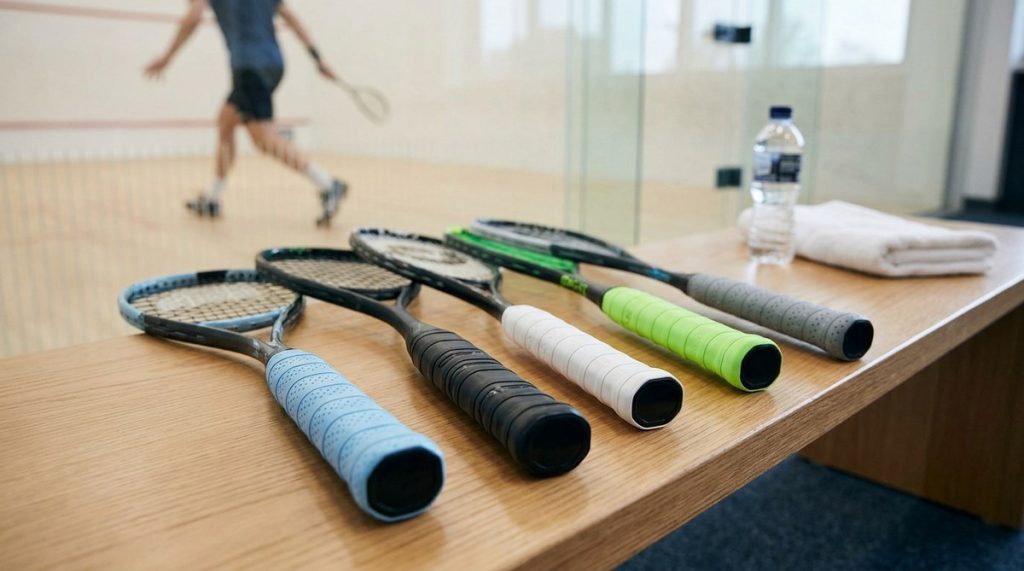
You step onto court, the air is warm, and within two rallies your palm is already slick. You wipe your hand on your shorts, adjust your grip, but the racket still feels like it might spin free on the next volley. Sound familiar? For squash players with naturally sweaty hands, that moment of lost control can cost you a point, a game, or even the match. The good news is that the right overgrip can turn a slippery handle into a confident, tacky surface that stays dry through the longest fifth game. This guide breaks down exactly what to look for and which overgrips will keep your game on track.
For sweaty hands, the best overgrip balances moisture absorption with lasting tack. Thin, dry-touch overgrips like Karakal PU Super Grip or Yonex Super Grap work well for most players. If you need more cushion, try a perforated option. Replace your overgrip every 3 to 4 sessions. A dry grip improves shot accuracy and helps prevent blisters, letting you focus on the rally rather than your slipping hand.
Why Sweaty Hands Ruin Your Game More Than You Think
Sweaty palms are not just uncomfortable. They create a physical disconnect between you and the racket. When your grip slips, your wrist has to overcompensate to hold the frame steady. That extra tension travels up your arm and reduces the feel you have for the ball. You might find yourself gripping harder, which fatigues your forearm and leads to rushed, mistimed shots.
Many club players in the UK train indoors on courts that lack proper ventilation. That warmth, combined with the high intensity of squash, creates a perfect storm for perspiration. The standard base grip on most rackets is not designed to handle that moisture. It gets slick, heavy and unpleasant.
An overgrip is a thin layer wrapped over the base grip. It is much cheaper to replace than a full base grip, and it gives you the chance to customise the feel, thickness and moisture handling of your handle. For players with sweaty hands, choosing the right overgrip is one of the most cost-effective upgrades you can make.
How to Choose an Overgrip for Sweaty Hands
Before we get into specific recommendations, it helps to understand the three main factors that matter most for a sweat-prone player.
Material and Texture
Most overgrips are made from polyurethane (PU) or a synthetic blend. PU grips are soft, tacky and absorb moisture well. Some are designed with a “dry” finish that feels slightly textured and stays grippy even when wet. Avoid slick, shiny grips; they become slippery as soon as sweat hits them.
Thickness
Thinner overgrips (around 0.4 mm to 0.6 mm) give you better feel and are less likely to bunch up when wet. Thicker grips (0.7 mm to 1.0 mm) offer more cushioning but can feel bulky. For sweaty hands, a thin to medium grip is usually the sweet spot. It lets you maintain a strong connection with the handle.
Perforations and Channels
Some overgrips have tiny holes (perforations) or surface channels that help wick moisture away from your palm. These can make a real difference in humid conditions. They also reduce the weight of the grip slightly, which some players prefer.
The 5 Best Overgrips for Sweaty Hands in 2026
After testing and talking to UK club players and coaches, these five overgrips stand out for their ability to stay dry and comfortable during tough matches.
| Overgrip | Material | Thickness | Best For | Key Feature |
|---|---|---|---|---|
| Karakal PU Super Grip | PU foam | 0.5 mm | All round performance | Absorbs sweat without losing tack |
| Yonex Super Grap | PU resin | 0.6 mm | Players who want feel | Thin, durable and stays dry |
| Wilson Pro Overgrip | Synthetic | 0.5 mm | Tacky feel | Extra perforations for airflow |
| Babolat VS Original | PU | 0.6 mm | Dampness control | Micro ventilation holes |
| Head Prime Tour | PU | 0.7 mm | Comfort and moisture control | Soft, absorbent with good durability |
1. Karakal PU Super Grip
Karakal is a brand that many British squash players know well. The PU Super Grip has been a staple for years because it manages to stay tacky even when your hand is wet. The material absorbs moisture without turning into a soggy mess, and it maintains its shape well over several sessions. It is thin enough to let you feel the bevels of the racket handle, so your grip changes are precise.
If you want a grip that simply works and does not cost a fortune, this is a solid choice. Replace it every 3 to 4 sessions for best results.
2. Yonex Super Grap
Yonex makes some of the most popular overgrips in racquet sports, and the Super Grap is their classic. It is slightly thicker than the Karakal but still lean. The resin used in the material gives it a dry, slightly matte finish that feels secure in the hand. Many players find that it outlasts other grips when used on sweaty palms.
One tip: stretch it gently as you wrap to avoid wrinkles. A smooth wrap prevents moisture from pooling in folds.
3. Wilson Pro Overgrip
The Wilson Pro Overgrip is known for its tacky texture. It uses perforations that allow air to circulate, which helps sweat evaporate. The grip is thin and wraps easily around most racket handles. If you play in a club where courts are warm and stuffy, the extra airflow can make a noticeable difference in the third game and beyond.
It works especially well if you pair it with a base grip that is not too thick. The feel is direct and responsive.
4. Babolat VS Original
Babolat designed the VS Original for tennis, but squash players have adopted it for good reason. It has micro ventilation holes that channel moisture away from the skin. The PU material is soft yet durable. It provides a good balance of cushioning and feel, which makes it popular among players who like a bit more padding without losing control.
It is a bit pricier than some options, but the longevity is better. You might get five or six sessions out of one.
5. Head Prime Tour
Head Prime Tour grips are less common but very effective. They use a soft PU that feels almost like a towel grip when dry but remains tacky when wet. The 0.7 mm thickness adds a bit of shock absorption, which can help if you have a stiff racket. It also resists peeling at the edge, a common frustration with some grips.
This is a good option if you tend to grip the racket tightly when under pressure. The extra cushioning reduces fatigue in your forearm.
How to Wrap an Overgrip Properly (3 Steps)
A poorly wrapped overgrip can cause bunching, slippage and uneven feel. Here is a simple process that works for squash rackets:
-
Start at the bottom of the handle. Remove any plastic from the new overgrip. Align the narrower end with the butt cap. Leave a small overhang that you can fold down neatly.
-
Wrap with even tension. As you spiral up, overlap each layer by about half the width of the grip. Keep the tension consistent. Too tight and the grip will compress; too loose and it will shift.
-
Finish at the top. When you reach the shaft, use the finishing tape (usually included) to secure the edge. Press it firmly. Trim any excess grip with scissors for a clean look.
Common Mistakes and How to Avoid Them
Even with the best overgrip, a few slip ups can ruin the experience.
| Mistake | Why It Happens | Solution |
|---|---|---|
| Overlapping too much | Adds bulk and reduces feel | Overlap by half the width, no more |
| Reusing finishing tape | Tape loses stickiness | Use fresh tape each time |
| Waiting too long to change grip | Dried sweat ruins tack | Replace after 3 to 5 sessions |
| Wrapping over a worn base grip | Uneven surface | Remove old base grip if it is damaged |
Expert advice from a Level 3 squash coach: “I tell my players to change their overgrip more often than they think they need to. A fresh grip costs a few pounds. Losing a match because your hand slipped? That costs a lot more. Treat it as consumable, like strings.”
Why Your Grip Size Also Plays a Role
The best overgrip in the world will not help if your racket handle is the wrong size. If the handle is too thick, you cannot close your hand properly, and your muscles stay tense. If it is too thin, you have to squeeze harder, which makes your hand sweat more. Most rackets come in standard sizes, but you can adjust with a slightly thicker or thinner overgrip.
For more on this, check out our guide on why your squash racket grip size actually matters more than you think. It explains how to measure your ideal grip circumference and how to adjust it with wraps.
What About Towel Grips?
Towel overgrips are popular in tennis, but they have a downside in squash. They absorb sweat very well initially, but they become heavy and slimy once saturated. In a long match, a towel grip can feel like a wet rag. They also add more thickness than most squash players like. For sweaty hands, a dry PU grip is usually a better choice than a towel grip.
Keeping Your Hands Dry Beyond the Grip
While a great overgrip is your first line of defence, you can also help yourself with a few habits:
- Use a towel during changeovers. Wipe your palm and the grip lightly.
- Keep a spare overgrip in your bag. If a grip gets too wet, you can change it between games.
- Consider a wristband. It stops sweat from running down your arm onto your hand.
- Wash your hands before playing. Oils and lotions reduce grip tack.
Some players also use antiperspirant on their palms (the same kind you use under your arms). It can reduce sweat production during a match. Try it during practice first to see if it feels comfortable.
The Link Between Grip and Footwork
You might not think of it, but a secure grip affects your whole body movement. When you trust your handle, you can focus on moving to the ball rather than adjusting your hold. That confidence lets you stay low and balanced. Good footwork starts with a relaxed upper body, and a relaxed upper body starts with a grip you do not have to fight.
Our article on footwork fundamentals: the ladder drill programme that actually works pairs well with a solid grip setup. When your hands and feet work together, your game improves faster.
Final Tips for Staying Dry and Comfortable
Overgrips are a small investment that makes a big difference. Do not wait until a crucial match to realise your grip is shot. Keep a few spares in your kit bag. Change them regularly. Experiment with different brands until you find the one that feels best in your hand.
If you play multiple times a week, consider swapping your overgrip every three sessions. Some brands like Karakal and Yonex are affordable enough that you can stock up.
For more equipment insights, read our guide on how often should you really be restringing your squash racket. Consistency across your gear helps you play at your best.
Also, if you are looking for a complete racket setup, our list of 5 budget-friendly squash rackets that perform like premium models includes models that pair well with the overgrips above.
Your Next Step on Court
You now know the overgrips that work best for sweaty hands, how to wrap them properly, and what mistakes to avoid. The next time you step onto the court, take a few minutes to check your grip. If it feels worn, change it. If you are not sure which one to try, start with the Karakal PU Super Grip or Yonex Super Grap. Both are widely available in UK sports shops and online.
A dry, confident grip lets you swing freely, hit cleaner shots and enjoy the rally without distraction. Give your hands the support they deserve, and watch your game improve one match at a time.