The One Squash Racket Feature Most Club Players Overlook
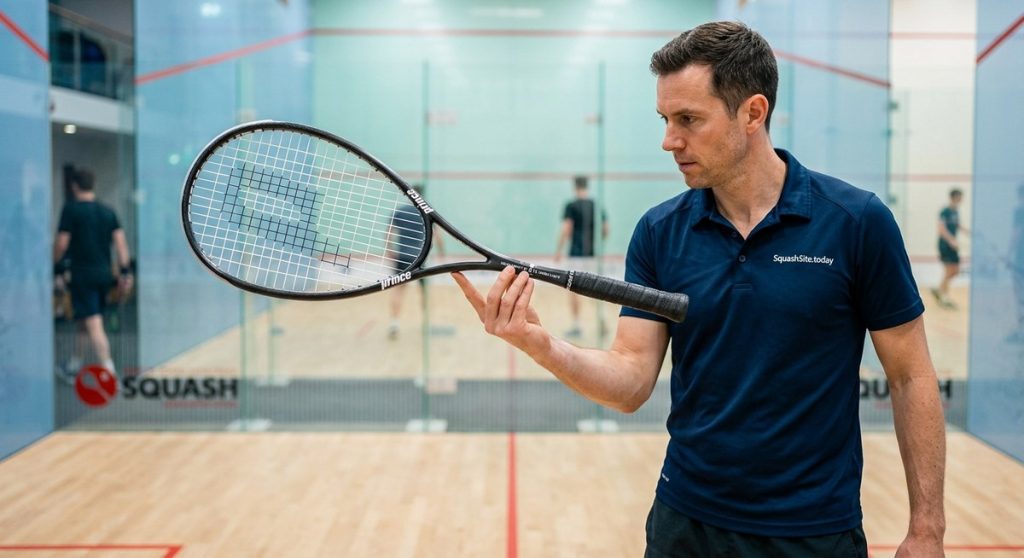
Most club players spend hours agonising over frame weight, balance, and grip size. They trawl online forums, compare specs, and watch YouTube reviews. Yet right under their noses sits a feature that can completely transform how a racket performs: the string pattern. It is one of the most overlooked details in modern squash, and it could be the reason your shots lack consistency or feel dead on off-centre hits. Get this right, and you might not need a new racket at all.
The string pattern (open vs dense) controls how much power, spin, and control you get from your squash racket. Most club players buy a racket based on weight or brand, ignoring this feature entirely. By understanding the pattern and matching it to your swing style, you can instantly improve shot accuracy and reduce arm fatigue without spending a penny on a new frame.
What You Are Probably Ignoring Right Now
Walk into any club in the UK on a Tuesday night and you will see a dozen different rackets. Most of them are strung with whatever came from the factory. Ask the owner what string pattern they use, and you will likely get a blank stare. It is not their fault. Manufacturers talk about weight and balance because those numbers are easy to sell. But the pattern of strings across the face of the racket influences everything from how the ball leaves the strings to how much vibration reaches your wrist.
The pattern is typically described as “open” (fewer strings, larger gaps) or “dense” (more strings, smaller gaps). This simple difference changes the behaviour of the ball on impact, the durability of the string bed, and the feel you get on off-centre hits. Let us break down what each pattern does.
Open vs Dense String Patterns: The Core Difference
| Feature | Open Pattern | Dense Pattern |
|---|---|---|
| String count | 14 x 16 (approx.) | 18 x 19 or higher |
| Power generation | Higher trampoline effect | Lower trampoline effect |
| Spin potential | Better bite on the ball | Less bite |
| Control on hard hit | Moderate | Excellent |
| Feel on off-centre | Harsher, more vibration | Softer, more forgiving |
| String durability | Lower (strings move and break sooner) | Higher (strings hold position longer) |
| Best suited for | Beginners, power players | Intermediate to advanced, control players |
The table shows a clear trade off. An open pattern gives you free power because the strings stretch further on impact, launching the ball with less effort from your arm. A dense pattern offers more precision and feel, especially when you are hitting with moderate to high swing speed. Most intermediate club players fall into the second group, yet they often stick with an open pattern racket because that is what they started with.
Why Club Players Overlook This Feature
There are a few reasons this happens. First, the string pattern is not printed in bold on the racket frame. You have to count strings or check the manufacturer’s website. Second, many players believe that the racket itself determines power, so they chase lighter frames or stiffer beams. But the string bed is the only part that makes contact with the ball. Changing the pattern can completely change the feel of the same racket model.
Third, club players tend to copy what they see in pro shops or from top players. But professionals often use custom string patterns or tensions that would not suit a club player’s swing speed. The pattern that works for a PSA tour pro generating racket head speed over 100 mph is very different from what works for a weekend league player.
How to Choose the Right String Pattern for Your Game
You do not need a degree in materials science to figure this out. Follow these steps to match pattern to your swing.
-
Assess your typical swing speed. If you take a full backswing and swing hard, you already have enough power. Choose a dense pattern (18 x 19 or similar) for better control. If you rely on short compact swings because you lack strength or technique, an open pattern (14 x 16) will help you generate depth.
-
Check your current racket’s pattern. Count the number of strings crossing vertically and horizontally. Most rackets have the pattern printed on the throat or listed in the specs. If it feels dead on volleys or you need to swing extremely hard to get depth, you may need a more open pattern.
-
Test before you commit. Borrow a team mate’s racket with a different pattern for a few games. Many clubs have demo rackets with different string setups. Try hitting drives, volleys, and drops. Notice how the ball leaves the strings. An open pattern will feel springy; a dense pattern will feel solid.
-
Adjust tension alongside pattern. If you switch to a dense pattern, you might also need to drop tension by 1-2 pounds to maintain similar power levels. The pattern change alone will reduce power, so you can compensate with a slightly lower tension. If you switch to an open pattern, raise tension slightly to keep control.
“I have seen players spend 150 quid on a new racket when all they needed was a string pattern change. The racket they already owned was fine. They just needed the right string bed for their swing speed. That change alone gave them better length and fewer tins.” – Mark, Level 2 squash coach from Yorkshire.
Signs That Your Current Pattern Is Wrong
You do not have to guess. Look for these clues during a match or practice session.
- You hit the tin repeatedly on straight drives, especially when you try to add pace.
- The ball floats long on volleys, lacking bite.
- You feel a jarring shock in your elbow or wrist after hard hits, especially on off-centre strikes.
- You cannot generate enough depth without over-swinging, which leads to tiredness in the third game.
- Your drops float high, giving the opponent an easy attack.
If any of these sound familiar, the pattern is a likely culprit. It is far more common to see a player struggling with an open pattern when they need dense, or vice versa, than it is to see the correct match.
The Link Between Pattern and Arm Health
This might be the biggest hidden benefit. A pattern that is too open for your swing speed can cause the ball to trampoline off the strings unpredictably. That unpredictability forces your arm to work harder to control the shot, leading to fatigue and, over time, strain on the forearm tendons. A dense pattern absorbs more of the impact and gives you a more predictable response. For players in their thirties and forties who play two or three times a week, switching to a denser pattern often reduces niggling elbow pain.
If you are dealing with elbow or wrist issues, read our guide on why your squash racket grip size actually matters more than you think. It is a different feature, but grip size and pattern work together to determine overall comfort.
Common Mistakes When Changing Pattern
| Mistake | Why It Hurts | Better Approach |
|---|---|---|
| Changing pattern and tension at the same time | You cannot tell which change caused the new feel | Adjust one variable at a time; pattern first, tension later |
| Jumping to the extreme (e.g., from very open to very dense) | The feel will be totally alien, and you may lose confidence | Move one step at a time; try a medium pattern like 16 x 18 first |
| Ignoring string gauge | Thicker strings in an open pattern reduce spin; thin strings in dense pattern break too fast | Match string gauge to pattern: thinner for dense, thicker for open |
| Expecting the same power with a dense pattern | Dense pattern requires slightly more effort to hit deep; accept the trade off for consistency | Use a lower tension (by 2 lbs) to compensate |
How to Test a New Pattern Without Buying a New Racket
You do not have to buy a whole new racket. Most stringers can restring your existing frame with a different pattern, but the racket itself must be designed for that pattern. Some rackets have a single string pattern option. Others, like many from Dunlop and Head, offer the same frame in both open and dense configurations. Check the manufacturer’s site or ask your club stringer.
If your racket supports multiple patterns, you can simply restring. If not, look for a used racket of the same model but with a different pattern. Many club players sell their “wrong” pattern rackets cheaply online. That is a low cost way to test.
We have a list of 5 budget-friendly squash rackets that perform like premium models if you decide to buy a second racket specifically for trying a different pattern.
Putting It All Into Practice
Once you identify your ideal pattern, stick with it for at least four to six weeks. Your touch and timing will adjust. You may miss the free power of an open pattern at first, but your shot consistency and arm comfort should improve. After that period, experiment with tension adjustments if needed.
Remember, the string pattern is just one piece of the puzzle. Pair it with the right string type and a grip size that matches your hand, and your racket will feel like an extension of your arm.
Your Next Step Towards Better Racket Feel
The squash racket feature most club players overlook is right there in front of them, literally. The string pattern determines how your racket behaves on every single shot. Yet few players ever think about it. Next time you are in the clubhouse, ask a few of your regular opponents what pattern they use. You will likely hear a lot of “I do not know” answers. That is your opportunity to share what you have learned and maybe help a team mate avoid an unnecessary equipment purchase.
Take five minutes this week to look up your racket’s official string pattern. If it does not match your swing style, make a change. It costs much less than a new frame, and it could be the reason you finally start controlling those long rallies instead of just surviving them.