How to Use Interval Training to Dominate the Fifth Game
You step onto the floor for Event 6, already two events deep. Your shoulders ache from the overhead work, and your lungs are still burning from the previous sprint. The leaderboard shows you are in contention, but you can feel the edge fading. Most athletes fade as the competition goes on. The best athletes, however, build their engine specifically to thrive when others are falling apart. That is where CrossFit Games interval training becomes your secret weapon. It is not just about pushing harder. It is about training your body to recover faster between bursts, maintain power under fatigue, and stay mentally sharp when the finish line feels miles away.
Smart interval training for the CrossFit Games is about more than random rounds of high intensity. It involves structured work-to-rest ratios that mimic the demands of multi-event competitions. By training your aerobic system to clear lactate and your anaerobic capacity to fire repeatedly, you can delay fatigue and close events stronger than your rivals. This guide explains exactly how to build that engine.
Why Interval Training Is Your Ticket to the Later Events
The CrossFit Games tests everything: strength, gymnastics, monostructural work, and mental grit. But the single greatest differentiator is your ability to repeat high-power output across multiple events with limited rest. Traditional steady-state cardio builds a solid base, but it does not prepare you for the stop-start nature of competition. You need intervals that simulate the chaos of the Games floor.
Interval training shifts your body’s energy systems. It teaches your fast-twitch fibres to keep firing even when your blood is thick with lactate. It also trains your heart rate to drop faster during rest periods, a skill that allows you to start the next round fresher. When you see athletes like Justin Medeiros or Tia-Clair Toomey pulling away in the final event, it is not magic. It is a well-trained interval engine.
The Science Behind Work-to-Rest Ratios
Every interval has a purpose. The ratio of work to rest dictates which energy system you are stressing. For CrossFit Games preparation, you need a balance of three main zones:
- Aerobic power intervals – longer work periods (2 to 5 minutes) with short rests (work-to-rest around 1:1 or 2:1). These build your ability to sustain effort and recover on the fly.
- Anaerobic capacity intervals – hard efforts of 30 seconds to 2 minutes with full rest (1:3 or 1:4). These develop your top-end power and lactate tolerance.
- Alactic power intervals – very short, explosive efforts (5 to 15 seconds) with long rest (1:5 or more). These sharpen your start and your ability to produce force after fatigue.
Ignoring any one of these zones leaves a gap in your fitness. A classic mistake is training only short intervals and wondering why you fade during a 15-minute chipper.
Structuring Your CrossFit Games Interval Sessions
Use the following numbered process to create a week of interval training that transfers directly to the competition floor. Adapt the specific movements to your available equipment and your weaknesses.
- Identify your weakest zone. Be honest. Do you die on long chippers? Then prioritise aerobic power intervals. Do you struggle to push the pace in short, heavy couplets? Then anaerobic capacity work is your focus.
- Choose movement pairings that mirror Games tests. Combine rowing with burpees, or bike with dumbbell cleans. The goal is to mix monostructural and skill work so your body learns to transition between modalities while heart rate stays high.
- Set a clear work-to-rest ratio. Write it down before you start. Do not leave it to chance. Example: 3 minutes of work (rowing at 90% effort) followed by 1 minute of rest, repeated 5 rounds.
- Track your output per interval. Use the monitor, a timer, or a note on the wall. Your goal is to hold consistent or slightly descending times, not to blow up in round one.
- Progress the stimulus over 4 to 6 weeks. Add a round, shorten the rest, or increase the intensity. Small, consistent jumps prevent plateau.
- Include a deload week every fourth week. Reduce volume by 40% to allow adaptation. Do not skip this step; it is where the real fitness gains happen.
Common Mistakes in CrossFit Games Interval Training
Many athletes waste weeks on poorly designed intervals. The table below highlights typical errors and the simple fixes that keep you on track.
| Mistake | Why It Hurts Your Performance | The Fix |
|---|---|---|
| Going all out every round | You spike lactate early, then crawl through later intervals, reinforcing poor pacing habits. | Aim for 85 to 90 percent effort in the first two rounds; save the red line for the final round. |
| Ignoring your rest period | Standing still or lying down allows heart rate to drop too low, making the next interval feel harder than it should. | Keep moving during rest: walk, shake out your arms, and keep your breathing steady. Active recovery works best. |
| Using the same ratio all season | Your body adapts quickly. Doing 3:1 work-to-rest for months yields no new stimulus. | Rotate through the three zones (aerobic, anaerobic, alactic) every 2 to 3 weeks within the same training cycle. |
| Skipping the warm-up | Cold muscles cannot produce maximal output, and you increase injury risk. | Spend 10 minutes on dynamic drills, light rowing, and progressive lunges before any interval session. |
Practical Tips for Game Day Dominance
- Schedule your interval sessions at the same time of day as your typical competition heat. Your body learns to perform at that specific time.
- Pair interval training with dedicated mobility work for the hips and shoulders. Tight joints limit your ability to maintain powerful positions under fatigue.
- Use a heart rate monitor to learn your recovery rate. If your heart rate does not drop by at least 20 beats per minute during a 60-second rest, your aerobic base needs more attention.
- Practice mental cues during the painful middle intervals. A simple phrase like “stay smooth” or “breathe deep” can prevent panic when the clock is ticking.
“The athlete who dominates the fifth event is the one who can recover while working. Interval training is the only way to teach your body that skill. Do not just survive the intervals; learn from them.” – Coach Adrian Bozman, CrossFit Games Head Judge
How to Progress Your Intervals Without Plateauing
A common question is: how do you keep making gains when life gets busy and motivation dips? The answer is periodisation. Divide your year into three phases. In the off-season, emphasise longer aerobic intervals (2 to 5 minutes) to build a strong base. During the competition prep phase, shift to shorter, more intense intervals (30 seconds to 2 minutes) that mirror event pacing. In the final weeks before a qualifier or the Games, include sport-specific intervals that combine multiple movements without rest – the classic “chipper” style.
If you find yourself stuck at a certain level, introduce a new variable. Change the movement, increase the load, or modulate the rest. For example, perform a 4-minute row at 80 percent effort, rest 90 seconds, then immediately do 15 wall balls. That transitional demand is exactly what the Games floor throws at you.
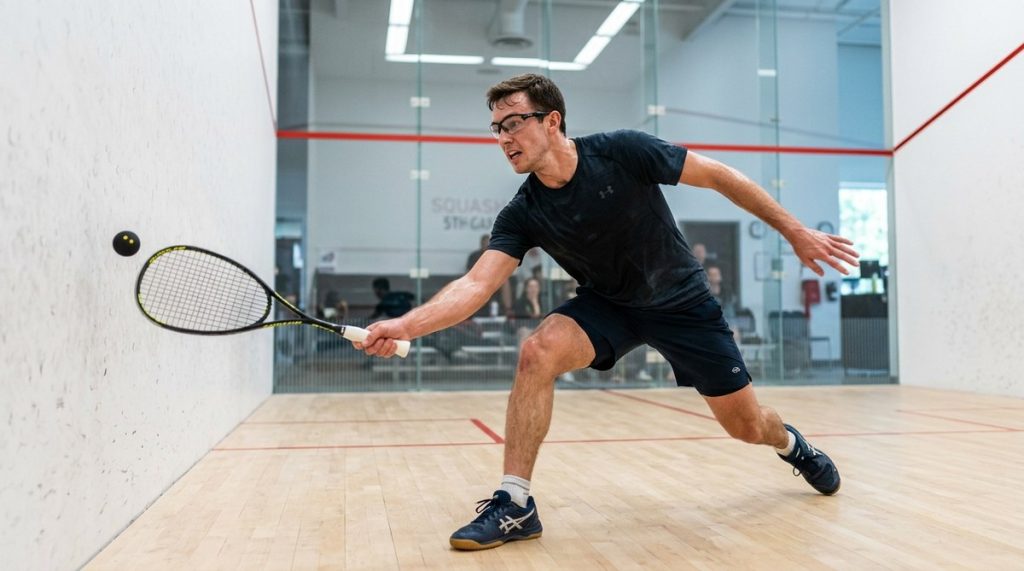
You can also use interval training to improve your court movement if squash is part of your cross-training. Sessions like ghosting routines that actually improve your court movement build a similar capacity, shifting directions with minimal rest. And for explosive power, building explosive power for stronger drives and kills translates directly into a more dynamic start on any event.
You Are Built for the Final Event
The difference between a good Games finish and a great one often comes down to how you feel when the penultimate event ends. Are you dreading the last test, or are you hungry for it? The right CrossFit Games interval training builds that hunger. It teaches your body that fatigue is a signal, not a stop sign.
Start this week. Pick one of the three zones you have been neglecting. Design a session with the numbered steps above. Do not overthink it. Just show up, trust the process, and let the intervals do their work. By the time you stand on the floor for that final event, you will be the one still moving while others slow down. That is the real prize.