How to Use Periodisation to Prevent Burnout in Your Competitive Squash Players
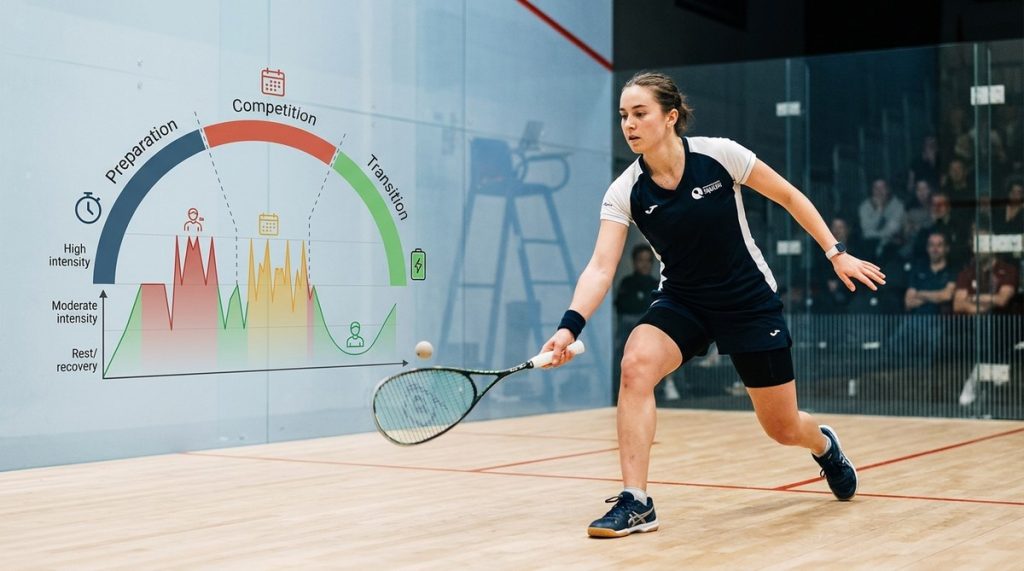
You watch a talented junior player burn out by February. Or a club regular who hits the wall in March and disappears until September. It happens every season. The sport demands explosive movement, relentless focus, and high volume. Without structure, the body and mind break. That is where periodisation for squash burnout becomes your most valuable coaching tool. It is not complicated. It is a deliberate plan to alternate stress and recovery so your players peak at the right moments and stay hungry for years.
Periodisation is the systematic planning of training stress to avoid overtraining and mental fatigue. By dividing the year into distinct phases, you can build fitness, sharpen skills, and schedule rest. This approach protects your players from burnout, keeps motivation high, and ensures they perform when it counts. It works for juniors, club players, and elite competitors alike.
Why Periodisation Matters More Than Ever in 2026
The 2026 squash calendar is packed. Regional leagues, university fixtures, club championships, and the PSA qualifying circuit overlap more than ever. Players who train hard all year without a plan end up with chronic fatigue, niggling injuries, or a total loss of interest.
Periodisation is the antidote. It organises training into blocks. Each block has a clear goal. One month you build aerobic capacity. Next month you sharpen court speed. Then you back off. This cycle prevents the accumulation of fatigue that leads to burnout.
Think of it like a garden. You cannot force plants to grow faster by watering them more. They need seasons. Periodisation gives your players seasons.
The Three Pillars of Periodisation for Squash
Before you design a plan, understand the three types of periodisation that apply to squash.
- Linear periodisation. You start with high volume and low intensity. Over weeks, volume drops and intensity rises. Great for building a base early in the season.
- Undulating periodisation. You vary intensity and volume within the same week. A hard court session on Tuesday, a light technical session on Thursday. This keeps the body guessing and reduces staleness.
- Block periodisation. You focus on one quality at a time. A four week block on agility and footwork. Then a block on explosive power. Then a block on match play.
Most coaches find a hybrid approach works best. Use linear periodisation for the off season. Switch to undulating patterns during the competition phase. Block periodisation is excellent for addressing specific weaknesses.
How to Structure a Periodised Season: A Step by Step Process
Here is a practical process you can apply to any competitive player, whether they are a 14 year old junior or a county level adult.
- Map the calendar. Write down every tournament, exam period, school holiday, and club event. Be realistic. A player cannot peak for twelve events a year. Choose three to five key moments.
- Work backwards from those peaks. Count back six to eight weeks for each peak. That is your specific preparation block. The four weeks before that are your general preparation block.
- Divide the remaining time into base blocks. Early season is for aerobic fitness, strength, and technical refinement. Keep court sessions at 60 to 70 per cent effort.
- Schedule a recovery week every fourth week. Drop volume by 50 per cent. No court work. Active recovery only. This is non negotiable.
- Add a transition phase between blocks. Two or three days of light movement. Let the body adapt before the next stress.
- Monitor daily. Use a simple rating of perceived exertion (RPE) from 1 to 10. If a player reports three consecutive days above 8, pull back.
This structure keeps the training load manageable. It also gives you data. You can see exactly when a player starts to fade and adjust before burnout sets in.
Common Periodisation Mistakes and How to Fix Them
Even experienced coaches slip up. Here is a table of the most common errors and the simple fixes.
| Mistake | Why It Happens | The Fix |
|---|---|---|
| Skipping recovery weeks | You think rest is wasted time | Schedule a recovery week and treat it as sacred. Active recovery builds longevity. |
| Keeping intensity too high too long | You want results now | Use undulating periodisation. Mix hard and easy days within the same week. |
| Ignoring mental fatigue | You only measure physical output | Add a psychological readiness score. Ask players to rate motivation on a 1 to 5 scale. |
| Copying a pro player’s plan | You assume what works for a PSA athlete works for everyone | Adapt volume and intensity to the individual. A 16 year old needs less total load than a 25 year old. |
| No transition between blocks | You move straight from endurance to power | Insert two to three days of low intensity movement. Let the nervous system reset. |
These mistakes are common because periodisation feels counterintuitive. You want to push harder. But the best coaches know that strategic rest produces better results than constant effort.
Reading the Warning Signs Before Burnout Hits
You cannot prevent burnout if you do not see it coming. Look for these signals in your players.
- Dropping technique. The forehand drive loses its snap. Footwork becomes sloppy. The player who usually hits clean shots starts framing out.
- Irritability. Small frustrations become big reactions. The player snaps at training partners or questions every drill.
- Plateau or regression. Times get worse instead of better. The player who was improving suddenly stalls.
- Loss of appetite for the game. They turn up late. They make excuses. They stop asking questions.
When you spot these signs, intervene. Reduce volume. Add an extra recovery day. Have a conversation about what is happening outside the court. School stress, work deadlines, and relationship issues all contribute to burnout. Periodisation only works if you treat the whole person.
“I used to think more training was always better. Then I lost a promising junior to burnout because I ignored the signs. Now I build recovery into every phase. The players who stay with me for years are the ones who learn to rest as hard as they train.”
Tim Bacon, M.A., AASP Charter Member
A Sample Week in the Competition Phase
Here is what a well periodised week looks like for a competitive club player during the season.
Monday
Off court. Strength session focusing on eccentric control for the knees. 45 minutes.
Tuesday
Court session. High intensity match play. 60 minutes. Focus on dictating pace.
Wednesday
Active recovery. Light swim or cycle. 30 minutes. No racket.
Thursday
Court session. Technical drills. Low intensity. 45 minutes. Work on backhand drop shots.
Friday
Off. Complete rest.
Saturday
Tournament or club match. Full effort.
Sunday
Active recovery. Stretching and mobility. 20 minutes.
Notice the pattern. Hard days are followed by easy days. The nervous system gets a chance to recover. This is undulating periodisation in action. It prevents the cumulative fatigue that leads to burnout.
How to Sell Periodisation to Your Players
Some players resist. They want to train hard every day. They think rest is weak. Here is how to frame it.
- Use the bank account analogy. Every hard session is a withdrawal. Every recovery session is a deposit. If you only withdraw, you go bankrupt.
- Show them the data. Track their RPE and performance. After a recovery week, their court speed and shot accuracy will improve. Let them see the proof.
- Involve them in the planning. Ask them to choose their three most important tournaments. When they own the calendar, they respect the recovery weeks.
For juniors, involve the parents too. Explain that periodisation is not about being soft. It is about building a career in the sport. The players who last are the ones who learn to manage their energy.
The Role of Nutrition and Sleep in Burnout Prevention
Periodisation covers training load. But burnout also comes from poor recovery outside the court. Two factors matter most.
Sleep. Teenage players need eight to ten hours. Adults need seven to nine. If a player is sleeping less than seven hours consistently, no training plan can save them from burnout. Adjust their schedule. Move evening sessions earlier. Cut screen time before bed.
Nutrition. Competitive squash burns a huge number of calories. If players are not eating enough, especially carbohydrates, their recovery suffers. Encourage them to eat within 30 minutes of finishing a session. Protein for repair. Carbs to replenish glycogen stores.
A periodised plan that ignores sleep and nutrition is like filling a car with the wrong fuel. It might run for a while. Then it stops.
Building Mental Resilience Through Periodised Training
Burnout is not just physical. The mental load of constant competition wears players down. Periodisation gives you a structure to build psychological strength.
- During base blocks, focus on process goals. Not winning matches. Improving a specific shot. Hitting a movement target.
- During competition blocks, shift to outcome goals. Winning a match. Beating a personal best.
- During recovery weeks, step completely away from performance. Play for fun. Hit the ball around. No pressure.
This cycle teaches players that their identity is not tied to winning every match. They learn to enjoy the process. That is the foundation of long term motivation.
For more on this topic, read our guide on 5 mental exercises that will transform your squash performance. It pairs perfectly with a periodised physical plan.
Periodisation for Different Player Profiles
Not every player needs the same structure. Here is how to adapt.
Junior players (12 to 16 years). Their bodies are still developing. Keep volume low. Maximum three court sessions per week. Prioritise technical work and movement quality. Recovery weeks are mandatory. Never let a junior train through pain.
University players. They juggle training with lectures, exams, and social life. Use block periodisation. Focus on one quality per term. The off term is for base fitness. The term is for maintenance and match play. Schedule recovery around exam stress.
Adult club players. They have jobs and families. Keep it simple. Two court sessions per week. One strength session. One active recovery day. Periodisation for adults is about consistency, not intensity. A player who trains twice a week for 40 weeks will outperform someone who trains five times a week for 10 weeks and then quits.
Elite or aspiring professionals. They need higher volume and more precise timing. Use a coach or sports scientist to monitor biomarkers like heart rate variability and sleep quality. Periodisation at this level is a science. Small adjustments make big differences.
For a deeper look at managing fatigue in advanced players, read the science behind recovery days and why elite squash players never skip them.
Putting Periodisation Into Action This Week
You do not need a perfect plan to start. Do this today.
- Grab a calendar. Mark the next three months.
- Identify one peak event for each player.
- Count back six weeks. That is your preparation block.
- Schedule a recovery week in week four.
- Write down one measurable goal for each block.
That is enough. You can refine as you go. The important thing is to start thinking in cycles instead of sessions.
Your Players Will Thank You for the Rest
Periodisation for squash burnout is not a luxury. It is a necessity for anyone who wants to play this sport for more than a couple of seasons. The players who learn to manage their energy become the ones who improve year after year. They avoid the March slump. They stay motivated. They enjoy the game.
As a coach, your job is to protect them from themselves. They will want to push harder. You need to know when to hold back. That is what makes you a great coach.
Start small. Use the process above. Adjust as you learn. And watch your players stay fresh, focused, and firing on all cylinders when it matters most.