Three Shots Ahead: Building a Pre-Emptive Match Strategy That Neutralises Your Opponent’s Game Plan
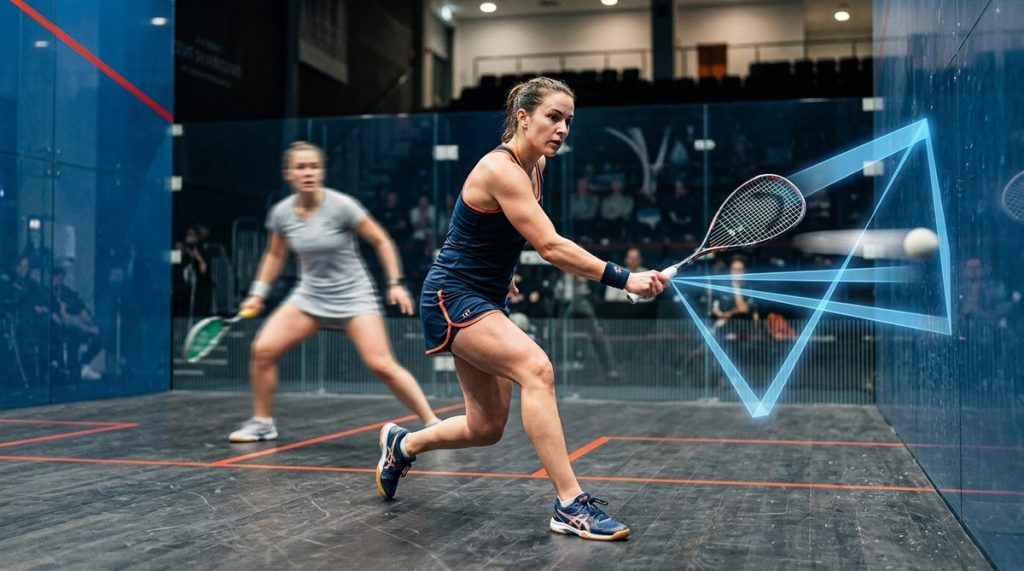
You step onto the court. Your opponent is aggressive, fast, and seems to know where you are going before you do. You feel reactive. Every shot you play is a response, not a statement. That feeling of being one step behind is not about fitness or skill. It is about strategy. The difference between a good player and a great one often comes down to who is dictating the terms of the rally. If you want to stop reacting and start controlling, you need to build a pre-emptive match strategy. This is advanced pickleball strategy that shifts the mental load onto your opponent.
Winning consistently at an advanced level means reading patterns before they fully form. By studying your opponent’s tendencies in the opening exchanges, you can set traps, disguise your intentions, and neutralise their strongest shots. This article breaks down the three-stage process of observation, manipulation, and execution that turns a defensive game into an offensive one.
Why reactive play keeps you stuck
Most club players rely on natural reflexes. They see the ball, they run to it, they hit it back. That works fine against average opponents. But against someone who has studied your movement, you become predictable. You are always answering questions, never asking them.
Reactive play has a hidden cost. It drains mental energy faster. When you are constantly scrambling to respond, your decision-making slows. You start making errors in your footwork, your shot selection suffers, and you end up playing your opponent’s game instead of your own.
The best players do not wait to see what happens. They force situations. They create pressure points that expose weaknesses. This is the core of an advanced pickleball strategy: you are not just playing the ball, you are playing the player.
The three-stage pre-emptive system
To build a match strategy that neutralises your opponent’s game plan, you need a repeatable process. Follow these three stages before and during every match.
-
Observe and categorise in the first two games. Watch how your opponent reacts to different shot types. Do they lunge early or late? Do they favour their forehand side when under pressure? Do they reset to centre court or drift to one side? Take mental notes. If you can, verbalise them between points to lock them in.
-
Create a pattern and break it. Once you have identified a tendency, feed it. Hit three consecutive shots to their backhand side. Watch them shift their weight in anticipation. Then, on the fourth shot, go cross-court to their forehand. The hesitation in their movement will tell you everything about their ability to adapt.
-
Exploit the lag. Every player has a recovery time after they commit to a movement. Your goal is to attack during that window. If they lunge wide to cover a deep drop shot, the next ball should go high and tight to the net. Their weight is still low. They cannot recover in time. That is where points are won.
This system works because it is based on human biomechanics, not guesswork. Everyone has a tell. Your job is to find it and use it.
Reading the visual cues that matter
You cannot build a pre-emptive strategy if you do not know what to look for. Here are the key visual cues that telegraph your opponent’s next shot.
- Racket preparation. A player who brings the racket back early is likely to hit a powerful drive. A late preparation often signals a soft touch shot or a lob. Watch the shoulder turn, not just the racket.
- Foot placement. If their front foot points towards the side wall, they are angling for a cross-court shot. If both feet are square to the net, expect a straight drive or a drop shot.
- Eyes and head movement. Some players glance at their intended target zone before they strike. This is a subconscious habit that is hard to break. If you catch it, you can move into that zone before the ball arrives.
- Breathing pattern. A sharp exhale usually accompanies an explosive shot. A relaxed breath often precedes a delicate placement shot. Use this to anticipate pace changes.
“The best players do not just watch the ball. They watch the person hitting it. The ball is just the result. The intention is what matters.” — Anonymous PSA Tour Coach
Table: common tendencies and how to counter them
Use this table as a reference during your next practice session. Match your opponent’s behaviour to the counter-strategy.
| Tendency | Visual cue | Counter-strategy |
|---|---|---|
| Over-commits to deep drops | Drops low and wide every time | After they lunge, play a high ball to the opposite side |
| Always resets to centre court | Returns to the middle after every shot | Play two consecutive shots to the same side to trap them |
| Favourite cross-court drive | Shoulder opens early, racket drops low | Position yourself early and play a counter-drop into the space they leave |
| Slow recovery after a lob | Stays flat-footed after a high return | Attack immediately with a low, fast ball to their weak side |
| Predictable serve placement | Serves to the same quadrant three times in a row | Cheat your starting position and attack the open court |
Setting traps with disguise and tempo
A pre-emptive strategy is not just about reading your opponent. It is about hiding your own intentions. This is where the art of deception comes into play.
Start every rally with a neutral stance. Keep your racket in a consistent position regardless of what shot you plan to play. If you always drop your racket low before a cross-court drive, your opponent will read it. Instead, train yourself to hold the same preparation shape for three different shot types. This is called disguise.
Tempo is your second weapon. Most players operate at one speed. They hit hard and fast, or they play soft and slow. The best players mix both within the same rally. Hit a powerful drive, then immediately follow with a soft lob that drops just over the net. The change in pace disrupts your opponent’s rhythm. They cannot settle into a pattern because you keep shifting the beat.
A simple way to practise this is to play a game where you alternate between an aggressive shot and a defensive shot on every ball. Do not let yourself play two aggressive shots in a row. This forces your brain to stay flexible and your opponent to stay confused.
Common mistakes that ruin a pre-emptive plan
Even good players fall into traps that undermine their strategy. Avoid these errors.
- Over-analysing. You do not need to read every single movement. Pick two or three cues and focus on those. Trying to read everything leads to paralysis.
- Telegraphing your own plan. If you stare at the corner you are about to target, your opponent will see it. Use peripheral vision and keep your head neutral.
- Sticking to a losing pattern. If your opponent has adapted to your strategy, change it. Do not keep hitting the same shot because it worked in the first game. Adaptability is the hallmark of advanced play.
- Forgetting the mental game. Physical execution is useless if your mind is not in the right place. Use your warm-up to set an intention for the match. If you want to learn more about mental preparation, read our guide on meet the mental game: how top psa pros stay cool under pressure.
How to drill this at your club
You cannot learn pre-emptive strategy by just reading about it. You need to drill it. Here are three exercises you can do with a regular hitting partner.
- The three-shot rule. Play a rally where you must decide your shot pattern before your opponent hits the ball. Call out your plan as you play. This forces you to commit to a strategy rather than reacting.
- Mirror game. Stand on opposite sides of the net. One player leads with body movements only, no ball. The other player must mirror the movement. This trains you to read body language without the distraction of the ball.
- Tempo shift drill. Play a full game where you change your shot speed every two shots. Slow, slow, fast, fast. Repeat. This builds the habit of varying pace intentionally.
If you want to improve your movement to support these strategies, check out footwork fundamentals: the ladder drill programme that actually works. Stronger footwork gives you more time to observe and react.
Putting it all together in a match
Let us walk through a realistic match scenario to see how this works in practice.
You are playing a right-handed opponent who loves their cross-court drive. In the first game, you notice they drop their racket low and open their shoulder when they prepare that shot. You also see that after they play a deep lob, they take a full second to reset their feet.
In the second game, you start feeding them lobs to their forehand side. Each time, they recover slowly. You attack immediately with a low ball to their backhand corner. You win two points in a row using this pattern.
By the third game, they adjust. They start staying lower after lobs. So you change your approach. You play two straight drives to their backhand, forcing them to defend deep. Then you play a soft drop shot that barely clears the net. They are caught moving backwards and cannot recover forward. You win the game.
This is the essence of a pre-emptive strategy. You are not guessing. You are testing, reading, and exploiting. Every point teaches you something new about your opponent. Use that information to stay three shots ahead.
Your next step on the court
The reason most players plateau is not a lack of talent. It is a lack of strategic thinking. They keep playing the same way and expecting different results. If you want to break through to the next level, you need to change how you approach every match.
Start your next session with a simple goal. Do not worry about winning. Worry about reading. Spend the first two games observing your opponent’s tendencies. Write them down mentally. Then, in the third game, try to exploit one of them. That is all. One pattern, one counter. See what happens.
Over time, this process becomes automatic. You will walk onto the court and immediately start categorising your opponent’s game. You will know where to attack before they know where to defend. That is the power of an advanced pickleball strategy built on anticipation.
For more tactical depth, read our companion piece on reading the game: 7 visual cues that telegraph your opponent’s next shot. It pairs perfectly with the pre-emptive framework you have just learned.
Now get on court and start playing three shots ahead.