Enhance Your Squash Footwork with Dynamic Ladder Drills
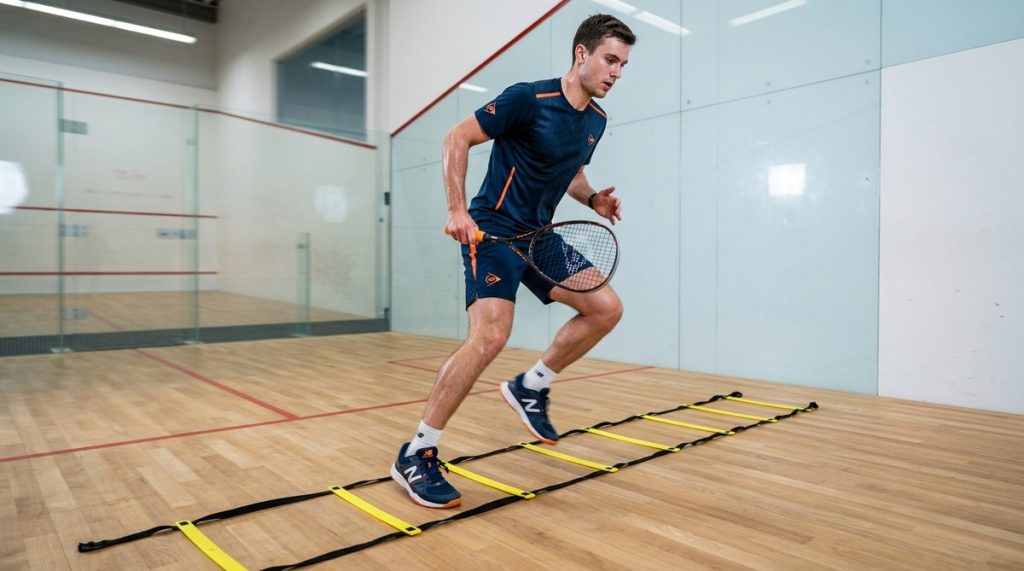
Improving your movement and agility on the squash court can make a significant difference in your game. A player with sharp footwork can reach difficult shots, maintain better court positioning, and react faster to opponents’ plays. To develop this vital aspect, specific squash footwork drills can help you build the speed, coordination, and endurance needed to excel. Whether you’re an amateur or semi-pro, integrating these targeted exercises into your routine will elevate your court performance and confidence.
Consistent practice of tailored squash footwork drills enhances agility, speed, and court coverage. Incorporating these exercises into your training will help you move smarter and faster, giving you an edge over opponents and making every rally more effective.
Why footwork drills are essential for squash players
Good footwork is the foundation of a strong squash game. It allows you to get into the best position to hit the ball with control and power. Without efficient movement, even the most technically sound shots can be wasted if you can’t reach the ball in time. Footwork drills specifically target the muscles and coordination needed to move swiftly and accurately.
These drills develop your ability to stay low, shift quickly from side to side, and maintain balance during rapid rallies. They also improve your endurance, so you can keep up the pace during long matches. For players serious about advancing their game, dedicating time to footwork is non-negotiable.
Top squash footwork drills to transform your movement
Here are some structured drills that can be seamlessly added to your training sessions. They target different aspects of court movement and can be adapted based on your fitness level.
1. Ladder drills for quickness and coordination
Using a speed ladder is one of the most effective ways to enhance foot speed and coordination. Focus on various stepping patterns such as high knees, lateral steps, and in-and-out movements. These improve your ability to change direction swiftly.
How to do it:
- Place a ladder flat on the court.
- Step into each box with quick, controlled movements.
- Incorporate lateral and diagonal steps for variety.
- Perform each pattern for 30 seconds, rest, and repeat.
2. Shadow squash with emphasis on footwork
Imagine hitting shots across the court without a ball, focusing solely on movement. Move to different court positions, mimicking game situations, to build instinctive footwork.
How to do it:
- Start at the centre court.
- Practice moving to the front, back, and sides.
- Emphasise staying low and balanced.
- Incorporate lunges and quick stops to simulate shot changes.
3. Cone drills for directional change
Set up cones in a pattern matching typical court movements—front, side, and cross-court.
How to do it:
- Sprint from the centre to a cone, then shuffle laterally to the next.
- Focus on explosive starts and controlled stops.
- Repeat for 10-15 minutes.
- For added challenge, add a small jump or hop between cones.
4. Multi-directional sprints
Speed and agility are crucial for covering the court. Short sprints with rapid direction changes simulate match scenarios.
How to do it:
- Mark out a 10-metre square.
- Sprint from the middle to each corner, then back to the centre.
- Include side shuffles and backward runs.
- Complete 3 to 4 rounds with short rest intervals.
5. Lunges with twist for stability and mobility
Lunges help strengthen your legs and improve balance, which is essential when reaching for shots in awkward positions.
How to do it:
- Step forward into a lunge, keeping your torso upright.
- Twist your upper body toward the front leg.
- Return to the start, then alternate legs.
- Perform 10-12 repetitions per leg.
Common mistakes to avoid during footwork drills
| Mistake | Explanation | How to fix it |
|---|---|---|
| Overreaching | Extending too far can compromise balance. | Stay close to your target and move your feet accordingly. |
| Poor posture | Slouching or leaning can slow you down. | Keep your back straight, knees slightly bent, and stay low. |
| Rushed movements | Moving too fast without control leads to errors. | Focus on controlled, precise steps before increasing speed. |
| Not engaging core | Weak core reduces stability. | Incorporate core strengthening exercises into your routine. |
| Neglecting recovery | Not allowing muscles to rest can cause fatigue. | Include rest periods and stretching after drills. |
Expert advice on effective footwork training
“Consistency is key. Incorporate footwork drills into your routine at least three times a week, and you’ll notice improvements in your court coverage and reaction time. Remember, quality beats quantity. Focus on controlled, precise movements to build muscle memory and prevent injury.”
Integrating footwork drills into your weekly training
To maximise benefits, blend these drills into your regular practice sessions. Start with a warm-up that includes light jogging and stretching. Then, dedicate 15 to 20 minutes to footwork exercises before moving on to technical or match play.
Suppose you want a structured plan. In that case, you can follow a progression—begin with basic ladder drills, then add cone exercises, and finally combine sprints and lunges. As your agility improves, increase the intensity or incorporate resistance like weighted vests for added challenge.
Additional tips for better court movement
- Always stay relaxed; tension slows you down.
- Use your non-racquet arm to balance and generate power in your movements.
- Keep your eyes up to anticipate shots and plan your movement.
- Practise shadowing shots to build muscle memory in movement patterns.
- Regularly assess your technique and seek feedback from coaches or video analysis.
Why mastering footwork makes a real difference
Great footwork directly influences your ability to control rallies and dictate play. When you move efficiently, you conserve energy, recover faster, and position yourself optimally. This not only improves your shot quality but also reduces injury risk. Players with sharp court movement can outlast opponents and create more attacking opportunities.
By dedicating time to targeted squash footwork drills, you’ll notice a difference in how quickly you can reach shots and how confidently you can command the court. Remember, even small improvements in your movement can translate into big gains during matches.
Keep moving forward with smarter footwork
Practising these drills consistently will build the agility, speed, and balance needed for competitive squash. Make them part of your routine and challenge yourself to improve each week. Think of footwork as the backbone of your game — invest in it, and you’ll see your overall performance rise. Your court coverage will become more fluid and natural, turning you into a formidable opponent.
Strive to incorporate a variety of drills to target different movement aspects, and always listen to your body. With patience and persistence, better court movement is within reach. Keep moving, stay focused, and enjoy the process of becoming a more agile, confident squash player.