How to Fix a Weak Backhand Drive in 10 Minutes
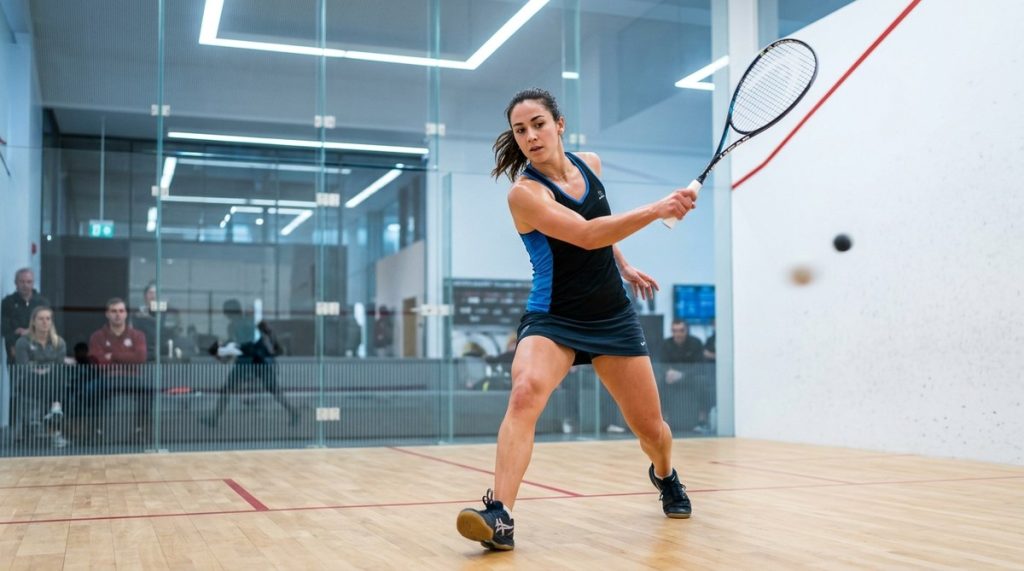
If your backhand drive feels like a polite tap compared to your forehand, you are not alone. It is the most common frustration among intermediate players who switch from tennis or pickleball. You have the racket head speed. You have the athleticism. Yet when you swing, the ball arrives at the back wall with all the menace of a damp sponge. The good news is that the problem is almost never strength. It is structure. And you can fix weak backhand drive issues in a single focused session.
A weak backhand drive usually comes from three faults: a collapsed wrist at contact, a late racket preparation, or a body position that faces the side wall instead of the front wall. In ten minutes you can reset all three. The fix requires no gym work, no new racket, and no drastic swing change. It is about where your elbow sits, when your wrist locks, and how your feet align at the moment of strike.
Why Your Backhand Drive Lacks Bite
Let us be blunt. If your backhand drive floats, you are likely opening the racket face at impact. Tennis players do this instinctively because they need topspin to clear the net. In squash, the ball is smaller, the court is tighter, and you do not need to brush up the back of the ball. You need a flat, firm contact point.
Another common culprit is the wrist. In tennis, a loose, whippy wrist generates spin and pace. In squash, too much wrist action at contact kills power. The racket head should arrive at the ball slightly ahead of your hand, with the wrist locked in a neutral position. If your wrist is bent backwards (extension) at the hit, you lose energy transfer. The ball feels dead off the strings.
Finally, look at your body alignment. Many players step towards the side wall when hitting a backhand drive. They open their chest to the left (for right handers) and swing across the body. That creates a glancing blow. You want your chest facing the front wall, your shoulder turned, and your weight moving forward into the shot.
The 10 Minute Fix: Three Corrections
Grab a racket and find a wall or a court. You do not need a partner for this. Work through each step in order. Spend three minutes on each, then do a final minute of free hitting to lock it in.
1. Reset the Grip and the Elbow Position
Hold the racket in a standard continental grip. The V between your thumb and index finger should sit on the top right bevel of the handle (for right handers). For left handers, it is the top left bevel. This is the same grip you use for volleys and serves in tennis, so it should feel familiar.
Now bring the racket back. The most common mistake is taking the racket back with a bent elbow that drops behind your hip. Instead, keep your elbow bent at roughly ninety degrees and position it in front of your hip, not behind it. Your forearm should be parallel to the floor. This is called the “elbow forward” position. It keeps the racket head up and gives you a stable platform to swing from.
Stand sideways to the wall. Practice taking the racket back with the elbow forward. Do ten slow swings without a ball. Feel how the racket head stays above your wrist. That is your new starting point.
2. Lock the Wrist at Contact
This is the biggest single change you can make. Swing slowly and stop at the contact point. The contact point for a backhand drive should be roughly level with your front foot, about hip height. At that moment, your wrist must be flat. Not bent up, not bent down. Flat.
Imagine you are pushing a heavy door closed with the palm of your hand. That is the feeling of a locked wrist at impact. If your wrist is loose, the racket face opens or closes unpredictably. If your wrist is bent back, you lose power.
Do ten shadow swings, pausing at contact. Check your wrist position visually. Then hit five gentle balls against the wall, focusing only on the wrist lock. Do not worry about power yet. Just feel the solid thud of a flat racket face meeting the ball.
3. Step Forward, Not Sideways
Stand at the back of the service box. Have a partner or a ball machine feed you a simple backhand drive, or drop feed yourself. As the ball approaches, step towards the front wall with your front foot. Your back foot should pivot naturally. Your chest should face the front wall, not the side wall.
Many tennis players step across their body, opening the hips too early. That makes the swing arc wide and weak. Instead, think of walking into the shot. Your weight should transfer from your back foot to your front foot as you swing. The racket should travel straight through the line of the ball, not around it.
Hit ten drives with this new footwork. The ball should travel lower and flatter than before. If it pops up, you are likely opening the racket face again. Go back to step two.
Common Mistakes and How to Spot Them
Use the table below to diagnose your own swing. Film yourself on your phone if you can. The camera does not lie.
| Mistake | What It Looks Like | The Fix |
|---|---|---|
| Collapsed wrist | Racket head drops below wrist at contact | Lock wrist flat; push through the ball |
| Elbow behind hip | Racket wraps around the body | Keep elbow in front of hip; swing from the shoulder |
| Open racket face | Ball floats high and weak | Close the face slightly; hit through the ball, not under it |
| Stepping sideways | Body faces side wall at contact | Step forward towards the front wall; transfer weight |
| Late preparation | Swing starts after the ball bounces | Take racket back early; use a split step to buy time |
Why Tennis Players Struggle Most
If you come from tennis, your backhand muscle memory is wired for a different sport. In tennis, the backhand drive often uses two hands, a longer swing, and a low to high brushing motion. In squash, the swing is shorter, the grip is firmer, and the contact point is later relative to your body.
The biggest adjustment is the wrist. Tennis players rely on wrist snap for topspin and net clearance. In squash, wrist snap at contact makes the ball balloon off the front wall. You need to suppress that instinct.
“The backhand drive in squash is a pushing motion, not a swiping motion. If you think of it as a firm handshake with the ball, your wrist will stay stable and the power will come naturally.” — Paul Assaiante, former Trinity College head coach and multiple national champion.
Try this mental cue: imagine you are stopping the ball on the racket face and then pushing it through the front wall. That pause, even if it is only milliseconds, forces your wrist to stay stable. It also improves accuracy because you are not rushing the swing.
Equipment Quick Check
Before you blame your technique, check your racket. A head heavy racket can make the backhand feel sluggish because the balance point fights your wrist. If you are using a racket that is too heavy or too head heavy, the backhand drive will always feel weak. Consider a balanced or head light frame if you struggle to generate racket head speed on the backhand side.
String tension also matters. Lower tension (around 24 to 26 lbs) gives more power but less control. Higher tension (27 to 29 lbs) gives more control but less pop. If your strings are dead or frayed, you lose energy transfer. If you have not restrung in six months, your backhand drive will suffer regardless of technique.
For more on equipment choices, see our guide on lightweight vs head heavy rackets and how frame balance suits your playing style.
A Simple Drill to Lock In the Fix
Here is a drill you can do alone in ten minutes. It combines all three corrections into one flowing movement.
- Stand at the back of the court, on the backhand side.
- Drop the ball from your non racket hand.
- Let it bounce once.
- As it rises, take the racket back with your elbow forward.
- Step towards the front wall with your front foot.
- Lock your wrist and push the ball straight down the line.
- Watch the ball hit the front wall and rebound. It should travel low and flat, not pop up.
Repeat twenty times. If the ball hits the side wall before the front wall, your swing is too wide. If the ball floats, your wrist is loose. Adjust and repeat.
This drill also builds the habit of early racket preparation. Most weak backhand drives start with a late take back. If you prepare early, you give yourself time to set the wrist and step forward. The shot becomes simpler.
When to Use the Backhand Drive in a Match
Once you have fixed the mechanics, you need to know when to use it. The backhand drive is not a winner shot. It is a pressure shot. You use it to pin your opponent in the back corner, to reset a rally when you are under pressure, or to change the direction of play.
Do not try to hit it harder than necessary. A clean, flat backhand drive that dies at the back wall is more effective than a wild swing that hits the tin. Control beats power every time.
If you want to add more sting to your drives, look at building explosive power for stronger drives and kills. That article focuses on the physical conditioning that supports a powerful swing, not just the technique.
Your Next Ten Minutes
You have the information. Now use it.
Go to a court or a wall. Spend the first three minutes on grip and elbow position. Spend the next three on wrist lock. Spend the following three on footwork and weight transfer. Use the final minute to hit free drives and feel how the three changes work together.
If you feel your old habits creeping back, slow down. The fix weak backhand drive process is not about speed. It is about precision. Once the new movement feels natural, you can gradually increase pace.
One Last Thought on Confidence
A weak backhand drive is not a permanent flaw. It is a technical gap that closes as soon as you understand the mechanics. Most players see a noticeable improvement within a single session. The ball sounds different off the strings. It travels with more purpose. Opponents stop targeting your backhand because it is no longer a liability.
You already have the racket head speed and the athletic ability. Now you have the structure. Get on court and turn that backhand into a weapon.