Stop Hitting the Frame: 3 Drills to Improve Your Squash Racquet Face Control
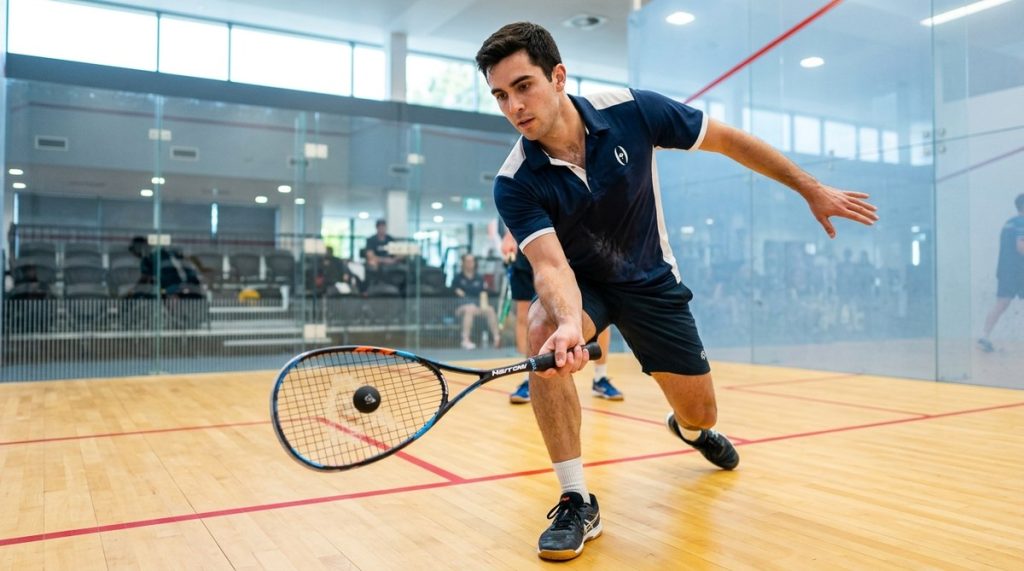
You are mid rally. You set up perfectly for a forehand drive. You swing with confidence. Then you hear it. That horrible, hollow ping of the ball glancing off the frame. The shot dies into the tin, or worse, loops into the middle of the court for your opponent to put away.
It is one of the most frustrating feelings in squash. You know you can hit the ball cleanly. But when the pressure is on, your racquet face angle goes wrong. You are not alone. Many intermediate players hit the frame more often than they would like. The good news is that this is a fixable problem. It comes down to racquet face control, and there are specific drills that can rewire your swing.
Hitting the frame is usually a sign of poor racquet face awareness, not a lack of power. By practising three targeted drills, you can train your hand, wrist, and eyes to work together so the sweet spot meets the ball every time. These exercises focus on slow, deliberate movements to build muscle memory that holds up under match pressure.
Why Your Racquet Face Keeps Failing You
Before we get into the drills, let us talk about why this happens. The racquet face is the angle of the strings at the moment of impact. If it is too open, the ball pops up. If it is too closed, the ball drives into the floor. And if the face is off by even a few degrees, you clip the frame instead of the strings.
There are three main reasons intermediate players struggle with this.
First, your grip might be too tight. A death grip on the handle stops your wrist from naturally adjusting the face angle through the swing. Second, you might be rushing your preparation. When you are late, you try to compensate with an awkward flick of the wrist. Third, you might not be watching the ball all the way onto the strings. Your eyes leave the contact point too early.
These three issues are connected. Fix one, and the others often improve too. The drills below target all of them at once.
Drill 1: The Slow Swing Mirror Drill
This is the most effective drill for building racquet face awareness. It looks simple, but it works because it forces you to feel the correct face angle without the pressure of a moving ball.
What you need: Your racquet and a mirror or a glass court wall where you can see your reflection.
How to do it:
- Stand sideways to the mirror in your ready position.
- Take your racquet back slowly into a full backswing. Pause at the top.
- Look at the angle of the strings in the mirror. They should be slightly closed, pointing roughly toward the side wall.
- Start your forward swing at half speed. Watch the racquet face as it moves through the contact zone.
- Stop at the point where you would normally hit the ball. Check the angle again.
- Repeat this 20 times on your forehand side, then 20 times on your backhand.
The goal is to make the correct face angle feel normal. Most players discover that their backhand face is too open at contact. That is a common cause of frame hits on the backhand side.
Progression: Once you feel comfortable, close your eyes during the swing and try to replicate the same face angle by feel. Open your eyes at the contact point to check. This builds proprioception, which is your body’s ability to know where the racquet head is without looking.
For more on how to build a consistent swing from the ground up, check out our guide on the perfect squash swing.
Drill 2: The One Step Solo Feed
This drill adds a moving ball but keeps the pace slow. It trains your eyes to track the ball onto the strings while your hand holds the correct face angle.
What you need: A squash ball, your racquet, and a court.
How to do it:
- Stand just behind the short line, facing the front wall.
- Drop the ball from shoulder height and let it bounce once.
- Take one step forward and hit a gentle drive down the line.
- Focus entirely on the contact point. Watch the ball meet the strings.
- Do not worry about power. The shot should travel at about half your normal speed.
- Repeat 15 times on the forehand, then 15 on the backhand.
The key is the single step. By limiting your movement, you remove the variable of poor footwork. You can focus purely on the racquet face. If you hit the frame, stop and check your grip. Are you holding too tightly? Is your wrist locked?
Common mistake: Players try to generate pace by swinging harder. That defeats the purpose. Keep the swing slow and smooth. Let the racquet do the work.
| Technique | Correct Feel | Common Mistake |
|---|---|---|
| Grip pressure | Firm but relaxed, like holding a tube of toothpaste | White knuckles, wrist locked |
| Wrist action | Natural hinge through contact | Flicking or scooping |
| Eye focus | Watch the ball hit the strings | Look up before contact |
| Swing speed | Smooth and controlled | Jerky or rushed |
Drill 3: The Two Wall Accuracy Challenge
This drill introduces a target and a bit of pressure. It forces you to control the racquet face under a low stakes condition, which mimics match play.
What you need: A court, your racquet, and three balls.
How to do it:
- Stand in the back corner of the service box on the forehand side.
- Hit a drive that travels parallel to the side wall and lands past the service line on the opposite side.
- The ball should bounce off the front wall and then hit the side wall before the second bounce.
- If the ball hits the side wall before the front wall, you have opened the face too much.
- If the ball dies into the tin, you have closed the face too much.
- Aim for 10 clean strikes in a row before switching to the backhand side.
The side wall contact is your feedback system. A well struck ball with a neutral face angle will travel straight and true. A mis hit will spray sideways or die early.
Why this works: It combines technical focus with a measurable outcome. You cannot cheat the drill. The ball tells you the truth about your racquet face control every time.
If you enjoy solo practice, our article on solo court drills has 12 more exercises you can do without a partner.
How to Structure These Drills Into a Training Session
You cannot do all three drills perfectly in one go. Your brain needs time to absorb the new movement patterns. Here is a suggested weekly structure:
- Monday: 10 minutes of the slow swing mirror drill at home before your match.
- Wednesday: 15 minutes of the one step solo feed as a warm up before hitting.
- Friday: 20 minutes of the two wall accuracy challenge as a focused practice block.
Stick with this for three weeks. After that, you should notice fewer frame hits and a cleaner sound off the strings.
“The racquet face is the steering wheel of your shot. If you do not know where it is pointing, you are driving blind. These drills take the guesswork out of the equation.” * Coaching tip from a Level 3 England Squash coach.
What to Do When You Still Hit the Frame
Even after practising these drills, you will occasionally hit the frame. That is normal. The important thing is to diagnose why in the moment. Ask yourself three questions:
- Was my preparation late?
- Was my grip too tight?
- Did I take my eye off the ball?
Usually, the answer is one of these three. If you can identify the cause within two seconds of the mistake, you can correct it on the next rally. That is the mark of a player who is improving.
Also, check your equipment. A worn out grip can cause your hand to slip, which alters the face angle at impact. Read our guide on why your squash racket grip size actually matters more than you think to make sure you are not fighting against your own gear.
Building Long Term Racquet Face Awareness
Racquet face control is not a skill you master in one session. It is a feeling you develop over time. The more you practise these drills, the more your hand will automatically find the correct angle without conscious thought.
Think of it like learning to drive a car. At first, you have to think about every gear change. Eventually, it becomes automatic. The same applies here. Your goal is to make the correct racquet face angle your default setting.
Combine these drills with good footwork and you will see a big improvement in your consistency. If you want to take your movement to the next level, our footwork fundamentals guide pairs perfectly with this racquet work.
Turning Practice Into Match Confidence
The most frustrating frame hits happen in matches because the pressure changes your technique. Your arm tenses up. You rush the swing. You forget everything you practised.
To bridge the gap between practice and matches, try this mental trick. Before your next match, hit five slow drives in the warm up using the same focus as the one step solo feed. Remind your hand what a relaxed, controlled swing feels like. Then carry that feeling into the first rally.
If you feel tension creeping in during the match, take a deep breath on the T and reset your grip pressure. A loose hand is a clean hitting hand.
Your Next Step on the Court
You now have three proven drills to stop hitting the frame and take control of your racquet face. The slow swing mirror drill builds awareness. The one step solo feed trains your eye. The two wall accuracy challenge adds pressure and feedback.
Pick one drill and do it today. Even five minutes of focused practice will make a difference. Then add the others over the next week. Your racquet face will thank you, and so will your match results.